
B.Arch CurriculumFree, forever
A tribute to Amogh N P
Set Design
Architecture builds the world we live in; set design builds the worlds we watch. This elective — scenography — is the architect's craft turned to the stage and the screen: the space of a performance, where a ground plan, an elevation and a scale model serve not a client but a story. Learn the discipline and its history; the stage types and the design process; how a set is built and painted; how light conjures mood; and how the same skills make exhibitions and themed environments. The most architectural of the arts, and the most theatrical.
Course byAmogh N P· Architect & interior designer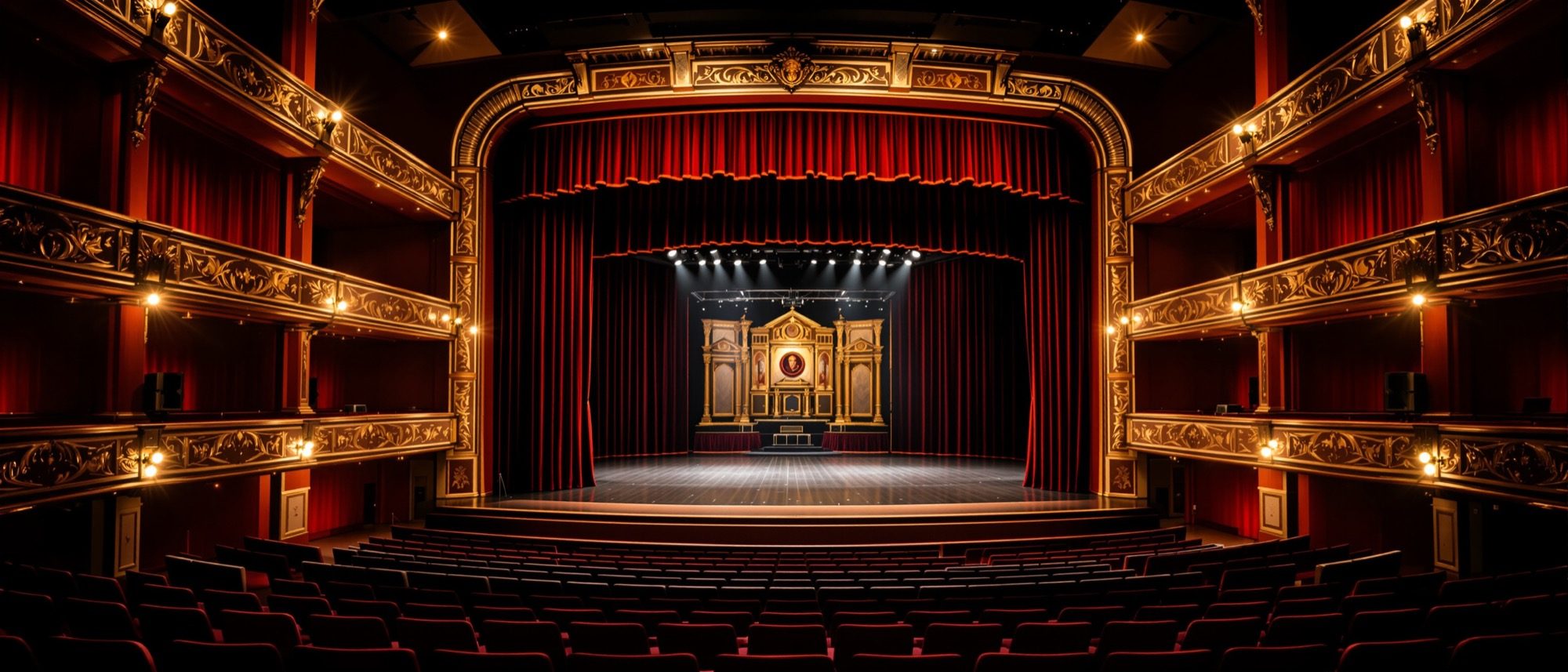
The syllabus
5 units · 5 liveTranscribed from the official B.Arch syllabus. All 5 units are live as full interactive lessons, each with original diagrams, a self-assessment quiz and a studio task.
Unit 1 — Introduction to Scenography
LiveThe definition and scope of set design and scenography; set design for theatre versus film versus exhibition; the production designer and the art department; and a history from the Greek skene through Serlio and the proscenium to Appia, Craig, the Bauhaus and Brecht.
Unit 2 — Stage, Space & Process
LiveThe stage types and the actor–audience relationship — proscenium, thrust, arena, black box and traverse; stage geography (upstage/downstage, wings, flies, apron); and the design process from script to ground plan, elevation and scale model.
Unit 3 — Set Construction & Materials
LiveThe scenic vocabulary — the flat, the platform, the cyclorama, the gauze, the wagon and the revolve; materials and scenic painting (texture, trompe-l'oeil, ageing); rigging, flying and safety; and the set model and technical drawings.
Unit 4 — Stage Lighting & Atmosphere
LiveThe functions of stage lighting and the McCandless method; the lantern types — fresnel, profile, PAR, flood, followspot, LED and moving heads; colour, gels and gobos; and how angle, colour and intensity build mood; plus sound and projection.
Unit 5 — Exhibition & Event Design
LiveExhibition and museum design — the visitor journey, display systems, interpretation and immersive environments; signage, wayfinding and environmental graphics; and the crossover of scenography back into architecture and interior design.
Course outcomes
What you will be able to doUnderstand the scope and history of set design and scenography.
Apply the stage types, stage geography and the design process.
Understand set construction, materials and scenic techniques.
Apply stage lighting to create visibility, form and mood.
Apply scenographic skills to exhibition, event and graphic design.
Create and present a set or exhibition design concept.
The author
Amogh N P
Architect, interior designer, and creative polymath. Studio Matrx began in his notebooks — his vision of design made honest, useful, and open to everyone. Its Academy is written and taught in his memory, and free, forever.
More about Amogh →Architecture builds the world; set design builds the worlds we watch.
Scenography, the stage types, set construction, stage lighting and exhibition design. Read the five units, study the diagrams, then test yourself.
The curriculum is free, forever