
Regenerative Water TechnologyVolume 1 · Issue 4 · September 2026
Regenerative Water Technology
Designing buildings and sites that capture, reuse, treat and regenerate water rather than treating it as infinite and single-use — rethinking water in buildings (water is not infinite; what regenerative water means; the landscape; the promise separated from the health and energy honesty), why water must change (the water crisis, the linear water problem, the closed-loop idea), understanding the water cycle (the natural cycle, water in and out of a building, water quality and types, measuring use), capturing water (rainwater harvesting, stormwater and runoff, alternative sources, storage and first-flush), reusing water (greywater recycling, blackwater and sewage, on-site treatment, fit-for-purpose matching), treating water naturally (constructed wetlands, biological treatment, natural versus mechanical, the living machine), water-sensitive design (water-sensitive urban design, sponge cities, landscape and water, integrating at scale), toward net-positive water (reduce demand first, closing the loop, net-zero and net-positive water, resilience and security), the building systems (plumbing and dual systems, pumps/energy/controls, health and safety, monitoring and maintenance), reality/limits/honesty (water-washing, the energy-water nexus, health and regulation limits, when simpler is better), and practice and the future. Rigorous and honest — regenerative water is genuinely essential as water grows scarce, but you must reduce demand first (the cheapest water is the water you never use), respect the energy-water nexus, and never compromise health (reusing water carries real disease risk and 'natural' is not 'safe') — for architects, interior designers and students. Defers the binding water-quality, public-health, plumbing, treatment and hydraulic engineering and any determination of whether reused water is safe for a use to qualified specialists, verified testing and the governing codes and health regulations (NBC India, IS, CPHEEO, drinking-water and reuse rules), treating figures and methods as illustrative. India-aware, honouring the ancient water-harvesting heritage (stepwells, tanks, johads) amid acute scarcity and groundwater depletion, with an absolute line on health.
Course byAmogh N P· Architect & interior designer11 modules · 44 lessons · ~15 hrs · 44 of 44 lessons live

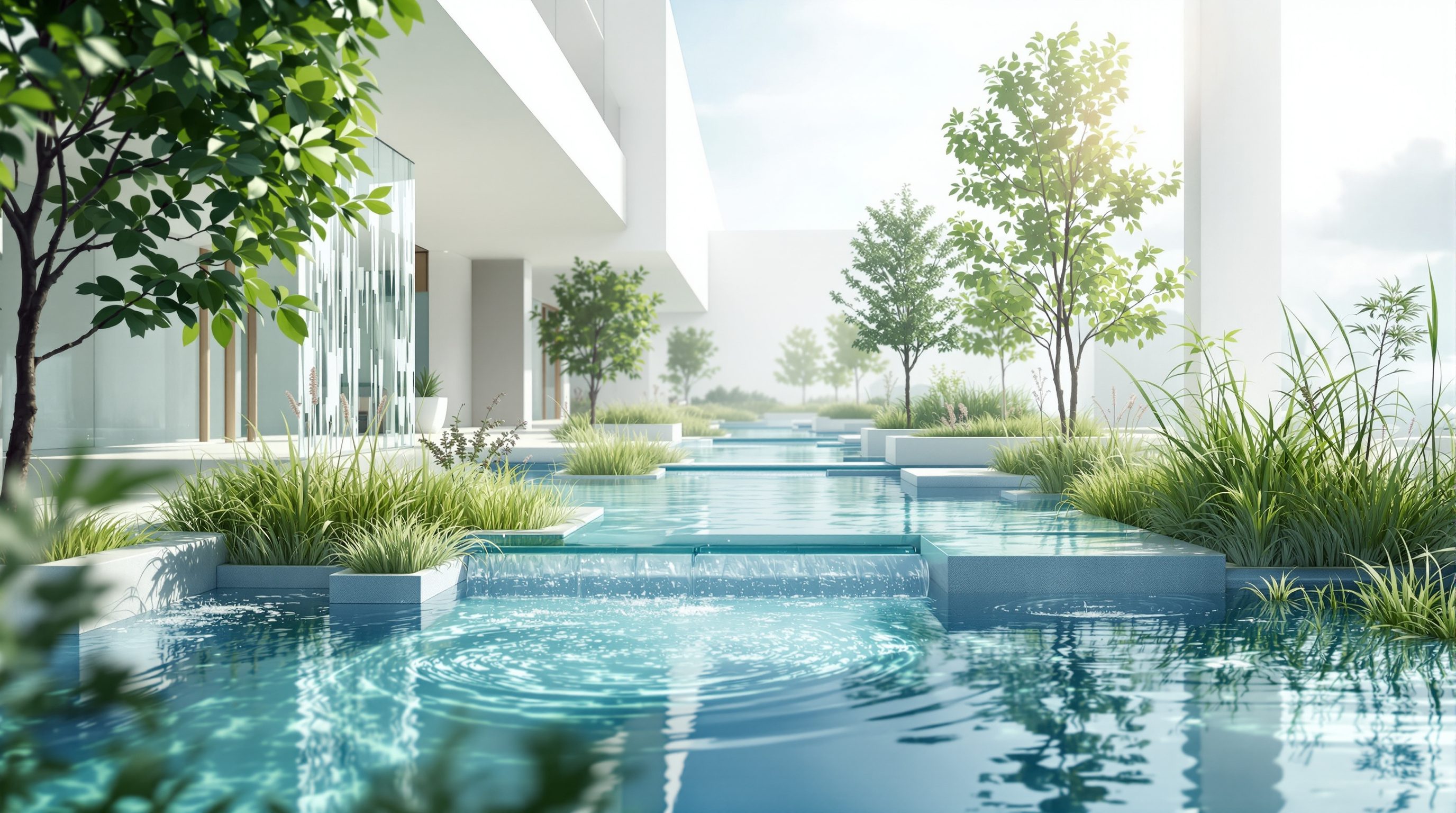 Module 0 · Rethinking Water in Buildings
0.1 · Water Is Not Infinite
For a century buildings treated water as infinite and single-use: piped in, used once, flushed out. That linear model is breaking as water grows scarce. Regenerative water technology makes the building capture, reuse and return water.
Read itStart with Module 0 — Rethinking Water in Buildings
Free · open0.1 · Water Is Not Infinite
Open0.2 · What Regenerative Water Means
Open0.3 · The Water-Technology Landscape
Open0.4 · The Promise & the Honesty
Open0.✓ · Mastery check: Rethinking Water in Buildings
OpenWhat this course covers
The through-line- 1Why Water Must Change. The case, weighed honestly: the water crisis, the linear water problem, the closed-loop idea, and the honest caveats.
- 2Understanding the Water Cycle. The foundation: the natural water cycle, water in and out of a building, water quality and types, and measuring water use.
- 3Capturing Water. Getting water for free: rainwater harvesting, stormwater and runoff, alternative sources, and storage and first-flush.
- 4Reusing Water. Using water more than once: greywater recycling, blackwater and sewage, on-site treatment, and fit-for-purpose matching.
The full course ahead
11 modules · 44 lessons11 modules and 44 lessons, from the foundations through to practice — each lesson with a three-tier read, a hands-on workshop, hand-drawn figures and a scored mastery check.
0Module 0 · Rethinking Water in Buildings
LiveBefore any tank or filter: water is not infinite; what regenerative water means; the water-technology landscape; and the promise separated honestly from the health and energy realities.
Module 0 · Rethinking Water in Buildings
LiveBefore any tank or filter: water is not infinite; what regenerative water means; the water-technology landscape; and the promise separated honestly from the health and energy realities.
1Module 1 · Why Water Must Change
LiveThe case, weighed honestly: the water crisis, the linear water problem, the closed-loop idea, and the honest caveats.
Module 1 · Why Water Must Change
LiveThe case, weighed honestly: the water crisis, the linear water problem, the closed-loop idea, and the honest caveats.
2Module 2 · Understanding the Water Cycle
LiveThe foundation: the natural water cycle, water in and out of a building, water quality and types, and measuring water use.
Module 2 · Understanding the Water Cycle
LiveThe foundation: the natural water cycle, water in and out of a building, water quality and types, and measuring water use.
3Module 3 · Capturing Water
LiveGetting water for free: rainwater harvesting, stormwater and runoff, alternative sources, and storage and first-flush.
Module 3 · Capturing Water
LiveGetting water for free: rainwater harvesting, stormwater and runoff, alternative sources, and storage and first-flush.
4Module 4 · Reusing Water
LiveUsing water more than once: greywater recycling, blackwater and sewage, on-site treatment, and fit-for-purpose matching.
Module 4 · Reusing Water
LiveUsing water more than once: greywater recycling, blackwater and sewage, on-site treatment, and fit-for-purpose matching.
5Module 5 · Treating Water Naturally
LiveLetting nature clean it: constructed wetlands, biological treatment, natural versus mechanical, and the living machine.
Module 5 · Treating Water Naturally
LiveLetting nature clean it: constructed wetlands, biological treatment, natural versus mechanical, and the living machine.
6Module 6 · Water-Sensitive Design
LiveBeyond the single building: water-sensitive urban design, sponge cities, landscape and water, and integrating at scale.
Module 6 · Water-Sensitive Design
LiveBeyond the single building: water-sensitive urban design, sponge cities, landscape and water, and integrating at scale.
7Module 7 · Toward Net-Positive Water
LiveClosing the loop: reduce demand first, closing the loop, net-zero and net-positive water, and resilience and security.
Module 7 · Toward Net-Positive Water
LiveClosing the loop: reduce demand first, closing the loop, net-zero and net-positive water, and resilience and security.
8Module 8 · The Building Systems
LiveMaking it work safely: plumbing and dual systems, pumps, energy and controls, health and safety, and monitoring and maintenance.
Module 8 · The Building Systems
LiveMaking it work safely: plumbing and dual systems, pumps, energy and controls, health and safety, and monitoring and maintenance.
9Module 9 · Reality, Limits & Honesty
LiveThe honest ledger: water-washing, the energy-water nexus, health and regulation limits, and when simpler is better.
Module 9 · Reality, Limits & Honesty
LiveThe honest ledger: water-washing, the energy-water nexus, health and regulation limits, and when simpler is better.
10Module 10 · Practice & the Future
LiveTurning water literacy into practice: the designer's role, getting started, water in India, and becoming a water-literate designer.
Module 10 · Practice & the Future
LiveTurning water literacy into practice: the designer's role, getting started, water in India, and becoming a water-literate designer.
The author
Amogh N P
Architect, interior designer, and creative polymath. Studio Matrx began in his notebooks — his vision of design made honest, useful, and open to everyone. Its Academy is written and taught in his memory, and free, forever.
More about Amogh →