
B.Arch CurriculumFree, forever
A tribute to Amogh N P
Progressive Architecture
Where the Contemporary course left India's masters and the high-tech and post-modern moment, this one goes global and forward — into the avant-garde and the not-quite-here. It runs from the fragmented, skewed forms of deconstructivism, through the pivot from appearance to performance in green architecture, into the digital and parametric turn that made the curved and the customised buildable, on to buildings that borrow nature's strategies and physically move, and finally to the emerging frontier of mass timber, 3D printing and AI. Its single most valuable habit: telling the genuine achievement from the over-claim.
Course byAmogh N P· Architect & interior designer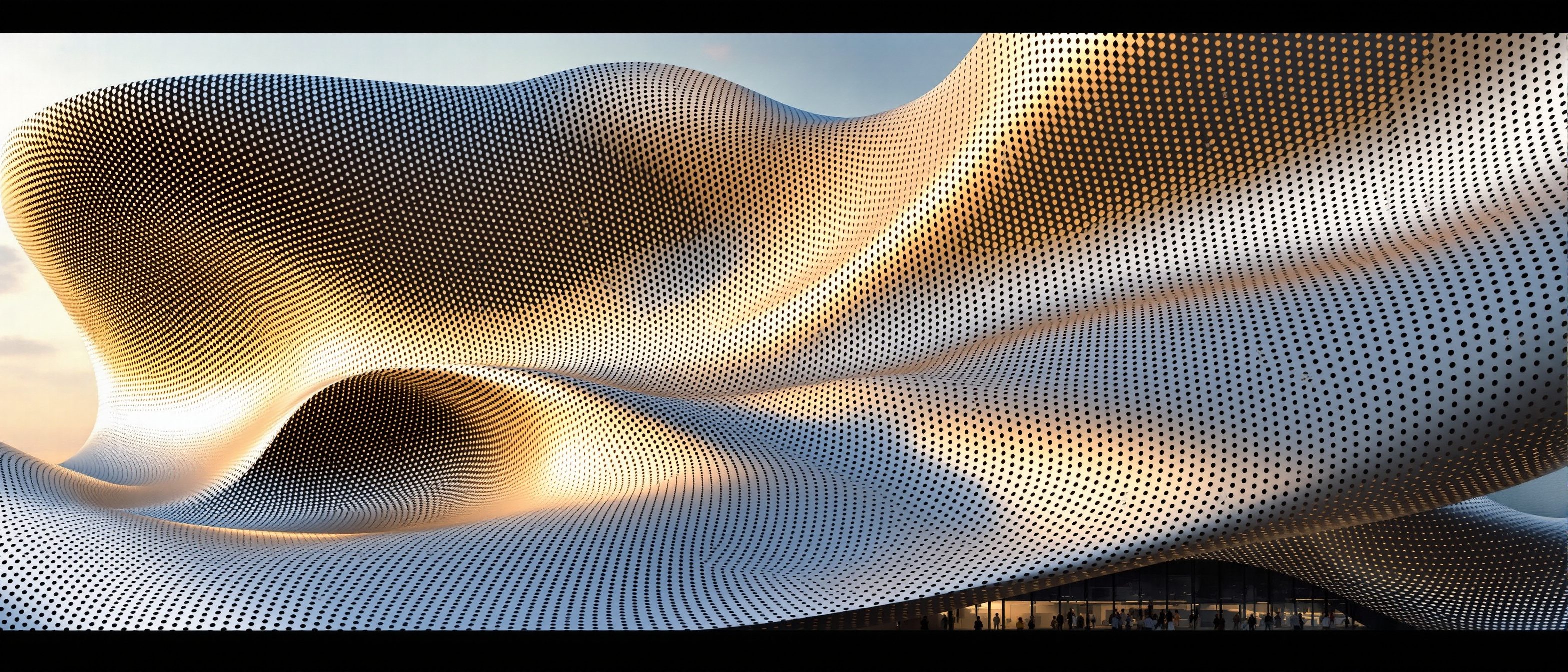
The syllabus
5 units · 5 liveTranscribed from the official B.Arch syllabus. All 5 units are live as full interactive lessons, each with original diagrams, a self-assessment quiz and a studio task.
Unit 1 — Deconstructivism & the Avant-Garde
LiveThe 1988 MoMA 'Deconstructivist Architecture' show (Johnson & Wigley); the two roots — Russian Constructivism and Derridean reading; the seven exhibitors and a signature work each — Gehry (Bilbao), Hadid (Vitra, Heydar Aliyev), Libeskind (Jewish Museum), Eisenman (autonomy), Koolhaas (Bigness), Tschumi (La Villette), Coop Himmelb(l)au; fragmentation and controlled chaos.
Unit 2 — Sustainable & Green Architecture
LiveThe pivot from form to performance; passive before active; Ken Yeang's bioclimatic skyscraper; the rating systems — LEED and the precise Indian trio GRIHA (national), IGBC (CII) and ECBC (BEE energy code); net-zero and operational vs embodied carbon; biophilia and the Living Building Challenge; cradle-to-cradle.
Unit 3 — Digital & Parametric Architecture
LiveThe paperless studio and the CAD/CAM turn; NURBS and the 'blob' (Greg Lynn); parametric design as relationships not shapes; 'Parametricism' as Schumacher's contested style label; BIM as a process not just 3D; file-to-factory and digital fabrication; algorithmic and generative design (kept conceptual — tools are a separate course).
Unit 4 — Biomimicry, Responsive & Kinetic
LiveBiomimicry (Benyus) at form, process and ecosystem levels; the Eastgate Centre told carefully; the kinetic/responsive/static distinction; the Institut du Monde Arabe and Al Bahar Towers as the kinetic-facade pair; smart materials with no moving parts; adaptive and interactive architecture — and the gap between narrative and mechanism.
Unit 5 — Emerging Directions & the Future
LiveNet-zero and climate-resilient design as the new baseline; mass timber and the tall-timber movement; 3D printing / additive construction; the circular economy and adaptive reuse; AI and computational design and its limits; smart cities and responsive urbanism; regenerative design; and the discipline of separating demonstrated capability from hype.
Course outcomes
What you will be able to doExplain deconstructivism and the late-20th-century avant-garde and its key figures.
Distinguish sustainable/green strategies and rating systems, including India's GRIHA, IGBC and ECBC.
Explain digital and parametric architecture as a design method, not merely curved form.
Classify biomimetic, responsive and kinetic approaches and their limits.
Appraise emerging directions — mass timber, 3D printing, AI — separating demonstrated from speculative.
Critique architectural claims, telling genuine achievement from marketing hype.
The author
Amogh N P
Architect, interior designer, and creative polymath. Studio Matrx began in his notebooks — his vision of design made honest, useful, and open to everyone. Its Academy is written and taught in his memory, and free, forever.
More about Amogh →Tell the achievement from the hype.
Deconstructivism, green design, parametric method, kinetic facades and the emerging future. Read the five units, study the diagrams, then test yourself.
The curriculum is free, forever