
B.Arch CurriculumFree, forever
A tribute to Amogh N P
Landscape Architecture
Where the architect encloses space with walls and roof, the landscape architect composes it with landform, planting, water and sky — and with the changing light of the day and the seasons. Because the medium is alive and unfolds in time, landscape architecture is a design discipline unlike any other: it designs not a fixed object but a process. This studio runs from the great garden traditions, through the elements and the design process, into the ecological approach that is now the discipline's core, and finally to practice — where the deepest idea is that a landscape is never finished on opening day.
Course byAmogh N P· Architect & interior designer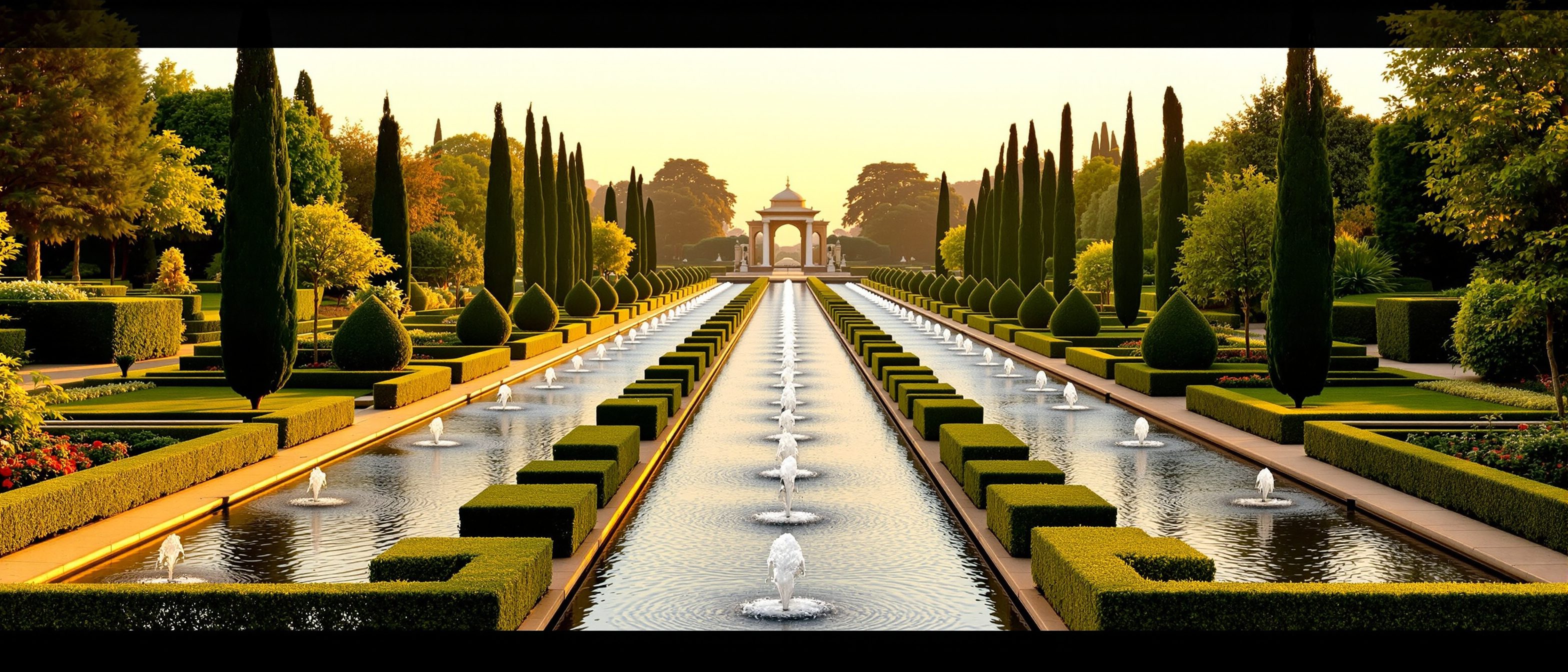
Five units, from the char-bagh to the living, maintained landscape.
5 units · 5 liveTranscribed from the official B.Arch syllabus. All 5 units are live as full interactive lessons, each with original diagrams, a self-assessment quiz and a studio task.
Unit 1 — Introduction & History
LiveWhat landscape architecture designs and how it differs from gardening; the profession (Olmsted, Central Park 1858); and a global and Indian garden history — the Persian/Mughal char-bagh, Japanese and Chinese gardens, the Italian, French and English traditions, and India's kunds, temple tanks and sacred groves; the formal-to-naturalistic shift.
Unit 2 — Elements of Landscape
LiveThe given natural elements (landform, water, vegetation, climate) and the design palette of softscape (the vertical planting layers — canopy, understorey, shrub, groundcover, climber — and plant form/texture/colour/seasonality) and hardscape (paving, steps and ramps, walls, water features, pergolas, furniture, lighting); landform and grading; and plants used as a spatial material.
Unit 3 — Design Process & Principles
LiveThe inventory-led design process (site analysis → concept → zoning → circulation → composition); the principles of landscape composition (unity, balance, scale, rhythm, focal point, sequence, enclosure and openness); the genius loci; planting-design principles (massing, layering, succession, seasonal interest); and microclimate design for thermal comfort in India.
Unit 4 — Ecology & Sustainability
LiveEcology as the modern core; Ian McHarg's Design with Nature and the layered overlay analysis; native planting and biodiversity; water-sensitive design (rain gardens, bioswales, permeable paving, constructed wetlands, rainwater harvesting); xeriscaping; the urban heat island and how landscape cools it; green infrastructure, green roofs and walls; soil, trees and ecological restoration.
Unit 5 — Landscape in Practice
LiveThe typology of landscape projects (parks, plazas, campuses, streetscape, waterfronts, restoration, roof gardens); landscape's relationship to architecture and the city; the Indian context; the consultant's role and the landscape drawing set (layout, grading, planting, details); phasing; and — the discipline's deepest idea — maintenance as design intent over the living timescale.
Course outcomes
What you will be able to doExplain landscape architecture as a design discipline and its garden-history traditions.
Use the elements of landscape — softscape layers and hardscape — to compose space.
Apply the landscape design process and the principles of composition.
Apply the ecological and sustainable approach — McHarg, water-sensitive design, natives.
Describe landscape practice, the drawing set, and maintenance as design intent.
Integrate landscape with architecture and value the genius loci and the living timescale.
The author
Amogh N P
Architect, interior designer, and creative polymath. Studio Matrx began in his notebooks — his vision of design made honest, useful, and open to everyone. Its Academy is written and taught in his memory, and free, forever.
More about Amogh →A landscape is never finished on opening day.
Garden history, the elements, the design process, ecology and practice. Read the five units, study the diagrams, then test yourself.
The curriculum is free, forever