
B.Arch CurriculumFree, forever
A tribute to Amogh N P
History of Architecture IV
The modern project — two and a half centuries of it. It opens when the Enlightenment trades Baroque drama for Neoclassical reason, sending architects back to measured antiquity. The Industrial Revolution then hands them iron, glass and steel, and buildings learn to span and rise as never before. Reform movements answer the machine; the Modern Movement of the Bauhaus and Le Corbusier strips ornament away and puts function first; and the postwar decades scatter into Postmodernism, High-Tech, Critical Regionalism and the global, sustainable architecture of our own century — India's Chandigarh, Ahmedabad and beyond included.
Course byAmogh N P· Architect & interior designer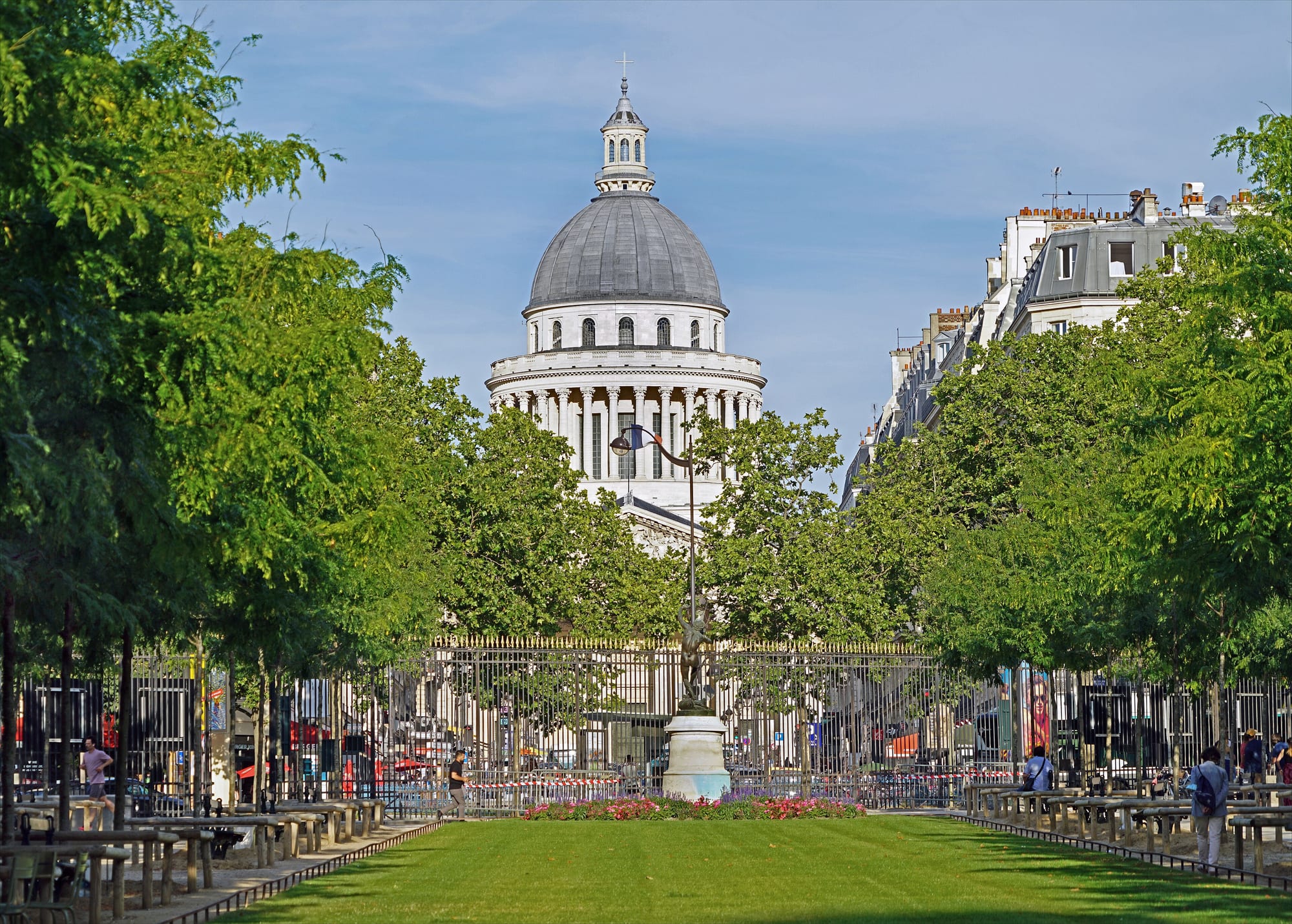
Course by Amogh N. P · Studio Matrx Academy
Five units, from Neoclassical reason to the contemporary.
5 units · 5 liveThe modern project, unit by unit. 5 of 5 units are live so far — each a full interactive lesson with original diagrams, a self-assessment quiz and a study task. The rest are in production.
Unit 1 — Neoclassicism & the Revivals
LiveThe Enlightenment turn from Baroque drama to classical reason. Archaeology, the Grand Tour and the return to measured antiquity. The Neoclassical works of Soufflot (the Panthéon, Paris), Schinkel (the Altes Museum, Berlin) and Jefferson (Monticello and the University of Virginia). The Greek, Roman and Gothic revivals, and colonial classicism in India.
Unit 2 — Iron, Glass & the Engineer
LiveThe Industrial Revolution and the new materials — cast and wrought iron, plate glass and, later, steel and reinforced concrete. The engineer's architecture: Paxton's Crystal Palace, the great train sheds, the Eiffel Tower, and the birth of the skyscraper on the Chicago steel frame.
Unit 3 — Reform & Art Nouveau
LiveThe reaction to the machine: the Arts and Crafts movement of Ruskin, Morris and Webb; Art Nouveau across Europe (Horta, Guimard, Gaudí, Mackintosh); and the Chicago School and Louis Sullivan's 'form follows function', leading to Frank Lloyd Wright's Prairie houses.
Unit 4 — The Modern Movement
LiveThe pioneers of modern architecture — the Deutscher Werkbund, Gropius and the Bauhaus, Le Corbusier's Five Points and the Villa Savoye, Mies van der Rohe's 'less is more', De Stijl and Constructivism — consolidating into the International Style.
Unit 5 — Postwar to Contemporary
LiveAfter the International Style — Brutalism, Postmodernism, High-Tech, Deconstructivism, Critical Regionalism and today's sustainable and digital practice. Modern Indian architecture: Le Corbusier's Chandigarh, Louis Kahn's IIM Ahmedabad, and the work of Charles Correa, B.V. Doshi and Raj Rewal.
Course outcomes
What you will be able to doExplain the ideas behind Neoclassicism and the nineteenth-century revivals, and identify their key works in Europe, America and colonial India.
Analyse how the Industrial Revolution's new materials — cast iron, wrought iron, plate glass and steel — reshaped structure and space, from the Crystal Palace to the first skyscrapers.
Describe the reform movements — Arts and Crafts, Art Nouveau and the Chicago School — that responded to industrialisation at the turn of the century.
Analyse the principles and leading figures of the Modern Movement — Gropius and the Bauhaus, Le Corbusier, Mies van der Rohe and the International Style.
Evaluate postwar and contemporary directions — Postmodernism, High-Tech, Deconstructivism, Critical Regionalism and sustainable practice — including modern Indian architecture.
Create a comparative reading of how technology, ideology and place have driven architectural change from the eighteenth century to today.
Image credits
Wherever a suitable image exists, we use a verified Creative-Commons or Public-Domain photograph from Wikimedia Commons, credited here and at point of use. Only where no acceptable image is available do we fall back to original Studio Matrx artwork rendered with our own Flux pipeline. All diagrams are original Studio Matrx work.
- Le Panthéon, Paris, juillet 2020 — Jean-Pierre Dalbéra, CC BY 2.0
- Altes Museum (Berlin) (6339770591) — Jean-Pierre Dalbéra from Paris, France, CC BY 2.0
- Dome, Panthéon, Paris, France — Fitzws, CC BY-SA 4.0
- Federal - Charlottesville, VA - University of Virginia (The Rotunda) (1) — Bmzuckerman, CC BY 4.0
- Eiffel Tower in 2022 02 — Maksim Sokolov (maxergon.com), CC BY-SA 4.0
- London King's Cross Station - panoramic — ell brown, CC BY-SA 2.0
- Marquette Building, Chicago, Illinois (9181627004) — Ken Lund from Reno, Nevada, USA, CC BY-SA 2.0
- Partial wide angle exterior view of Chhatrapati Shivaji Maharaj Terminus — Shashank Mehendale, CC BY-SA 4.0
- Panneaux Histoires Métro Hector Guimard Art Nouveau Accès Guimard Station Alexandre Dumas Métro Paris - Paris XI (FR75) - 2025-10-24 - 1 — Chabe01, CC BY-SA 4.0
- Frank Lloyd Wright - Chicago, IL - Frederick Robie House (C) — Bmzuckerman, CC BY 4.0
- Außenansichten des Bauhaus-Gebäudes in Dessau 07 — JensKunstfreund, CC BY-SA 4.0
- The Barcelona Pavilion, Barcelona, 2010 — Ashley Pomeroy at English Wikipedia, CC BY 3.0
- Modulor Chandigarh le Corbusier — Pierre Jeanneret, Public domain
- Sail Amsterdam - Oosterdokskade - View SSE on NEMO Museum 1997 by Renzo Piano (from Centre Pompidou, Paris) & Replica Amsterdam 1990 — Txllxt TxllxT, CC BY-SA 4.0
- Palace of Assembly Chandigarh — UnpetitproleX, CC BY-SA 4.0
- Louis Kahn Plaza, IIM Ahmedabad — Perspectives - The Photography Club, IIM Ahmedabad, CC BY-SA 4.0
- Art Nouveau Riga 46 — Scotch Mist, CC BY-SA 4.0
- Casa Batllo Facade — Daniel Kraft, CC BY-SA 3.0
- Fagus-Werk Smithy 017 3758c — Ludvig14, CC BY-SA 4.0
The author
Amogh N P
Architect, interior designer, and creative polymath. Studio Matrx began in his notebooks — his vision of design made honest, useful, and open to everyone. Its Academy is written and taught in his memory, and free, forever.
More about Amogh →Reason, the machine, and the modern.
Two and a half centuries of building, from the calm of Neoclassicism to the steel, glass and ideas of our own age. Read the units top to bottom, study the diagrams, then test yourself.
The curriculum is free, forever