
Reform & Art Nouveau
Craft against the machine, the organic line, and 'form follows function' — the turn of the century searches for a modern style.
The engineers had the new materials — but their bare iron sheds struck many as ugly, and the century's endless copying of old styles felt exhausted. Around 1900 a series of movements set out to find a genuinely modern beauty. The Arts and Crafts movement answered the machine with honest hand-craft; Art Nouveau answered it with the sinuous, living line of nature; and in Chicago, Louis Sullivan answered the tall building with a slogan — "form follows function" — and passed it to a young draughtsman, Frank Lloyd Wright, who would reinvent the house.
Learning objectives
By the end of this lesson, you will be able to — mapped to the course outcomes for History of Architecture IV:
Explain why reform movements arose in reaction to industrialisation and the 'styleless' architecture of the engineers.
Describe the Arts and Crafts ideals of honest construction, craft and 'truth to materials'.
Recognise Art Nouveau's organic, whiplash line and its leading figures — Horta, Guimard, Gaudí and Mackintosh.
Explain Sullivan's 'form follows function' and how Wright's Prairie house points toward modern architecture.
Four reform ideas
Truth to materials, the organic line, the building as a total work of art, and "form follows function" — four ideas, pulling in different directions, but all trying to escape the twin dead ends of machine shoddiness and historical revival.[1, 3]
Arts and Crafts, against the machine
John Ruskin and William Morris hated what industry did to building and to the worker: shoddy machine ornament, dishonest imitation, and craft reduced to drudgery. Their Arts and Crafts movement argued for honest construction — a material shown as what it is, a joint that does real work and is allowed to be seen, and the dignity of the hand-made. Philip Webb's Red House (1859) for Morris is the manifesto: plain red brick, a practical asymmetrical plan following its rooms, and hand-crafted fittings throughout.[1, 3]
The buildings & the makers
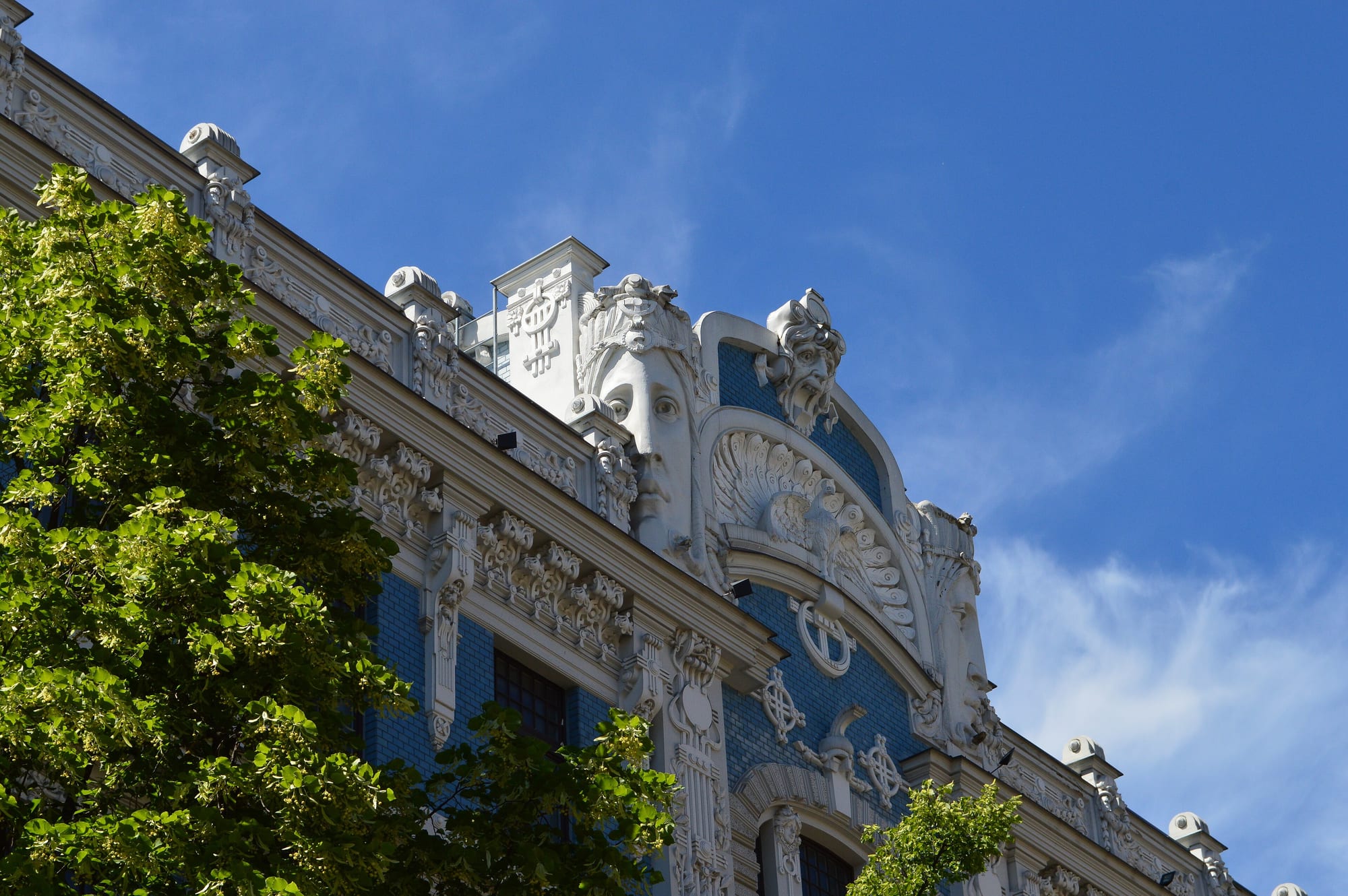
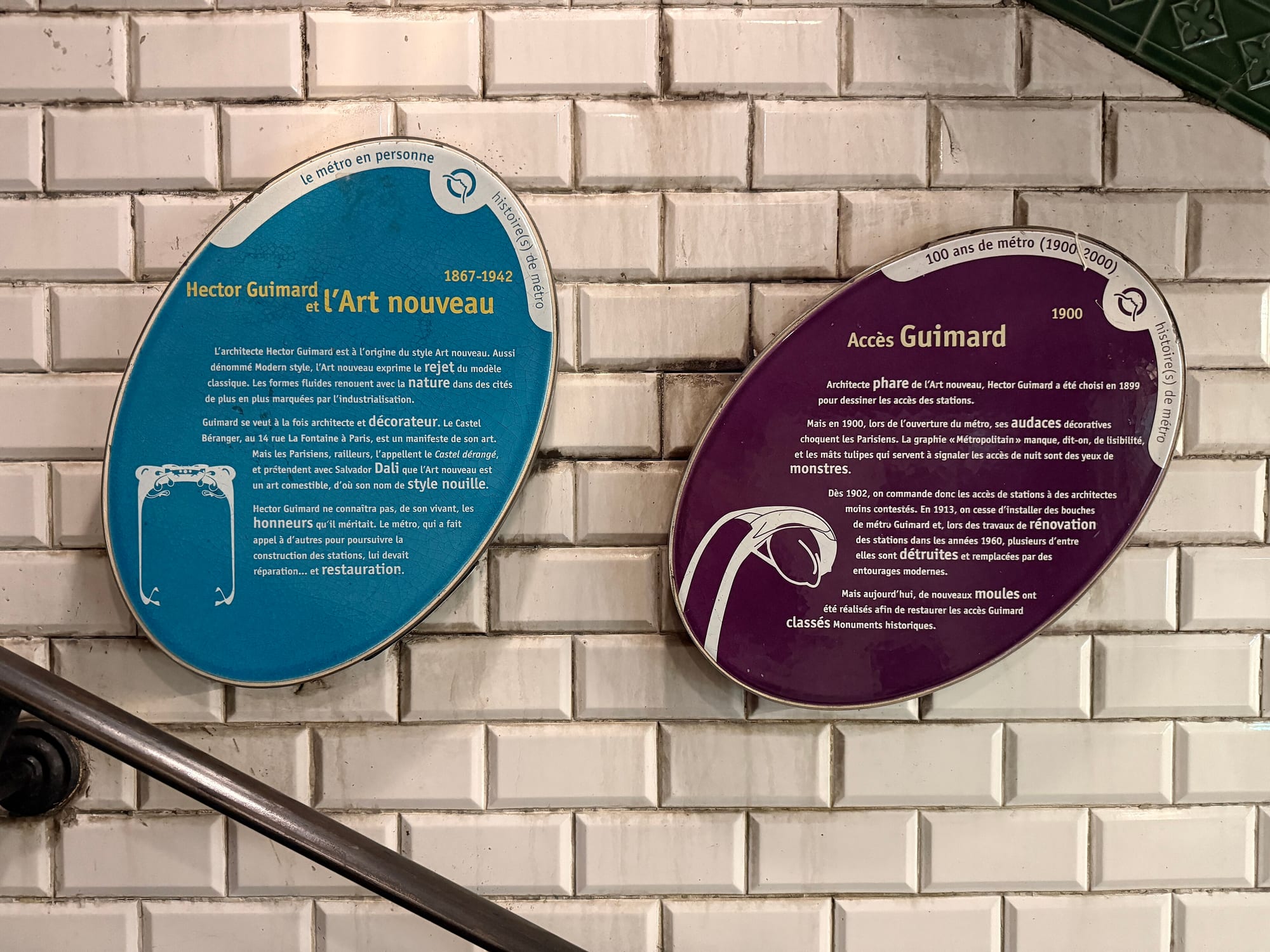
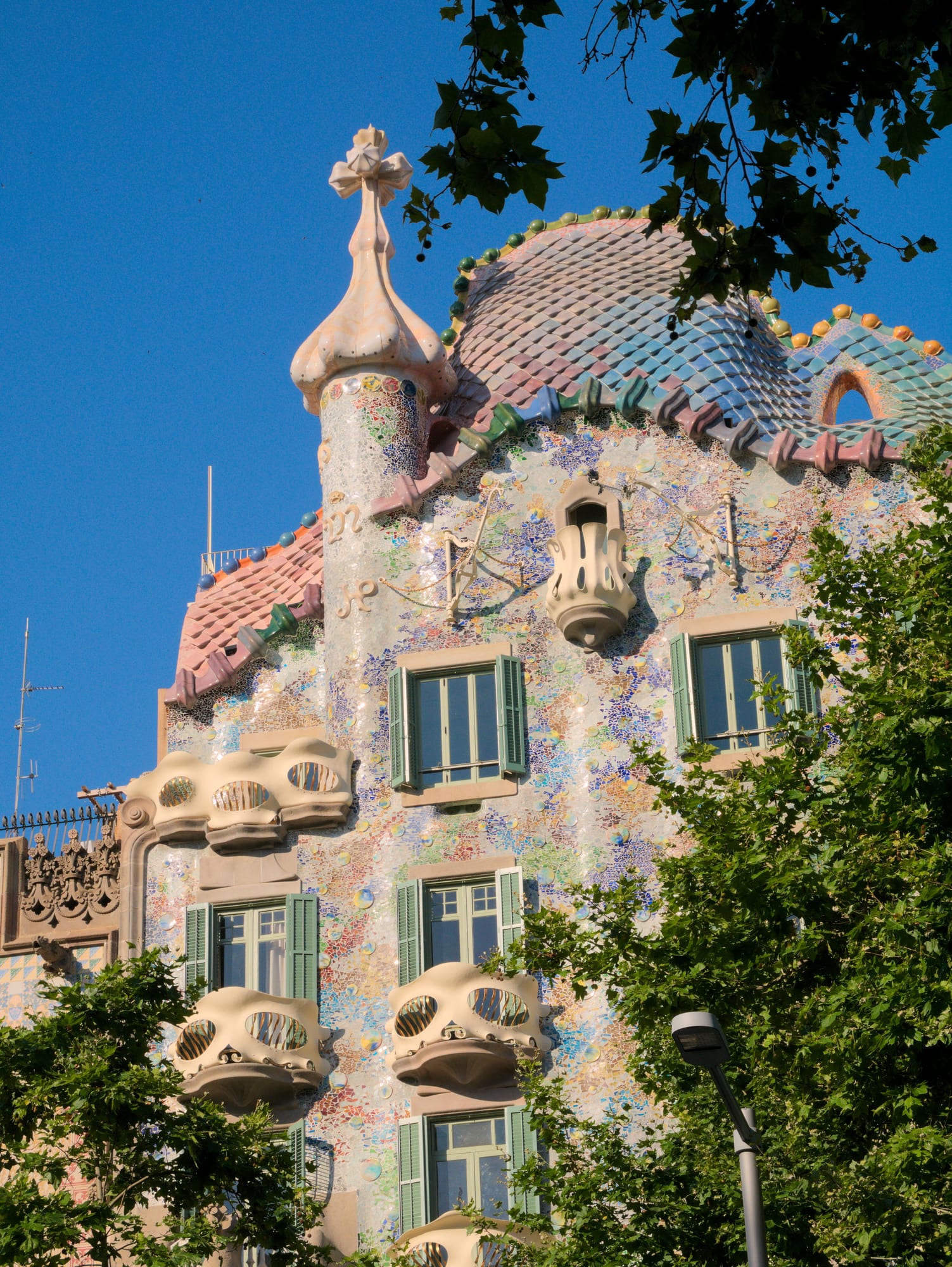
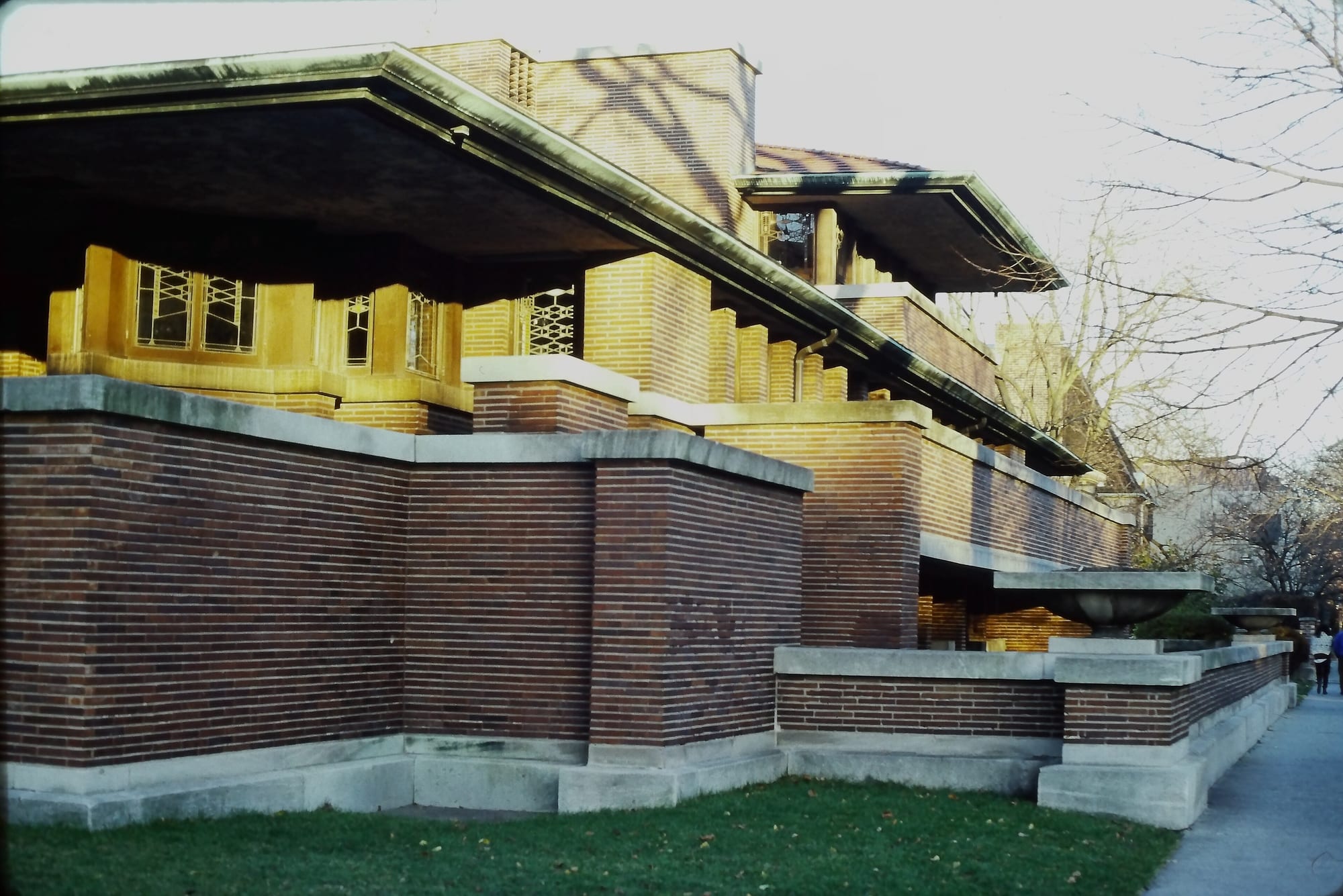
Follow the reformers building by building: Morris and Webb's honest Red House; Horta and Guimard turning iron into flowering plants on the streets of Brussels and Paris; Gaudí's wholly personal Barcelona; Mackintosh's cool Glasgow restraint; and Sullivan's skyscrapers handing on to Wright's low, open Prairie house — the doorway to the modern.[1, 2, 4]
Morris and the Red House
The Arts and Crafts movement began as much in the workshop as on the drawing board. William Morris's firm made textiles, wallpaper, furniture and stained glass by hand, to a high standard, as a moral stand against machine shoddiness. Philip Webb's Red House at Bexleyheath (1859), built for Morris, put the ideals into brick: an L-shaped plan shaped from the inside out by its rooms, honest red-brick walls, steep tiled roofs, and craftsmanship everywhere. Its influence ran worldwide — including into the bungalow and into thoughtful colonial-era domestic building in India.[1, 3]
Craft vs the organic line
| Aspect | One | The other |
|---|---|---|
| Attitude to the machine | Arts & Crafts — reject it; return to honest hand-craft | Art Nouveau — accept the new material (iron), bend it into organic art |
| The line | Arts & Crafts — plain, sturdy, honest construction | Art Nouveau — sinuous, flowing, plant-like whiplash curves |
| Ornament | Sullivan — a fitting ornament expressing the building | The coming Modernists — strip ornament away entirely (Unit IV) |
| Historicism | The revivals — borrow a past style | Reform & Art Nouveau — invent a genuinely new style |
| The house | Red House — honest brick, plan from the inside out | Prairie House — low, horizontal, open, flowing space |
Key terms
The reform movement (Ruskin, Morris, Webb) championing honest hand-craft, good materials and truth to construction against machine production.
The principle that a material should be shown honestly as what it is, and construction expressed rather than disguised.
The c. 1890–1910 'new art' style of sinuous, organic, nature-derived lines, seeking a modern style free of historical revivals.
Art Nouveau's signature curve — a long, sinuous, asymmetrical line drawn from plant stems and tendrils.
A 'total work of art' — a building designed as a single unified vision, down to its furniture and fittings.
Louis Sullivan's dictum that a building's form should express its purpose and structure; the rallying cry of modern architecture.
The 1880s–90s architects (Jenney, Sullivan, Burnham & Root) who developed the steel-framed tall office building.
Frank Lloyd Wright's ideal of buildings integrated with their site and nature, with open, flowing, horizontal space.
Study task
Take one everyday object or building detail you can find — a gate, a railing, a chair, a lamp — and redraw it twice: once in the honest Arts and Crafts spirit (plain, sturdy, the construction shown), and once in the Art Nouveau spirit (one continuous, sinuous, plant-like line). In a sentence, say which feels more "modern" to you, and why.
Self-assessment
1. The Arts and Crafts movement is best summed up by which idea?
2. Art Nouveau's signature is —
3. Frank Lloyd Wright's Prairie house matters to this course because it —
Recap
References & further reading
- [1]Banister Fletcher's A History of Architecture (20th ed.), ed. Dan Cruickshank. Oxford: Architectural Press, 1996.
- [2]Francis D.K. Ching, Mark Jarzombek & Vikramaditya Prakash, A Global History of Architecture (3rd ed.). Hoboken: John Wiley & Sons, 2017.
- [3]Kenneth Frampton, Modern Architecture: A Critical History (4th ed.). London: Thames & Hudson, 2007.
- [4]Nikolaus Pevsner, Pioneers of Modern Design: From William Morris to Walter Gropius. Yale University Press, 2005.
- [5]Works of Antoni Gaudí — UNESCO World Heritage Centre (inscribed 1984, extended 2005). https://whc.unesco.org/en/list/320/
Further reading
- Nikolaus Pevsner, Pioneers of Modern Design: From William Morris to Walter Gropius. Yale University Press.
- Kenneth Frampton, Modern Architecture: A Critical History — the reform and Art Nouveau chapters. Thames & Hudson.
- Gillian Naylor, The Arts and Crafts Movement. Trefoil / MIT Press.
Sources gathered and fact-checked June 2026. Published values vary by source, sample and method — treat as indicative and confirm against the cited standard before structural use.
Where this course goes next
Sullivan's slogan and Wright's open space set the stage. Unit IV is the Modern Movement itself — the Deutscher Werkbund, Gropius and the Bauhaus, Le Corbusier's Five Points, and Mies van der Rohe's "less is more" — as architecture strips ornament away and rebuilds itself around function, space and the machine.