
Postwar to Contemporary
After the International Style — concrete, irony, high-tech and place — and the modern story arrives in independent India.
The International Style promised one honest, universal architecture for the whole world. The postwar decades answered with many. Some kept the modern faith but built it heavy, in raw concrete (Brutalism); some rebelled and brought back history, colour and wit (Postmodernism); some wore their technology proudly on the outside (High-Tech) or fractured the box entirely (Deconstructivism); and some argued that architecture must be rooted back in its place and climate. This last idea leads us home — to the modern architecture of independent India.
Learning objectives
By the end of this lesson, you will be able to — mapped to the course outcomes for History of Architecture IV:
Describe the main directions after the International Style — Brutalism, Postmodernism, High-Tech and Deconstructivism.
Explain Critical Regionalism and the drive to root architecture in place, climate and culture against placeless modernism.
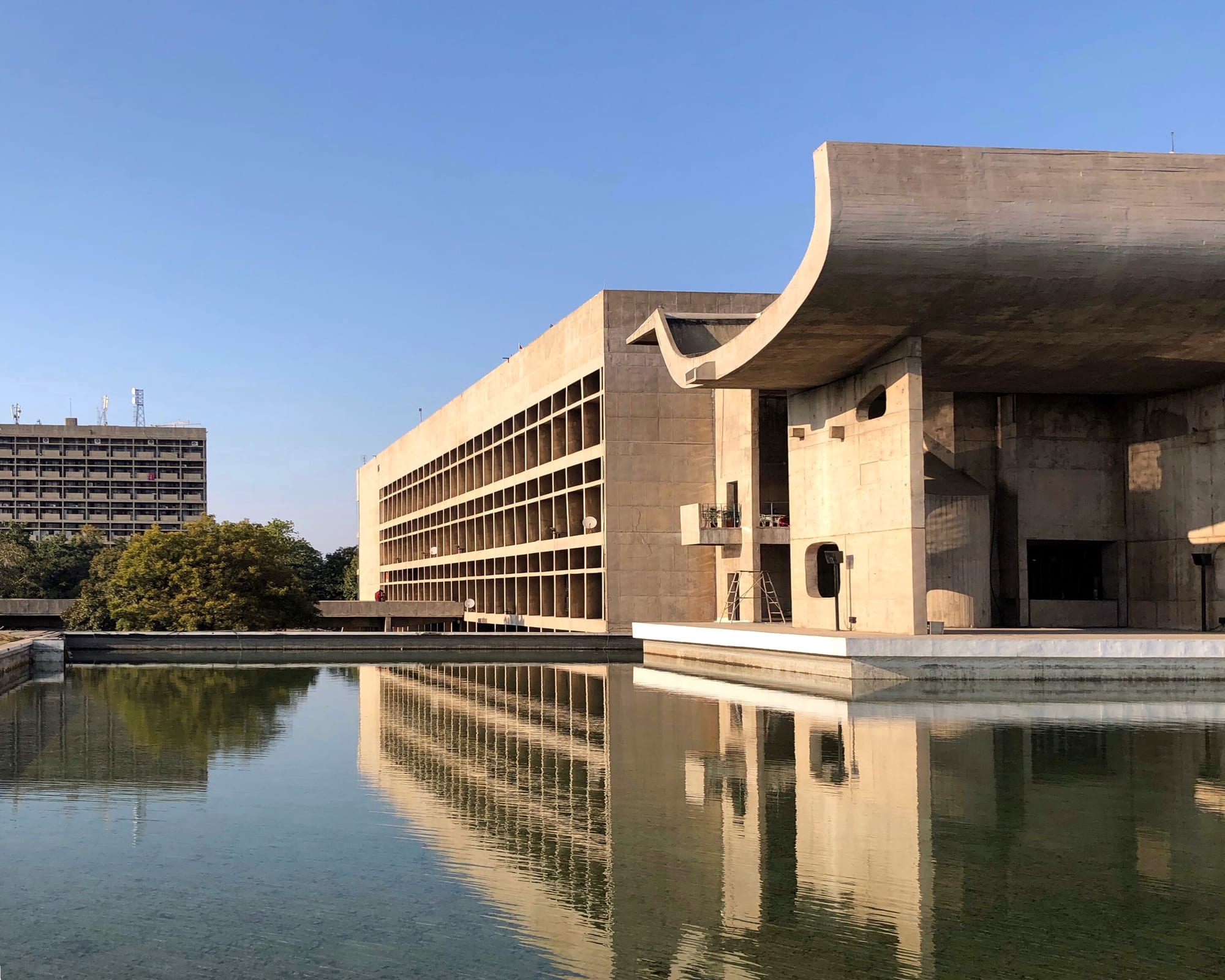
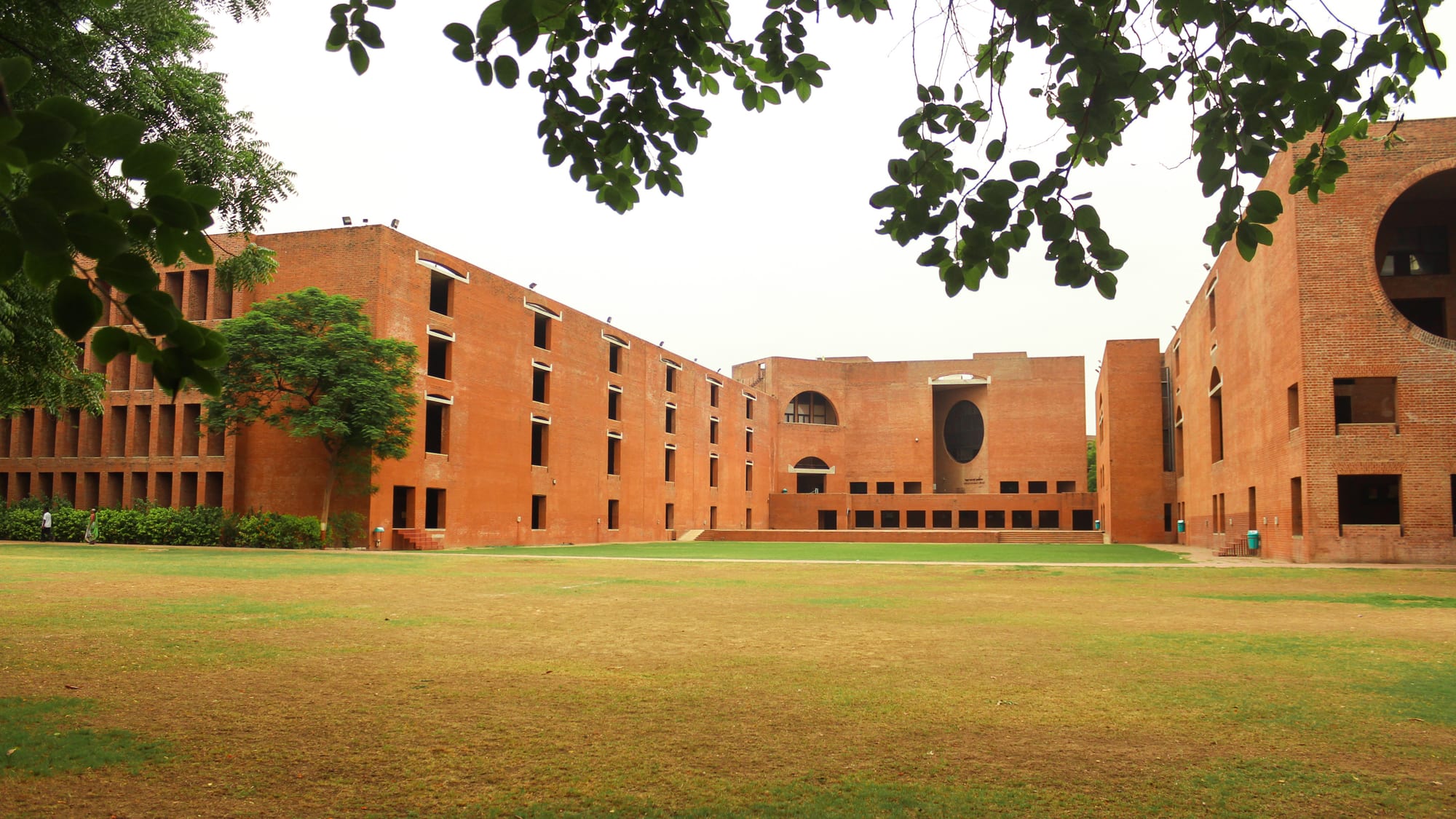
Evaluate the contribution of modern Indian architecture — Chandigarh, Kahn's Ahmedabad, Correa and Doshi.
Assess how technology, ideology and place continue to drive architecture into the sustainable, digital present.
After the International Style
Four responses to a modernism that had grown blank and placeless: Brutalism's raw concrete, Postmodernism's return of history and ornament, High-Tech and Deconstructivism's two very different takes on technology, and Critical Regionalism's call to root architecture in place — the idea that carries straight into today's sustainability.[1, 3]
Raw concrete, honest and heavy
The first postwar direction stayed modern but grew heavy and sculptural. BRUTALISM (from béton brut, 'raw concrete') left concrete unfinished — board-marked, massive, frankly structural — in bold, monumental civic buildings: town halls, universities, arts centres. It grew from Le Corbusier's rough late work (the Unité d'Habitation, 1952) and spread worldwide as a serious, unglamorous architecture of welfare-state institutions. In India its weight and shade suited the climate and the mood of a young nation building in concrete.[1, 2]
The buildings — and India
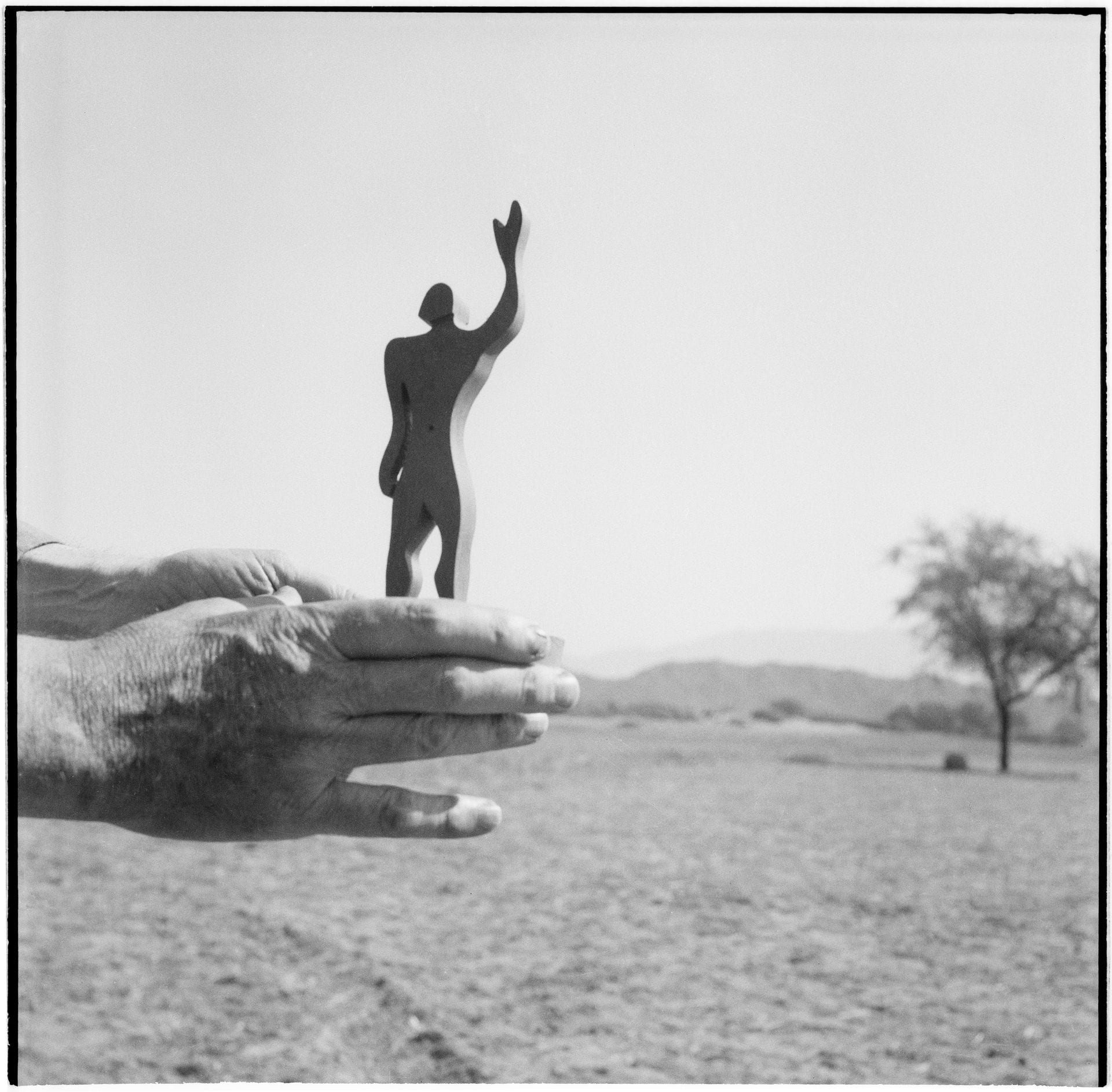
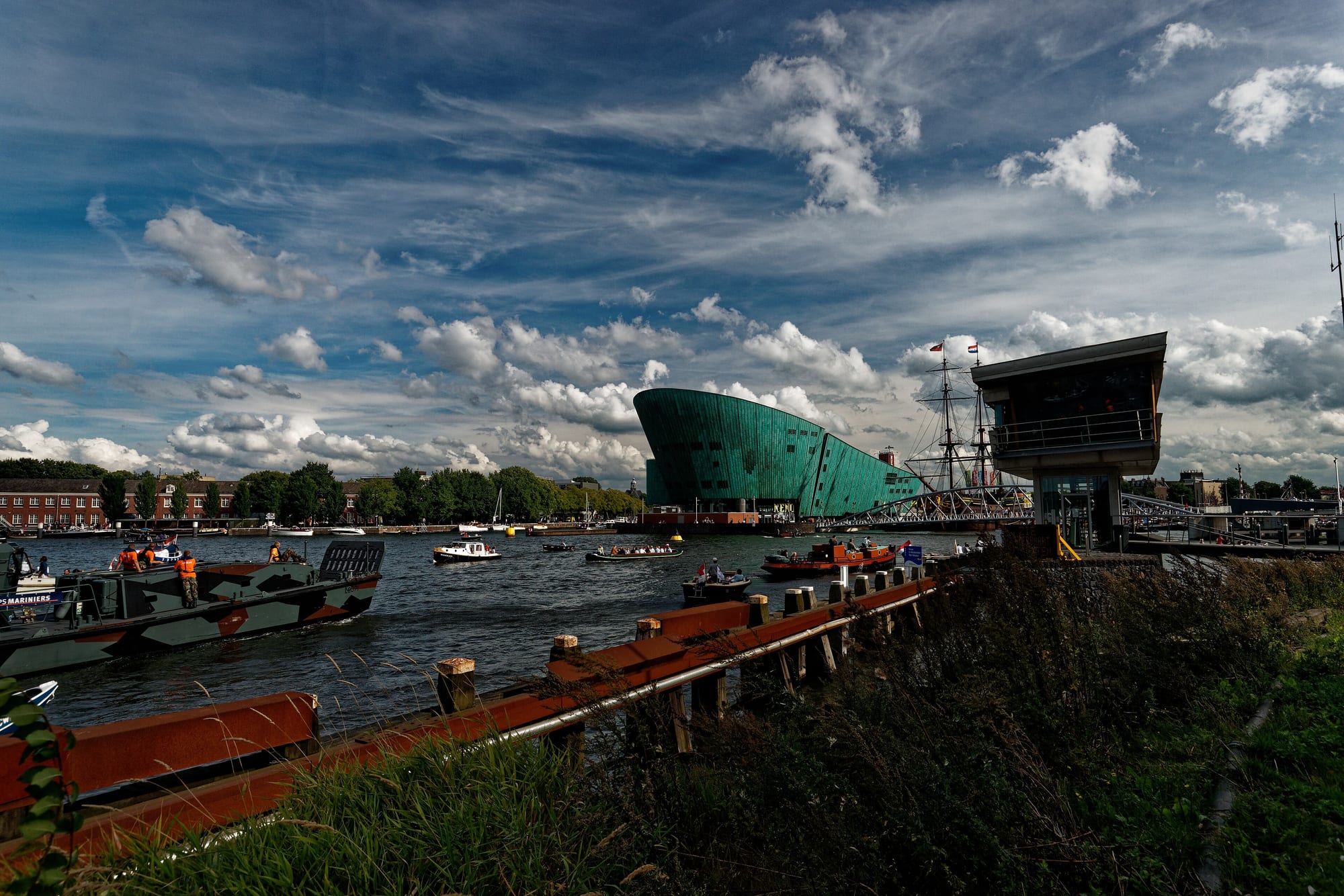
Trace the arc across the world and then home: the Unité and the Pompidou; Postmodern quotation and Gehry's Bilbao; and then modern India — Le Corbusier's Chandigarh, Louis Kahn's IIM Ahmedabad, and the climate-rooted architecture of Charles Correa and B.V. Doshi that made modernism unmistakably Indian.[2, 4]
Concrete and the machine, worldwide
Le Corbusier's Unité d'Habitation in Marseille (1952) — a self-contained concrete slab of flats on massive pilotis — launched Brutalism as a global civic language. A generation later, High-Tech turned the machine inside out: Renzo Piano and Richard Rogers's Pompidou Centre in Paris (1977) hangs its brightly coloured structure, pipes and escalators on the outside, freeing the interior as open, flexible floors. Both are honest about how a building is made — one in raw mass, the other in exposed machinery.[1, 2]
The competing directions
| Aspect | One | The other |
|---|---|---|
| Attitude to the modern box | Brutalism — keep it modern, but heavy and raw in concrete | Postmodernism — reject its blankness; bring back history and ornament |
| Where the structure goes | High-Tech — worn on the outside, celebrated | Deconstructivism — fractured and tilted, computer-built |
| Sameness vs place | International Style — looks the same everywhere | Critical Regionalism — rooted in local climate, light and culture |
| Indian modernism | The masters — Corbusier's Chandigarh, Kahn's Ahmedabad | The Indians — Correa and Doshi, climate and place made modern |
| Today's driver | Sustainability — climate, low energy, low carbon | The digital — parametric design and computational fabrication |
Key terms
Postwar architecture of raw, board-marked exposed concrete (béton brut) — massive, sculptural and frankly structural.
The reaction against the plain modern box — reviving history, ornament, colour, symbolism and wit ('less is a bore').
An architecture that celebrates technology by exposing structure and services, as at the Pompidou Centre.
Fragmented, angular, non-rectangular architecture made buildable by the computer — e.g. Gehry's Bilbao.
Kenneth Frampton's idea of a modern architecture rooted in local place, climate and culture, resisting placelessness.
'Raw concrete' left unfinished with the marks of its formwork — the material and name behind Brutalism.
Charles Correa's device of usable outdoor rooms and sections shaped by the Indian climate — light, shade and ventilation.
Design centred on climate, low energy and low-carbon materials — today's return to climate-rooted building.
Study task
Pick a modern building in your own Indian city — an office, campus, museum or apartment block. Judge it against Critical Regionalism: does it respond to the local sun, shade and ventilation, materials and culture, or could it stand anywhere in the world? Sketch one section and add arrows for sun and air, then suggest one change that would make it more rooted in its place — in the spirit of Correa and Doshi.
Self-assessment
1. Robert Venturi's 'less is a bore' was a reply to —
2. Critical Regionalism argues that good modern architecture should —
3. Which pair correctly matches modern Indian architecture?
Recap
References & further reading
- [1]Kenneth Frampton, Modern Architecture: A Critical History (4th ed.). London: Thames & Hudson, 2007.
- [2]Francis D.K. Ching, Mark Jarzombek & Vikramaditya Prakash, A Global History of Architecture (3rd ed.). Hoboken: John Wiley & Sons, 2017.
- [3]William J.R. Curtis, Modern Architecture Since 1900 (3rd ed.). London: Phaidon, 1996.
- [4]The Capitol Complex, Chandigarh — UNESCO World Heritage Centre (The Architectural Work of Le Corbusier, inscribed 2016). https://whc.unesco.org/en/list/1321/
- [5]Balkrishna Doshi — The Pritzker Architecture Prize, 2018 Laureate. https://www.pritzkerprize.com/laureates/balkrishna-doshi
Further reading
- Kenneth Frampton, Modern Architecture: A Critical History — the postwar and regionalism chapters. Thames & Hudson.
- Jon Lang, A Concise History of Modern Architecture in India. Permanent Black.
- Charles Correa, A Place in the Shade: The New Landscape and Other Essays. Penguin / Hatje Cantz.
Sources gathered and fact-checked June 2026. Published values vary by source, sample and method — treat as indicative and confirm against the cited standard before structural use.
You've reached the end of the course
From Neoclassical reason, through iron, glass and steel, the reform movements and the Modern Movement, to the plural, place-conscious, sustainable architecture of today — that is the modern project, in five units. Revisit any unit's diagrams and quiz to consolidate, and carry one question into studio: how will your own architecture answer its technology, its ideas, and its place?