
Neoclassicism & the Revivals
The Enlightenment trades Baroque theatre for classical reason — and the past becomes a catalogue to build from.
The Baroque had spent a century trying to move you — with curved walls, gold, and theatrical light. Then the Enlightenment arrived and asked a colder question: not does it thrill me, but is it true? Architecture answered by cooling down. It went back to ancient Greece and Rome — newly measured, for the first time, by real archaeology — and rebuilt itself around reason, clear geometry and the correct use of the classical orders. This is Neoclassicism, and the same habit of borrowing from the past would soon fan out into the great nineteenth-century revivals.
Learning objectives
By the end of this lesson, you will be able to — mapped to the course outcomes for History of Architecture IV:
Explain the forces — Enlightenment reason, archaeology and the Grand Tour — that turned architecture from the Baroque to the Neoclassical.
Describe the character of Neoclassical architecture: clear geometry, restraint, and the correct use of the Greek and Roman orders.
Read Neoclassicism across three settings — Soufflot's Panthéon (France), Schinkel's Altes Museum (Germany) and Jefferson's Virginia (USA).
Distinguish Neoclassicism from the parallel Greek, Roman and Gothic revivals, and recognise colonial classicism in India.
The big ideas
Four ideas drive the whole period: reason replacing drama, antiquity re-measured by archaeology and the Grand Tour, the classical orders treated as a strict grammar, and — underneath the calm — two radical undercurrents (the "primitive hut" and the "sublime") that point straight at the modern future.[1, 2]
The Enlightenment cools the Baroque
The Baroque had used curved walls, swirling ornament and theatrical light to move the emotions. As Enlightenment thinkers put reason, clarity and natural law above spectacle, architecture followed: it wanted to look calm, rational and true. The result — Neoclassicism — favours simple geometric masses, flat or lightly modelled walls, and restrained ornament. Where the Baroque persuaded you, the Neoclassical building tries to convince you.[1, 2]
The great examples
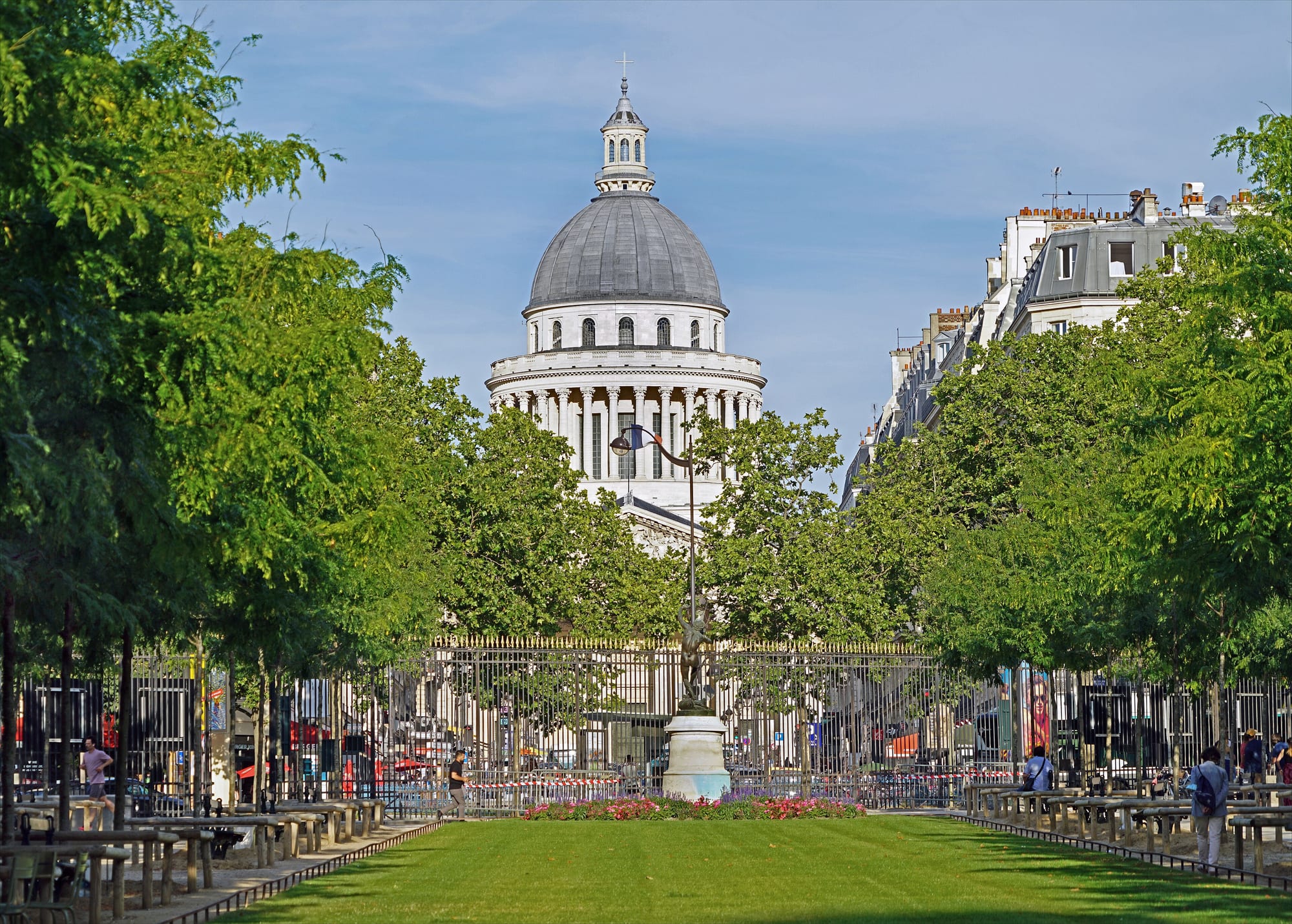
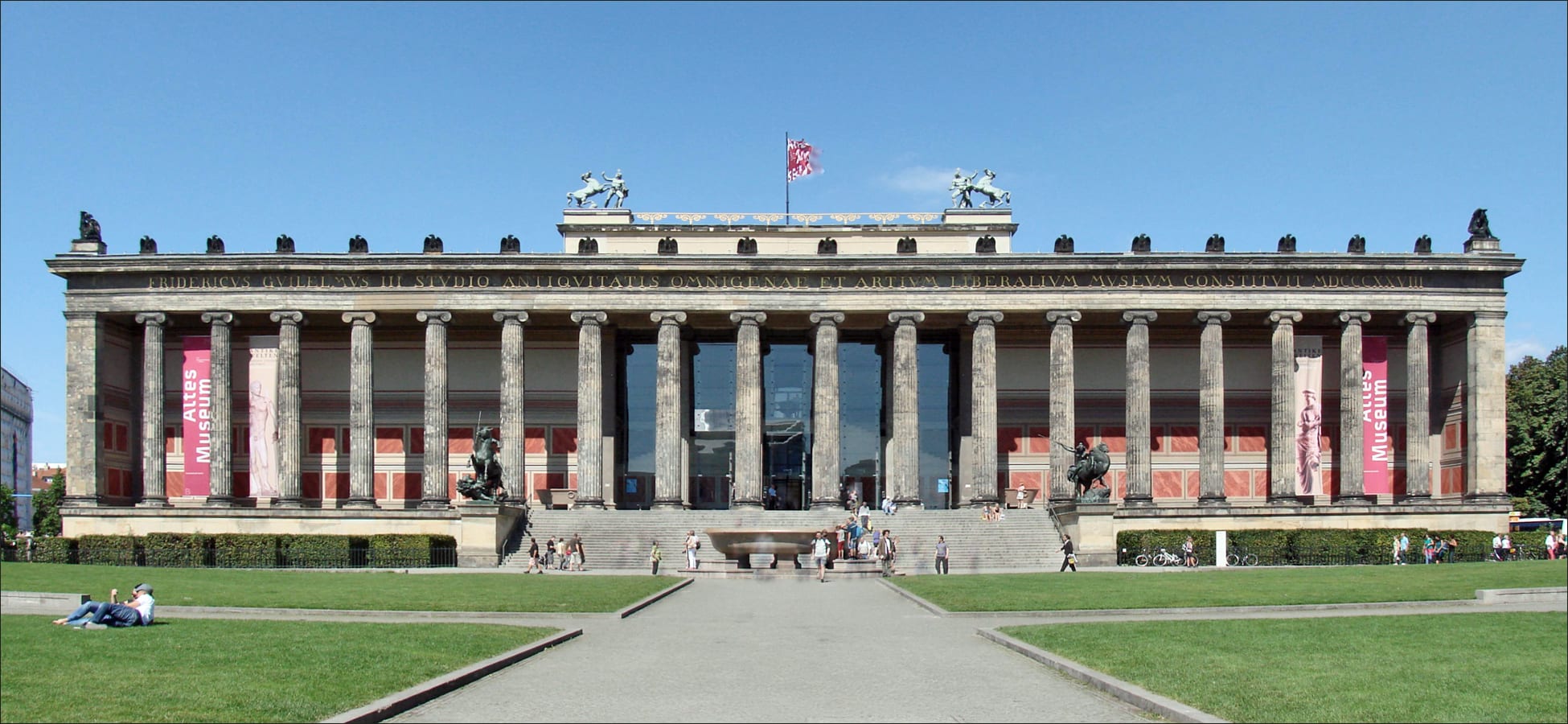
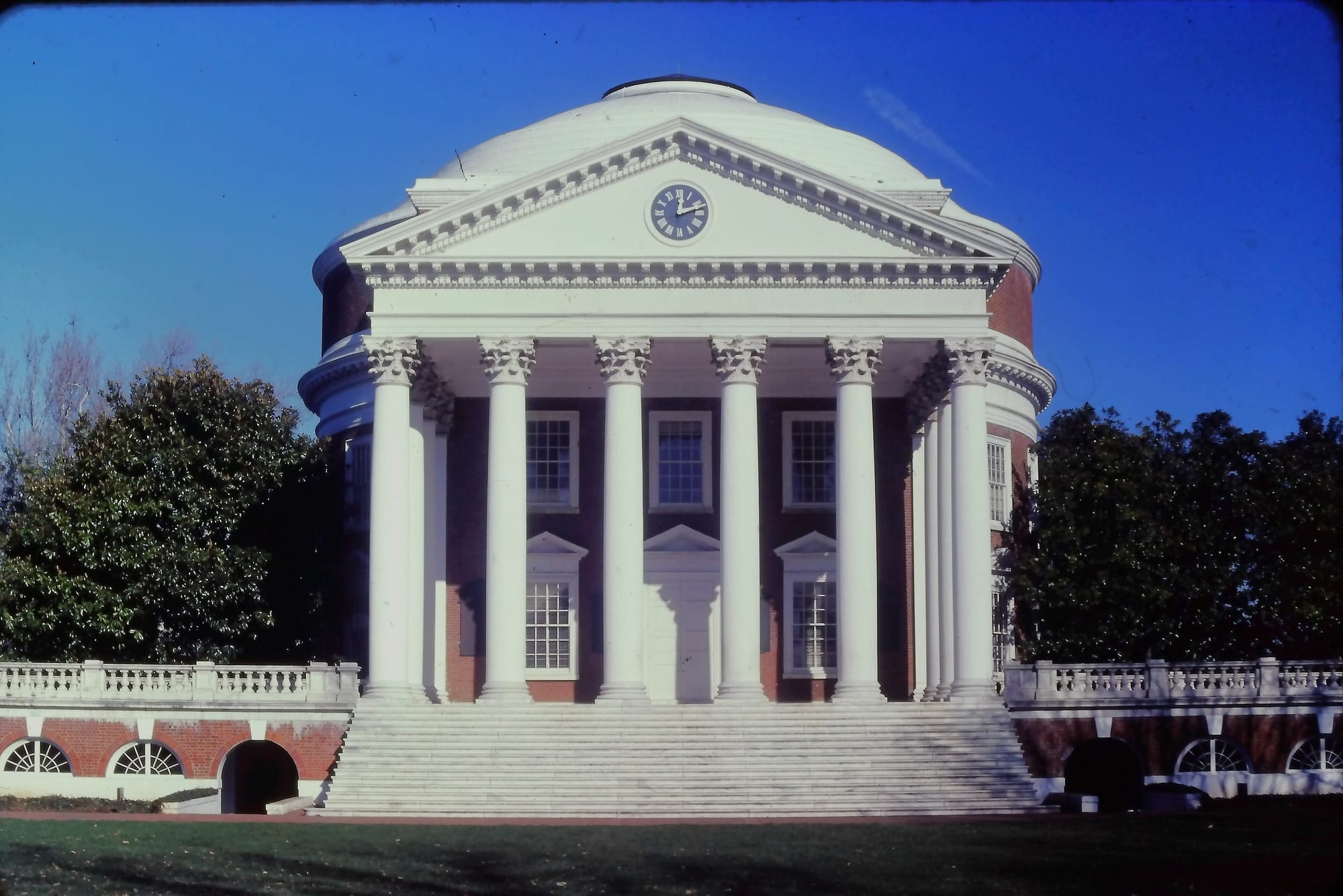
Read Neoclassicism across three settings and then watch it split into the revivals. Soufflot's Panthéon in Paris marries Gothic structural lightness to classical form; Schinkel's Altes Museum in Berlin turns the museum into a secular temple; and Jefferson makes classicism the very language of the new American republic. The same historicist habit then spreads as the Greek, Roman and Gothic revivals — and travels east with empire into the classical façades of British India.[1, 2, 4]
Soufflot's rational church
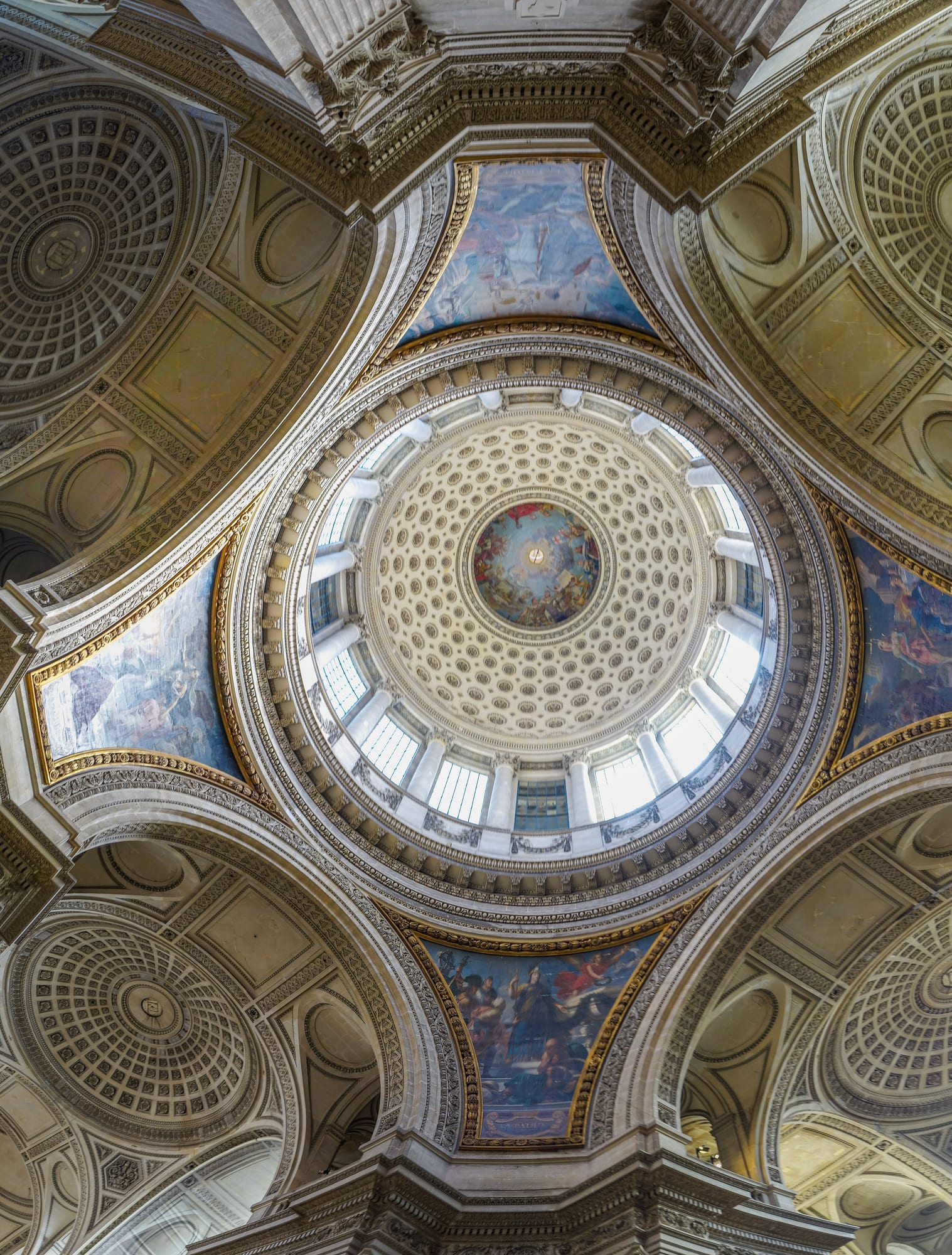
Jacques-Germain Soufflot's Panthéon in Paris (1758–90, first designed as the church of Sainte-Geneviève) is the manifesto building. Its Greek-cross plan carries a great dome on slender clustered piers, and a severe Corinthian portico fronts it — Soufflot's stated aim was to combine the lightness of Gothic structure with the correct forms of classical antiquity. It was a piece of structural daring dressed in classical calm, and it strained the engineering of its day. In the Revolution it was secularised into a mausoleum for the nation's great — hence the name.[1, 4]
Baroque vs Neoclassical
| Aspect | One | The other |
|---|---|---|
| Emotional aim | Baroque — move you with drama, curve and light | Neoclassical — convince you with calm, clarity and reason |
| Massing & wall | Baroque — undulating façades, deep modelling, movement | Neoclassical — simple geometric masses, flat walls, restraint |
| Attitude to the orders | Baroque/Mannerist — orders bent and played with | Neoclassical — orders used correctly, as archaeological fact |
| Source of authority | Neoclassicism — ancient Greece & Rome, newly measured | Gothic Revival — the Christian Middle Ages, held to be more 'honest' |
| Nineteenth-century logic | One 'correct' style | Historicism — style is a choice, matched to a building's meaning |
Key terms
The c. 1750–1850 return to the clarity, geometry and correct orders of ancient Greece and Rome, in reaction to the Baroque and Rococo.
The educational journey through Italy (and Greece) that gave young architects first-hand knowledge of ancient buildings.
The disciplined systems of column and entablature — Doric, Ionic, Corinthian (Greek), plus Tuscan and Composite (Roman) — treated by Neoclassicists as a grammar to be used correctly.
A columned porch with a pediment, fronting the entrance — the signature Neoclassical gesture (as at the Panthéon).
A circular, usually domed hall or building — Schinkel's museum and Jefferson's library both centre on one, echoing the Roman Pantheon.
The nineteenth-century practice of choosing a past style (Greek, Roman, Gothic) to suit a building's purpose and meaning.
The parallel movement (Pugin, Ruskin) that held medieval Gothic to be more honest and Christian than classicism; e.g. the Palace of Westminster.
Laugier's idea that true architecture is honest structure — post, beam and roof — an early ancestor of functionalism.
Study task
Pick one Neoclassical building near you — very often a colonial-era bank, courthouse, town hall or museum in an Indian city centre. Photograph or sketch its front, then label its Neoclassical grammar: the portico, the order of its columns (Doric, Ionic or Corinthian), the pediment, and any dome or rotunda. In two lines, explain which antiquity it borrows from — and why that borrowing suited the building's purpose.
Self-assessment
1. What best explains the shift from Baroque to Neoclassical architecture?
2. Soufflot's Panthéon in Paris is significant because it —
3. Nineteenth-century 'historicism' means that —
Recap
References & further reading
- [1]Banister Fletcher's A History of Architecture (20th ed.), ed. Dan Cruickshank. Oxford: Architectural Press, 1996.
- [2]Francis D.K. Ching, Mark Jarzombek & Vikramaditya Prakash, A Global History of Architecture (3rd ed.). Hoboken: John Wiley & Sons, 2017.
- [3]Spiro Kostof, A History of Architecture: Settings and Rituals (2nd ed.), rev. Gregory Castillo. Oxford University Press, 1995.
- [4]Centre des monuments nationaux — The Panthéon, Paris (official site). https://www.paris-pantheon.fr/en/
- [5]Staatliche Museen zu Berlin — Altes Museum (official site). https://www.smb.museum/en/museums-institutions/altes-museum/
- [6]Monticello and the University of Virginia — UNESCO World Heritage Centre (inscribed 1987). https://whc.unesco.org/en/list/442/
Further reading
- Hugh Honour, Neo-classicism (Style and Civilization). Penguin.
- Nikolaus Pevsner, An Outline of European Architecture. Penguin.
- Kenneth Frampton, Modern Architecture: A Critical History — the opening chapters on Neoclassicism and its aftermath. Thames & Hudson.
Sources gathered and fact-checked June 2026. Published values vary by source, sample and method — treat as indicative and confirm against the cited standard before structural use.
Where this course goes next
Neoclassicism looked backward for its authority. The next unit turns to the force that would break the spell of history altogether — the Industrial Revolution, and the cast iron, plate glass and steel that let buildings span and rise as antiquity never could. Units II–V are in production; this Unit I is the template for the rest.