

Iron, Glass & the Engineer
The Industrial Revolution hands architecture new materials — and the engineer learns to span and rise as antiquity never could.
While architects were still arguing over Greek versus Gothic, a quieter revolution was rewriting what a building could physically do. The Industrial Revolution poured out new materials — cast iron, wrought iron, plate glass, and soon steel and reinforced concrete — and a new kind of designer, the engineer, used them to span and rise as stone never could. The deepest change of all is simple to state: the building's weight moved off the wall and onto a frame — and once that happened, the wall was free to melt into glass.
Learning objectives
By the end of this lesson, you will be able to — mapped to the course outcomes for History of Architecture IV:
Explain how the Industrial Revolution introduced cast iron, wrought iron, plate glass and steel into building.
Describe how each material behaves — what cast iron, wrought iron and steel are good and bad at — and why that matters structurally.
Explain the shift from load-bearing wall to structural frame, and how it freed the wall to become a curtain of glass.
Read the engineer's architecture through the Crystal Palace, the train sheds, the Eiffel Tower and the Chicago skyscraper.
The materials & the big idea
Start with the metals. Cast iron and wrought iron do opposite jobs; steel does both and does them better; glass and prefabrication bring lightness and speed. But the idea that matters most is structural — the shift from a wall that carries the building to a frame that carries it, leaving the wall to become a thin curtain.[1, 2]
Two irons, two jobs
The first two industrial metals behave very differently. CAST IRON is poured into moulds — cheap, strong in compression, easily made into decorative columns, but brittle and weak in tension (it snaps rather than bends). WROUGHT IRON is worked/rolled — tough, strong in tension, good for beams and ties. Early iron buildings used cast-iron columns to carry loads down and wrought-iron beams and trusses to span across. Getting the right iron in the right place was the whole engineering art.[1, 2]
The engineer's architecture
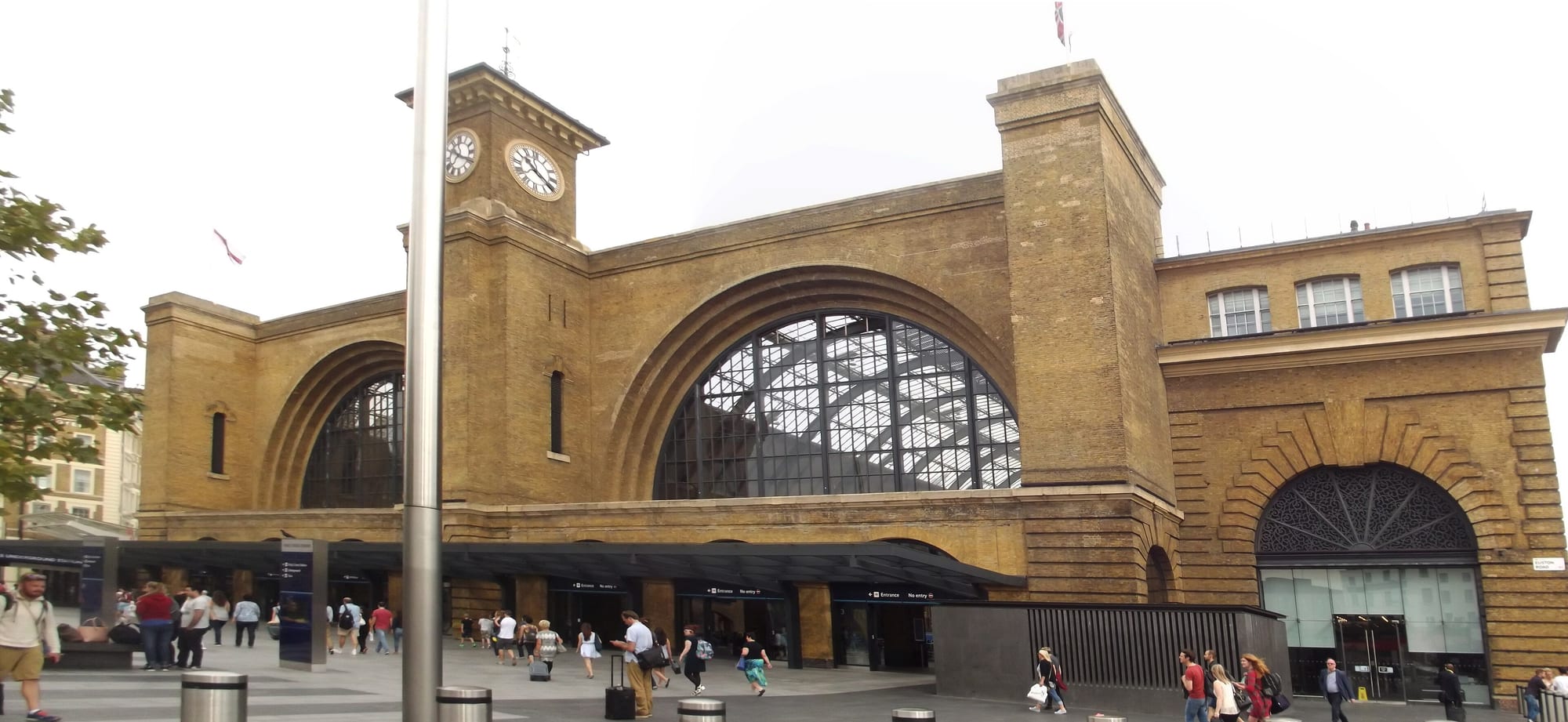
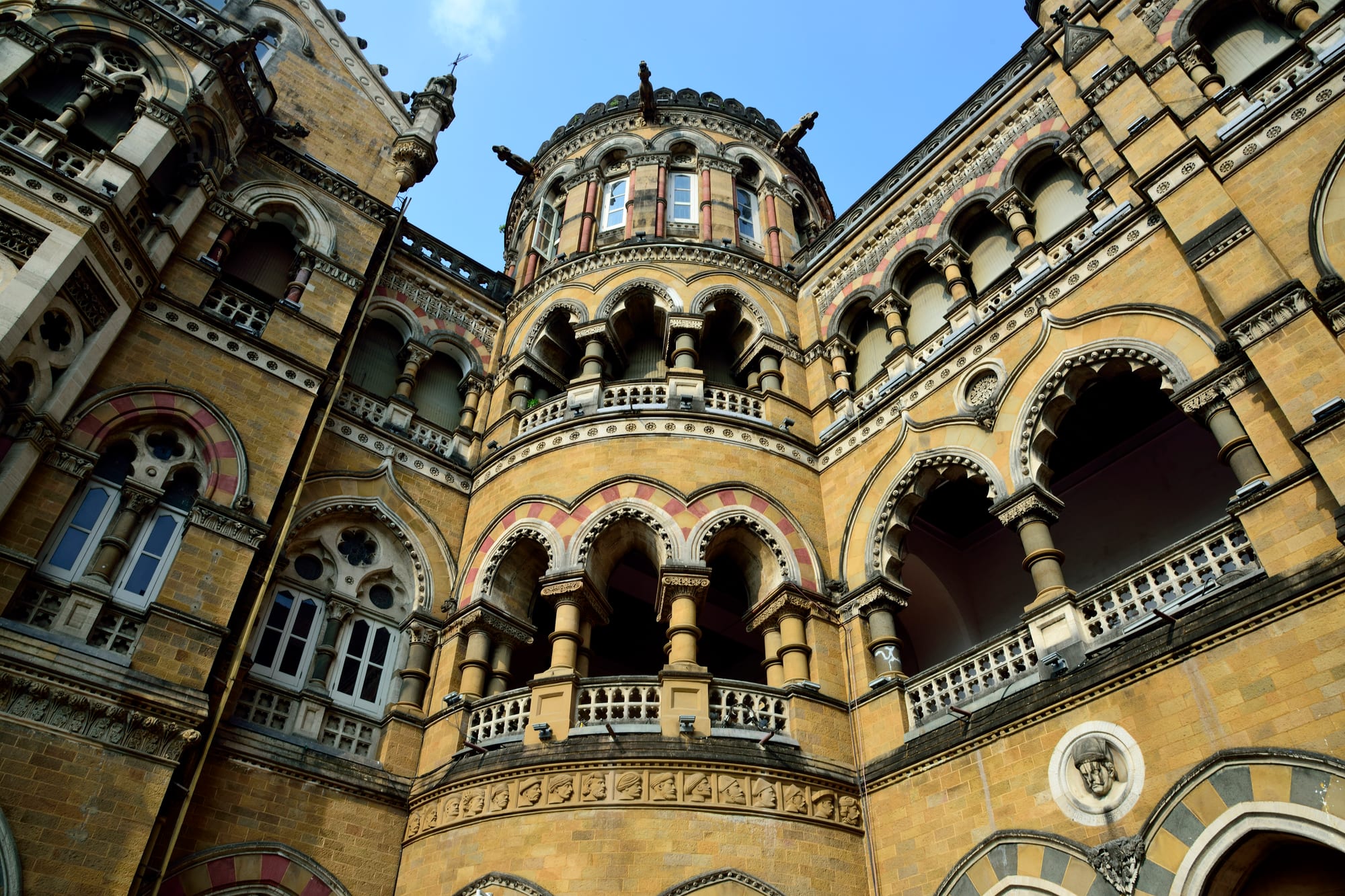
Now watch the idea built. Paxton's Crystal Palace makes a whole hall from a repeating factory-made kit; the train sheds and Eiffel's tower show structure becoming the architecture itself; and in Chicago the steel frame and the elevator give birth to the skyscraper. India's railway stations bring it all to the subcontinent — the engineer's shed inside the architect's stone skin.[1, 2, 5]
A building as a kit
Joseph Paxton's Crystal Palace, built in London's Hyde Park for the Great Exhibition of 1851, was the shock of the new. A greenhouse-builder, not a trained architect, Paxton designed a vast hall of cast-iron columns, wrought-iron trusses and nearly a million square feet of glass — prefabricated as standard modules and assembled in months, then dismantled and moved. It enclosed living trees. It had almost no 'style'. It proved that iron, glass and mass-production could make architecture the academies had never imagined.[1, 3]
Wall vs frame
| Aspect | One | The other |
|---|---|---|
| What carries the load | Old way — the masonry wall carries the building | New way — a steel/iron frame carries it; the wall only carries itself |
| Cast vs wrought iron | Cast iron — strong in compression, brittle; good for columns | Wrought iron — strong in tension, tough; good for beams and trusses |
| Consequence for the wall | Load-bearing wall — thick, small windows, limited height | Curtain wall — thin skin of glass, big windows, great height |
| Who designed it | The architect — style, the historicist stone façade | The engineer — structure, the iron-and-glass shed behind |
| Enabler of height | Steel frame — a rigid tall skeleton | Safe passenger elevator — makes the upper floors usable |
Key terms
Iron poured into moulds — strong in compression, cheap, but brittle and weak in tension; used for columns and decorative work.
Worked/rolled iron — tough and strong in tension; used for beams, ties and trusses before steel.
An iron–carbon alloy, strong in both compression and tension and reliably uniform; the material of the tall framed building.
Concrete cast around steel bars — concrete takes the compression, steel the tension; the other great modern structural material (from c. 1900).
A rigid skeleton (iron or steel) that carries all the building's loads, so the outer wall no longer has to.
A thin, non-load-bearing outer skin — often glass — hung on the frame; it carries only its own weight.
Making standardised building parts in a factory and assembling them on site — pioneered at the Crystal Palace.
A tall, multi-storey framed building, born in 1880s Chicago from the steel frame plus the safe passenger elevator.
Study task
Find a colonial-era railway station, market hall or bridge in an Indian city and look for its iron. Sketch or note where the cast-iron columns and wrought-iron or steel trusses are, and where the roof becomes glass. In two lines, say which parts are "the engineer's building" (structure) and which are "the architect's building" (the styled façade) — and where the wall has stopped carrying load.
Self-assessment
1. Why were cast iron and wrought iron used for different parts of a building?
2. The single most important structural idea in this unit is —
3. The birth of the skyscraper in 1880s Chicago required two inventions —
Recap
References & further reading
- [1]Banister Fletcher's A History of Architecture (20th ed.), ed. Dan Cruickshank. Oxford: Architectural Press, 1996.
- [2]Francis D.K. Ching, Mark Jarzombek & Vikramaditya Prakash, A Global History of Architecture (3rd ed.). Hoboken: John Wiley & Sons, 2017.
- [3]Kenneth Frampton, Modern Architecture: A Critical History (4th ed.). London: Thames & Hudson, 2007.
- [4]Société d'Exploitation de la Tour Eiffel — The Eiffel Tower (official site). https://www.toureiffel.paris/en
- [5]Spiro Kostof, A History of Architecture: Settings and Rituals (2nd ed.), rev. Gregory Castillo. Oxford University Press, 1995.
Further reading
- Sigfried Giedion, Space, Time and Architecture. Harvard University Press.
- Kenneth Frampton, Modern Architecture: A Critical History — the chapters on iron, industry and the Chicago frame. Thames & Hudson.
- Rowland Mainstone, Developments in Structural Form. Architectural Press.
Sources gathered and fact-checked June 2026. Published values vary by source, sample and method — treat as indicative and confirm against the cited standard before structural use.
Where this course goes next
The engineers had the new materials — but their raw iron sheds horrified many who still wanted architecture to mean beauty and craft. Unit III is the reaction: the Arts and Crafts movement, the flowering of Art Nouveau, and the Chicago School's search for an honest style for the tall building — the ideas that carry us to the threshold of the Modern Movement.