
Baroque
Movement, drama and gilded grandeur — St Paul's, Versailles and the Winter Palace.
Where the Renaissance was calm and balanced, the Baroque (c. 1600–1750) wanted to move you. It set architecture in motion — curved and undulating façades, the oval plan, theatrical light and illusionistic ceilings — and fused architecture, sculpture and painting into one overwhelming effect, in the service of the Counter-Reformation Church and the absolutist State. This final unit reads its elements through three monuments: Wren's St Paul's, Louis XIV's Versailles, and Rastrelli's Winter Palace.
Learning objectives
By the end of this lesson, you will be able to — mapped to the course outcomes for History of Architecture III:
Describe the defining features and elements of Baroque architecture — movement, drama, the oval plan and the union of the arts.
Explain the structure of St Paul's triple-shell dome and why it was so ingenious.
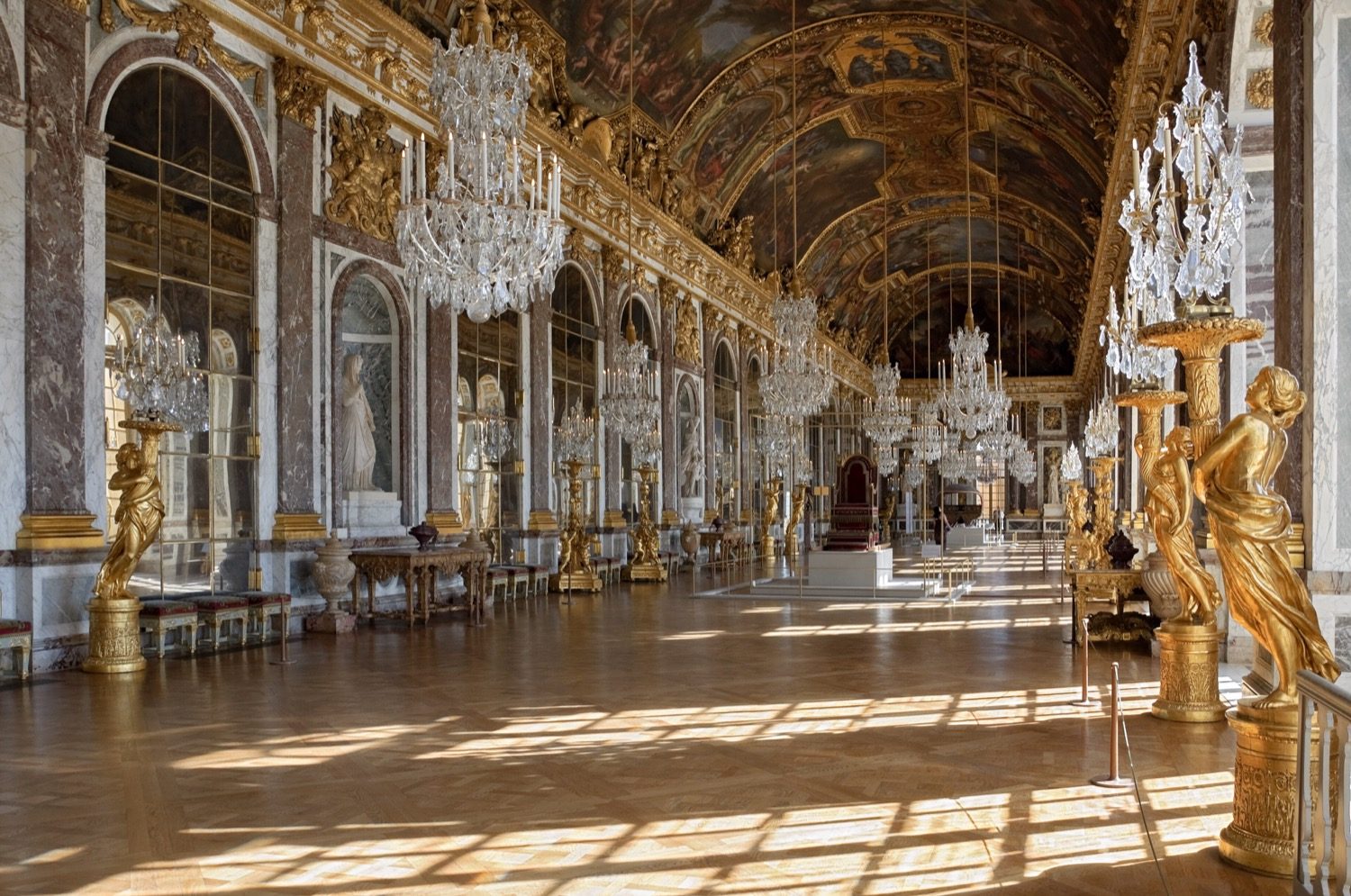
Analyse Versailles and the Hall of Mirrors as the architecture of absolutism.
Compare English, French and Russian Baroque through St Paul's, Versailles and the Winter Palace.
The features of Baroque
Baroque is fundamentally about movement and drama — undulating walls, the oval plan, directed light and illusion — not merely ornament. It served faith and power alike.[1, 2]
Architecture in motion
Where the Renaissance was calm, static and balanced, the Baroque is dynamic and theatrical — it wants to move you. Curved and undulating (concave–convex) façades, the oval plan and oval dome, sweeping axial vistas and grand scale all set the building in motion. Baroque is fundamentally about movement and drama, not merely ornament.[1, 2]
St Paul's, Versailles and the Winter Palace
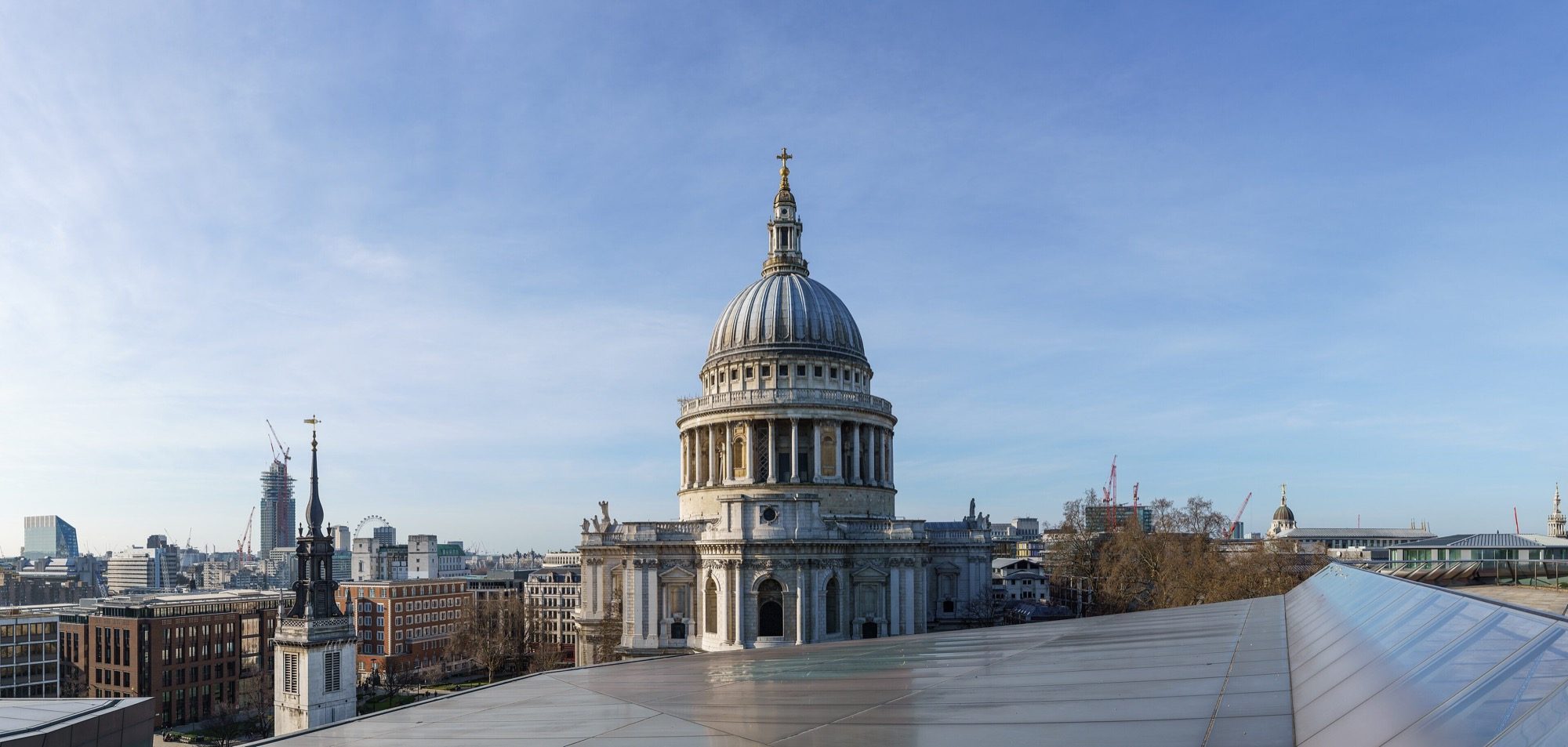
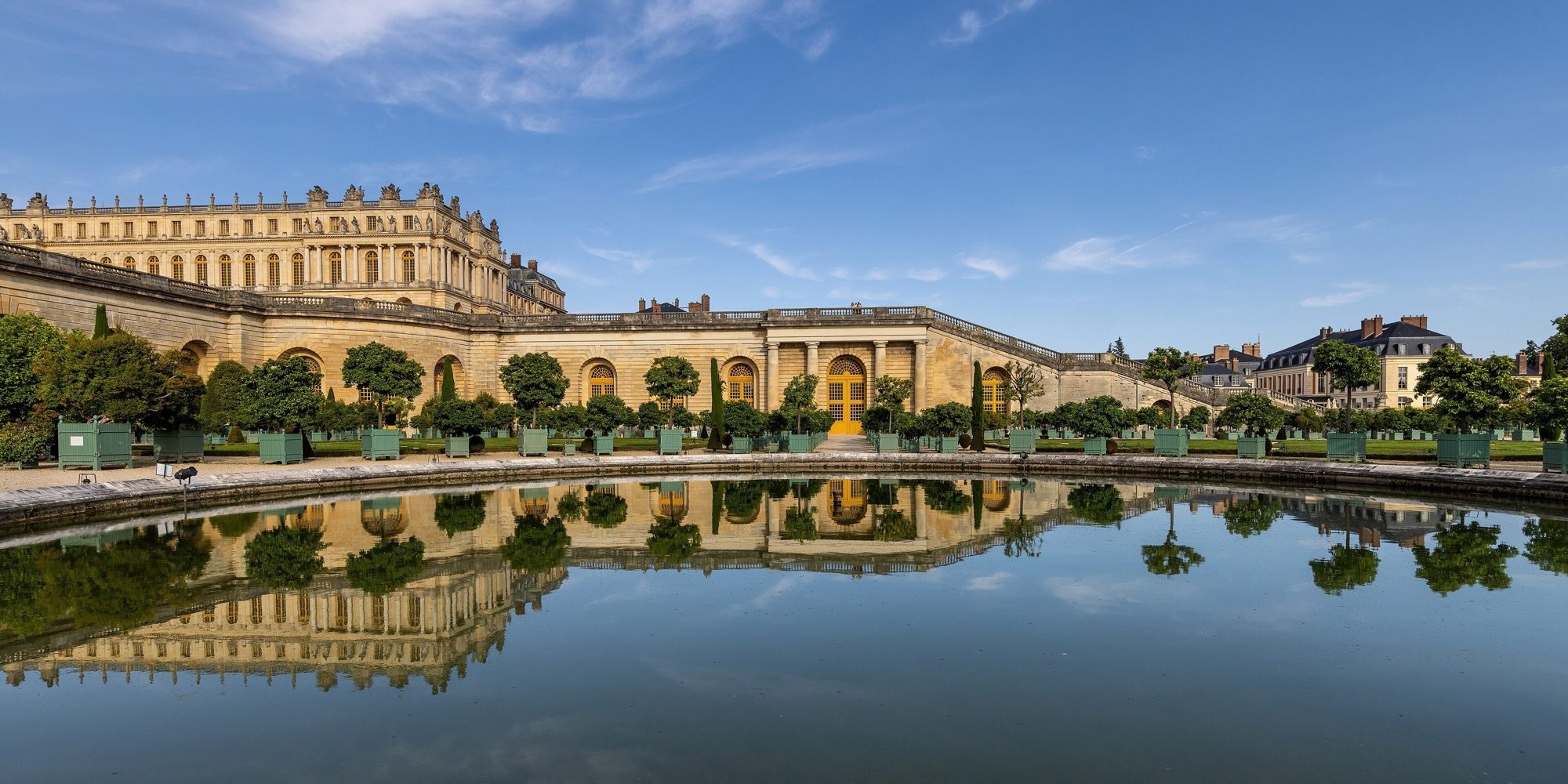
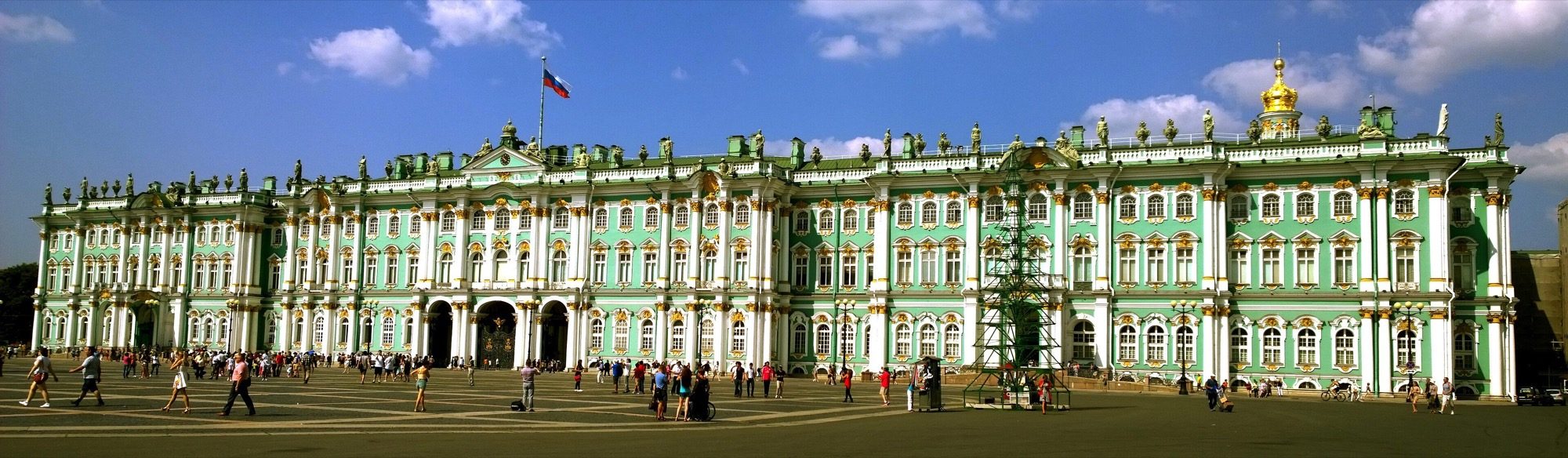
Three buildings carry the style across Europe: the ingenious triple-shell dome of St Paul's (English Baroque restraint), the axial grandeur of Versailles with its Hall of Mirrors (French Classical Baroque), and the gilded flamboyance of the Winter Palace(Russian Baroque).[3, 4]
The triple-shell dome
Wren's St Paul's (1675–1710) is English Baroque. Its dome is a structural masterpiece in three shells: an outer timber-and-lead dome for the skyline silhouette, a hidden internal brick cone that actually carries the stone lantern's weight, and an inner masonry dome seen from within — rising to 365 ft (111 m), framed by twin Baroque west towers.[4, 5]
At a glance
| Aspect | One | The other |
|---|---|---|
| Versus the Renaissance | Renaissance: calm, static, balanced, repeated units | Baroque: dynamic, dramatic, moving, theatrical |
| Two national flavours | Italian Baroque: exuberant curves, undulating walls (Bernini, Borromini) | French Classical Baroque: grandeur disciplined by classical order (Versailles) |
| Two great domes | St Paul's: ingenious triple shell on a colonnaded drum, 111 m | St Peter's: double-shell masonry — the precedent St Paul's rivalled |
| Three Baroque realms | England (St Paul's): tempered, classical-leaning drama | France & Russia (Versailles, Winter Palace): courtly grandeur, gilded display |
Key terms
The dramatic 17th–18th-c. style of movement, emotion and grandeur — not merely 'ornate'.
Illusionistic ceiling painting that extends real architecture into fictive painted space.
'Deceive the eye' — painting so realistic it appears three-dimensional.
An elongated-circle plan giving directional movement and drama — a Baroque hallmark.
A wall of alternating concave and convex curves, creating rippling movement.
A dome of three layers — outer timber-lead shell, hidden brick cone, inner masonry dome (St Paul's).
A suite of rooms whose aligned doorways form a single axial vista, typical of Baroque palaces.
'Total work of art' — the Baroque fusion of architecture, sculpture and painting.
Study task
Draw a section through the dome of St Paul's and label its three shells, noting which one actually carries the stone lantern. Then in two lines explain why “Baroque just means ornate” is wrong, and name the team — not the single architect — behind Versailles.
Self-assessment
1. The dome of St Paul's Cathedral is structurally notable because it is —
2. Who designed the Hall of Mirrors at Versailles?
3. The Winter Palace in Saint Petersburg was designed by —
Recap
References & further reading
- [1]Francis D.K. Ching, Mark Jarzombek & Vikramaditya Prakash, A Global History of Architecture (3rd ed.). Wiley, 2017.
- [2]Spiro Kostof, A History of Architecture: Settings and Rituals (2nd ed.). Oxford University Press, 1995.
- [3]Banister Fletcher's A History of Architecture (20th ed.). Architectural Press, 1996.
- [4]St Paul's Cathedral, London — official site. https://www.stpauls.co.uk/
- [5]Christopher Wren and the building of St Paul's — Encyclopædia Britannica. https://www.britannica.com/biography/Christopher-Wren
- [6]The Hall of Mirrors — Château de Versailles (official site). https://en.chateauversailles.fr/discover/estate/palace/hall-mirrors
- [7]Winter Palace / State Hermitage Museum — Encyclopædia Britannica. https://www.britannica.com/place/Winter-Palace
- [8]Historic Centre of Saint Petersburg — UNESCO World Heritage Centre. https://whc.unesco.org/en/list/540/
Further reading
- Banister Fletcher's A History of Architecture — the Baroque chapters.
- Rolf Toman (ed.), Baroque: Architecture, Sculpture, Painting. Könemann / h.f.ullmann.
- John Summerson, Architecture in Britain 1530–1830 — for Wren and English Baroque.
Sources gathered and fact-checked June 2026. Published values vary by source, sample and method — treat as indicative and confirm against the cited standard before structural use.
Continue the series
The Baroque is where this course ends — but the story doesn't. Next comes the modern project: Neoclassicism's return to reason, the iron and glass of the Industrial Revolution, and the Modern Movement of the Bauhaus and Le Corbusier.
Continue to History of Architecture IVThe author
Amogh N P
Architect, interior designer, and creative polymath. Studio Matrx began in his notebooks — his vision of design made honest, useful, and open to everyone. Its Academy is written and taught in his memory, and free, forever.
More about Amogh →