
Italian Renaissance
Antiquity reborn in Florence — proportion, the orders, perspective, and Brunelleschi's dome.
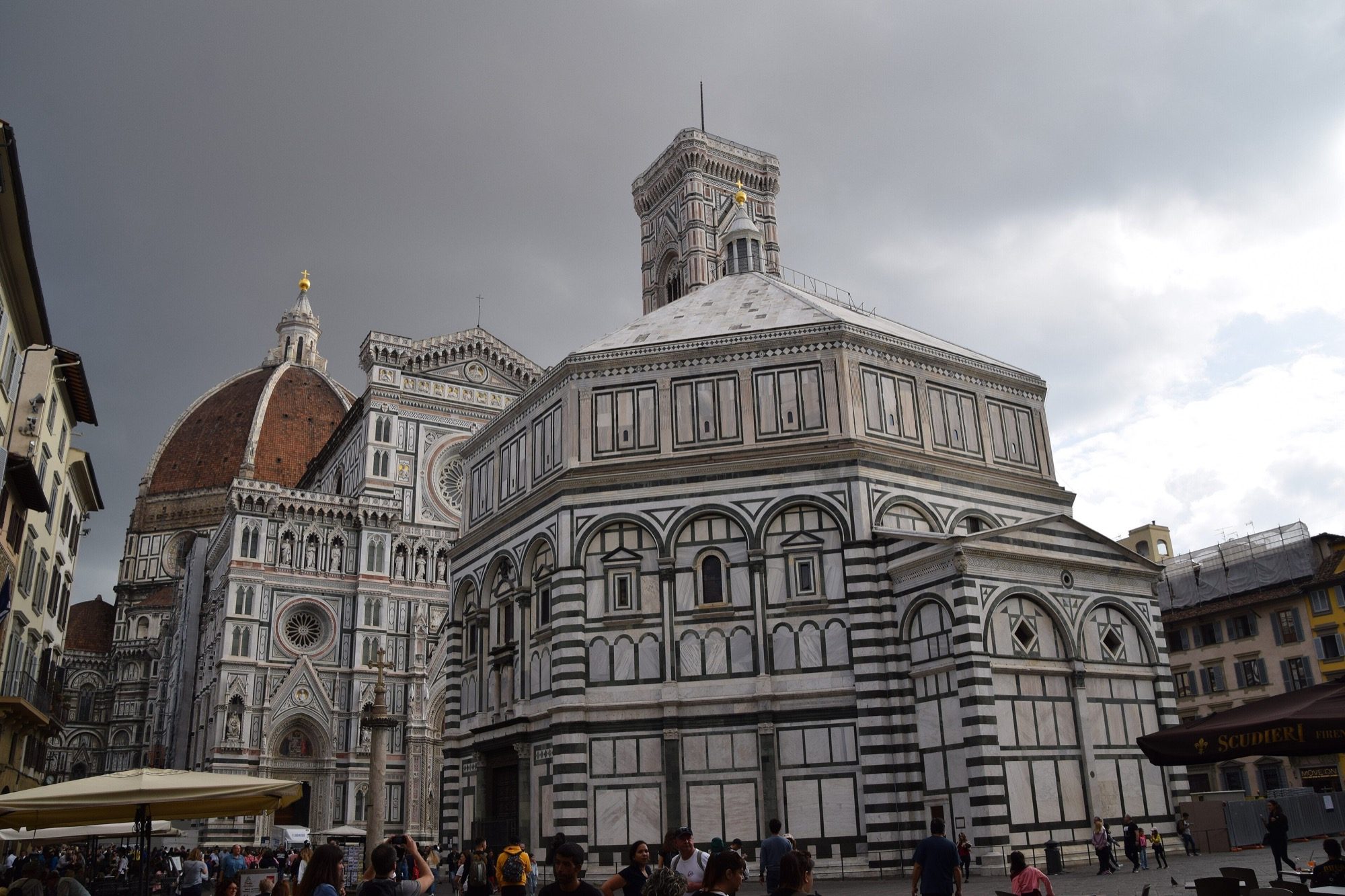
In fifteenth-century Florence, architects turned their backs on the Gothic and looked instead to the ruins of Rome. The Renaissance — a self-conscious “rebirth” of classical antiquity — put the orders, proportion, symmetry and the new science of perspective back at the centre of building. It unfolds in three phases: Early (Brunelleschi and Alberti, in Florence), High (Bramante, in Rome) and Late or Mannerist (Michelangelo and Palladio). At its heart stands one impossible object — Brunelleschi's dome.
Learning objectives
By the end of this lesson, you will be able to — mapped to the course outcomes for History of Architecture III:
Explain what the Renaissance revived — antiquity, the orders, proportion and linear perspective.
Distinguish the Early, High and Late (Mannerist) phases and place the key buildings in each.
Explain why Brunelleschi's dome of Florence was an engineering breakthrough.
Compare the contributions of Brunelleschi, Alberti, Bramante, Michelangelo and Palladio.
The three phases
The Renaissance is best held as a sequence: Early Renaissance clarity in Florence, High Renaissance gravity in Rome, and the rule-bending tension of the Late Renaissance and Mannerism.[1, 2] Each phase has its monuments and its masters.
Florence, the 15th century
A self-conscious rebirth (rinascita) of Greco-Roman antiquity, centred on Florence and driven by humanism — the return to the classical orders, mathematical proportion and symmetry. Brunelleschi rediscovered linear (one-point) perspective by experiment (c. 1413–20). The key works: his dome of Florence Cathedral, the Pazzi Chapel and San Lorenzo, and Alberti's Sant'Andrea at Mantua.[1, 2]
The dome of Florence
Brunelleschi roofed Florence Cathedral with an octagonal double-shell dome raised without a full timber centering — impossible to span such a void — by laying brick in a self-supporting herringbone pattern and binding it with hidden chains. Its profile is pointed, not a hemisphere, and it remains the largest masonry dome ever built.[2, 6]
The masters and their motifs
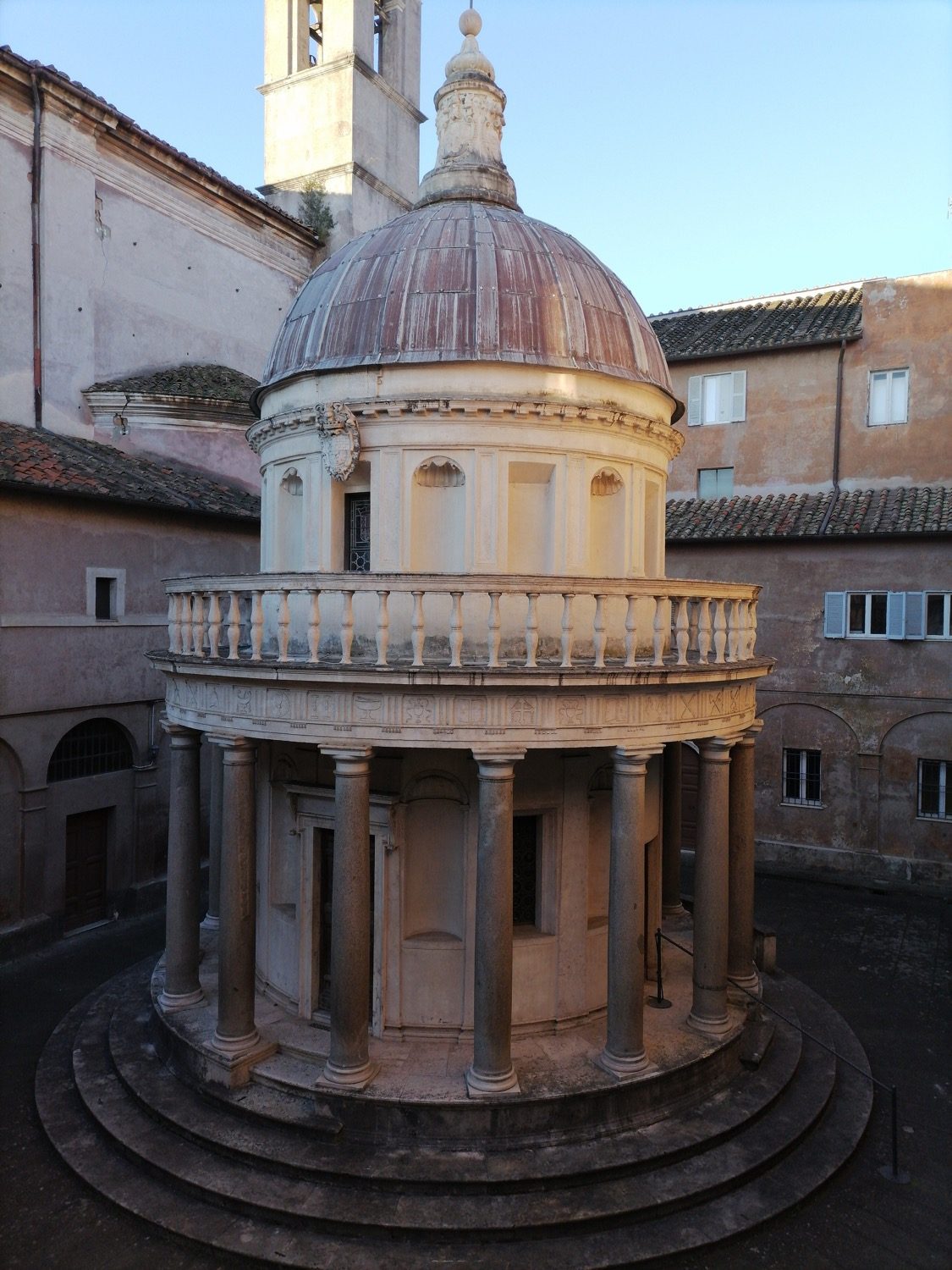
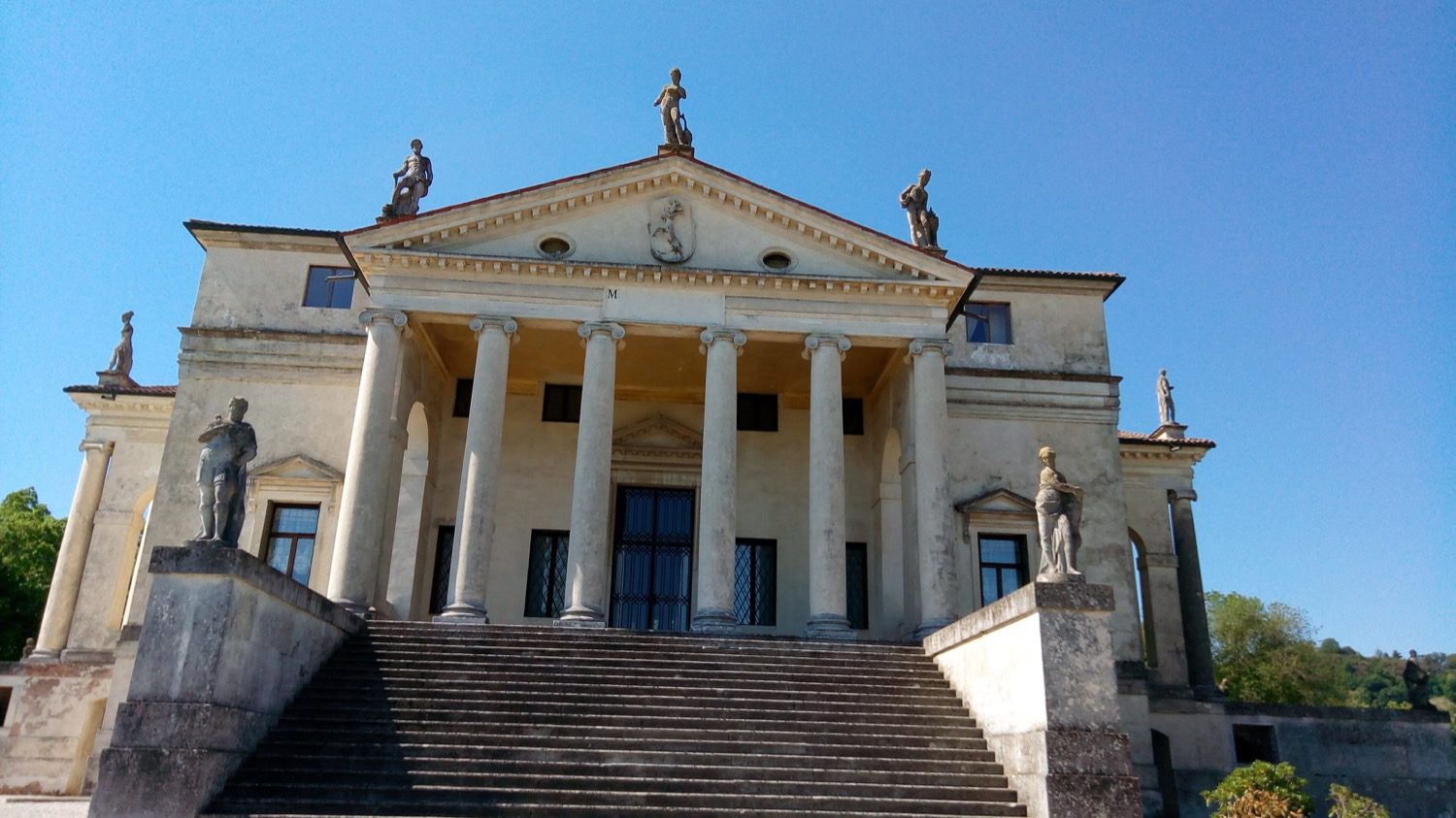
Two ideas run through the era: the giant order applied to a triumphal-arch façade (Alberti's Sant'Andrea) and the perfectly symmetrical centralized plan(Bramante's Tempietto, Palladio's Villa La Rotonda).[1, 3]
The dome of Florence (1420–36)
Filippo Brunelleschi raised the octagonal double-shell dome of Santa Maria del Fiore without a full timber centering — impossible to span such a void — by laying brick in a self-supporting herringbone pattern and binding the structure with embedded stone-and-iron chains. Its profile is pointed (quinto acuto), NOT a hemisphere. It remains the largest masonry dome ever built.[2, 6]
At a glance
| Aspect | One | The other |
|---|---|---|
| Period mood | Early Renaissance: planar, slender, intellectual (Florence) | High Renaissance: grave, monumental, archaeological (Rome) |
| Two temperaments | Brunelleschi: serene geometry, flat planes | Michelangelo: sculptural, muscular, rule-breaking (Mannerism) |
| Versus the Middle Ages | Gothic: structure shown — pointed arch, flyers | Renaissance: structure hidden behind classical order & proportion |
| Two centralized icons | Bramante's Tempietto — a commemorative round temple | Palladio's La Rotonda — an inhabited domed villa |
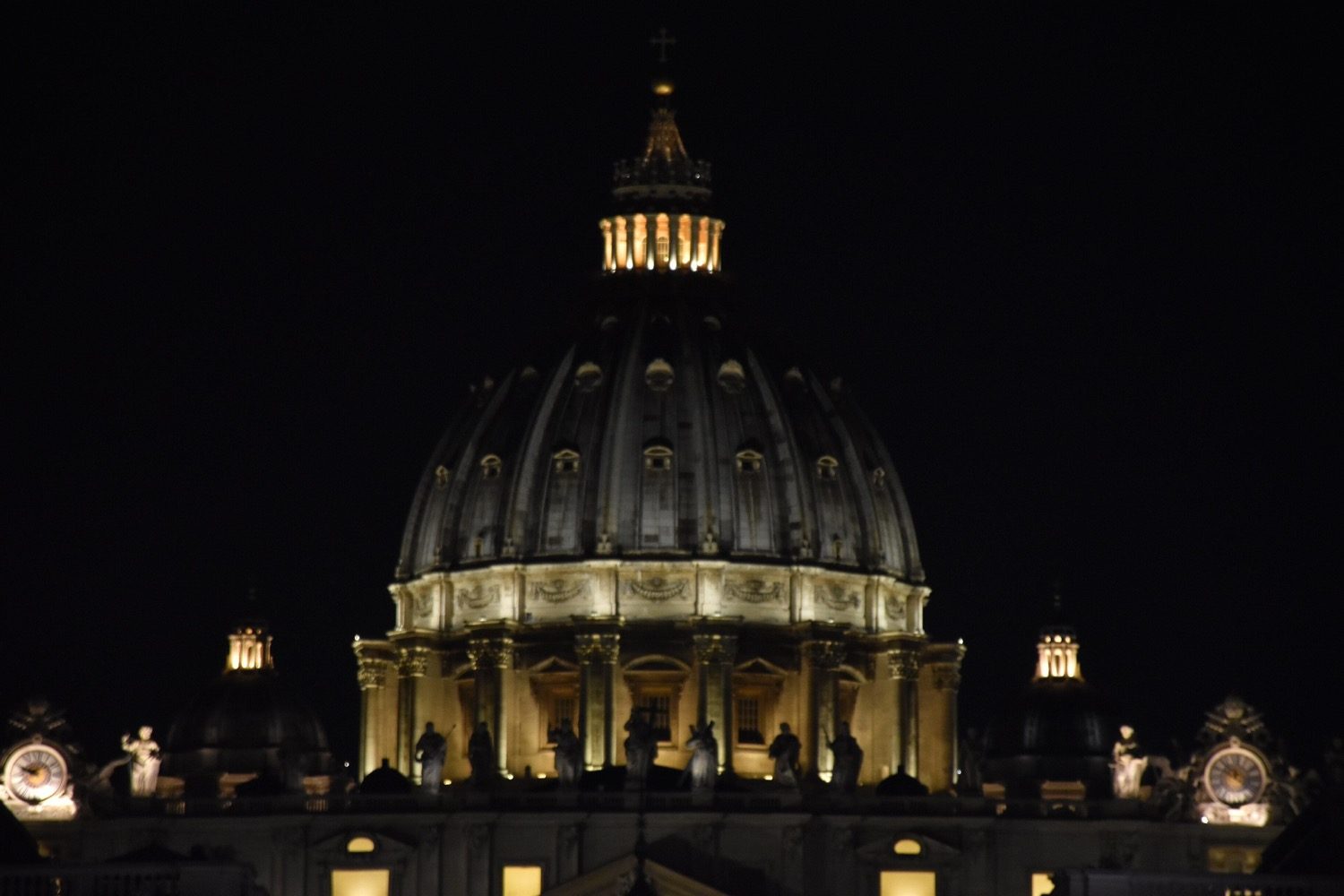
| Two great domes | Florence (Brunelleschi): brick double-shell octagon, no centering | St Peter's (della Porta after Michelangelo): round, drum-mounted |
Key terms
A column or pilaster order rising through two or more storeys to unify a façade.
A flat, rectangular column projecting slightly from a wall — articulation, not structure.
The triangular (or segmental) gable above an entablature, from the Greek temple front.
Masonry with deeply recessed joints and rough blocks, used on palace ground floors.
The cylindrical wall, often windowed, that raises a dome above the roofline.
The small turret crowning a dome, admitting light at the apex.
A plan organised about a central point — circle, Greek cross, polygon — not a long axis.
A geometric system using a vanishing point to render depth on a flat surface.
Study task
Draw a section through Brunelleschi's dome showing the two shells, and add a one-line note on each of the three tricks that let it stand without centering. Then explain in two lines why it is wrong to call it a hemisphere — and why it must not be confused with the dome of St Peter's.
Self-assessment
1. What made Brunelleschi's dome of Florence an engineering breakthrough?
2. Which small Roman building is the emblem of the High Renaissance?
3. Who actually built the dome of St Peter's after Michelangelo's death in 1564?
Recap
References & further reading
- [1]Banister Fletcher's A History of Architecture (20th ed.). Architectural Press, 1996.
- [2]Francis D.K. Ching, Mark Jarzombek & Vikramaditya Prakash, A Global History of Architecture (3rd ed.). Wiley, 2017.
- [3]Spiro Kostof, A History of Architecture: Settings and Rituals (2nd ed.). Oxford University Press, 1995.
- [4]Santa Maria delle Grazie & Leonardo's Last Supper — UNESCO World Heritage Centre (inscribed 1980). https://whc.unesco.org/en/list/93/
- [5]City of Vicenza and the Palladian Villas of the Veneto — UNESCO World Heritage Centre. https://whc.unesco.org/en/list/712/
- [6]Smarthistory — Brunelleschi, Dome of the Cathedral of Florence. https://smarthistory.org/brunelleschi-dome-of-the-cathedral-of-florence/
Further reading
- Banister Fletcher's A History of Architecture — the Renaissance chapters.
- Andrea Palladio, The Four Books of Architecture (I Quattro Libri, 1570) — the source treatise.
- Marvin Trachtenberg & Isabelle Hyman, Architecture: From Prehistory to Postmodernity (2nd ed.). Prentice Hall, 2002.
Sources gathered and fact-checked June 2026. Published values vary by source, sample and method — treat as indicative and confirm against the cited standard before structural use.
The author
Amogh N P
Architect, interior designer, and creative polymath. Studio Matrx began in his notebooks — his vision of design made honest, useful, and open to everyone. Its Academy is written and taught in his memory, and free, forever.
More about Amogh →