
B.Arch CurriculumFree, forever
A tribute to Amogh N P
Evolution of Interiors I
How did the room get to be the way it is? This is the history of the interior — space, furniture, ornament and how people actually lived — from the ancient world to the threshold of the modern, as a world survey with the Indian tradition woven throughout. You move from the animal-leg chairs of Egypt and the reclining dining of Greece and Rome, through the gold-ground mosaics of Byzantium and the sparse travelling furniture of the medieval hall, to the classical revival of the Renaissance, the grandeur of Baroque Versailles and the intimate comfort of the Rococo salon, and finally the disciplined return to antiquity in Neoclassicism — set beside the magnificent, wholly distinct floor-based interior of Mughal and Rajput India, the parchin kari and the courtyard haveli. It is taught honestly: interiors survive worse than facades, so you learn the evidence and its gaps, not just the conclusions. This is Part I; the deep Indian and modern story follows in Part II.
Course byAmogh N P· Architect & interior designer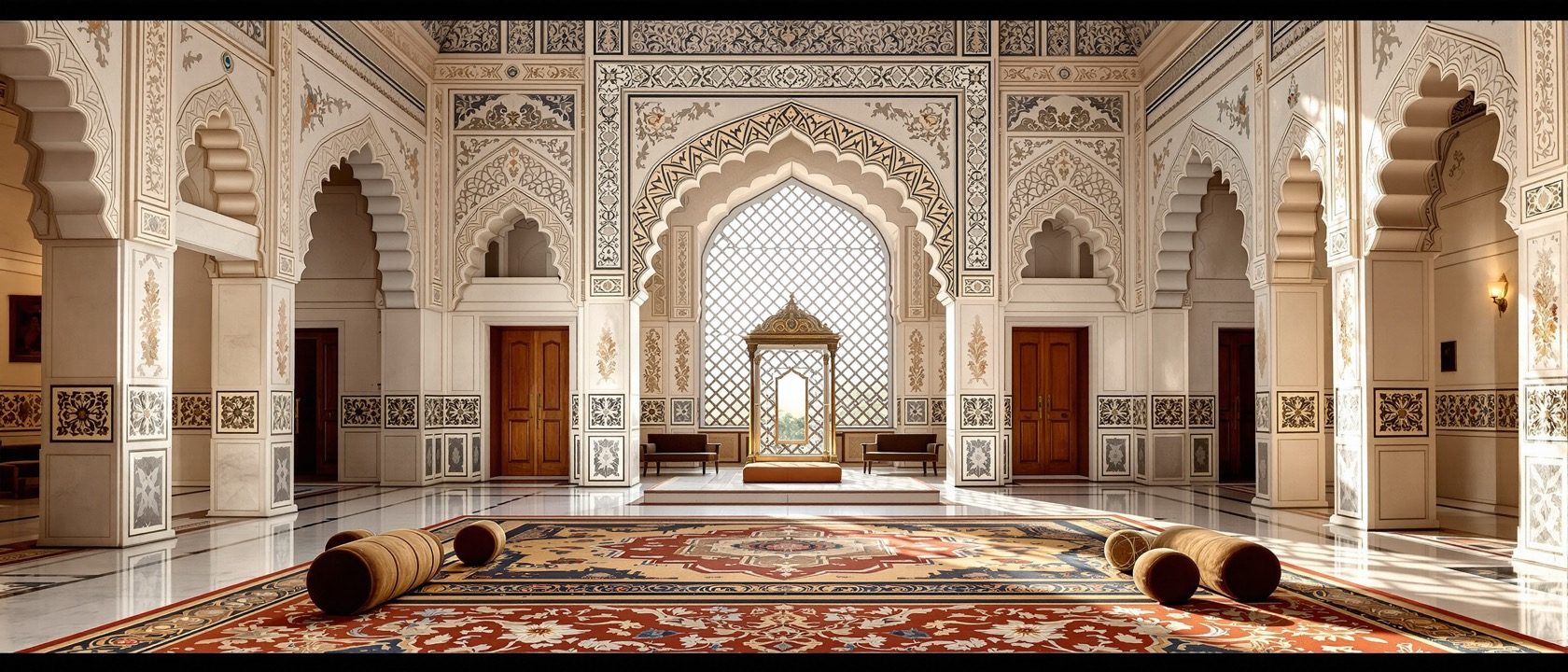
The syllabus
5 units · 5 liveA history course opening the second year — Part I of two. All 5 units are live as full interactive lessons, each with original zoomable period diagrams, a self-assessment quiz and a study task, and the Indian tradition woven throughout.
Unit 1 — The Ancient World
LiveThe earliest interiors we can reconstruct — Egyptian furniture (animal-leg chairs, stools, chests, headrests) preserved by a funerary culture, in ebony, ivory and gilding; Mesopotamia and the reclining banquet; the Indus Valley / Harappan courtyard house with its standardised brick and drainage (furniture inferred, not survived); Greek interiors — the megaron, the andron and symposium, the klinē couch and the klismos chair; and the Roman domus and insula — atrium, peristyle, triclinium and cubiculum, the Four Pompeian wall-painting styles, mosaic and the hypocaust.
Unit 2 — Medieval & Gothic
LiveByzantine interiors of glass mosaic on a gold ground and marble revetment (Hagia Sophia, Ravenna) that dissolve the wall into light; the medieval Great Hall — central hearth, dais, trestle tables, benches and the chest as primary furniture, tapestries for warmth and status; Romanesque to Gothic, where the pointed arch opens the wall to stained glass and coloured light, with linenfold panelling and the buffet; and the early Indian thread — the painted rock-cut interiors of Ajanta and Ellora, the temple sanctum sequence, and the floor-based domestic tradition (takht, charpai, bolsters).
Unit 3 — The Renaissance
LiveThe interior reconceived around classical antiquity, proportion and harmony — the palazzo and its cortile, coffered ceilings and the revived orders; the named furniture (the cassone marriage chest, the cassapanca chest-bench, the sgabello and the X-frame Savonarola and Dantesca chairs), the intarsia-clad studiolo, fresco and the grottesche ornament revived from Nero's buried Golden House; and the spread north — Fontainebleau and strapwork, and the bold carved oak of the Elizabethan and Jacobean interior, the great chamber, the court cupboard and the four-poster tester bed.
Unit 4 — Baroque & Rococo
LiveThe age of the decorated interior — Baroque grandeur, drama and illusion at Versailles (the Hall of Mirrors, Le Brun, the ceremonial state bedchamber, marble and ormolu, Boulle marquetry), with the restrained Dutch bourgeois interior of Vermeer and Delft tiles as counterpoint; then Rococo intimacy and asymmetry — the salon and hôtel particulier, the rocaille and boiserie, the comfort revolution of the fauteuil and bergère, the commode, chinoiserie and porcelain; and the English 18th century, Palladian and Georgian, and the cabinetmakers led by Chippendale and his Director.
Unit 5 — Neoclassical & Mughal India
LiveNeoclassicism — the disciplined reaction to Rococo, fired by the excavation of Pompeii and Herculaneum; Robert Adam's total integrated interiors and the 'Adam style', the Louis XVI style, Wedgwood Jasperware, and the revived Greek klismos closing the Western circle. Set beside a consolidated look at the parallel Indian interior — Mughal garden-connected pavilions and the diwan, floor seating on carpets and masnad bolsters, the jharokha and jali, parchin kari (pietra dura) and shish mahal mirror-work; Rajput palace murals; and the courtyard haveli as a domestic interior system — the bridge to Evolution of Interiors II.
Course outcomes
What you will be able to doTrace the interior, furniture and ornament of the ancient world (Egypt, Greece, Rome) and the Indus thread.
Describe Byzantine, medieval and Gothic interiors and the early Indian rock-cut and floor-based tradition.
Analyse the Renaissance interior and its named furniture, ornament and northern spread.
Distinguish Baroque, the Dutch interior and Rococo, and the great cabinetmakers.
Evaluate Neoclassicism and the parallel Mughal, Rajput and haveli interior tradition.
Explain how interiors are reconstructed from uneven evidence, and read style through furniture and ornament.
The author
Amogh N P
Architect, interior designer, and creative polymath. Studio Matrx began in his notebooks — his vision of design made honest, useful, and open to everyone. Its Academy is written and taught in his memory, and free, forever.
More about Amogh →How did the room get to be the way it is?
From the animal-leg chairs of Egypt and the reclining dining of Rome to Gothic light, the Renaissance cassone, Versailles, the Rococo bergère and Adam's total interior — set beside the Mughal diwan and the courtyard haveli. Read the five units, try the explorers, then test yourself.
The curriculum is free, forever