
B.Arch CurriculumFree, forever
A tribute to Amogh N P
Design of Structures I
How to size reinforced-concrete members by the Limit State Method of IS 456:2000. Five design problems an architect must understand — footings, columns, beams, slabs and the dog-legged staircase — each with the governing formula, a worked example and a live calculator you can drive. The calculation layer between why structures stand (Concept of Building Structures) and how RCC is detailed (Building Materials & Construction II).
Course byAmogh N P· Architect & interior designer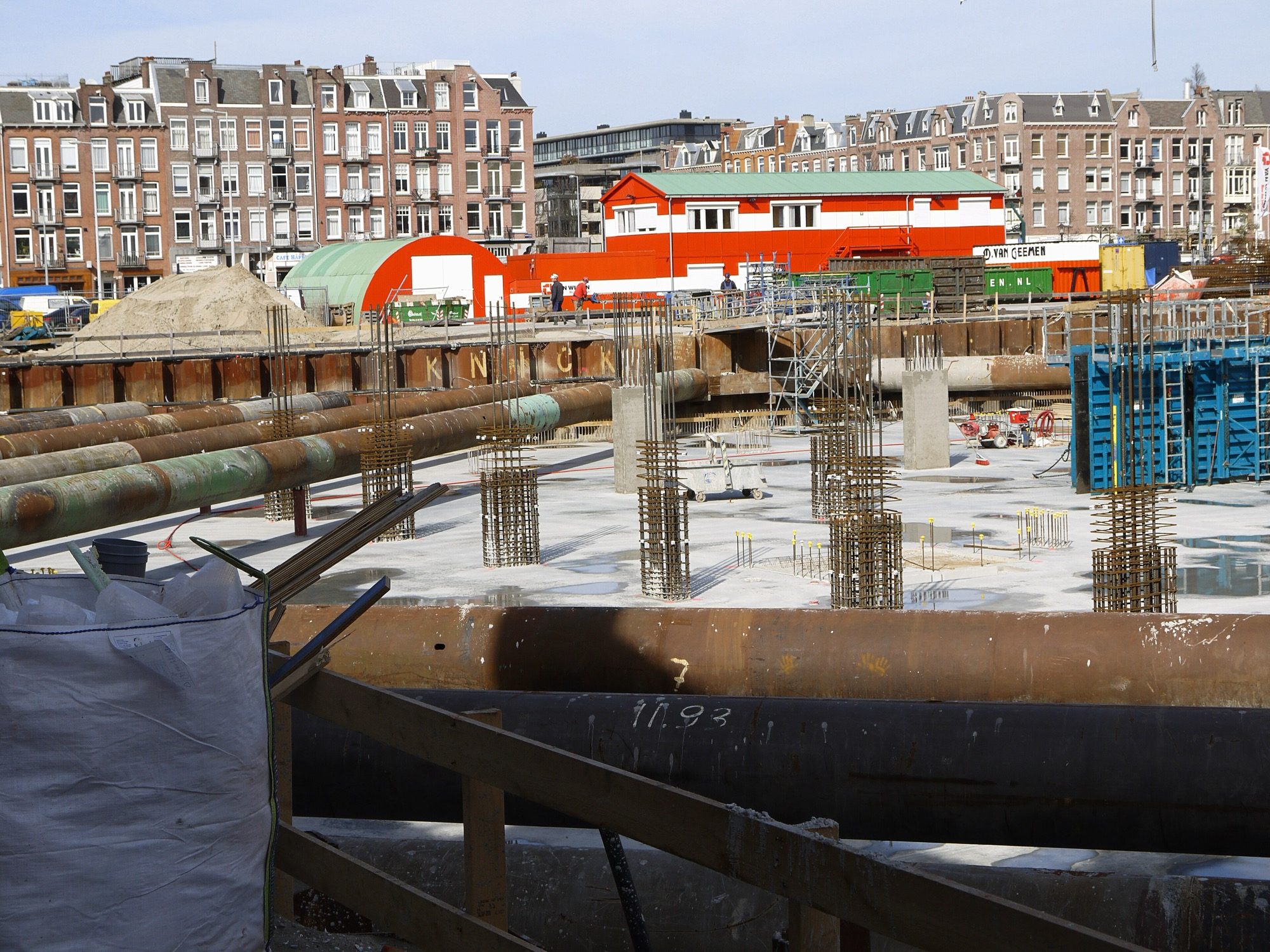
The syllabus
5 units · 5 liveTranscribed from the official B.Arch syllabus. All 5 units are live as full interactive lessons — each with original diagrams, a worked example, a live calculator and a self-assessment quiz.
Unit 1 — Design of Footings
LiveTypes of foundations — shallow (isolated, combined, strip, raft) and deep (pile). The limit-state design of an isolated axially-loaded rectangular footing: sizing the plan area from the safe bearing capacity, one-way and two-way (punching) shear, and bending reinforcement.
Unit 2 — Design of Columns
LiveTypes of columns — by shape, by reinforcement (tied and spiral), by slenderness (short and long) and by loading. The design of a short axially-loaded rectangular, square and circular column, with reinforcement limits and the minimum-eccentricity condition.
Unit 3 — Design of Beams
LiveTypes of beams — simply supported and continuous, singly and doubly reinforced. The limit-state stress block, the limiting moment of resistance, and the design of a rectangular beam for flexure.
Unit 4 — Design of Slabs
LiveTypes of slabs — one-way and two-way, simply supported. Behaviour and load paths, the span/depth control on thickness, and the design of a one-way slab for flexure with main and distribution steel.
Unit 5 — Design of Staircases
LiveTypes of staircases — straight, dog-legged, open-well, spiral. The comfort rules of riser and tread, the geometry of a dog-legged stair, the loads on the inclined waist slab, and its design.
Course outcomes
What you will be able to doDescribe and design various types of footings, including shallow and deep foundations, and size an isolated footing.
Design different types of columns — axially loaded rectangular, square and circular short columns.
Apply limit-state design to beams — singly and doubly reinforced, simply supported and continuous.
Design one-way and two-way slabs and understand their behaviour and applications.
Design a dog-legged staircase and understand its structural requirements.
Design basic structural elements and validate concepts through worked examples and calculators.
Image credits
Verified Commons / Public-DomainEvery photograph is a verified Creative-Commons or Public-Domain work from Wikimedia Commons, used with attribution. The hand-drawn diagrams are original Studio Matrx work.
- Chantier de construction du complexe associatif multifonctions à Antony 07 — Lionel Allorge, CC BY-SA 3.0
- Foundations and support column rebar (90c329fd-155d-451f-67e4-2cf8bfc03738) — National Park Service, Public domain
- Building construction Moira Close Broadwater Farm Haringey 2025 29 — Acabashi, CC BY-SA 4.0
- Cement Slab Pour — Beams&Lintels, CC BY-SA 4.0
- Fundament zur Errichtung einer Treppenanlage zum Parkbogen Ost 3 — August Geyler, CC BY-SA 4.0
- Vitoria - Zumabide - Obras 01 — Basotxerri, CC BY-SA 4.0
- FOUNDATION - FOOTER FORMS - REBAR LAYOUT PRIOR TO CONCRETE POUR ON NEW STORAGE BUILDING - NARA - 17427477 — Unknown author or not provided, Public domain
- Large excavation of the building-project De Hallen, Amsterdam-West - Grote bouwput van De Hallen in de Kinkerbuurt, Amsterdam Oud-West — Fons Heijnsbroek, CC0
- Longfellow Bridge Downstream Span 6 Deck Framing (April 2017) (34424859861) — MassDOT, Public domain
- Concrete formwork (27) — WTF Formwork - http://www.wallties.com, CC BY-SA 3.0
- Chantier de construction du complexe associatif multifonctions à Antony 31 — Lionel Allorge, CC BY-SA 3.0
- Bauteilaktivierung 2 2 — Helyesen, CC BY 3.0
The author
Amogh N P
Architect, interior designer, and creative polymath. Studio Matrx began in his notebooks — his vision of design made honest, useful, and open to everyone. Its Academy is written and taught in his memory, and free, forever.
More about Amogh →Learn to size the structure.
Footings, columns, beams, slabs and stairs — each with the formula, a worked example and a calculator you can drive. Read the five units, then test yourself.
The curriculum is free, forever