
B.Arch CurriculumFree, forever
A tribute to Amogh N P
Concept of Building Services
The invisible systems that make a building work — water in, waste out, power and light, heat and cool, and sound under control. Five units: water supply and quality; sanitation, sewerage and drainage; electrical systems and illumination; mechanical systems (pumps, boilers, refrigeration); and the fundamentals of acoustics — with three live calculators for water demand, the lumen method and reverberation time.
Course byAmogh N P· Architect & interior designer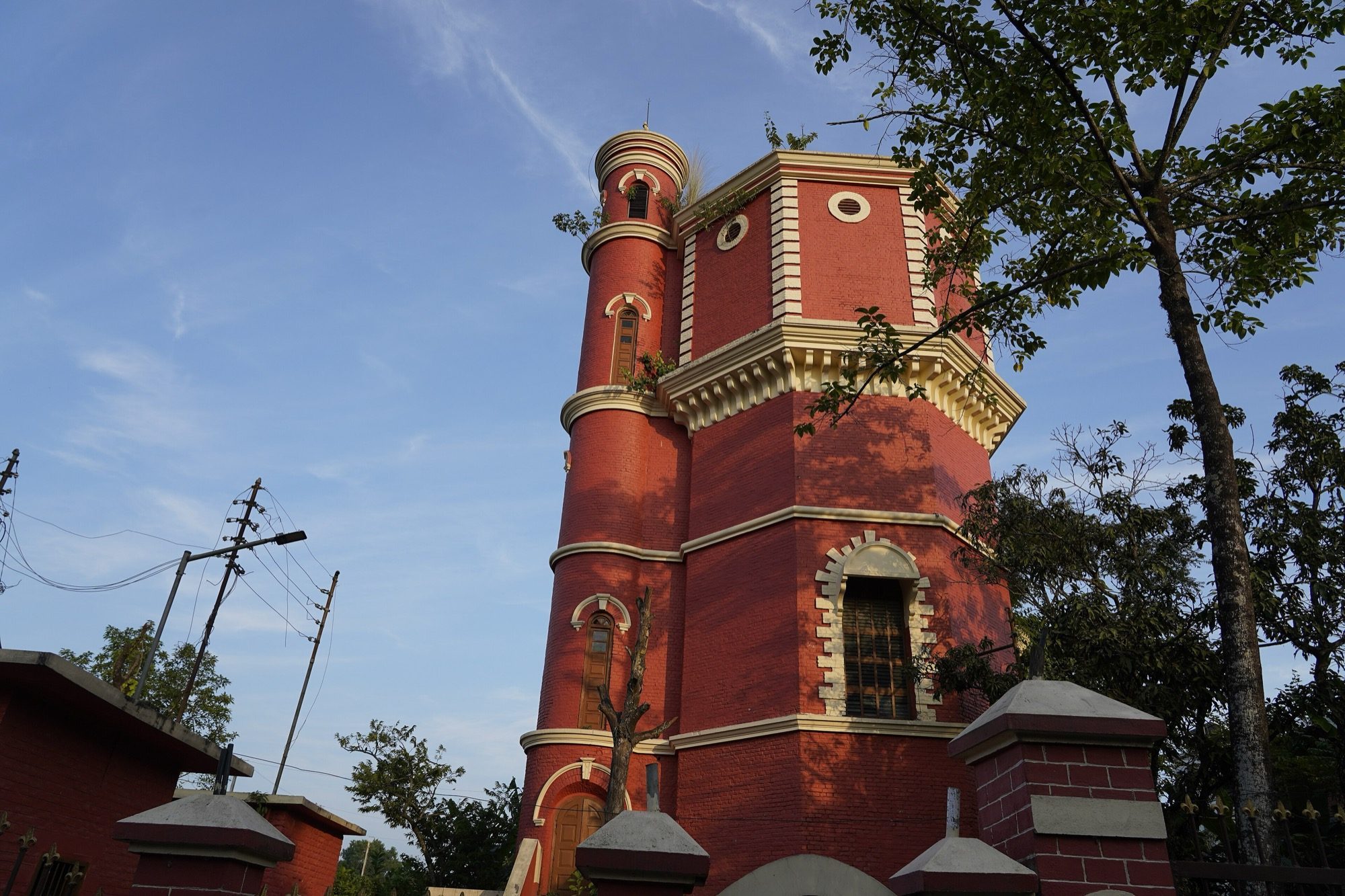
The syllabus
5 units · 5 liveTranscribed from the official B.Arch syllabus. All 5 units are live as full interactive lessons — with original diagrams, live calculators and a self-assessment quiz.
Unit 1 — Water Characteristics & Quality
LiveSurface and ground water sources; quality and quantity; the nature of impurities and the need for treatment; potability standards; and per-capita water demand and building storage.
Unit 2 — Sanitation, Sewerage & Drainage
LiveEnvironmental sanitation and sanitation in buildings; building drainage — soil, waste and vent pipes, traps and the water seal; the arrangement of sewerage in housing and the septic tank; and rainwater disposal, storm-water drainage and rainwater harvesting.
Unit 3 — Electrical Systems & Illumination
LiveBasics of electricity; single- and three-phase supply; protective devices and earthing for safety. Principles of illumination — luminous flux, candela, lux, the laws of illumination, utilization and maintenance factors, and the lumen method.
Unit 4 — Mechanical Systems
LivePumps — uses, types, selection, installation and maintenance; hot-water boilers; and basic refrigeration — heat and temperature, sensible and latent heat, change of state, saturation, refrigerants and the vapour-compression cycle.
Unit 5 — Fundamentals of Acoustics
LiveSound waves — frequency, wavelength, intensity and the decibel scale; speech and music; noise, transmission loss and sound insulation; absorption and the absorption coefficient; and reverberation, echo and the reverberation-time calculation.
Course outcomes
What you will be able to doDescribe the characteristics of water — sources, quality, impurities and treatment needs — and estimate demand.
Explain the fundamentals of sewage treatment, sewerage systems, drainage and environmental sanitation.
Apply principles of electrical systems and illumination, including the lumen method, in real scenarios.
Describe mechanical-systems principles — pumps, boilers and basic refrigeration.
Analyse acoustic properties and apply noise-control and reverberation techniques in building design.
Apply building-services knowledge through calculation and design-decision making.
Image credits
Verified Commons / Public-DomainEvery photograph is a verified Creative-Commons or Public-Domain work from Wikimedia Commons, used with attribution. The hand-drawn diagrams are original Studio Matrx work.
- The Water Works Silver Jubilee Avenue, Cooch Behar Town, West Bengal, India. 14 — Amitabha Gupta, CC BY 4.0
- Primary sedimentation tank1 w — Unknown author, CC BY-SA 3.0
- Tube well in India in 1968 — Unknown author, Public domain
- Roslyn Sewer Manhole Cover, Roslyn, Long Island, New York October 15, 2021 — AITFFan1, CC BY-SA 4.0
- Medical Department - Sanitary Service - Sanitation - Camp Custer, Battle Creek, Michigan. Septic tanks under construction - NARA - 45499119 — U.S. National Archives, Public domain
- Mid-1960s wooden main distribution board fuses — Phiarc, CC BY-SA 4.0
- LEDシーリングライト (7900161546) — Party Lin, CC BY 2.0
- Centrifugal Pump — Saud, CC BY-SA 4.0
- U.S. Air Force Senior Airman Martini Frazier, a heating, ventilation and air conditioning technician with the 379th Expeditionary Civil Engeineer Squadron, examines the baffles of a chiller unit for dirt 131022-F-EI671-008 — TSgt Joselito Aribuabo, Public domain
- Hot water boiler (14617277899) — marsupium photography, CC BY-SA 2.0
- Vienna - Vienna Opera main auditorium - 9779 — Jorge Royan, CC BY-SA 3.0
- Anechoic chamber-1 — Togabi, CC BY-SA 4.0
- Royal Albert Hall - Messiah from Scratch 2015 — Martinvl, CC BY-SA 4.0
- Opening the rainwater harvesting tank (6955943981) — SuSanA Secretariat, CC BY 2.0
- HomeEarthRodAustralia1 — Unknown author, CC BY-SA 3.0
The author
Amogh N P
Architect, interior designer, and creative polymath. Studio Matrx began in his notebooks — his vision of design made honest, useful, and open to everyone. Its Academy is written and taught in his memory, and free, forever.
More about Amogh →The systems behind the walls.
Water in, waste out, power and light, heat and cool, sound under control. Read the five units, drive the calculators, then test yourself.
The curriculum is free, forever