
Water Characteristics & Quality
Where water comes from, why it must be treated, and how much a building needs.
Before a building can do anything else, it needs clean water in the right quantity. That means knowing where water comes from, what makes raw water unsafe, how it is treated to be potable, and how much a given building actually needs — the per-capita demand that sizes every tank and pipe.
Learning objectives
By the end of this lesson, you will be able to — mapped to the course outcomes for Concept of Building Services:
Compare surface and ground water by quality and quantity.
List the impurities in water and the treatment steps that remove them.
Estimate a building's daily water demand and storage from per-capita figures.
Recall the key IS 10500 potability limits.
Sources and treatment
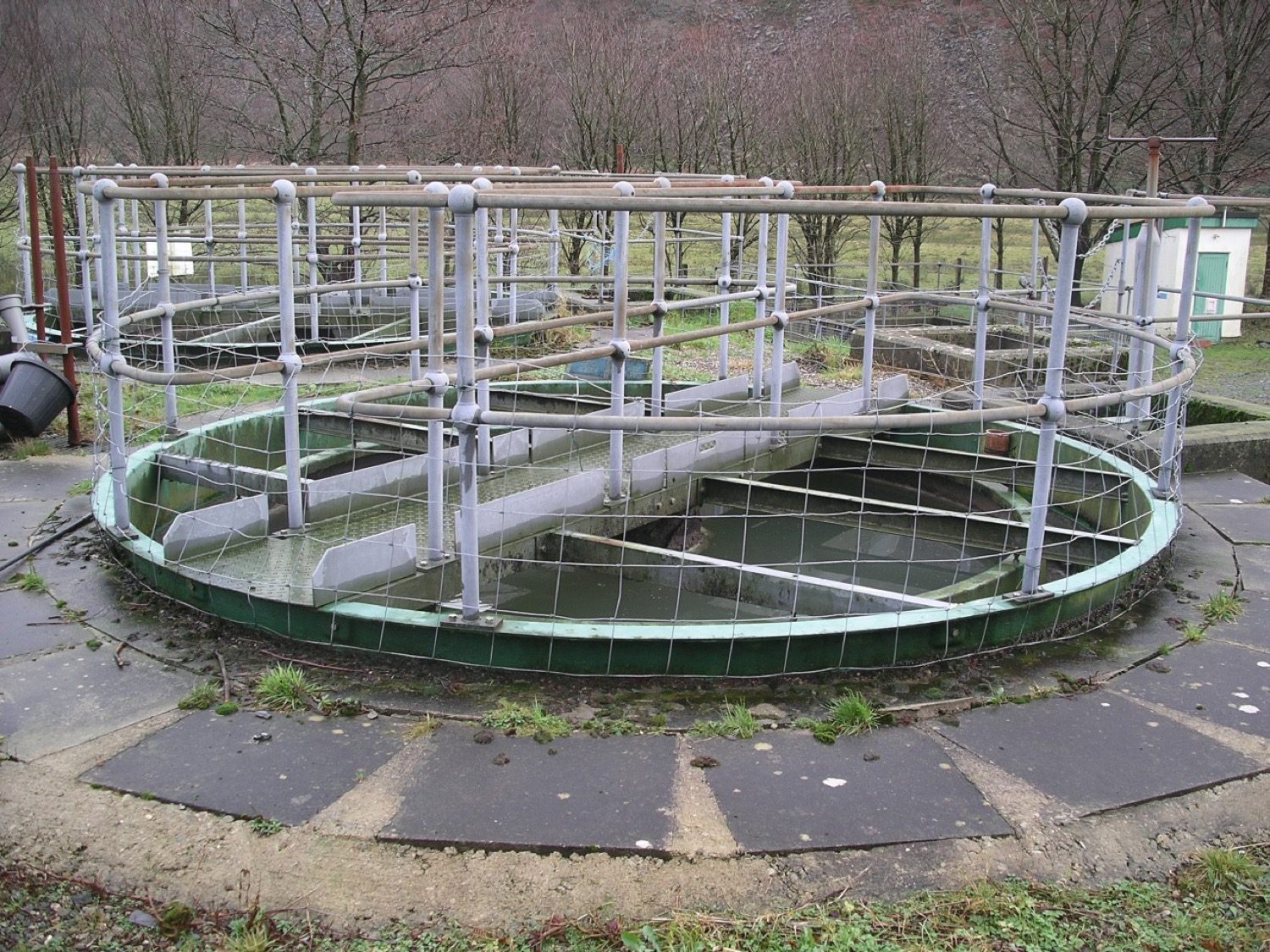
Surface water is plentiful but turbid and pathogen-laden; ground water is clearer but often hard. Either way it passes a treatment train and must meet the IS 10500 potability limits.[2, 3]
How much water does a building need?
Estimate the demand
Drive it yourself: a 100-person residential building at 135 LPCD needs 13,500 litres a day — about a 13.5 m³ store. Change the occupancy and population and watch the tanks resize.
Water demand & storage
Daily demand = population × LPCD (IS 1172 / NBC). Store about a day, split ~⅔ in the underground sump and ~⅓ in the overhead tank.
0 L/day
Daily demand
0.0 m³
m³/day
0 L
Sump ≈ ⅔ day
0 L
OHT ≈ ⅓ day
A 5-person home at 135 LPCD = 675 L/day; 100 persons = 13,500 L/day (13.5 m³).
Surface vs ground water
| Aspect | Surface | Ground |
|---|---|---|
| Turbidity | Surface: high (silt, debris) | Ground: low (soil-filtered) |
| Pathogens | Surface: high — full treatment | Ground: lower — often only disinfection |
| Hardness | Surface: usually soft | Ground: often hard / mineral-rich |
| Quantity | Surface: large but seasonal | Ground: steadier, aquifer-limited |
| Treatment | Surface: full train | Ground: softening / de-fluoridation |
Key terms
Litres Per Capita per Day — the per-person daily water design demand (135 for full-flushing housing).
Cloudiness from suspended particles, measured in NTU; acceptable ≤ 1 NTU (IS 10500).
Calcium and magnesium salt content (as CaCO₃) that causes scaling and scum.
Total Dissolved Solids — all dissolved minerals/salts, mg/L; acceptable ≤ 500.
Water safe and pleasant to drink, meeting IS 10500.
Adding alum so fine colloidal turbidity clumps into settleable flocs.
Killing pathogens, usually by chlorination, with a residual kept in the network.
Rooftop storage that gravity-feeds the building, sized for about a day's demand.
Worked example
A 5-person household at 135 LPCD needs 5 × 135 = 675 litres a day, so roughly a 675 L store (a ~450 L sump topping a ~225–340 L overhead tank). Scale that to a 100-flat building and the demand becomes 13.5 m³ a day — confirm both in the calculator.
Self-assessment
1. The standard per-capita water demand for a town with full flushing is —
2. The treatment step that mainly removes pathogens is —
3. Compared with surface water, ground water is generally —
Recap
References & further reading
- [1]S.C. Rangwala, Water Supply and Sanitary Engineering. Anand: Charotar Publishing House.
- [2]NBC 2016 — National Building Code of India, Part 9: Plumbing Services. Bureau of Indian Standards.
- [3]IS 10500:2012 — Drinking Water: Specification. Bureau of Indian Standards.
- [4]IS 1172:1993 — Code of Basic Requirements for Water Supply, Drainage and Sanitation. Bureau of Indian Standards.
- [5]CPHEEO — Manual on Water Supply and Treatment. Ministry of Housing & Urban Affairs, Government of India.
Further reading
- S.C. Rangwala, Water Supply and Sanitary Engineering.
- G.S. Birdie & J.S. Birdie, Water Supply and Sanitary Engineering. Dhanpat Rai.
- B.C. Punmia, Water Supply Engineering (Environmental Engineering I). Laxmi Publications.
Sources gathered and fact-checked June 2026. Published values vary by source, sample and method — treat as indicative and confirm against the cited standard before structural use.
The author
Amogh N P
Architect, interior designer, and creative polymath. Studio Matrx began in his notebooks — his vision of design made honest, useful, and open to everyone. Its Academy is written and taught in his memory, and free, forever.
More about Amogh →