
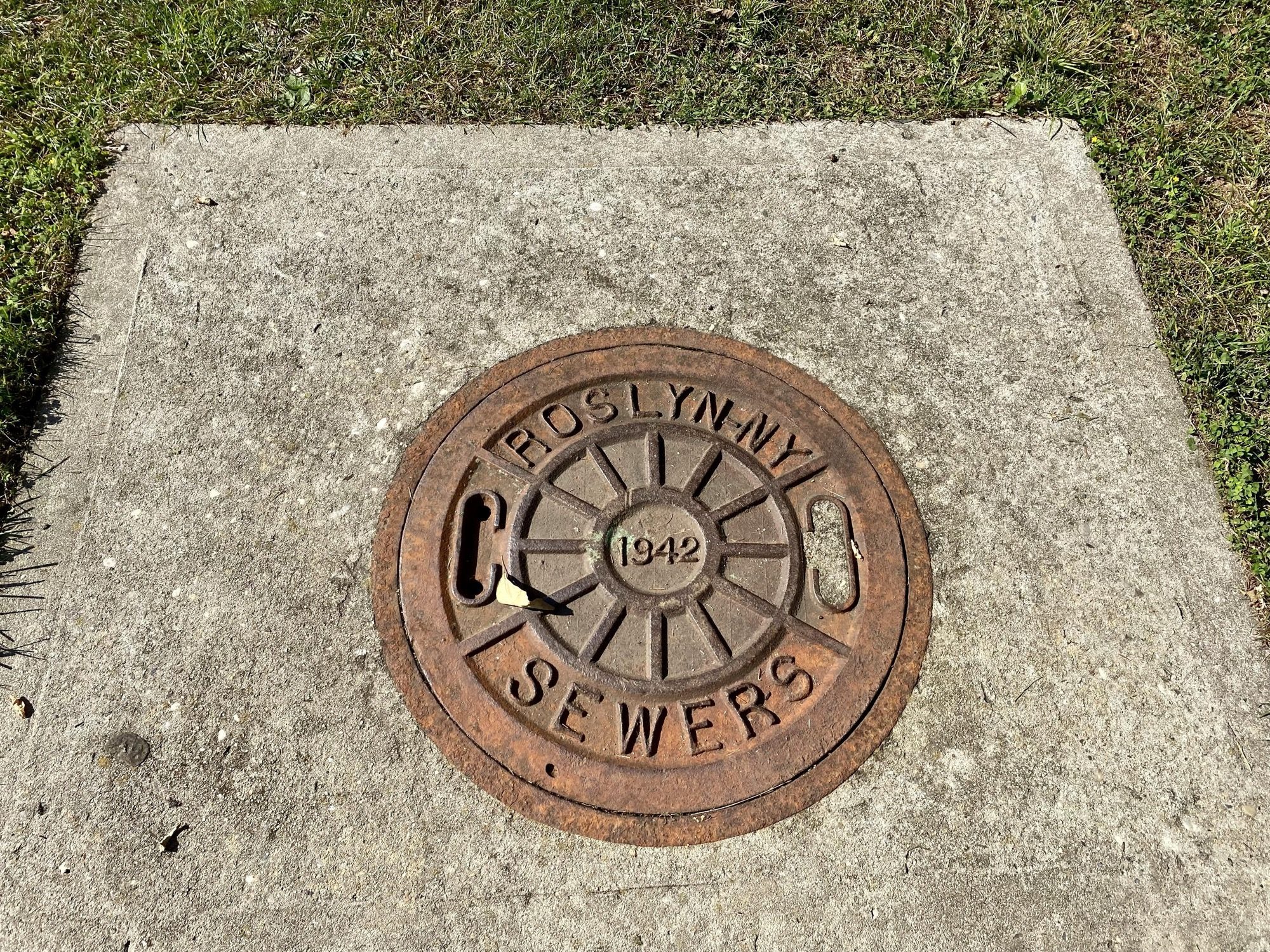
Sanitation, Sewerage & Drainage
Waste out, gases blocked, rain kept separate.
Getting waste safely out of a building is as important as getting water in. The trick is keeping three flows apart and under control — foul waste behind a trap's water seal, clean rainwater on its own path, and sewer gases firmly outside.
Learning objectives
By the end of this lesson, you will be able to — mapped to the course outcomes for Concept of Building Services:
Distinguish soil, waste and vent pipes and explain the trap's water seal.
Describe how building drainage connects to a sewer or to a septic tank and soak pit.
Explain why storm water and sewage are kept in separate systems.
Outline rainwater disposal and rainwater harvesting from buildings.
Building drainage
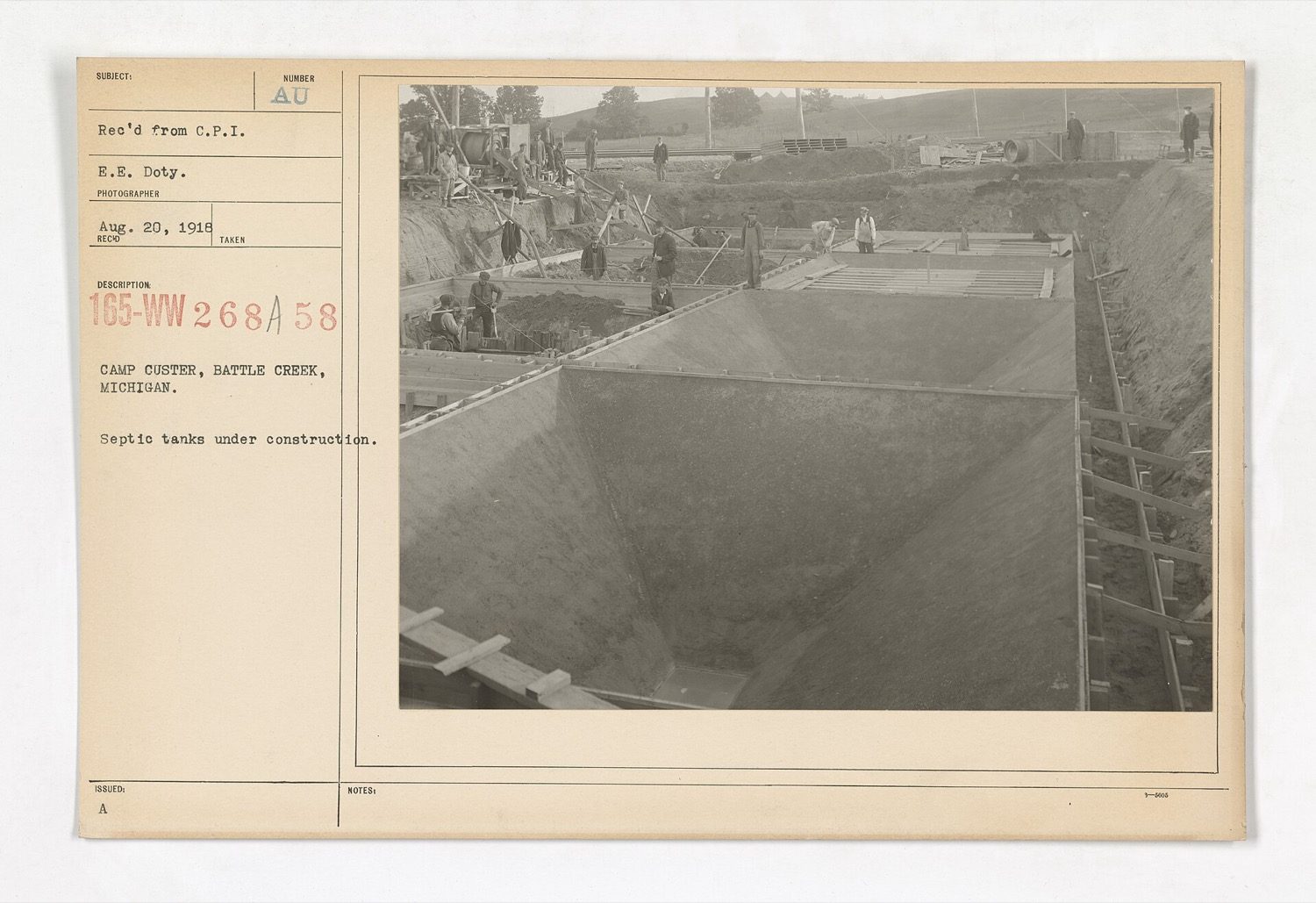
Soil pipes carry excreta, waste pipes carry used water, vent pipes carry air; every fixture sits behind a trap whose water seal blocks sewer gas. Where there is no public sewer, a septic tank and soak pit take over.[1, 2]
Rainwater and storm water
Clean rain runoff is drained or, better, harvested for recharge — and always kept separate from foul sewage so that monsoon flows never overload the treatment system.[2, 7]
Soil vs waste, storm vs sewage
| Aspect | One | The other |
|---|---|---|
| Carries | Soil pipe: WC/urinal excreta | Waste pipe: basin/bath/sink water |
| Drainage liquid | Storm: clean rain runoff | Sewage: foul + excreta |
| Layout | Two-pipe: separate vented stacks | Single-stack: one stack, deep seals |
| On-site disposal | Septic tank: settle + digest | Soak pit: percolate effluent |
| System type | Separate: two networks (preferred) | Combined: one network (monsoon risk) |
Key terms
Carries WC and urinal discharge (human excreta).
Carries used water from basins, baths and sinks (no excreta).
Carries no water; admits air to protect trap seals from siphonage.
A U-bend holding a 50–75 mm water plug that blocks sewer gas.
A trapped chamber at the external wall connecting waste pipes to the underground drain.
A deep-seal trap in the last manhole isolating house drainage from the public sewer.
An on-site watertight tank where sewage settles and is anaerobically digested.
A pit that lets septic-tank effluent percolate into the soil.
Study task
Sketch a single bathroom's drainage: show the WC on a soil pipe and the basin on a waste pipe, draw the trap and its water seal on each, and add the vent pipe. Then in two lines explain what the water seal does and why the vent is needed.
Self-assessment
1. A trap in plumbing primarily —
2. A soil pipe carries —
3. Where there is no public sewer, household sewage is best disposed by a —
Recap
References & further reading
- [1]S.C. Rangwala, Water Supply and Sanitary Engineering. Charotar Publishing House.
- [2]NBC 2016 — National Building Code of India, Part 9: Plumbing Services. Bureau of Indian Standards.
- [6]IS 2470 (Part 1):1985 — Code of Practice for Installation of Septic Tanks. Bureau of Indian Standards.
- [7]IS 2527:1984 — Code of Practice for Fixing Rainwater Gutters and Down-pipes. Bureau of Indian Standards.
Further reading
- S.C. Rangwala, Water Supply and Sanitary Engineering.
- G.S. Birdie & J.S. Birdie, Water Supply and Sanitary Engineering. Dhanpat Rai.
- SP 35:1987 — Handbook on Water Supply and Drainage. Bureau of Indian Standards.
Sources gathered and fact-checked June 2026. Published values vary by source, sample and method — treat as indicative and confirm against the cited standard before structural use.
The author
Amogh N P
Architect, interior designer, and creative polymath. Studio Matrx began in his notebooks — his vision of design made honest, useful, and open to everyone. Its Academy is written and taught in his memory, and free, forever.
More about Amogh →