
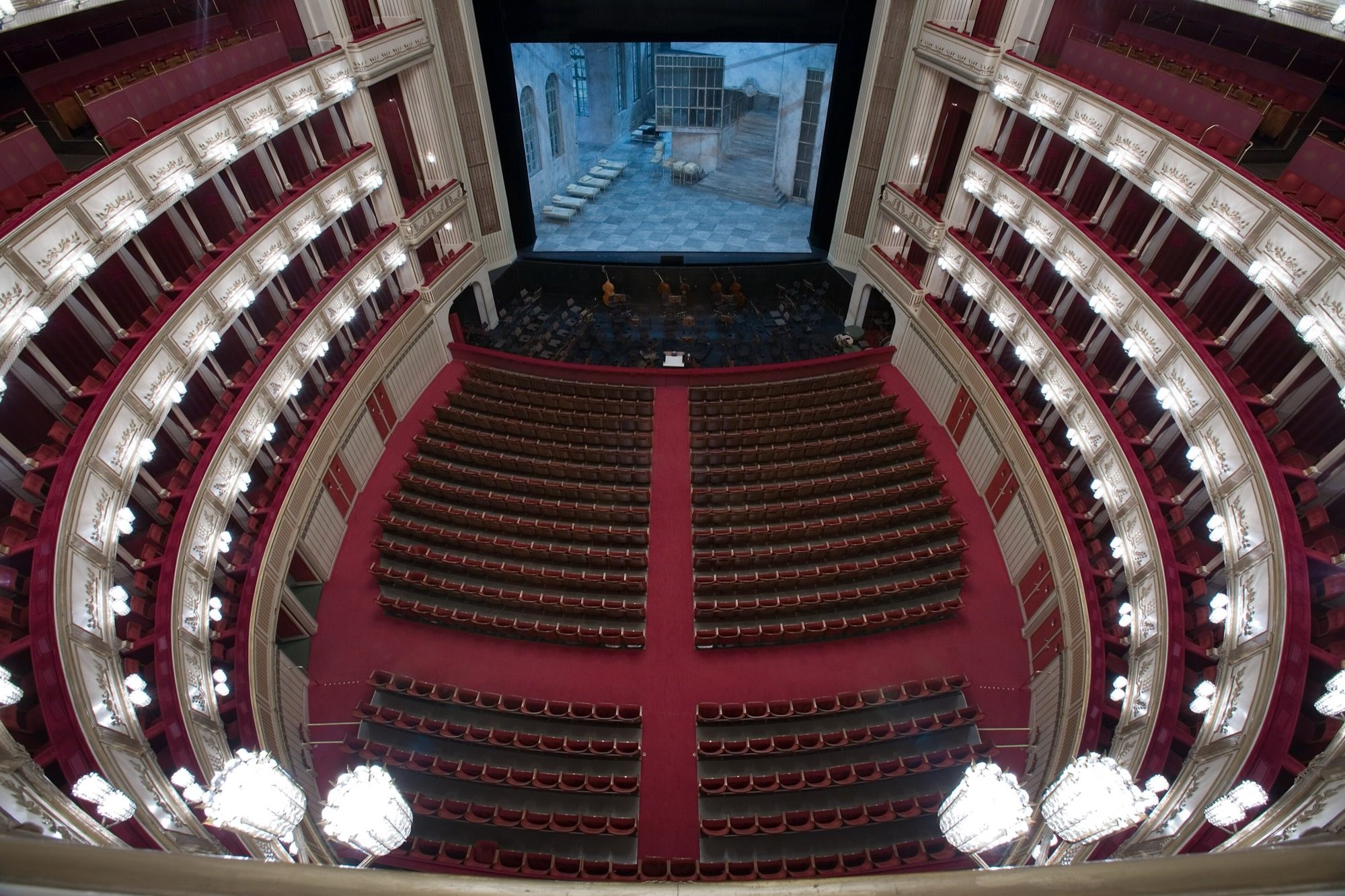
Fundamentals of Acoustics
Sound as a wave, noise under control, and the reverberation of a room.
Sound is the service architects most often forget — until a hall echoes or a wall lets the neighbours through. This unit covers sound as a wave and the decibel scale, the difference between keeping sound out (insulation) and soaking it up (absorption), and the number that defines how a room sounds: its reverberation time.
Learning objectives
By the end of this lesson, you will be able to — mapped to the course outcomes for Concept of Building Services:
Describe sound as a wave and the logarithmic decibel scale.
Distinguish sound insulation (transmission loss) from sound absorption.
Compute a room's reverberation time from Sabine's formula.
Choose absorption treatment for a given use and optimum reverberation time.
Sound, noise and absorption
Sound is a pressure wave (v = fλ) measured in decibels on a logarithmic scale. Noise is blocked by mass (transmission loss) and soaked up by absorption — two different jobs that students constantly confuse.[15]
The wave and its measure
Sound is a longitudinal pressure wave: frequency (Hz) is pitch, wavelength (m) its length, with v = fλ (≈343 m/s in air). Loudness is measured as sound pressure level in decibels — a logarithmic scale (reference 20 µPa = 0 dB) because hearing spans a millionfold range: whisper 30, conversation 60, traffic 80, pain ~120 dB.[15]
Reverberation
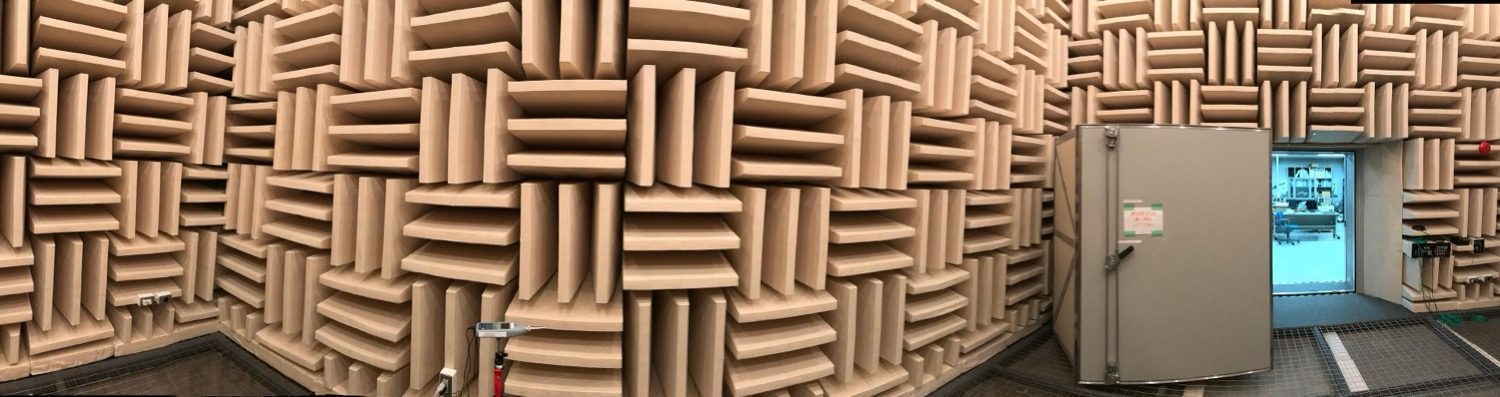
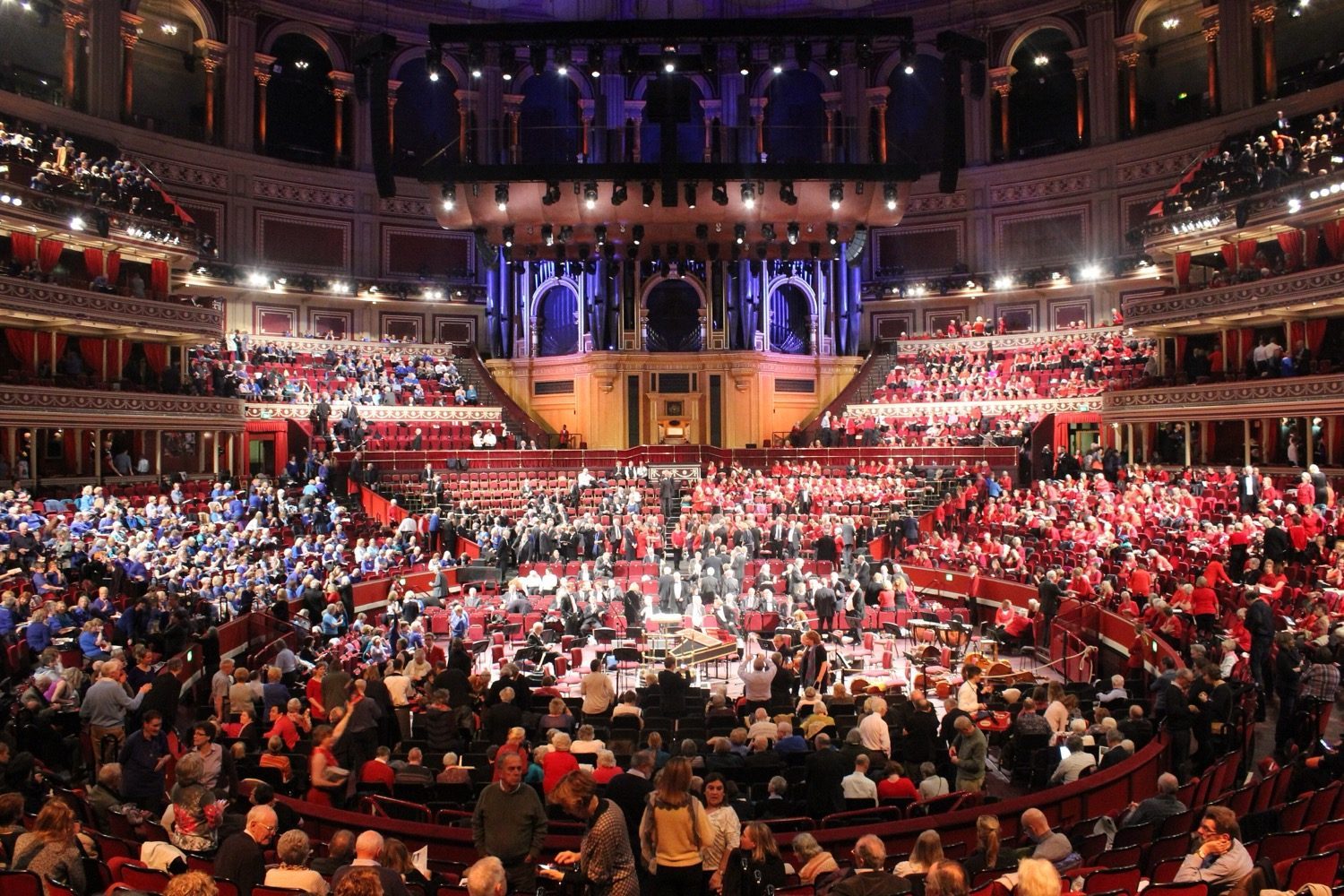
Reverberation time — how long sound lingers — is set by the room's volume and its absorption: T = 0.161 V / A. Tune it short for speech and longer for music; too much muddies the word, too little leaves music dry.[16, 15]
Compute reverberation time
A 3000 m³ hall with 500 sabins of absorption reverberates for about 0.97 s — fine for speech. Add absorption and watch the time fall toward the speech band; reduce it and the room turns live for music.
Reverberation time · Sabine
T = 0.161 V / A, where A = Σ(S·α) is the total absorption in metric sabins. More absorption → shorter reverberation.
0.00 s
Reverberation time T (RT60)
Optimum bands: speech 0.6–1.0 s, music 1.5–2.2 s.
Absorption vs insulation
| Aspect | One | The other |
|---|---|---|
| Goal | Absorption: reduce reverberation in a room | Insulation (TL): stop sound to the next room |
| Needs | Absorption: porous/soft material | Insulation: mass + decoupling |
| α value | Absorptive: α → 1 | Reflective: α → 0 |
| Optimum RT | Speech: ~0.6–1.0 s (clarity) | Music: ~1.5–2.2 s (fullness) |
| Sabine RT vs A | More absorption A → shorter RT | Larger volume V → longer RT |
Key terms
Logarithmic unit of sound pressure level; reference 20 µPa = 0 dB.
Cycles per second (Hz) and the length of one cycle (m); v = fλ.
Reduction in dB of sound passing through a partition — the measure of sound insulation.
A heavier (denser) single partition insulates better — roughly +6 dB per doubling of mass.
Fraction of incident sound not reflected (0 = reflective, 1 = fully absorptive).
Unit of absorption; 1 metric sabin = 1 m² of fully absorptive surface.
Time for sound to decay 60 dB: T = 0.161 V / A.
A distinct delayed reflection (echo); rapid ringing between parallel hard walls (flutter).
Worked example
A hall of V = 3000 m³ with total absorption A = 500 sabins has T = 0.161 × 3000 / 500 = 0.97 s. Treat the walls to raise A to 800 sabins and T falls to 0.60 s — clearer speech. Confirm both in the calculator, and note that absorption changes reverberation, not the sound getting through the wall.
Self-assessment
1. The reference sound pressure for 0 dB is —
2. In Sabine's formula T = 0.161 V / A, increasing the absorption A will —
3. Putting acoustic foam on a wall mainly —
Recap
References & further reading
- [15]M. David Egan, Architectural Acoustics. New York: McGraw-Hill / J. Ross Publishing.
- [16]Sabine, W.C. — reverberation theory; see also IS 1950, Code of Practice for Sound Insulation of Non-Industrial Buildings, Bureau of Indian Standards.
- [17]NBC 2016 — National Building Code of India, Part 8: Building Services (acoustics provisions). Bureau of Indian Standards.
Further reading
- M. David Egan, Architectural Acoustics.
- Leslie L. Doelle, Environmental Acoustics. McGraw-Hill.
- Fred Hall & Roger Greeno, Building Services Handbook.
Sources gathered and fact-checked June 2026. Published values vary by source, sample and method — treat as indicative and confirm against the cited standard before structural use.
The author
Amogh N P
Architect, interior designer, and creative polymath. Studio Matrx began in his notebooks — his vision of design made honest, useful, and open to everyone. Its Academy is written and taught in his memory, and free, forever.
More about Amogh →