
Doors, windows & joinery
The openings are where the weather tests your house — and where cheap choices show up fastest.
Lesson byAmogh N P· Architect & interior designer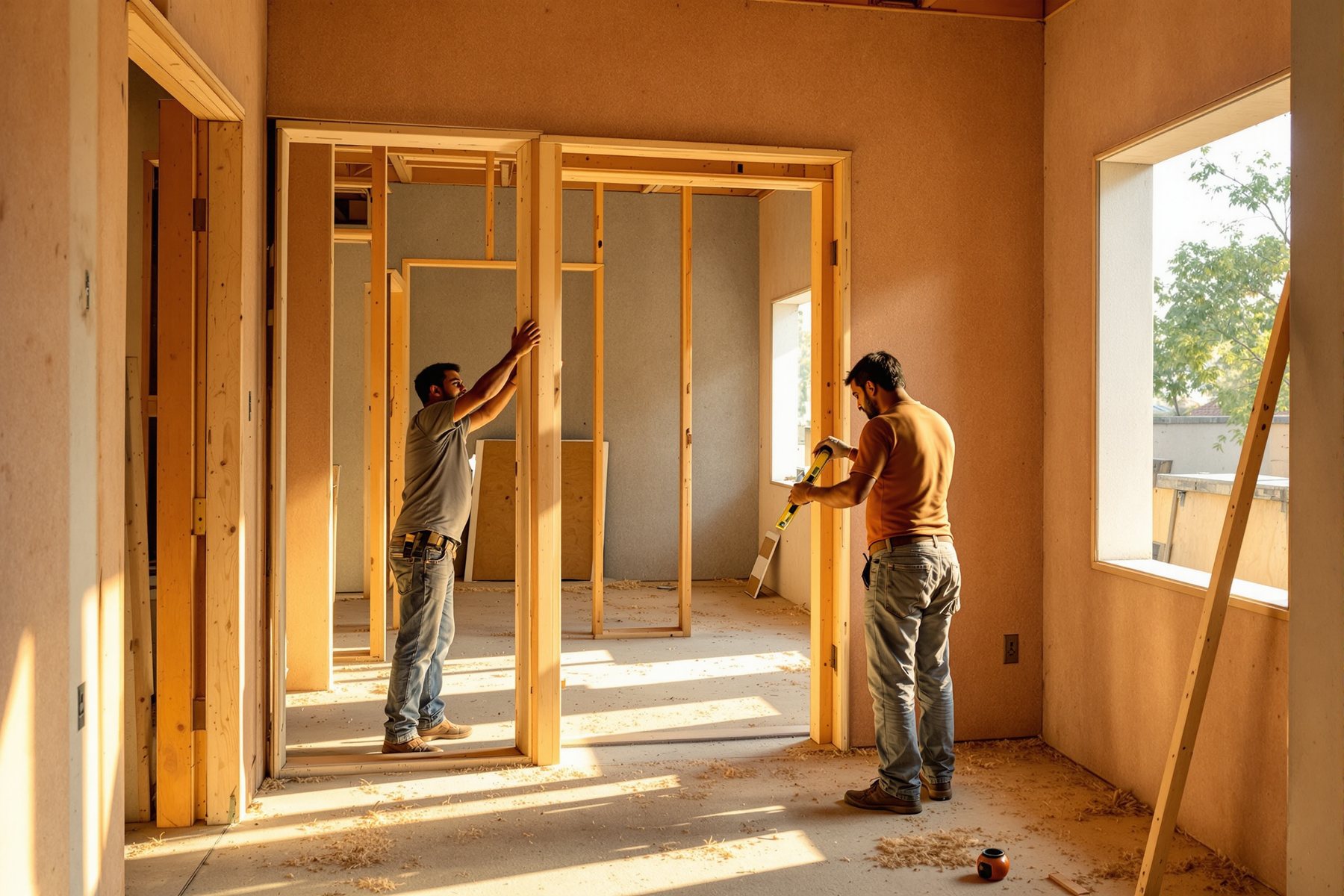
Every window is a hole you cut in your weatherproof wall — then ask to keep the rain out.
A wall's whole job is to keep the outside outside. Then you cut openings in it for light, air and doors — and each one is a negotiation with the weather. In a country where the monsoon arrives sideways, the window that looked fine in the showroom can let driving rain track straight into the plaster. Doors and windows aren't just a finish you pick by colour; they're the most weather-tested part of the house.
Frame, shutter, material — and a detail for the rain
A door or window is a frame fixed in the wall and a shutter that moves in it
Every opening has two parts: the frame (chowkat) fixed into the masonry, and the shutter (the leaf that swings or slides). Frames go in early — often at brickwork stage — so they're built into the wall; shutters hang later. The big decision is material, and each has a place:
- Wood (teak / hardwood) — warm, repairable, premium; the classic choice for the main door especially. Quality teak is expensive; cheaper 'wood' is often engineered. Needs polish/paint maintenance. - UPVC — plastic-framed windows with multi-point locks and good gaskets; excellent at sealing out rain, dust and noise, low maintenance. A strong monsoon-coast choice. - Aluminium — slim, strong, modern sliders; durable and low-maintenance but conducts heat and, if poorly detailed, can leak at the track. - Flush vs panel doors — internal doors are commonly flush (cheaper, plain); panel and the main door are where you spend.
A fair rule of thumb: spend on the main door and the windows that face weather; save on internal flush doors. Match the material to exposure, not just the look.
Pick the material by which way the rain comes in, not by which catalogue page looked nicest.
The monsoon comes at an angle — and the window detail decides whether it gets in
A window only keeps water out if it's detailed to. Rain in India rarely falls straight down; it's driving rain, pushed by wind at an angle, and that changes everything about how an opening must be built. (The monsoon masterclass on wind and rain is worth a read alongside this.)
The details that keep a window dry:
- Sill slope and a drip course — the sill (bottom ledge) slopes outward so water runs off, and a groove (drip) under the projecting sill/chajja breaks the water's path so it drips clear instead of tracking back along the underside into the wall. - Sealant and gaskets — the gap between frame and masonry is sealed; good shutters have gaskets that compress shut. - Chajja / weather shade — a small projecting hood over the window throws rain away from the opening. - Orientation awareness — windows on the windward (monsoon-facing) side need the most robust detailing; a deep verandah or overhang protects them.
Get this wrong and the symptom is unmistakable: a damp patch under the window after the first big storm. Get it right — slope, drip, seal, shade — and even a windward window stays dry through the season.
Decide where to spend by exposure, not catalogue looks: invest in a good main door and in windows on the weather-facing sides (UPVC or well-detailed aluminium seal best against driving rain), and economise on internal flush doors. Ask your contractor specifically how each window is detailed for rain — sill slope, drip groove, sealant, weather shade. If they can't answer, you've found the windows that will leak.
Detail openings for the local wind-driven rain: outward-sloping sills with throated drips, chajjas sized to the rainfall angle, continuous frame-to-masonry sealant, and gasketed shutters on windward elevations. Specify frame fixing and lintel/sill details on the drawings rather than leaving them to the fabricator. Coordinate frame installation with masonry so chowkats are built in true and plumb. Window leaks are nearly always a missing drip or unsealed frame, not a 'bad window'.
Openings are the hardest part of the envelope because they puncture every layer the wall was protecting. The drip groove, the sloped sill, the chajja and the overlap of shutter on frame are all about controlling water under wind pressure — driving rain, not gravity rain. Study how orientation, overhang depth and detailing combine to keep a windward facade dry, and why material choice (thermal break, gasketing) interacts with climate. The opening is a climate-response problem, not a product selection.
“A good-quality window won't leak — the brand and material are what matter.”
Even a premium window leaks if the opening isn't detailed for driving rain. The things that actually keep water out are the outward-sloping sill, the drip groove under the projection, a sealed frame-to-wall joint and a weather shade — plus robust detailing on the monsoon-facing side. Most window leaks in India are a missing detail, not a bad product.
Make your openings weather-ready, not just good-looking:
- 01List your openings by exposure and decide where to spend — main door and weather-facing windows get the budget; internal flush doors don't.
- 02For each weather-facing window, confirm the rain details with your contractor: outward-sloping sill, drip groove under the projection, sealed frame, and a chajja/weather shade.
- 03Check that frames are fixed plumb and true and built into the masonry, and that windward-side windows have the most robust detailing — then read the monsoon wind-and-rain masterclass.
Doors and windows feel like a finishing choice you make by colour and catalogue, but they're really the most weather-exposed part of the house. Spend where the weather hits — the main door and the windward windows — and obsess over the rain details: slope, drip, seal, shade. A window that's beautiful but undetailed will announce itself with a damp patch after the first real storm; a plain one that's detailed right will stay dry for decades.
Each opening is a frame built into the wall and a shutter that moves in it. Choose material by exposure — wood for the main door, UPVC/aluminium for weather-facing windows, flush doors internally — and spend where the weather hits. Above all, detail windows for driving rain: an outward-sloping sill, a drip groove, sealed frame and a chajja, with the toughest detailing on the windward side.
Which is better for an Indian house — wooden, UPVC or aluminium windows?
It depends on exposure and budget. UPVC seals best against driving rain, dust and noise with low maintenance, making it strong for monsoon-facing windows; aluminium is slim, modern and durable but needs careful detailing to avoid track leaks; wood is premium and warm, ideal for the main door. Match the material to the weather each opening faces.
How do I stop rain from leaking through my windows?
Detail the opening, not just the window: an outward-sloping sill, a drip groove under the projecting sill or chajja, a fully sealed frame-to-wall joint, gasketed shutters and a weather shade over the opening. Driving rain comes at an angle, so windows on the monsoon-facing side need the most robust detailing. Most window leaks are a missing detail, not a bad product.
Should the main door be solid wood?
The main door is the place to spend, and solid teak or quality hardwood is the classic choice — durable, repairable and substantial. Internal doors can be cheaper flush doors. If you prefer engineered or other materials for the main door, ensure they're rated for exterior exposure, since it faces sun and rain directly.
The author
Amogh N P
Architect, interior designer, and creative polymath. Studio Matrx began in his notebooks — his vision of design made honest, useful, and open to everyone. Its Academy is written and taught in his memory, and free, forever.
More about Amogh →The house is now weather-tight and full of openings. The last stage on site is the one you'll touch and see every day — the floors underfoot, the finishes on the walls, and the paint that ties it all together.