
Flooring, finishes & painting
The stage where a building finally becomes a home — and where sequence is everything.
Lesson byAmogh N P· Architect & interior designer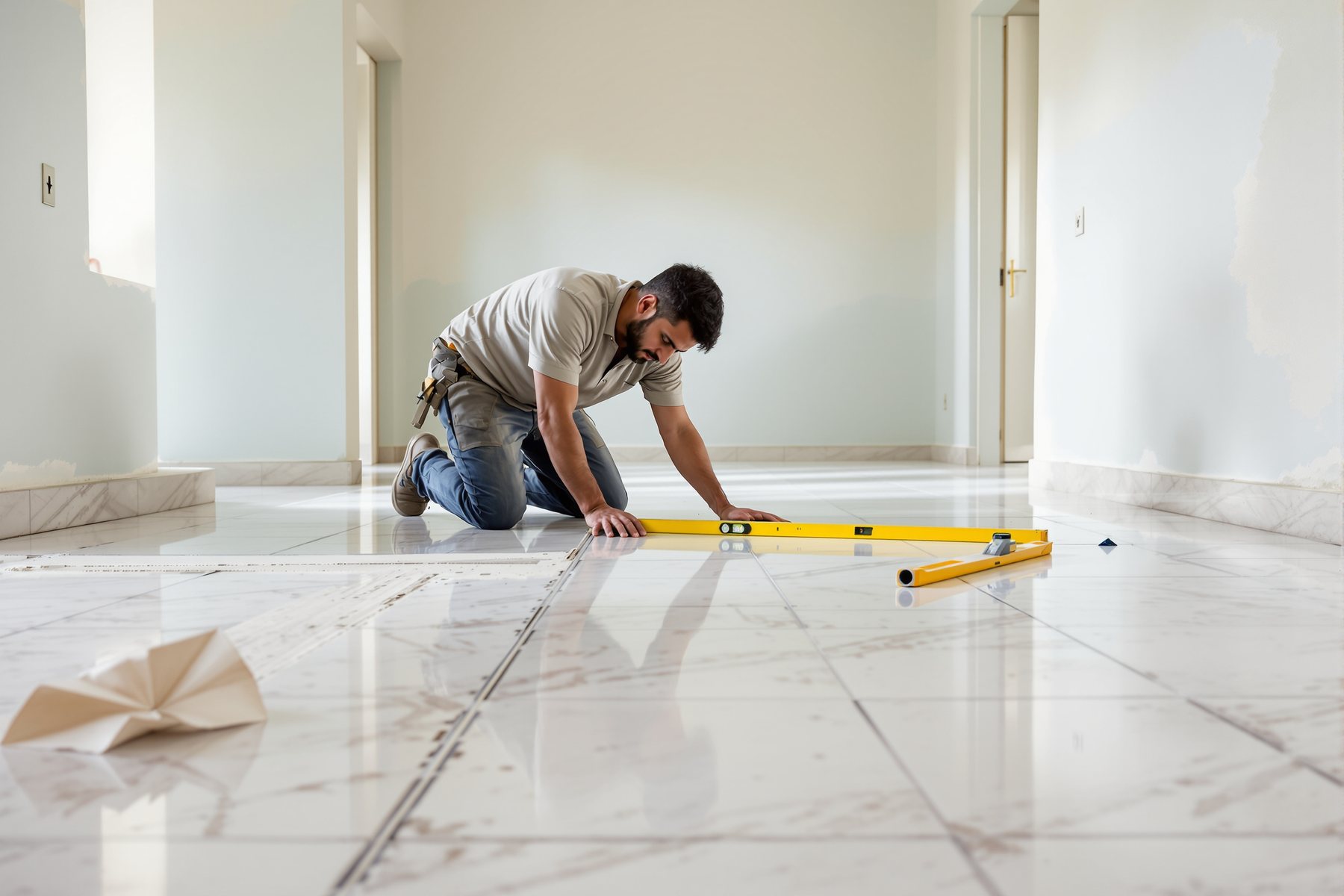
Paint the walls, then lay the floor, and you'll repaint the walls. Order is the secret of a clean finish.
Finishing is where the house stops being a building site and starts being yours — the first time the floor gleams and the walls hold colour. But it's also where an out-of-order site undoes its own work: floors scratched by ladders, fresh paint splashed by tilers, skirting fitted before the floor it's meant to sit on. The materials matter, but the sequence matters just as much. Done in the right order, finishing is the most satisfying stage of all.
Floors, walls, ceilings — in the right order
Tile, vitrified or granite — pick by room, traffic and budget
Flooring is a big visual and budget decision, and the main options each suit different rooms (all rates are material only, typical 2026, vary widely by quality and city):
- Ceramic tiles — economical, huge range, fine for bathrooms and utility areas. Roughly ₹40-80/sq ft. - Vitrified tiles — the popular all-rounder for living areas and bedrooms: hard, low-maintenance, big glossy or matt formats. Roughly ₹60-150/sq ft, premium ranges higher. - Granite — natural stone, very durable, classic for kitchens, stairs and high-traffic areas. Roughly ₹150-350/sq ft depending on stone and finish. - Marble / Italian marble — luxurious, softer, higher maintenance; a premium choice. ₹150/sq ft into the thousands. - Wood / laminate / SPC — warm underfoot for bedrooms; cost varies with type.
Remember laying flooring is material + labour + skirting, so the installed cost is above the tile rate. A common, sensible mix: vitrified in living/bedrooms, ceramic in bathrooms/utility, granite on kitchen counters and stairs. Buy a little extra of each batch for future repairs — dye-lots change.
Choose the floor for the room's job, not one expensive stone for the whole house.
Putty, primer, paint — and the sequence that keeps the work clean
Painting is a layered process, not one coat of colour:
- Wall putty — a white powder/paste skimmed over plaster to make it smooth and fill fine pores. Usually 2 coats, sanded between. - Primer — 1 coat sealing the putty and giving the paint something to grip. - Paint (emulsion) — 2 (sometimes 3) coats of the final colour. Interiors use washable emulsion; exteriors use weatherproof exterior emulsion that resists the monsoon and sun.
More than the materials, the sequence of the whole finishing stage decides the result. The rough rule is top-down and dirty-before-clean, so each trade doesn't ruin the last:
1. False ceilings and ceiling work first (dusty, overhead). 2. Plaster + putty + primer on walls. 3. Flooring and skirting laid and protected. 4. First coats of paint, then fix electrical fittings, switch plates, sanitaryware. 5. Final paint coat last, touching up after the messy fittings work — so the finished colour is the last thing applied and stays pristine.
Get the order right and you avoid the classic own-goals: scratched new floors, paint-splashed tiles, skirting laid before its floor.
Two habits here pay off. First, choose flooring by room and traffic, not one expensive material everywhere — vitrified for living and bedrooms, ceramic in wet areas, granite where it earns its keep — and budget the _installed_ cost (tile + labour + skirting), not the tile rate. Second, insist the finishing follows the top-down, dirty-before-clean order, with the final paint coat applied last after all the messy fitting work, so your finished surfaces don't get wrecked by the next trade.
Sequence the finishing trades explicitly in the program — false ceiling, putty/primer, flooring with protection, first paint, fittings, then final coat — and protect laid floors and joinery from the trades that follow. Specify putty/primer/paint as a coat schedule (2+1+2) with surface prep and inter-coat sanding, and split interior vs weatherproof exterior systems. Most 'poor finish' complaints are sequencing and surface-prep failures, not paint quality.
Finishing is construction sequencing made visible. The logic is dependency and protection: wet and dusty work precedes dry and clean, overhead precedes underfoot, and each finished surface must be shielded from the trades that follow. The putty-primer-paint stack is a substrate-adhesion problem (smoothing, sealing, then colour). Understanding finish sequence and surface preparation is what separates a crisp building from a scuffed one — and it's pure project management, not aesthetics.
“Finishing is just picking nice tiles and paint colours — the order the work happens in doesn't really matter.”
Order is half the battle. Painting before flooring means repainting after the tilers; laying floors before ceiling work means scratched floors; final paint before fittings means touch-ups everywhere. The reliable rule is top-down and dirty-before-clean — ceilings, then walls, then floors, with the final paint coat applied last after the messy fittings work — so each trade doesn't ruin the one before it.
Plan the finish so the materials and the order both work for you:
- 01Map flooring room by room — vitrified for living/bedrooms (~₹60-150/sq ft material), ceramic in wet areas (~₹40-80), granite where it earns its keep (~₹150-350) — and budget the installed cost including labour and skirting.
- 02Confirm the paint schedule with your contractor: 2 coats putty, 1 primer, 2-3 emulsion, with washable interior and weatherproof exterior systems.
- 03Agree the finishing sequence in writing — false ceiling, putty/primer, flooring (protected), first paint, fittings, final paint coat last — and that laid floors and joinery are covered while later trades work.
Finishing is where the house becomes a home, and it rewards two disciplines equally: choosing each material for the job its room does, and running the trades in the right order so none undoes another's work. Floor by room and traffic, budget the installed cost, and follow the top-down, dirty-before-clean sequence with the final paint coat last. Do both and you'll walk into a home that looks as cared-for on day one as the effort that built it.
Choose flooring by room: vitrified (~₹60-150/sq ft) in living/bedrooms, ceramic (~₹40-80) in wet areas, granite (~₹150-350) where it earns its keep — and budget the installed cost (tile + labour + skirting). Paint in layers — 2 putty + 1 primer + 2-3 emulsion. Above all, finish top-down and dirty-before-clean: ceilings, walls, floors, first paint, fittings, then the final coat last so nothing scuffs the finished surfaces.
Which flooring is best for an Indian home — vitrified tiles or granite?
Both have their place. Vitrified tiles (~₹60-150/sq ft material) are the popular, low-maintenance all-rounder for living rooms and bedrooms, while granite (~₹150-350/sq ft) is a tough natural stone ideal for kitchens, stairs and high-traffic areas. Many homes mix them — vitrified in living areas, ceramic in wet areas, and granite where durability matters most.
What is the correct sequence of putty, primer and paint?
Apply about 2 coats of wall putty over the plaster to smooth it (sanding between), then 1 coat of primer to seal it, then 2-3 coats of emulsion paint as the final colour. Interiors use washable emulsion and exteriors use weatherproof exterior emulsion. Good surface prep and inter-coat sanding matter as much as the paint itself.
In what order should house finishing work be done?
Work top-down and dirty-before-clean: false ceilings and overhead work first, then wall putty and primer, then flooring and skirting (kept protected), then the first paint coats, then electrical fittings and sanitaryware, and finally the last paint coat. This order stops each trade from damaging the finished work of the one before it.
The author
Amogh N P
Architect, interior designer, and creative polymath. Studio Matrx began in his notebooks — his vision of design made honest, useful, and open to everyone. Its Academy is written and taught in his memory, and free, forever.
More about Amogh →The house is now built and finished, stage by stage. Module 7 turns to the systems that decide how it actually feels to live in — the light, water and energy choices that age well.