
Electrical & plumbing rough-ins
Every switch and tap you'll ever use gets decided before the plaster goes on — once.
Lesson byAmogh N P· Architect & interior designer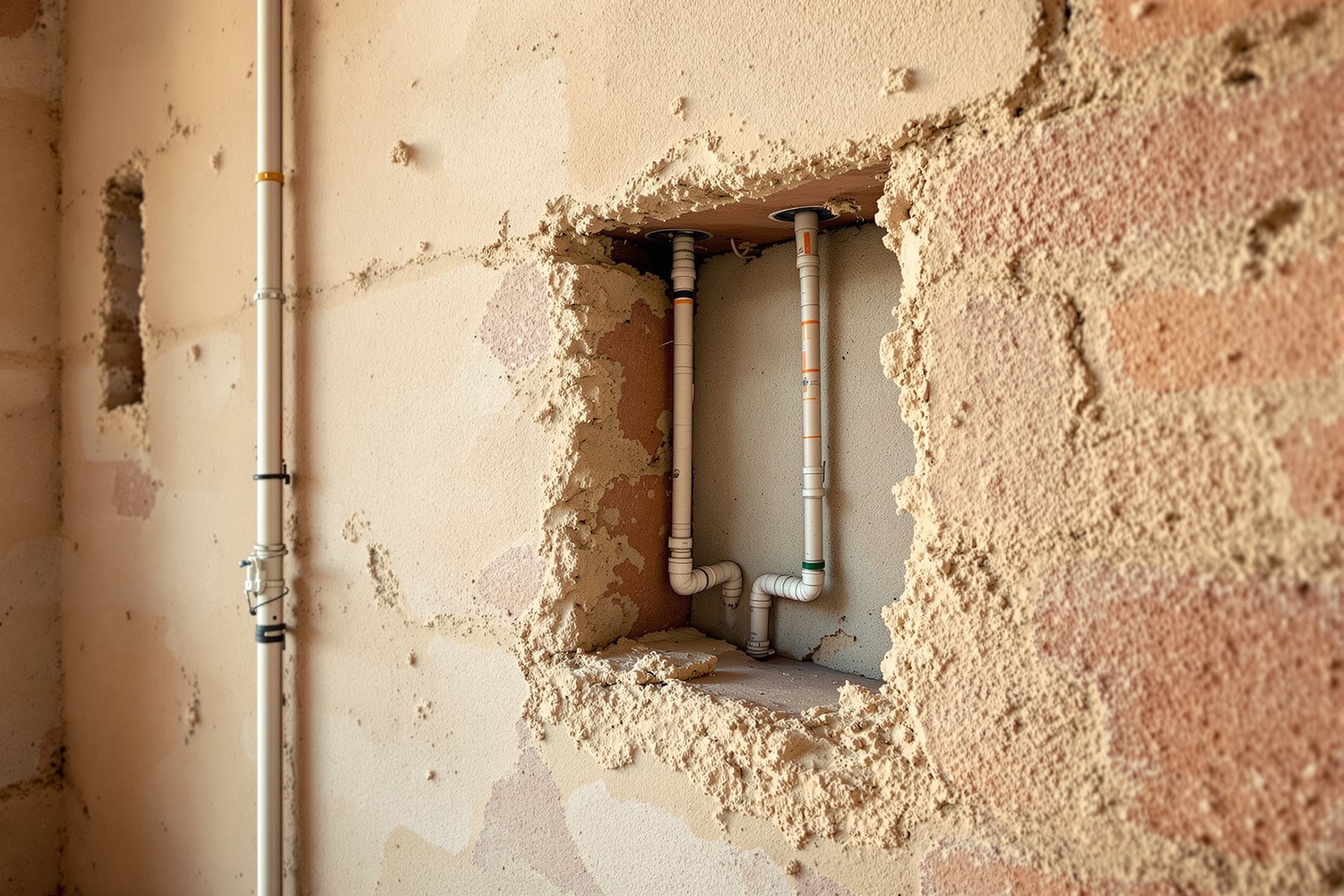
The bed goes there, so the bedside socket goes there. Decide it now, or live with the extension cord forever.
There's a single day on every build when the house lets you change your mind for free — and then it closes. Before plaster, the walls are open and a socket can move two feet for the cost of a chase. After plaster, that same socket means breaking the wall, re-wiring, re-plastering and re-painting. The rough-in stage is where you mentally move into the house, room by room, and place every point where you'll actually stand.
Rough-in = the hidden lines, placed before the walls close
Conduits, wiring and pipes — the buried network of the house
'Rough-in' is laying all the hidden services before plaster and flooring cover them.
Electrical. India uses concealed wiring: walls are chased (grooved), PVC conduits (protective pipes) are laid, and wires are pulled through them later — so a wire can be replaced without breaking the wall. The rough-in fixes the position of every switch, socket, light, fan, and dedicated point (geyser, AC, chimney, microwave, water purifier). Each room gets a board (modular switch plates) wired back to the MCB distribution board, which is wired back to the meter.
Plumbing. Two networks: supply lines (pressurised, usually CPVC or PEX for hot/cold) bringing water to taps and the cistern, and drainage lines (gravity, usually PVC/UPVC) taking waste away with the right slope. Concealed supply lines run in the wall chases; soil and waste stacks run down through ducts. The rough-in fixes where every tap, shower, WC, washbasin, washing-machine and water-heater point lands.
This is the stage to pressure-test the plumbing (cap it and pressurise) to catch joint leaks before they're plastered over.
Walk the empty rooms and mime your morning. Where's your hand reaching? Put a point there.
Before plaster, everything is movable and free. After plaster, nothing is.
The rough-in is the project's great point of no return. While the conduits and pipes are exposed, moving a switch, adding a socket, raising a geyser point or shifting a shower is a small change. The hour the plasterer arrives, that freedom ends — every later change means chasing a finished wall, re-wiring, re-plastering, re-painting, at many times the cost and a fresh round of mess.
So before sign-off, do a room-by-room walk-through against your furniture layout:
- Stand where the bed, sofa, TV, study table and dining table will go. Is there a socket and switch where your hand actually reaches? - Count points honestly — bedrooms need bedside + AC + general sockets; the kitchen needs many more than you think (chimney, hob, microwave, fridge, mixer, purifier, exhaust). - Confirm switch heights, the TV and AC point positions, and that the earthing is properly done. - Mark anything you're unsure about and resolve it now, on the open wall.
The homeowners who love their wiring are the ones who treated this walk-through as seriously as the design itself.
Block out a half-day to walk the house with your electrician and your furniture plan _before_ plaster, and physically act out your daily routine in each room — where you'll charge a phone, plug a lamp, run the geyser, stand at the kitchen counter. Mark every socket and switch with chalk and adjust freely. This single walk-through is the difference between a house wired for someone in general and a house wired for you.
Produce an electrical layout and a plumbing layout coordinated with the furniture plan, with point schedules and switch heights, and freeze them at a formal pre-plaster client walk-through. Pressure-test supply lines and check drainage slopes and venting before concealment. Coordinate conduit routes with the structural drawing so chasing doesn't cut into beams or cover. Most 'add a point later' disputes vanish when the rough-in is signed off room by room.
Services design is where human routine meets the building fabric. A socket's position is an ergonomic and behavioural decision, not just an electrical one — it encodes how the room will be used. Learn the logic of distribution (meter to DB to circuits to points), the separation of supply and drainage, slope and venting in drainage, and why concealment forces all of this to be resolved before the finishing trades. The 'soft' walk-through is rigorous design.
“I can always add a socket or move a switch later if I find I need one.”
Only cheaply before plaster. Once walls are plastered, painted and tiled, adding or moving a point means chasing the finished wall, re-wiring, re-plastering and re-painting — many times the cost, plus the mess of a finished house torn open. The rough-in stage is a genuine point of no return, so place every point against your real furniture layout while the walls are still open.
Use the open-wall window before it closes:
- 01Walk every room with your furniture layout and your electrician before plaster, acting out your daily routine, and chalk-mark every socket, switch and light where your hand actually reaches.
- 02Count points room by room against a checklist — bedside, AC, geyser, and a kitchen list (chimney, hob, microwave, fridge, mixer, purifier, exhaust) people always under-provide.
- 03Confirm the plumbing was pressure-tested for leaks and drainage slopes checked, before any line is plastered or floored over.
The rough-in is the one stage where the house bends to your habits for free, and then it sets hard. The homeowners who never resent their switches are simply the ones who took the pre-plaster walk-through seriously — who stood in each empty room, imagined a Tuesday morning, and put a point exactly where their hand would reach. Do that walk. After plaster, every regret has a price tag and a dust sheet.
Rough-in lays the hidden services before plaster: concealed wiring in chased conduits back to the MCB board, and CPVC/PEX supply + PVC/UPVC drainage plumbing. Pressure-test the plumbing before concealing it. Above all, do a room-by-room walk-through against your furniture layout to place every switch, socket and tap — because this is a true point of no return, free before plaster and costly after.
What is an electrical and plumbing rough-in?
The rough-in is laying all the hidden services — concealed wiring conduits and water supply and drainage pipes — into the walls and floors before plaster and tiling cover them. It fixes the position of every switch, socket, light, tap and drain. It's done before finishing because changing a point afterwards means breaking open finished walls.
Why is the rough-in stage called a point of no return?
Because while the walls are still open, moving a switch or adding a socket is cheap. Once plaster, paint and tiles go on, the same change means chasing the wall, re-wiring, re-plastering and re-painting at many times the cost and mess. So you must finalise every point against your real furniture layout before plaster begins.
How many electrical points should each room have?
It varies, but most people under-provide. Bedrooms typically need bedside sockets both sides, an AC point and general sockets; kitchens need far more than expected — chimney, hob, microwave, fridge, mixer, purifier and exhaust. The best way is a room-by-room walk-through against your furniture layout, placing a socket wherever your hand will actually reach.
The author
Amogh N P
Architect, interior designer, and creative polymath. Studio Matrx began in his notebooks — his vision of design made honest, useful, and open to everyone. Its Academy is written and taught in his memory, and free, forever.
More about Amogh →With the services hidden safely in the walls and the surfaces ready, the openings come next — the doors, windows and joinery that decide how the weather and the light get in.