
 Lesson 2.3
Lesson 2.3 · Timber & Wood-based Materials
Cork, Wood-fibre & Wood Products
Beyond solid timber and bamboo sits a wider wood family - cork, the renewable bark stripped from a living oak; wood-fibre boards and insulation felted from wood; and the engineered panels (plywood, OSB, particleboard) whose bio-credentials rise or fall on an honest question the warm wood look hides - what binds them, and what does that resin off-gas
Some wood you strip from a living tree without killing it. Some you felt into breathable boards. And some you glue - which is where the honest question begins.
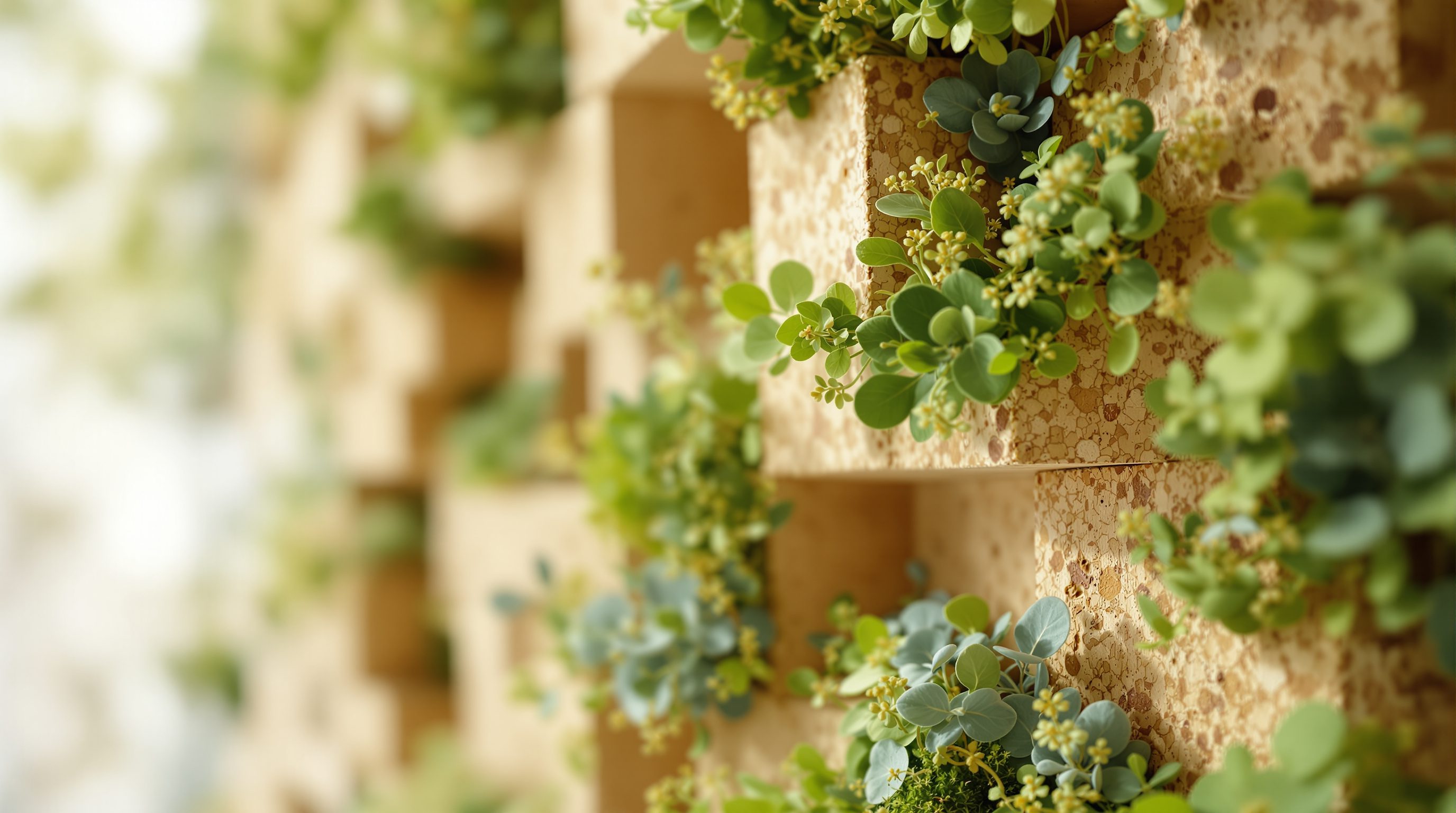
The wood family does not stop at solid timber and bamboo. Around them sits a whole range of wood-based products, and they carry two very different lessons at once - one about how beautifully renewable a bio-material can be, and one about how easily its green promise can quietly leak away. Consider cork: it is the outer bark of the cork oak, and it is stripped from the tree by hand roughly every nine years while the tree lives on for two centuries, regrowing its bark for the next harvest. No tree is felled; the material renews itself on a living trunk. Its closed-cell structure makes it light, insulating, resilient and water-resistant, useful for flooring and insulation - a near-poetic example of a renewable grown material.
Then consider the enormous world of engineered wood panels - plywood, oriented strand board (OSB), particleboard, medium-density fibreboard - and wood-fibre insulation. These take wood or wood residues and reconstitute them into sheets, and they are genuinely useful and often clever ways to use small pieces and offcuts. But almost all of them are held together by an adhesive, and here the honest question of this lesson arrives: what binds the wood, how much of it is there, and what does it do to the air? Many common boards use synthetic, often formaldehyde-based resins that can off-gas into the indoor air and that dilute the material's bio-based credentials. A wood-based product is only as green as its sourcing, its binder and its emissions - so a literate designer looks past the warm wood look to the resin, the formaldehyde class and the Environmental Product Declaration.
Cork = renewable bark, near-ideal. Wood-fibre = depends on binder. Plywood/OSB/particleboard = wood + glue; more glue = less tree + more formaldehyde. Check the binder.
Cork: bark that renews itself
Cork is one of the most quietly remarkable bio-materials, because of how it is harvested. It is the thick outer bark of the cork oak, a Mediterranean evergreen, and it is stripped from the standing tree by skilled workers who peel the bark without harming the living trunk beneath. The tree simply regrows its bark, and can be harvested again roughly every nine years across a life of up to two centuries. So cork is a genuinely renewable material taken from a living, carbon-storing tree that is never felled to yield it - and the cork oak landscapes (the montado and dehesa) are themselves valued, biodiverse, managed ecosystems. As a model of grown-not-extracted material, cork is close to ideal.
Its structure is a honeycomb of millions of tiny closed cells filled with a gas, which gives cork its distinctive properties: it is very light, a good thermal and acoustic insulator, resilient and elastic (it springs back after compression, which is why it seals bottles and cushions floors), water- and rot-resistant, and comparatively fire-resistant, charring rather than flaring. In building it appears as cork flooring and wall tiles, as expanded cork insulation board (where cork granules are heated so their own resins bind them, giving an insulation with little or no added glue), and as underlays and gaskets. In interiors particularly, cork brings warmth, softness underfoot, quiet and a natural material story, and expanded cork board is one of the more honest bio-based insulations because it can be bound by the cork's own material rather than a synthetic resin.
The honest qualifications are about supply and context rather than the material itself. Cork oak grows in a specific Mediterranean region, so cork is not a local material for most of the world, including India - which means transport, cost and availability temper its low-carbon case away from its home ground, and demand must not outstrip the slow, careful harvest. It is a specialist, often premium, product rather than a bulk material. But within its niche, cork is a model of the bio-based ideal: a durable, useful, insulating material harvested renewably from a living tree - and a useful benchmark against which to judge the less honest members of the wood-products family.
Cork = bark peeled from a living oak every ~9 years, tree lives ~200 yrs. Light, insulating, resilient, water-resistant. Renewable ideal - but a limited, far-away supply.
Wood-fibre: breathable boards and insulation from wood
Between cork and the glued panels sits wood-fibre, a family of products made by breaking wood - often sawmill residues and small roundwood - down into fibres and re-forming them into boards and insulation. At the softer end are wood-fibre insulation boards and batts, used to insulate walls, roofs and floors; at the denser end are the fibreboards, including medium- and high-density fibreboard (MDF, HDF) used for joinery, furniture and linings. The appeal of wood-fibre insulation in particular is that it makes a genuinely useful thermal material out of what would otherwise be waste, and it brings properties that many synthetic insulations lack.
Those properties are worth naming because they matter to how a wall performs. Wood-fibre is vapour-open (breathable), so it can help a wall buffer and manage moisture rather than trap it - valuable in the moisture-sensitive assemblies that bio-based construction favours. It has a relatively high density and heat capacity for an insulation, which gives good decrement delay - it slows the passage of summer heat, helping keep interiors cooler through the hot part of the day, a quality of real interest in Indian climates. And it stores carbon and is made from a renewable resource. As with all these materials, the specific thermal, moisture, fire and acoustic performance figures depend on the exact product and belong to verified test data, EPDs and the codes, not to a lesson.
The honesty check for wood-fibre is the same one that runs through this whole lesson: the binder and the processing. Some wood-fibre products are bound largely by the wood's own lignin and a little natural or low-emission binder, keeping them genuinely close to a clean bio-material; others, especially the denser fibreboards like standard MDF, are bonded with synthetic resins - frequently urea-formaldehyde - and can off-gas formaldehyde, which is where a wood-looking product quietly loses much of its bio and health advantage. So wood-fibre spans the honest spectrum: at its best a breathable, carbon-storing, waste-derived insulation that is a real asset to a bio-based wall; at its most processed, a resin-heavy board that must be judged by its emissions class and EPD like any other engineered panel.
Wood-fibre: fibres from wood residues -> breathable insulation (good moisture + decrement delay) OR dense MDF/HDF. Bio-value depends on the binder. Check emissions.
Plywood, OSB, particleboard - and the resin honesty
The workhorses of modern construction and joinery are the reconstituted wood panels: plywood (odd layers of veneer glued crosswise), OSB (oriented strands of wood pressed and glued into sheets), particleboard or chipboard (small chips and a lot of glue), and MDF (fine fibres and resin). They are enormously useful - they turn small pieces, thinnings and offcuts into large, stable, cheap, standard sheets, and they underpin everything from sheathing and subfloors to flat-pack furniture. In one sense they are a good bio-material story: efficient use of the tree, less waste, renewable raw material.
But this is where the honest through-line of the module bites hardest. These panels are wood plus adhesive, and as you move from plywood toward particleboard the proportion of glue rises and the pieces of actual wood shrink - so the material becomes less the tree and more the resin holding it. And the resin matters twice over. First, it is usually a synthetic, fossil-derived adhesive, so a heavily bonded, energy-intensively pressed board is only partly the clean bio-based material its wood look implies - the bio-advantage is genuinely eroded by the synthetic content and processing. Second, and more sharply for health, many of these resins are formaldehyde-based (urea-formaldehyde especially), and they can off-gas formaldehyde - a volatile organic compound and recognised irritant and carcinogen - into indoor air for a long time after installation. A room lined and furnished with cheap high-formaldehyde board can have measurably worse indoor air quality, which is the opposite of the healthy, natural interior a bio-material is supposed to deliver.
None of this means avoiding engineered panels - they are indispensable, and there are far better versions. It means judging them honestly. Formaldehyde emissions are regulated and classified (grades such as E1 and E0, and schemes like CARB), and lower-emitting options exist: phenolic or MDI (formaldehyde-free) resins, no-added-formaldehyde boards, and bio-based binders. The binding health limits, emission classes and test methods belong to the standards, verified data and EPDs (Modules 7.4 and 8.4 go deeper), not to assumption. The literate move is simple to state and important to practise: with any wood panel, ask what binds it, how much wood is really there, and what it off-gasses - and specify the low-emission, honestly-sourced version rather than trusting the warm wood surface.
Judging the genuine bio-advantage - VOCs, binders and EPDs
The practical skill this lesson builds is judging a wood-based product honestly, and it comes down to a short, repeatable set of questions that a designer can apply to cork, wood-fibre or any engineered panel. First, sourcing: is the wood legal and certified from sustainably managed forests (the certification schemes of Module 8.1), or could it come from deforestation? A panel from a clear-cut forest is not a green product however low its glue. Second, the binder: what holds it together, how much of it is there, and is it a synthetic fossil resin or a natural or low-emission one? The more resin and processing, the more the bio-advantage erodes. Third, emissions and health: does it off-gas formaldehyde or other VOCs, and to what emission class - is it a low- or no-added-formaldehyde product with the certificates to prove it? This matters most for interiors, where people breathe the air these boards give off.
Fourth, the whole picture: is there an Environmental Product Declaration giving a verified, whole-life carbon and impact figure rather than a marketing claim? An EPD is the difference between knowing a product's real footprint and trusting its appearance. And fifth, durability and end of life: will the product last in its use, and can it be reused or does its resin content make it hard to recycle? These five questions - sourcing, binder, emissions, EPD, durability - are the honest filter that separates a genuinely low-carbon, healthy wood product from a greenwashed one.
This lesson deliberately does not hand you thresholds - the safe formaldehyde limits, the acceptable VOC levels, the carbon numbers - because those are binding health and environmental facts that belong to the standards, verified test data, EPDs and the codes, and they change. What it hands you is the discipline. Cork, at its best, passes these questions easily and stands as the benchmark; wood-fibre spans the range depending on its binder; and the common panels can be excellent or quietly compromised depending entirely on their resin and sourcing. A wood-based product is not automatically a bio-based good just because it is made of wood - it is bio-based to the exact extent that its sourcing, binder, emissions and life cycle stand up to honest, verified scrutiny. Look past the warm surface to the answers.
Formaldehyde and VOC emissions
Whether a wood panel is healthy to breathe
Formaldehyde and VOC off-gassing from resin-bonded panels is regulated and classified (E1, E0, CARB and similar). The binding health limits and emission classes belong to the standards and verified test data, not assumption. Cross-link Health, Air and Life-cycle (Module 7.4).
Binder type and content
How much of the product is really bio-based
Synthetic (often formaldehyde) resin binders erode the bio-advantage; low-emission, MDI, no-added-formaldehyde and bio-based binders are better. Judge the specific product and its EPD, not the wood look. Module 8.4.
Sourcing and certification
Whether the wood itself is sustainable
The wood in any product should be legal and certified from sustainably managed forests (FSC-type schemes); a panel from deforestation is not green however low its glue. Cross-link Sustainable Sourcing and Land Use (Module 8.1).
EPD and whole-life impact
The real footprint of the product
An Environmental Product Declaration gives a verified whole-life carbon and impact figure; use it rather than a marketing claim. Cork and honestly-bound wood-fibre tend to fare well, resin-heavy boards less so. Module 8.4.
Workshop — put three wood products through the five-question honesty filter
The skill this lesson builds is seeing past a wood surface to what binds it, so the exercise is to take three real wood-based products and interrogate them with the same five honest questions.
Three wood products you can picture and a notebook. No measurement - this is about the honesty filter; the binding formaldehyde and VOC limits and carbon figures come from the standards, verified test data and EPDs.
Goal: a first, honest comparison of three wood products by their real bio-credentials
Inputs: three wood-based products you can picture (e.g. cork flooring, wood-fibre insulation, a particleboard cabinet or MDF panel) + this lesson + a notebook
Time: ~40 minutes
- 1List the three products and, for each, note what it physically is - how much is actual wood or bark, and how much is binder or resin.
- 2Ask the sourcing question: for each, could the wood be legal and certified from a sustainably managed forest, and how would you know?
- 3Ask the binder and emissions questions: what holds each together (natural, low-emission, or synthetic formaldehyde resin), and could it off-gas VOCs into a room? Which would you be happy to breathe around?
- 4Ask the EPD and durability questions: does each have a verified EPD you could ask for, will it last in its use, and can it be reused or recycled?
- 5Write a one-paragraph ranking: order the three from most to least genuinely bio-based and healthy, say why, and flag which binding facts (formaldehyde class, VOC limits, EPD figures) you would need the standards and verified data to confirm - as reasoning, not a verdict.
You’ll walk away with
A one-page honest comparison of three wood products, each run through the five questions (sourcing, binder, emissions, EPD, durability), with a reasoned ranking and a clear list of what the standards, EPDs and verified test data must confirm.
Three altitudes on the same idea
Read the band that fits you — or all three.
Wood-based products span the full honest range of this field - from cork, a near-ideal renewable material harvested from a living tree, to engineered panels whose bio-credentials leak away through synthetic resin and formaldehyde - so specify them by interrogating the binder, not by trusting the wood look. Use cork and honestly-bound wood-fibre where their properties fit: cork for resilient, insulating, water-resistant finishes and expanded-cork insulation; wood-fibre insulation for breathable, carbon-storing walls with good decrement delay for hot climates. With plywood, OSB, particleboard and MDF, remember that as glue rises the material becomes less the tree and more the resin, and that formaldehyde-based binders off-gas - so specify certified sustainable sourcing, low- or no-added-formaldehyde boards, and demand EPDs and emission classes. Apply the five-question filter - sourcing, binder, emissions, EPD, durability - to every wood product. Defer the binding health limits, formaldehyde and VOC thresholds, and carbon figures to the standards, verified test data, EPDs and the codes; own the honest material judgement.
Interiors are exactly where the resin-binder honesty of wood products decides whether a natural-looking material is genuinely healthy - because your clients breathe the air that panels, floors and furniture give off. Cork is a gift for interiors: warm, quiet, resilient underfoot, water-resistant, and, as expanded cork board, one of the more honest bio-based insulations. Wood-fibre and solid or well-made engineered wood bring warmth and moisture-buffering. But the same shelves and cabinetry made from cheap high-formaldehyde particleboard or standard MDF can measurably worsen indoor air quality with off-gassing VOCs - the opposite of the healthy, biophilic interior a natural material promises. Learn to read the labels: formaldehyde emission classes (E1, E0), no-added-formaldehyde and low-VOC certifications, and EPDs, and specify those honest versions over the warm-looking cheap board. Coordinate the binding health thresholds with the standards and verified data. Your domain is the genuinely healthy, warm, natural interior - proven by the binder and the emissions certificate, not by the wood grain.
This lesson is the sharpest example in the whole course of how a bio-material's green promise can quietly leak away - so it teaches you to look past the surface to what binds a material. Hold the two ends. Cork is close to the bio-based ideal: bark stripped from a living oak every nine years, the tree unharmed for two centuries, light, insulating, resilient and renewable - a model of grown-not-extracted material. At the other end, engineered panels (plywood, OSB, particleboard, MDF) are wood plus glue, and as the glue rises the material becomes less tree and more resin; many use formaldehyde-based binders that off-gas VOCs into indoor air, eroding both the bio and the health advantage. Wood-fibre sits in between depending on its binder. The skill is a five-question filter: sourcing, binder, emissions, EPD, durability. You are not expected to know the safe formaldehyde limit - that is for the standards and verified data - but you are expected to know that being made of wood does not make a product bio-based or healthy, and to ask what binds it and what it off-gasses.
“If a product is made of wood - plywood, particleboard, MDF, wood-fibre board - it is a natural, bio-based, healthy material, so any wood panel is automatically a green and safe choice for a building or an interior.”
Do it yourself
No tools needed — reason it through.
- 1Explain why cork is close to the bio-based ideal - how it is harvested, why the tree survives, and what its closed-cell structure gives it.
- 2What makes wood-fibre insulation useful in a wall (breathability, decrement delay, carbon), and what determines whether it is genuinely bio-based?
- 3Why does the bio-advantage of a wood panel erode as you move from plywood toward particleboard?
- 4Why is formaldehyde off-gassing a health issue in interiors, and how is it classified and reduced?
- 5State the five-question honesty filter for any wood product and explain why being made of wood is not enough to make it green.
The one line to carry out
Peer-reviewed journals & authoritative standards
- 01Cork (material) — Wikipedia — Cork (material), 2026.
- 02Wood fibre — Wikipedia — Wood fibre, 2026.
- 03Engineered wood — Wikipedia — Engineered wood, 2026.
- 04Volatile organic compound — Wikipedia — Volatile organic compound, 2026.
- 05Indoor air quality — Wikipedia — Indoor air quality, 2026.
We have now met the whole wood palette - solid timber, mass timber, bamboo, cork, wood-fibre and the engineered panels. The final step of this module is to put them to work: to see where and how wood serves across a single building, and how to detail it to last. Next: wood in the building.
The author
Amogh N P
Architect, interior designer, and creative polymath. Studio Matrx began in his notebooks — his vision of design made honest, useful, and open to everyone. Its Academy is written and taught in his memory, and free, forever.
More about Amogh →