
B.Arch CurriculumFree, forever
A tribute to Amogh N P
Architectural Design IX
The final design studio works at the largest scale you will design: not a building, but a piece of city. Urban design is the craft of the space BETWEEN buildings — the streets, squares and public realm that give a 2D masterplan three-dimensional life. This studio takes you through the whole act: reading a real city by its figure-ground, morphology and the way people picture it; surveying and analysing a site until the design problem reveals itself; choosing an intervention — a transit node, a heritage precinct, a waterfront, a new community; shaping urban form and writing a form-based code that holds it together; and delivering a phased masterplan to a jury. It is where everything — climate, structure, services, history, people and policy — has to come together on a single, generous public ground.
Course byAmogh N P· Architect & interior designer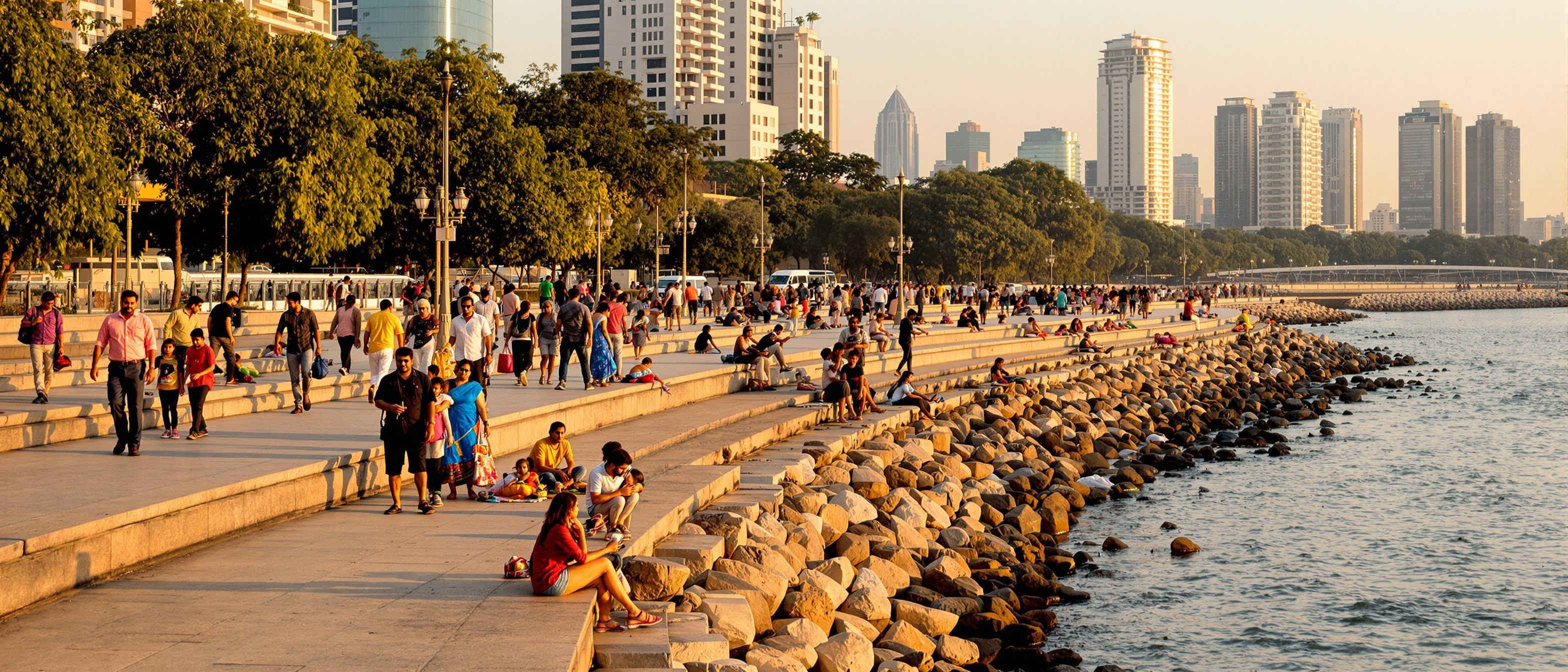
The syllabus
5 units · 5 liveTranscribed from the official B.Arch syllabus. All 5 units are live as full interactive lessons, each with original diagrams, a self-assessment quiz and a studio task.
Unit 1 — The Urban Design Studio
LiveWhat urban design is — the interface between architecture and town planning, the 3D design of the public realm between buildings; the scales of urban design and the studio process (survey → analysis → concept → masterplan → form-based code → demonstration → jury); and reading the city through figure-ground (the Nolli plan), urban morphology (Conzen) and Lynch's five elements as an analysis tool.
Unit 2 — Reading & Analysing the Site
LiveThe urban survey across physical, socio-economic, environmental, transportation, land-use and byelaw layers; context models and SWOT; Patrick Geddes's 'survey before plan' and 'conservative surgery'; and deriving the design problem and brief from analysis — the brief is found, not assumed.
Unit 3 — Urban Design Strategies & Interventions
LiveThe menu of interventions — transit-oriented development, heritage precinct conservation and adaptive reuse, urban waterfront, brownfield and greenfield, urban renewal, and market square/public space — each with its focus and an Indian example; and place-making (Gehl, Whyte, the Project for Public Spaces) and the street as public space.
Unit 4 — Urban Form, Massing & Form-Based Codes
LiveThree-dimensional urban form — massing, density and FSI, the street wall, active frontages and the enclosure ratio (height-to-width of the street); form-based codes vs conventional use-based (Euclidean) zoning; the rural-to-urban transect (T1–T6) and the SmartCode; design guidelines; and integrating sustainability (SDG 11) and smart technology.
Unit 5 — Synthesis, Demonstration & Delivery
LiveThe urban design framework and masterplan as a flexible, phased structure rather than a frozen blueprint; stakeholders and public participation (the charrette); demonstration drawings — illustrative masterplan, urban sections, 3D and serial vision; delivery through Development Authorities; and evaluating the proposal against the Responsive Environments qualities and Carmona's dimensions at jury.
Course outcomes
What you will be able to doExplain what urban design is — the 3D public realm between buildings — and read a city's structure.
Survey and analyse an urban site across physical, social, environmental and movement layers, and derive the brief.
Choose and develop an urban design intervention — TOD, heritage, waterfront, renewal — for a real context.
Shape three-dimensional urban form and write a form-based code and design guidelines.
Synthesise a phased masterplan with stakeholders and defend it against urban-design qualities at jury.
Integrate sustainability, heritage and smart-technology strategies into a deliverable proposal.
The author
Amogh N P
Architect, interior designer, and creative polymath. Studio Matrx began in his notebooks — his vision of design made honest, useful, and open to everyone. Its Academy is written and taught in his memory, and free, forever.
More about Amogh →Not a building — a piece of city.
Reading the city, analysing a site, choosing an intervention, coding the form and defending a masterplan. Read the five units, study the diagrams, then test yourself.
The curriculum is free, forever