
B.Arch CurriculumFree, forever
A tribute to Amogh N P
Architectural Design III
The rural design studio. Where Design I taught the studio process and Design II the methods, Design III turns to the village — reading an agrarian settlement, designing WITH a community rather than for it, learning from vernacular wisdom, and building sustainably with local materials and skills. Five units, six rural studio briefs, and a self-assessment rubric tuned to rural design.
Course byAmogh N P· Architect & interior designer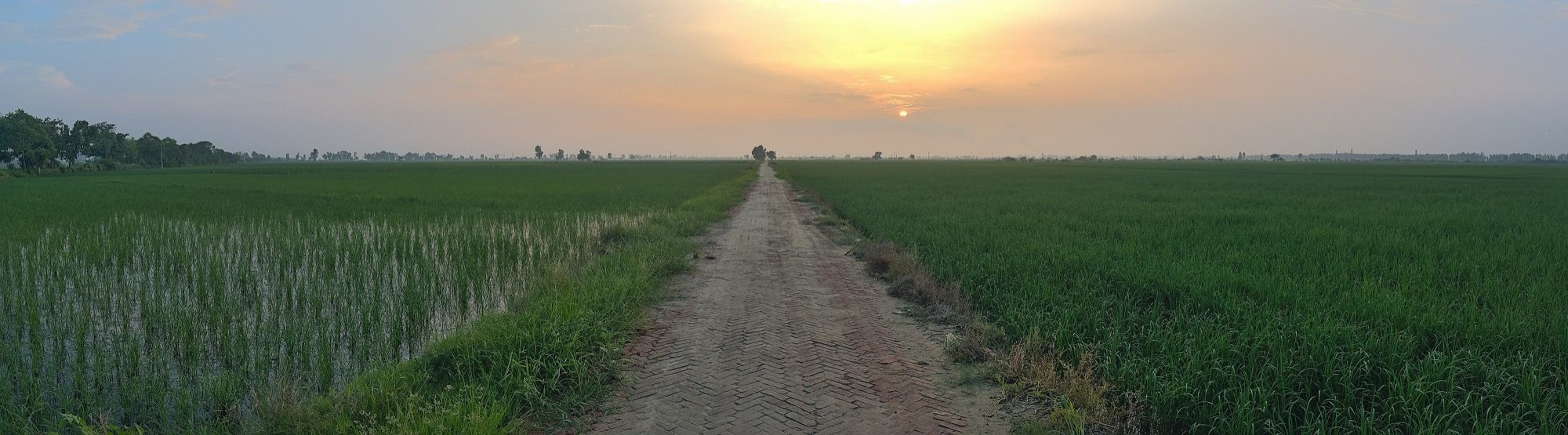
The syllabus
5 units · 5 liveTranscribed from the official B.Arch syllabus. All 5 units are live as full interactive lessons — with original diagrams, a self-assessment rubric and a quiz.
Unit 1 — Understanding Rural Contexts
LiveWhat makes a rural context different — agrarian economy, community ties, limited infrastructure and seasonal rhythms; Indian rural settlement morphology (nucleated, linear, dispersed) and how settlements respond to water, terrain and climate; and rural versus urban design thinking.
Unit 2 — Participatory Design
LiveDesigning WITH a community, not for it; the user as expert; community workshops and the Participatory Rural Appraisal (PRA) toolkit — transect walks, social mapping, seasonal calendars; the ladder of participation; and the enabling approaches of Hamdi, Habraken, Correa and Fathy.
Unit 3 — Field Survey & Case Studies
LiveReading a rural site and community through observation, interviews, questionnaires, focus groups, transect walks and mapping; running a village case study; triangulating findings; and learning from case studies such as Aranya, New Gourna and Laurie Baker's work.
Unit 4 — Heritage & Cultural Documentation
LiveDocumenting rural heritage to inform design — measured drawings, photographic survey, oral history and heritage mapping in the INTACH tradition; the regional vernacular house types of India and their climate logic; and cultural sensitivity.
Unit 5 — Sustainable Rural Design
LiveWhy rural vernacular is naturally sustainable and how to keep it; local materials and techniques (mud, CSEB, bamboo, stone, thatch) and cost-effective methods (Laurie Baker, COSTFORD); passive climate design and resource management; and the synthesis studio exercise.
Six rural studio briefs
Real, India-relevant rural projects to take on — each says what you learn and what to design.
Village community hall
Learn: Community as client; a flexible, low-cost, long-span space.
Design a samaj mandir near the village chowk for meetings, weddings and camps — with shade, cross-ventilation and an open forecourt.
Primary health sub-centre
Learn: Designing to a government norm with passive comfort.
An OPD, examination, ANM room, store and waiting in local materials, cooled passively and phased for incremental upgrade.
Rural primary school
Learn: Child-scale anthropometrics on a rural budget.
Classrooms, a verandah, a midday-meal kitchen and toilets — daylit, ventilated, low-maintenance and usable by the community after hours.
Farmer's house (incremental)
Learn: The dwelling as a working-living unit; supports and infill.
Integrate living, storage, cattle and drying/processing space in a house designed to be built and extended as the family affords.
Weekly haat / market shed
Learn: Designing for periodic, intense use.
A covered shed for the weekly market — flexible stalls, shade, a water point, waste handling — minimal footprint, maximum local economy.
Anganwadi (creche & nutrition centre)
Learn: Designing for toddlers and caregivers to ICDS norms.
A play-learning room, kitchen, toilet, store and a safe shaded outdoor area, built in local materials with a buildable detail set.
Course outcomes
What you will be able to doAnalyse the distinctive features and challenges of rural environments — economic, social and infrastructural.
Apply participatory design methods and involve rural communities in the design process.
Conduct field surveys and case studies in rural areas to gather and analyse data effectively.
Document the historical and cultural heritage of rural areas through various research methods.
Design sustainable, culturally sensitive solutions tailored to rural communities and traditions.
Understand the essence of rural planning and the vernacular as collective, evolved design.
Image credits
Every photograph is a verified Creative-Commons or Public-Domain work from Wikimedia Commons, used with attribution. The hand-drawn diagrams are original Studio Matrx work.
- Road through paddy fields in rural Haryana, India — UnpetitproleX, CC BY-SA 4.0
- Construction traditionnelle dans le désert du Thar (Rajasthan) (7) — Ji-Elle, CC BY-SA 4.0
- Fields Zangla Zanskar River Ladakh Jun24 A7CR 00981 — This Photo was taken by Timothy A, CC BY-SA 4.0
- VSTF library inaugration at Bhadwad Nawapur District Nandurbar Maharashtra 17 oct 2018 — Mvstfnandurbar, CC BY-SA 4.0
- Women in adivasi village, Umaria district, India — Yann (talk), CC BY-SA 4.0
- Road through paddy fields in rural Haryana, India — UnpetitproleX, CC BY-SA 4.0
- Aangan in village crafts museum — HameshaIndia, CC BY-SA 4.0
- Shirgul Maharaj Temple, Churdhar, Himachal Pradesh, India — UnpetitproleX, CC BY 4.0
- Kanadukathan-WUS04201 — Rainer Halama, CC BY-SA 4.0
- Indian vernacular architecture — Ritwikbmca, CC BY-SA 4.0
- A traditional Assam-type mud and bamboo house in rural Assam,India(Goalpara District) — পাপৰি বৰা, CC BY-SA 4.0
- Rural painter — Srimanta Ray, CC BY-SA 4.0
- Houses Alley Econy Nilgiris Nov24 A7CR 05164 — Timothy A. Gonsalves, CC BY-SA 4.0
- Artistic mud house at shantiniketan — User: rajeevakumara, CC BY 3.0
- Patil wada Wall Painting — Patilvishal96, CC BY-SA 4.0
The author
Amogh N P
Architect, interior designer, and creative polymath. Studio Matrx began in his notebooks — his vision of design made honest, useful, and open to everyone. Its Academy is written and taught in his memory, and free, forever.
More about Amogh →Design with the village, not for it.
Read the rural context, work with the community, learn from the vernacular and build sustainably. Read the five units, take on a brief, then score your scheme.
The curriculum is free, forever