
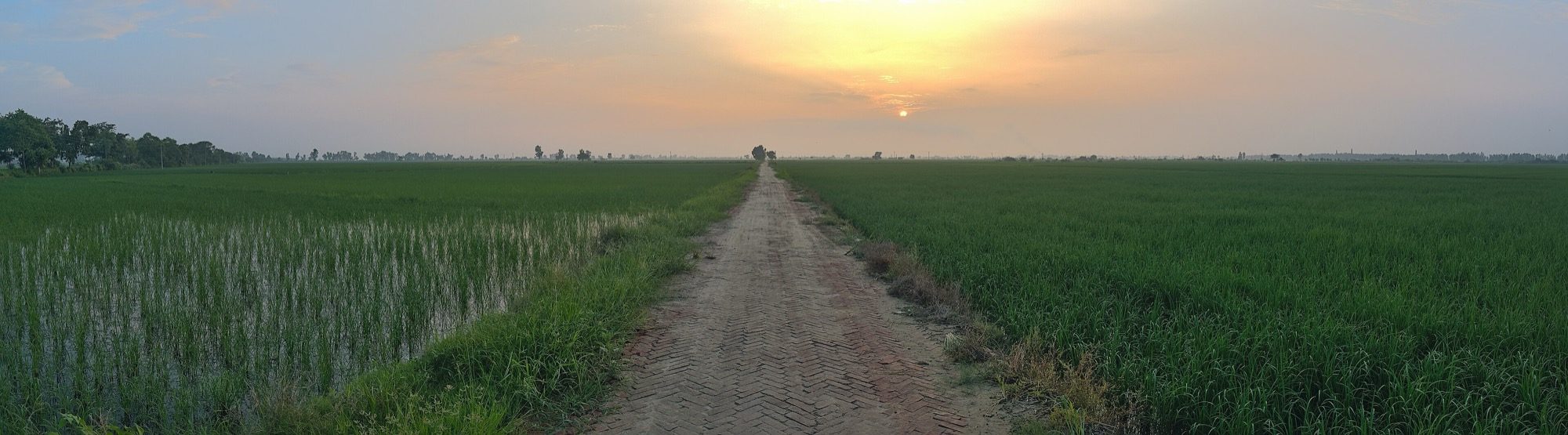
Field Survey & Case Studies
Reading a village layer by layer — and learning from the best.
A good village study is layered, not a single measured plan. You read the settlement through many lenses — watching, asking, mapping — and you triangulate, never trusting one method alone. Then you learn from the schemes that did it well: Aranya's incremental housing, Fathy's New Gourna, Laurie Baker's cost-effective work.
Learning objectives
By the end of this lesson, you will be able to — mapped to the course outcomes for Architectural Design III:
Choose field methods — observation, interview, questionnaire, focus group, mapping — to read a village.
Run a village case study, recording pattern, house types, materials and livelihoods.
Triangulate findings across methods rather than trusting one alone.
Draw lessons from Aranya, New Gourna and Laurie Baker's work.
Reading a village in the field
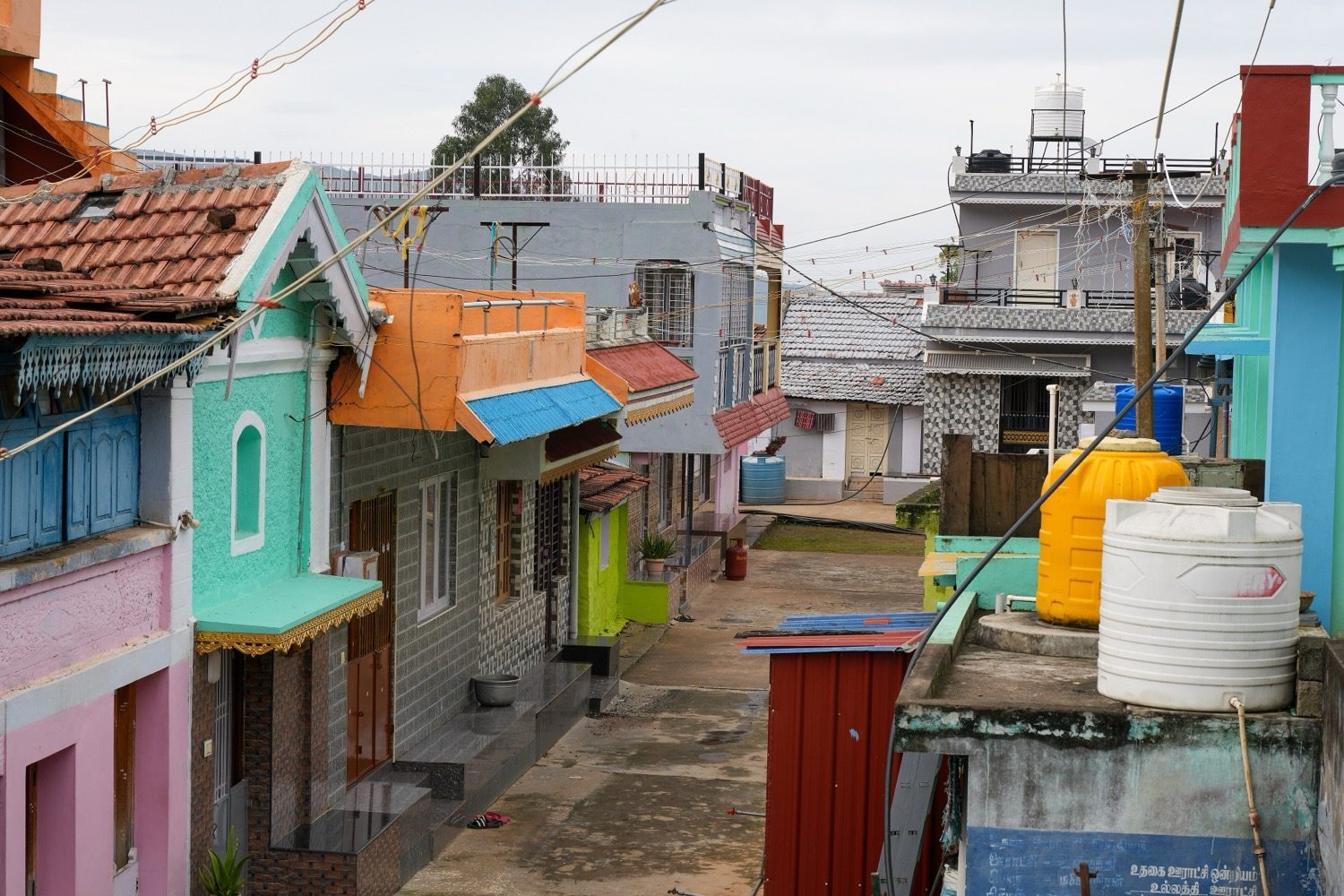
Combine observation, interviews, questionnaires, focus groups, transect walks and mapping into a layered portrait — pattern, house types, materials, climate, community spaces, livelihoods and change — and triangulate the findings.[5, 1]
Many ways to read a site
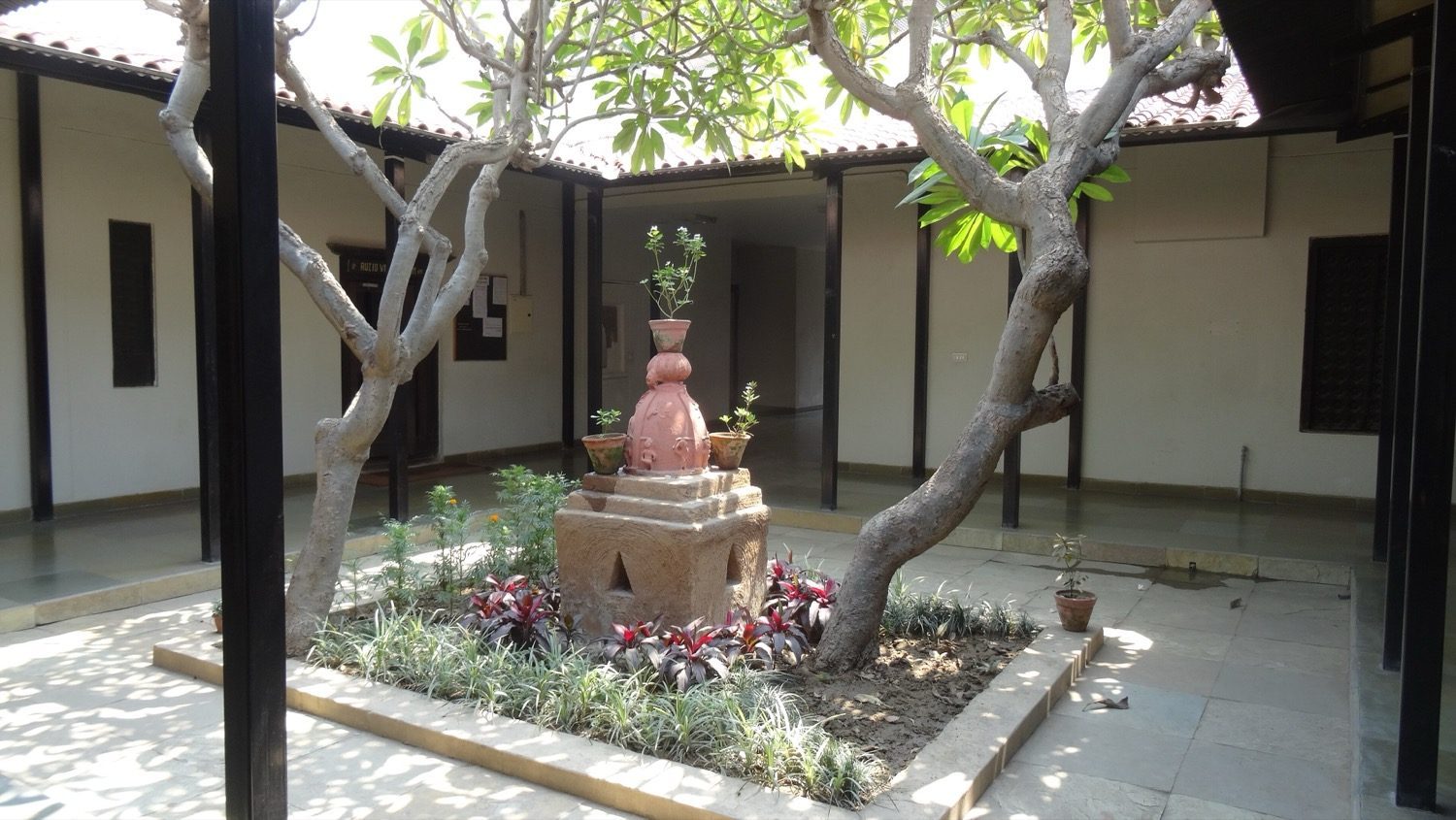
Field reading combines direct observation (actual behaviour and use), interviews (stated needs and history), questionnaires, focus-group discussions, measured documentation, transect walks and mapping. Each captures something different. The measured/instrument side belongs with the Surveying course; this studio reads the social-spatial life.[5, 1]
Triangulate the findings
Cross-check observation against interviews against the seasonal calendar; pair the measured with the lived; date your observations. This is how a village study becomes reliable.[5]
Methods & lessons
| Aspect | One | The other |
|---|---|---|
| Observation | Reveals real behaviour and use | Silent on intent / meaning |
| Interview | Reveals stated needs, history, meaning | Subjective — needs triangulation |
| Data pairing | Quantitative: dimensions, counts | Qualitative: who, when, why |
| Aranya lesson | Process: sites-and-services, incremental | Not: a fixed finished form to copy |
| New Gourna lesson | Build with the community in local material | Participation & politics decide success |
Key terms
Reading actual behaviour and use on site — objective, but silent on 'why'.
A guided group conversation surfacing shared needs and disagreements.
A structured cross-settlement walk recording land, use and assets zone by zone.
Cross-checking findings across several methods so no single one is trusted alone.
Public provision of serviced plots on which residents build incrementally (Aranya).
An in-depth study of a real village or project to draw transferable lessons.
Studio task
Write a one-page field-study plan for a village: which methods you will use, what each will capture, and how you will triangulate. Then study one case (Aranya, New Gourna or a Laurie Baker project) and note the process lesson — not just the form — you would carry into your own design.
Self-assessment
1. Aranya, Indore is best described as a —
2. Checking interview claims against observation and a seasonal calendar is called —
3. A common error in a village study is to —
Recap
References & further reading
- [1]Amos Rapoport, House Form and Culture. Prentice-Hall, 1969.
- [4]Aga Khan Award for Architecture — Aranya Community Housing, Indore (B.V. Doshi / Vastu-Shilpa Foundation), 1995 cycle.
- [5]Robert Chambers, Rural Development: Putting the Last First. Longman, 1983.
- [7]Hassan Fathy, Architecture for the Poor. University of Chicago Press, 1973.
Further reading
- Robert Chambers, Rural Development: Putting the Last First.
- Gautam Bhatia, Laurie Baker: Life, Work & Writings. Penguin Books India, 1991.
- Aga Khan Award for Architecture archives — Aranya, Indore.
Sources gathered and fact-checked June 2026. Published values vary by source, sample and method — treat as indicative and confirm against the cited standard before structural use.
The author
Amogh N P
Architect, interior designer, and creative polymath. Studio Matrx began in his notebooks — his vision of design made honest, useful, and open to everyone. Its Academy is written and taught in his memory, and free, forever.
More about Amogh →