
Heritage & Cultural Documentation
Recording vernacular wisdom so you can design with it.
Vernacular buildings are a textbook written in mud, timber and stone — climate response and cultural pattern worked out over centuries. Documenting them is how you read that book before it is lost, and turn it into a design resource. You document to learn principles you will redeploy, not a façade to copy.
Learning objectives
By the end of this lesson, you will be able to — mapped to the course outcomes for Architectural Design III:
Explain why heritage is documented — to learn from it and inform design.
Use documentation methods — measured drawings, photographs, oral history, mapping.
Read the climate logic of India's regional vernacular house types.
Document with cultural sensitivity, recording intangible as well as tangible heritage.
Documenting heritage
Record with measured drawings, photographic survey, oral history and heritage mapping — building an INTACH-style inventory — and do it with cultural sensitivity, capturing intangible heritage (ritual, use, craft) as well as the fabric.[1, 9]
India's vernacular house types
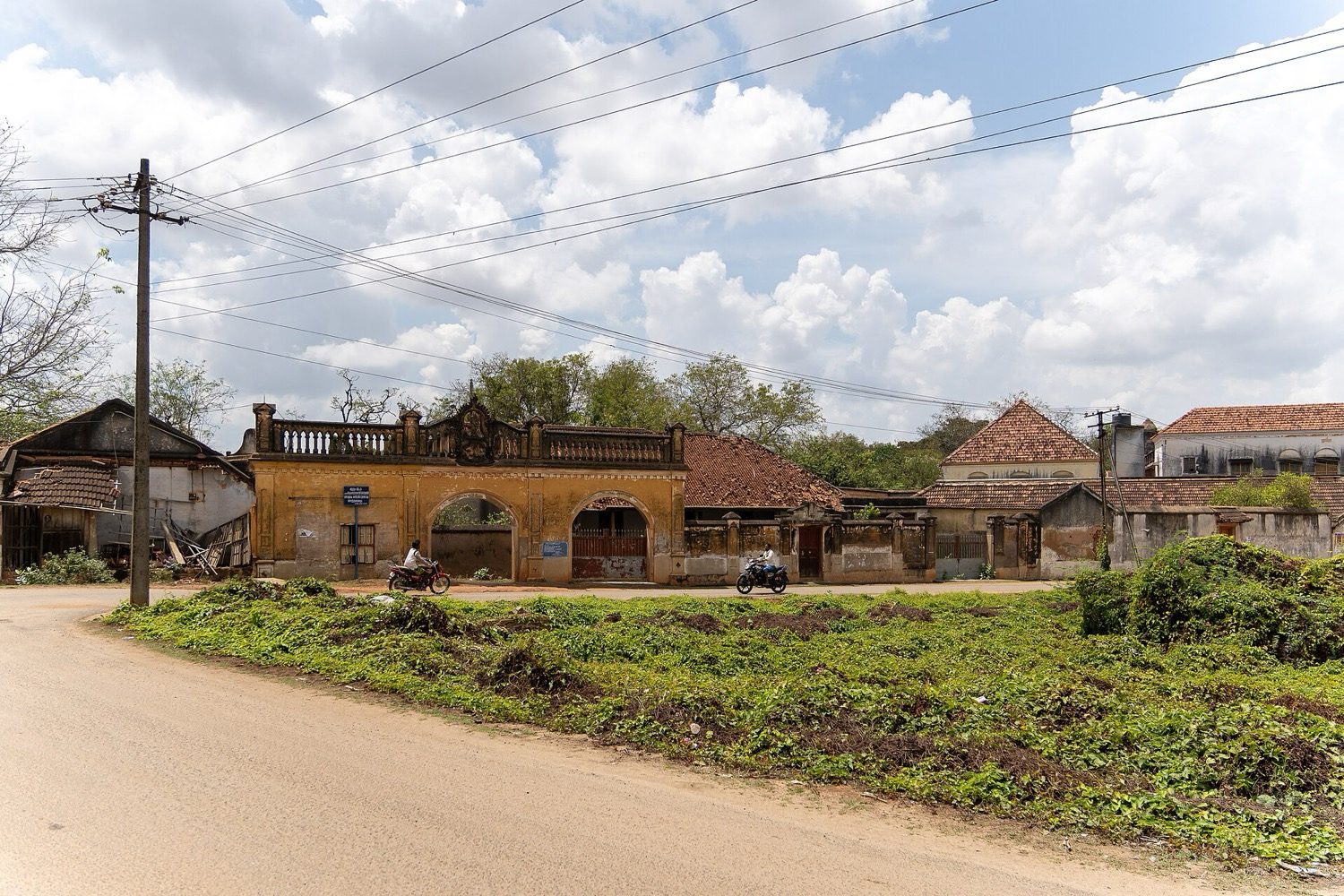
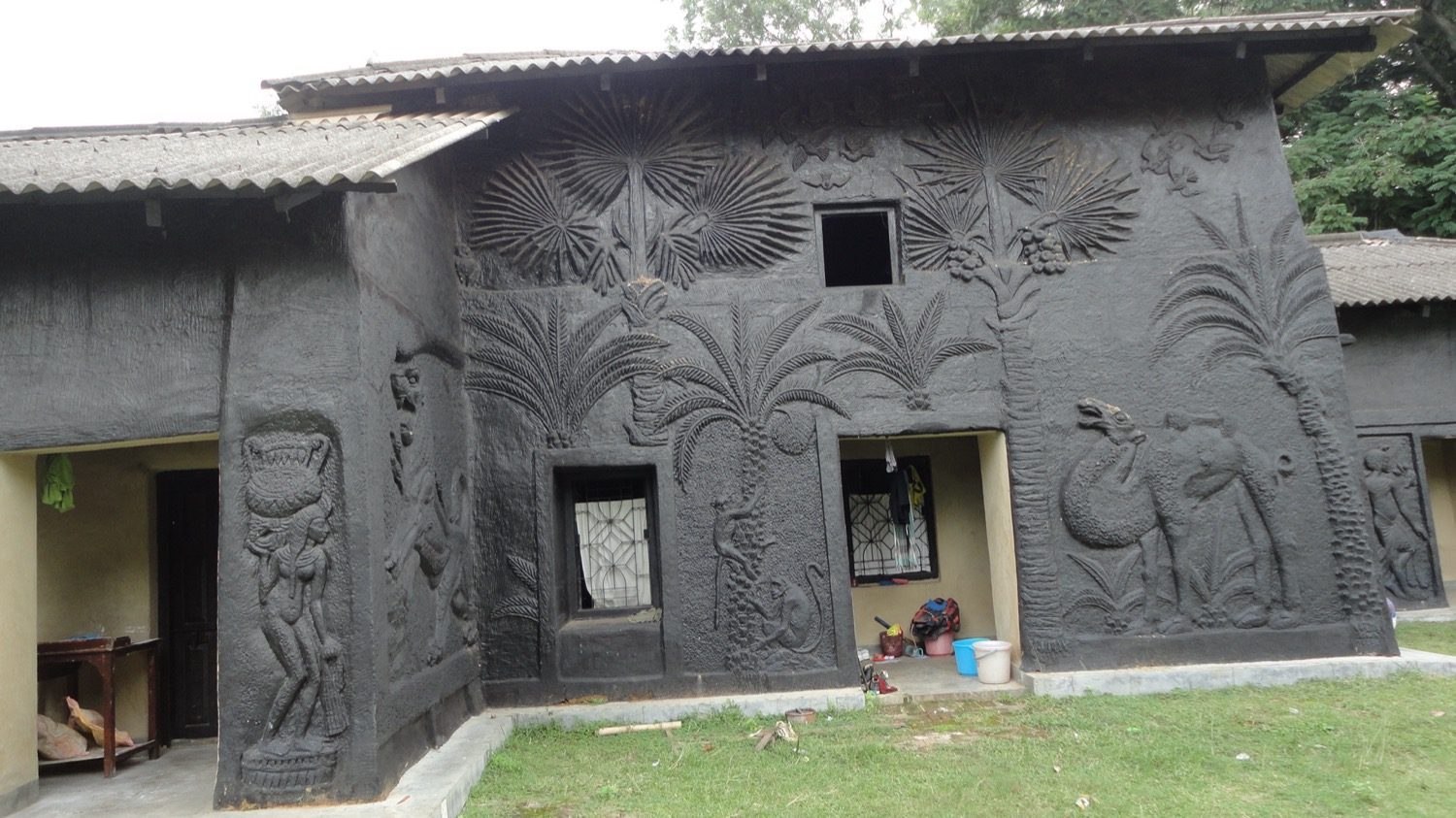
Each region answers its climate in its own way — the courtyard, verandah, jaali, thick mud wall and raised plinth recurring as devices. Read these for the logic, not the look.[10, 6]
| House type | Region | Material | Climate / cultural response |
|---|---|---|---|
| Nalukettu | Kerala | Timber, sloping clay-tiled roofs | A central courtyard (nadumuttam) and steep tiled roofs shed heavy monsoon rain and ventilate the hot-humid interior. |
| Haveli | Rajasthan | Stone, lime, carved jaali screens | An inward courtyard, thick thermal-mass walls and jaali cool the hot-dry interior and give privacy. |
| Bhunga | Kutch, Gujarat | Mud / cob walls, conical thatch | A circular plan resists earthquakes and desert storms; the thick mud wall buffers extreme heat. |
| Assam-type (Ikra) | Assam & North-East | Bamboo-reed lattice + plaster, raised plinth | A light frame flexes in earthquakes; the raised level and light walls suit floods and high humidity. |
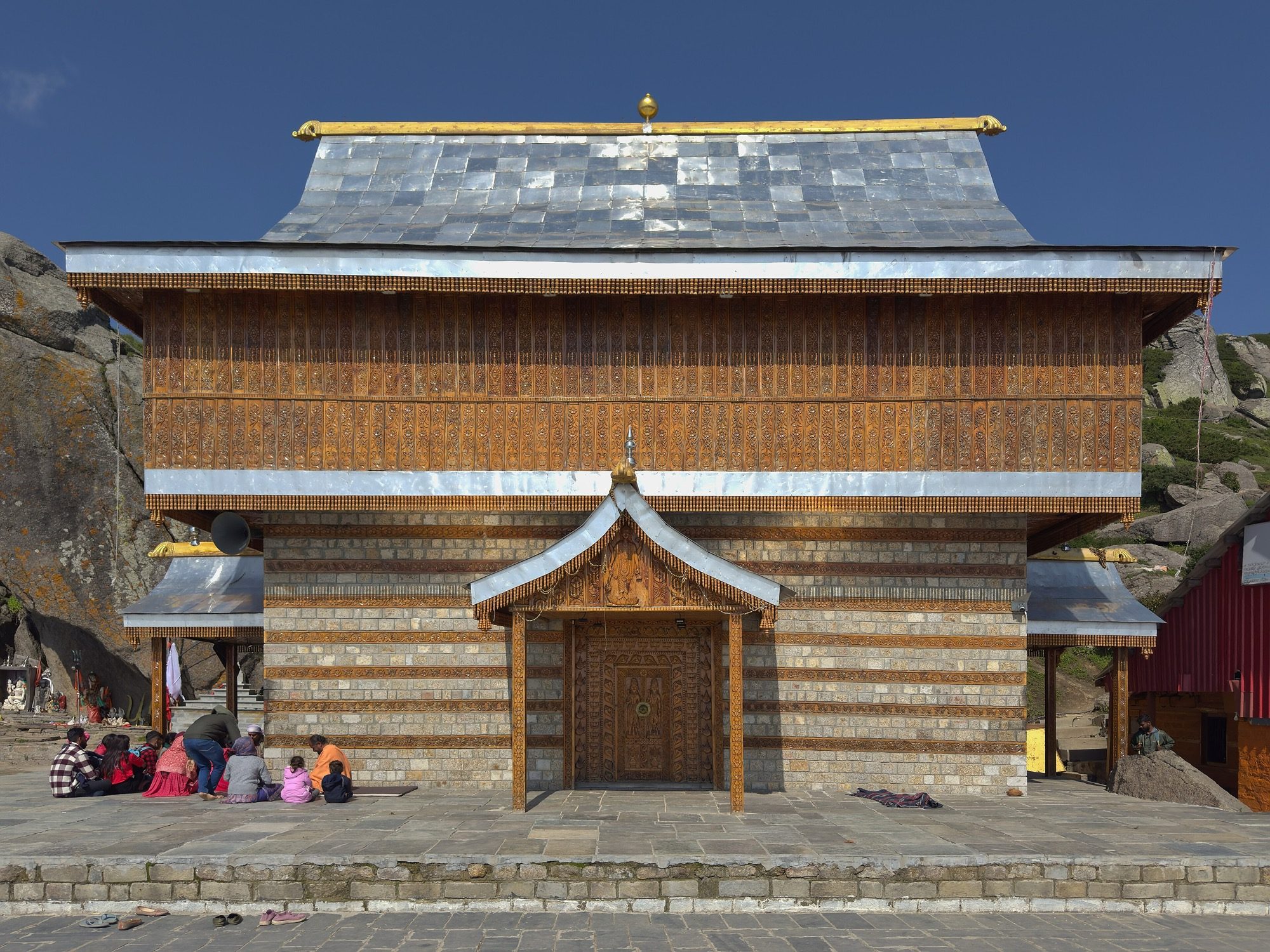
| Kath-kuni | Western Himalaya | Alternating dry-stacked stone & deodar timber | Timber-bonded masonry is flexible against earthquakes; thick walls retain heat in the cold. |
| Bangla (do-chala) | Bengal | Mud walls, curved thatch / tile roof | The curved twin-slope roof sheds heavy monsoon rain — the form the Mughals later borrowed as the 'Bangla' roof. |
Climate & documentation
| Aspect | One | The other |
|---|---|---|
| Hot-dry vs warm-humid | Haveli: thick walls, small openings | Nalukettu: light, ventilated, steep roof |
| Seismic strategy | Kath-kuni: timber bands flex in stone | Assam-type: light bamboo frame flexes |
| Documentation | Measured drawing: captures form | Oral history: captures meaning & use |
| Heritage value | Tangible: fabric, structure, craft | Intangible: ritual, oral tradition, skill |
| Studio purpose | Document to learn principles | Not to copy a façade |
Key terms
Kerala timber courtyard house around a central nadumuttam.
Rajasthani inward courtyard mansion of stone with jaali screens.
Circular Kutch mud-walled, thatch-roofed hut — earthquake- and heat-resistant.
Himalayan technique of alternating dry-stacked stone and timber bands.
The open central space organising ventilation, light, microclimate and ritual life.
A perforated stone or lattice screen modulating light, air, heat and privacy.
Recording and inventorying a settlement's heritage assets and their condition.
Rituals, oral tradition and building know-how — invisible in a measured drawing.
Studio task
Document one vernacular house: a measured plan and section, a short oral-history note from a resident, and a paragraph naming the climate and cultural logic behind its courtyard, roof or wall. Then state one principle you would carry into a new rural design.
Self-assessment
1. The circular plan of the Kutch bhunga is mainly a response to —
2. In INTACH's listing approach, heritage buildings are graded —
3. In a rural design studio, you document a vernacular house mainly to —
Recap
References & further reading
- [1]Amos Rapoport, House Form and Culture. Prentice-Hall, 1969.
- [6]Bernard Rudofsky, Architecture Without Architects. Museum of Modern Art, 1964.
- [9]INTACH, Charter for the Conservation of Unprotected Architectural Heritage and Sites in India. New Delhi: INTACH, 2004.
- [10]Kulbhushan Jain & Minakshi Jain, Architecture of the Indian Desert. Ahmedabad: AADI Centre, 2000.
Further reading
- Kulbhushan Jain & Minakshi Jain, Architecture of the Indian Desert.
- Gautam Bhatia, Laurie Baker: Life, Work & Writings. Penguin, 1991.
- Bernard Rudofsky, Architecture Without Architects.
Sources gathered and fact-checked June 2026. Published values vary by source, sample and method — treat as indicative and confirm against the cited standard before structural use.
The author
Amogh N P
Architect, interior designer, and creative polymath. Studio Matrx began in his notebooks — his vision of design made honest, useful, and open to everyone. Its Academy is written and taught in his memory, and free, forever.
More about Amogh →