
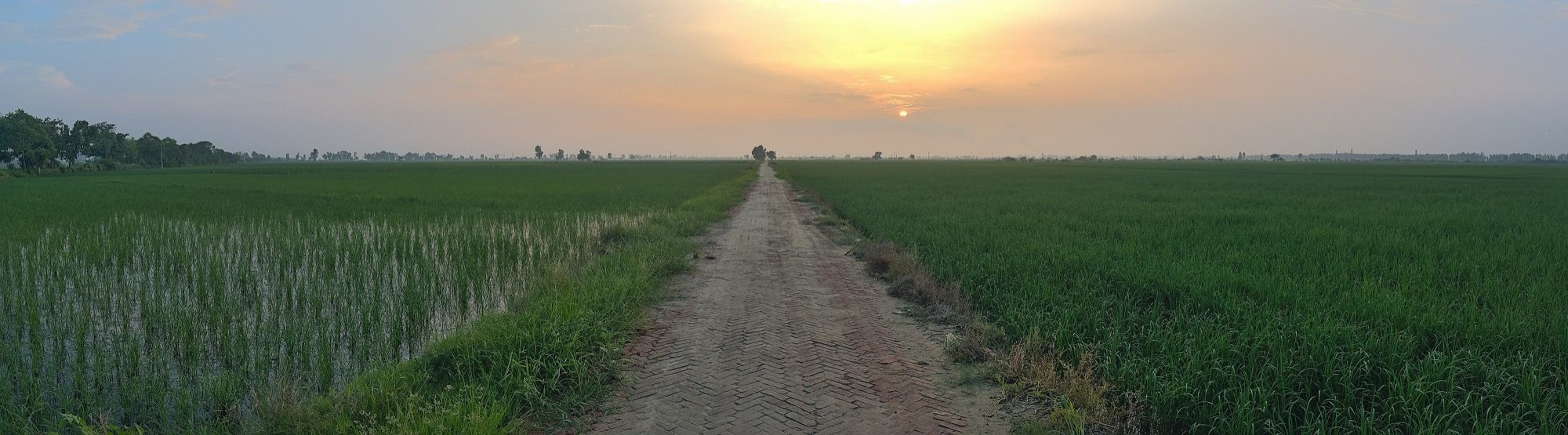
Understanding Rural Contexts
Reading the village before you design in it.
A rural site is never empty. It comes with an agrarian economy, a web of kinship, thin infrastructure and strong seasonal rhythms — and a built form that has answered to land and climate for generations. Before you draw a line, you have to learn to read the village: how it is shaped, what holds it together, and why designing here is not designing in a city.
Learning objectives
By the end of this lesson, you will be able to — mapped to the course outcomes for Architectural Design III:
Explain what distinguishes a rural context — economy, community, infrastructure, season.
Read Indian settlement morphology — nucleated, linear and dispersed — and its drivers.
Identify the village core and its foci (chowk, temple, well, tank).
Contrast rural and urban design thinking — client, budget, materials, build.
What makes a context rural
Rural contexts cluster a set of traits — agrarian economy, community ties, thin infrastructure, seasonal rhythm — and take recognisable settlement forms shaped by water, terrain and climate.[1, 6]
More than a population count
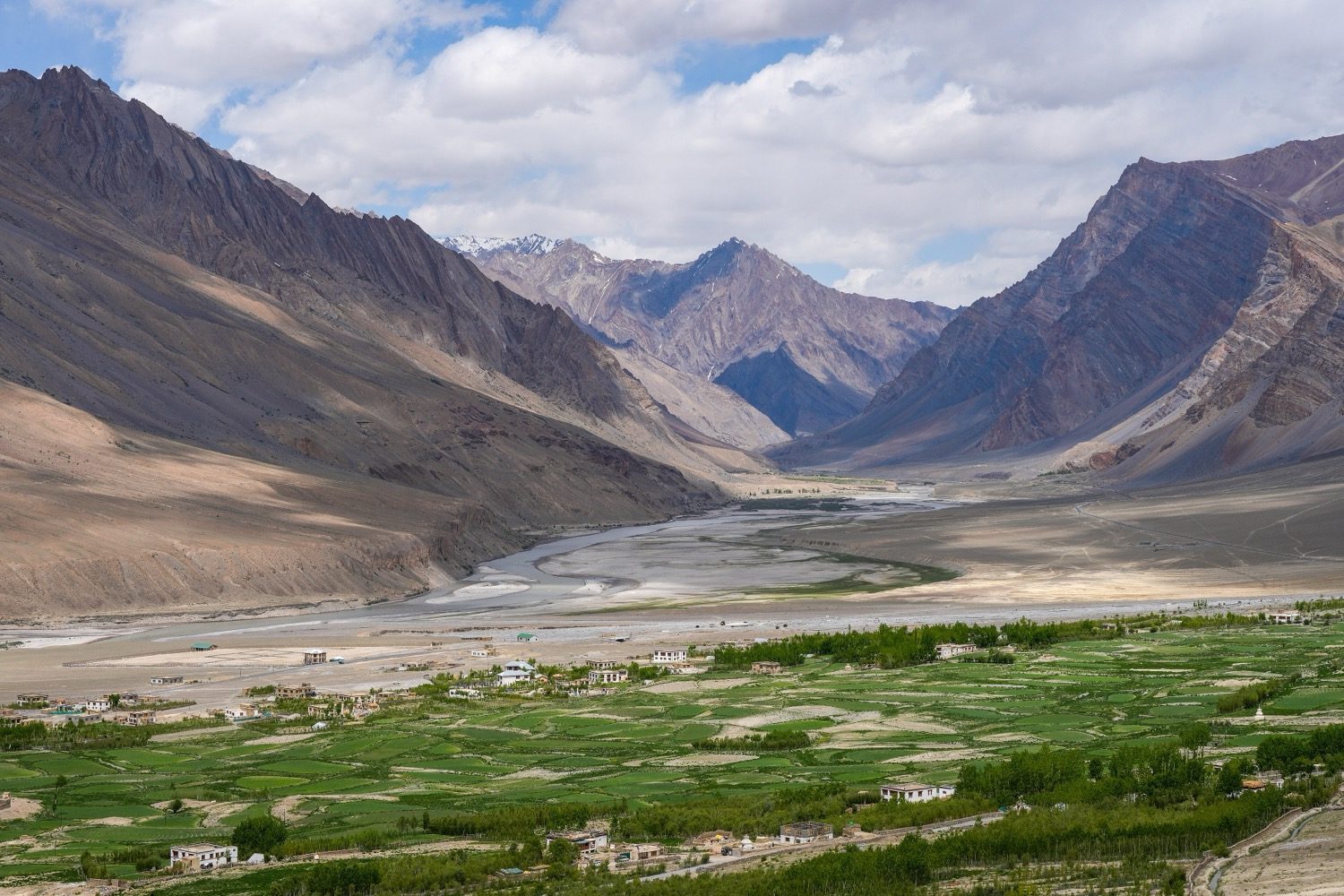
A rural context clusters traits: lower density, an agrarian/primary economy, dense kinship ties, thin infrastructure, and strong seasonal rhythms tied to the monsoon and harvest. The built form answers to land and climate first — the 'site' is inseparable from its water, soil and social fabric.[1]
Rural vs urban design thinking
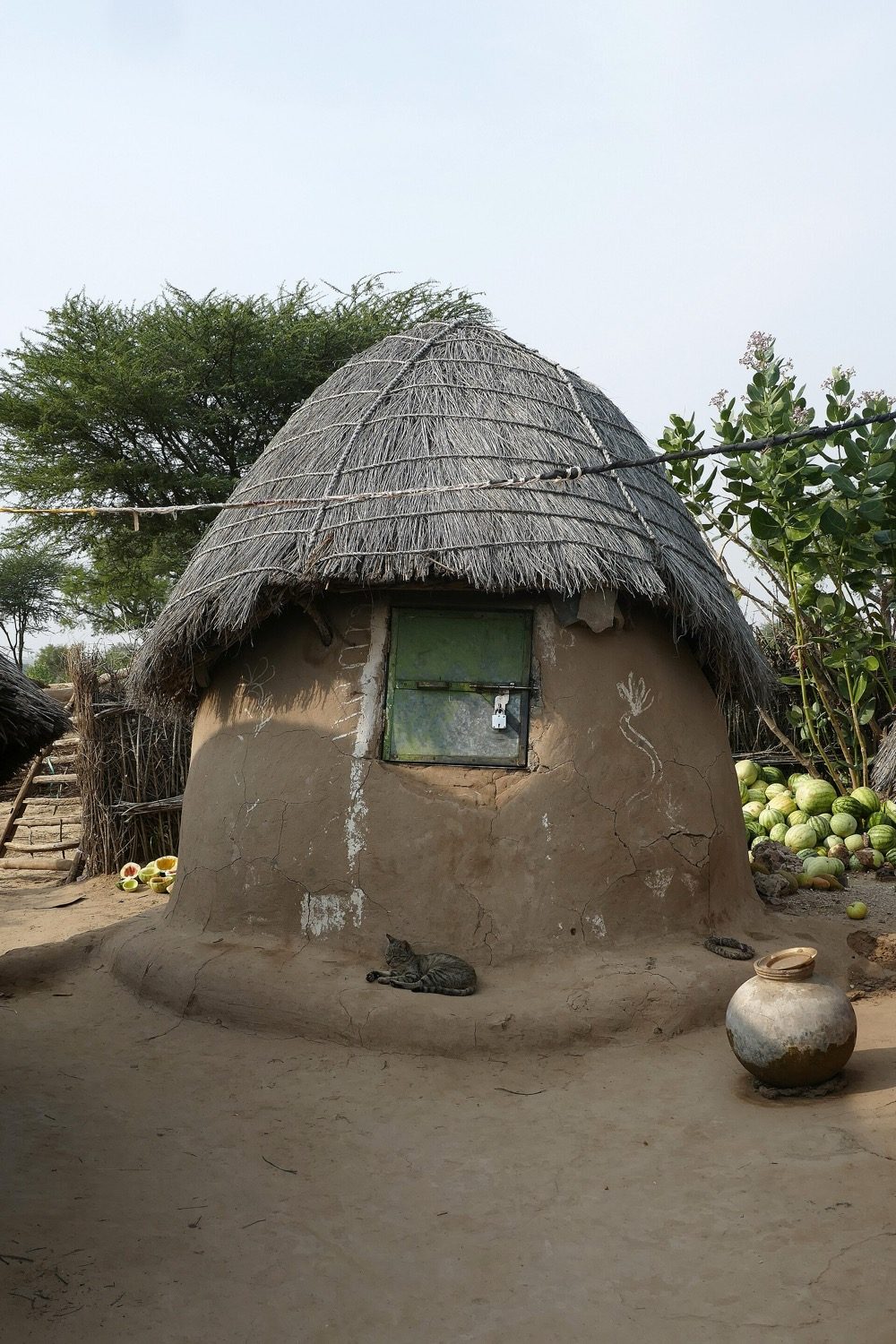
Rural projects are incremental and owner-built, lean on local materials and skills, and treat the community as the client — value measured by appropriateness and affordability, not a finished object.[3, 4]
Rural vs urban, at a glance
| Aspect | Rural | Urban / other |
|---|---|---|
| Client | Rural: the community | Urban: a single owner / developer |
| Build | Rural: incremental, owner-built | Urban: contractor / developer-built |
| Materials | Rural: local materials & skills | Urban: market / imported materials |
| Settlement | Nucleated: fertile plains, shared core | Dispersed: rugged / water-poor terrain |
| Value measured by | Appropriateness & affordability | Finished, frozen object |
Key terms
Building shaped by local climate, materials, skills and custom rather than formal design.
Houses packed around a core — typical of fertile plains.
Isolated farmsteads spread across rugged or water-poor terrain.
The original inhabited core of a village (Maharashtra) — houses, temple, shops, panchayat.
The common gathering space at a village's heart.
Treating the collective body of users, not a single owner, as the project's client.
Studio task
Pick a real village you know. Sketch its settlement pattern (nucleated, linear or dispersed), mark the core and its foci (chowk, temple, well, tank), and write three ways its form answers water, terrain or climate. Then list two ways designing here differs from a city project.
Self-assessment
1. The original inhabited core of a village in Maharashtra is the —
2. Dispersed (scattered) settlements are most associated with —
3. The biggest shift from urban to rural design is that the client becomes —
Recap
References & further reading
- [1]Amos Rapoport, House Form and Culture. Englewood Cliffs, NJ: Prentice-Hall, 1969.
- [3]Nabeel Hamdi, Housing Without Houses: Participation, Flexibility, Enablement. London: Intermediate Technology Publications, 1995.
- [4]Charles Correa, Housing and Urbanisation. Mumbai: Urban Design Research Institute, 1999.
- [6]Bernard Rudofsky, Architecture Without Architects. New York: Museum of Modern Art, 1964.
Further reading
- Amos Rapoport, House Form and Culture.
- Bernard Rudofsky, Architecture Without Architects.
- Charles Correa, Housing and Urbanisation.
Sources gathered and fact-checked June 2026. Published values vary by source, sample and method — treat as indicative and confirm against the cited standard before structural use.
The author
Amogh N P
Architect, interior designer, and creative polymath. Studio Matrx began in his notebooks — his vision of design made honest, useful, and open to everyone. Its Academy is written and taught in his memory, and free, forever.
More about Amogh →