
Sustainable Rural Design
Local materials, local skills, climate response — by design.
Rural building was sustainable long before the word existed — local materials, local hands, climate response. The studio's task is to keep that logic in new work: neither a generic concrete box nor a frozen museum of mud. This final unit gathers the materials, the cost-effective techniques and the passive devices, and asks you to synthesise everything into one rural design.
Learning objectives
By the end of this lesson, you will be able to — mapped to the course outcomes for Architectural Design III:
Explain why local materials, skills and climate response make rural design sustainable.
Choose earth and natural materials (mud, CSEB, bamboo) with their merits and limits.
Use cost-effective techniques — rat-trap bond, filler slab — and passive devices.
Synthesise context, participation, vernacular learning and sustainability into a design.
Building sustainably in the village
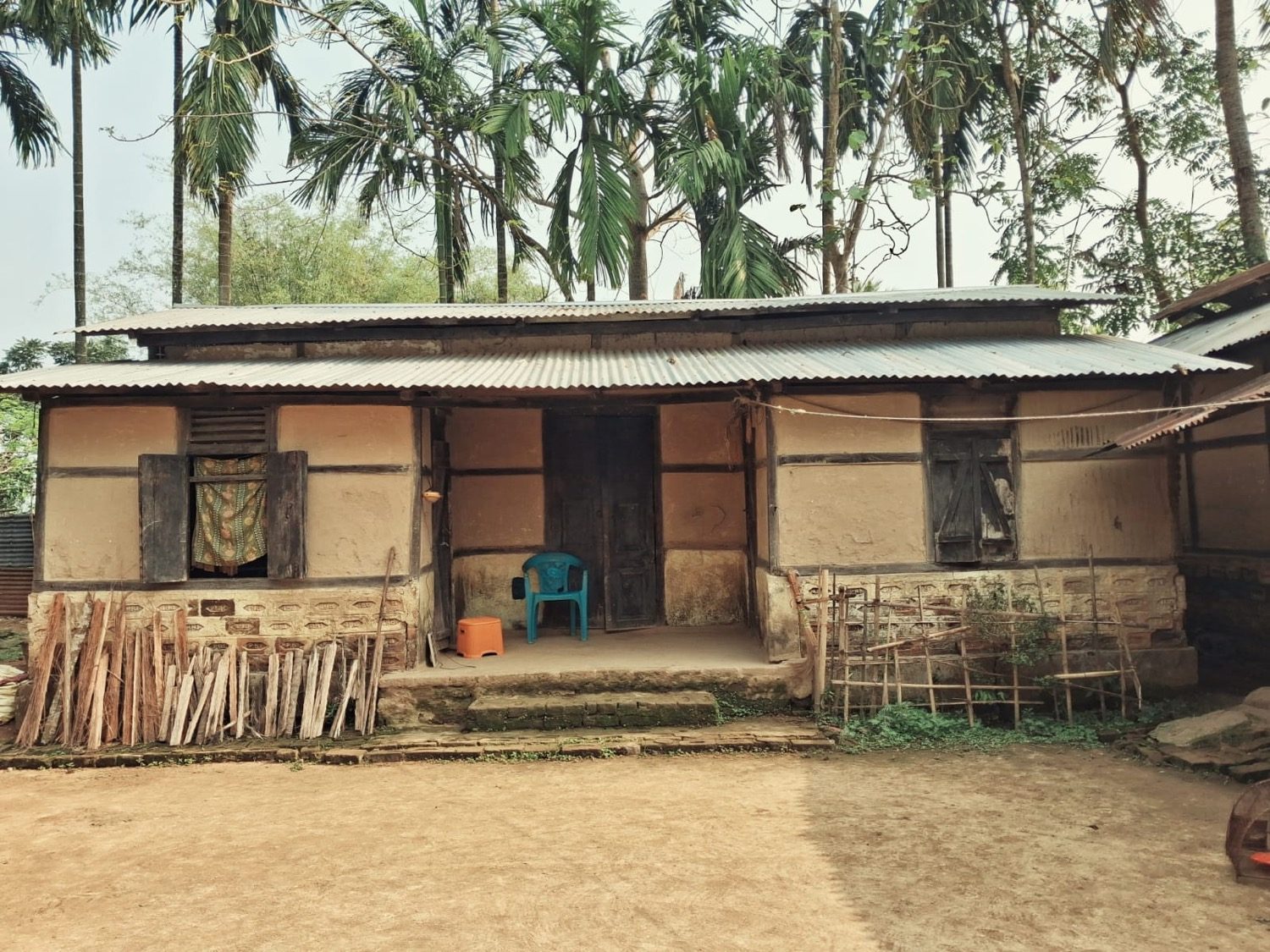
Earth (adobe, rammed earth, CSEB), bamboo, stone and thatch are low-carbon and local; Laurie Baker's rat-trap bond and filler slab cut cost and material; courtyards, verandahs and thermal mass give comfort without machinery.[1, 11, 12]
Keep the vernacular logic
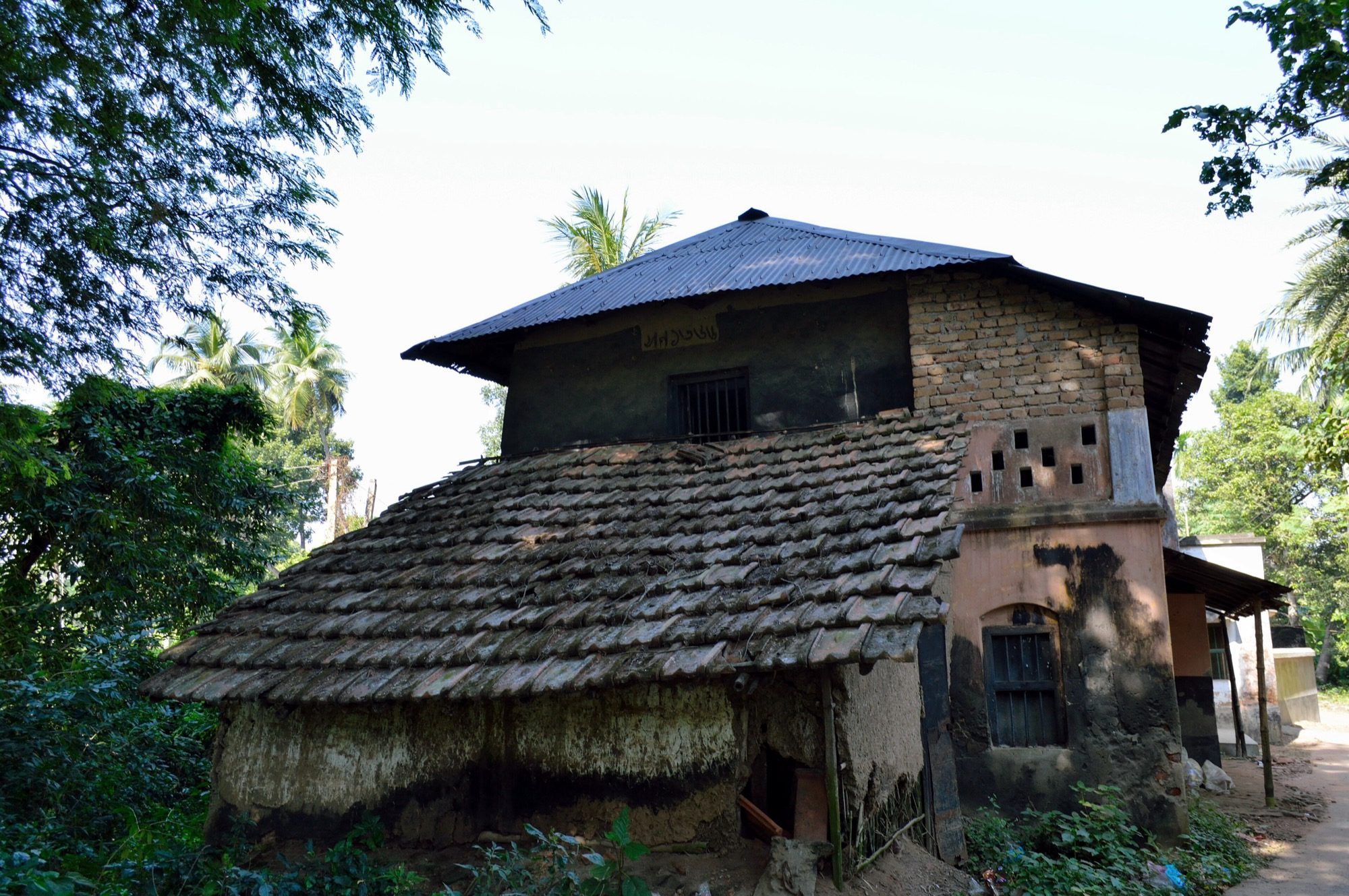
Rural buildings are low-impact when they use local materials, local skills and climate response — minimising transport, embodied energy and imported skills. The task is to keep this in new construction: not a generic concrete box, and not a frozen museum of mud. Sustainability is the starting premise, not a bolt-on.[1, 11]
The sustainable choices
| Aspect | One | The other |
|---|---|---|
| Wall material | Mud / CSEB: low carbon, thermal mass; needs moisture care | Fired brick: durable, code-accepted; high kiln energy |
| Sourcing | Local: low transport, supports village economy | Imported: consistent supply, high cost & carbon |
| Roof slab | Filler slab: ~30% less concrete/steel | Solid RCC slab: heavier, costlier, higher carbon |
| Sustainability stance | Integral — from day one | Bolt-on — a panel or label added later |
| Comfort | Passive — courtyard, mass, ventilation | Active — machinery and energy |
Key terms
Compressed Stabilised Earth Block — soil pressed with ~5% stabiliser, unfired; low embodied energy.
Moist soil compacted in formwork into monolithic load-bearing walls with high thermal mass.
Brick-on-edge bond with an internal cavity — ~30% material saving and better insulation (Baker).
An RCC slab with inert filler in the low-stress tension zone — ~30% less concrete and steel (Baker).
A material's capacity to store and slowly release heat, flattening day–night temperature swings.
The total energy to extract, make and transport a material — low for local earth and bamboo.
Achieving comfort through form, orientation, mass and ventilation rather than machinery.
Score your rural scheme
Bring it all together. Score your studio scheme against the six things a rural design is judged on — context and climate, participation, cultural sensitivity, local materials, sustainability, and resolution.
Score your rural scheme
Reads the settlement, water, terrain and climate, and responds passively (orientation, shade, ventilation, roof).
The brief was shaped WITH users (PRA / workshop), and that evidence is visible — not just claimed.
Respects custom, social space, privacy and belief — without entrenching inequity or romanticising poverty.
Buildable by local labour with locally available, affordable materials.
Can be built, maintained, extended and afforded over time (supports/infill, phasing, low running cost).
Spatially resolved and clearly communicated, with the participatory process documented.
Weighted score
Score all six criteria…
0%
Studio exercise
Take one of the six rural briefs and carry it through: read the context, shape the brief with the community, learn from a vernacular precedent, and design in local materials with passive comfort. Then score the result on the rubric above and note what you would iterate.
Self-assessment
1. The Laurie Baker technique that places bricks on edge to form an insulating cavity is the —
2. CSEB blocks differ from ordinary clay bricks because they are —
3. The soundest stance on sustainability in rural design is to treat it as —
Recap
References & further reading
- [1]Amos Rapoport, House Form and Culture. Prentice-Hall, 1969.
- [11]Bernard Rudofsky, Architecture Without Architects. Museum of Modern Art, 1964.
- [12]Gautam Bhatia, Laurie Baker: Life, Work & Writings. New Delhi: Penguin Books India, 1991.
Further reading
- Gautam Bhatia, Laurie Baker: Life, Work & Writings.
- Auroville Earth Institute — Compressed Stabilised Earth Block manuals.
- Kulbhushan Jain & Minakshi Jain, Architecture of the Indian Desert.
Sources gathered and fact-checked June 2026. Published values vary by source, sample and method — treat as indicative and confirm against the cited standard before structural use.
The author
Amogh N P
Architect, interior designer, and creative polymath. Studio Matrx began in his notebooks — his vision of design made honest, useful, and open to everyone. Its Academy is written and taught in his memory, and free, forever.
More about Amogh →