
The home that never buys a tanker
A representative Bengaluru house designed around rain: every roof a catchment, wells that refill the borewell, and a family that mostly stopped calling the tanker.
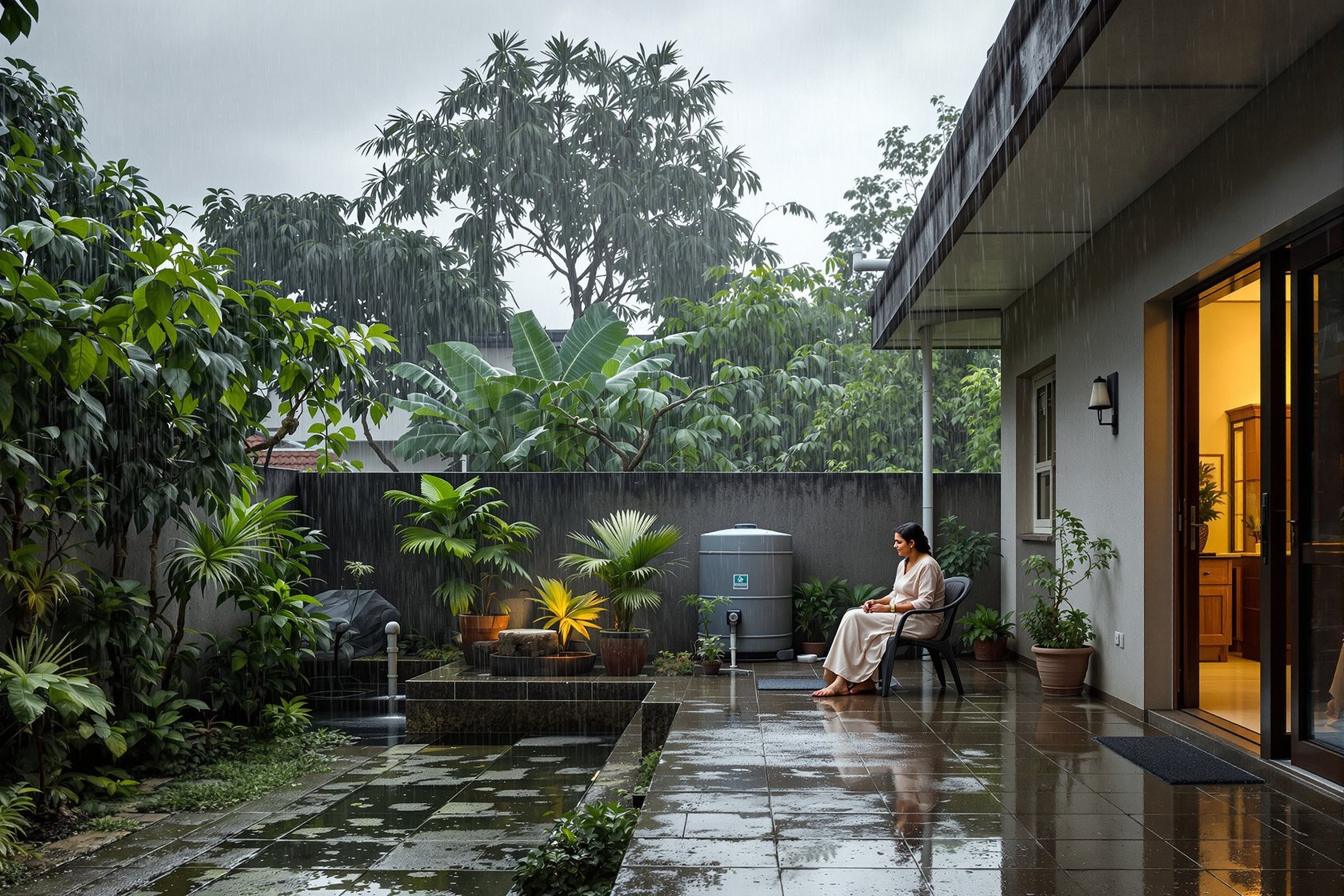
In their old flat, the sound they listened for was the tanker's horn. Two lorries a week in summer, sometimes three, each one a phone call and a wait and a cash payment and a quiet resentment at paying so much for water that arrived warm and smelling faintly of the last thing the tank had carried. When they built their own house, in one of those Bengaluru layouts where the borewells go deeper every year and the water comes up hard as chalk, they made one promise early: the house would be built around the rain, not around the lorry. This is a representative home of that type, and its story is the ordinary, achievable kind.
Every roof is a catchment
The first idea was simple and changed everything downstream. Nothing that falls on the house is allowed to leave for free. Every roof surface — the main terrace, the lower utility roof, the porch — was pitched and plumbed to drain into a single collection line rather than sprayed onto the compound to run out of the gate. On a decent Bengaluru monsoon, a modest terrace sheds a genuinely useful volume of water, far more than most people imagine when they watch it disappear down the road. The design treats that as the primary source and the borewell as the backup, which is the reverse of how the street around them thinks.
First, throw the first flush away
The catch with roof water is that the first rain of a dry spell carries down everything the roof has collected while you weren't looking: dust, leaves, bird mess, grit. So the system starts by throwing that away on purpose. A first-flush diverter fills and seals off a fixed volume of that dirty opening water before the clean rain behind it is allowed through to storage. It is a humble plastic arrangement that empties itself slowly between showers, and it is the difference between water you want to store and water you would rather not.
Store some, sink the rest
Then the water splits two ways, and this split is the heart of the design. Some goes to a storage tank, sized to carry the household across the dry gaps between rains, feeding the everyday supply after simple filtration. The rest — the surplus the tank cannot hold in a heavy spell — is sent down recharge wells: dug pits packed with graded stone and sand that let the water soak back into the ground instead of running off. Those wells sit near the borewell on purpose. The rain the house cannot use today is banked underground, and the borewell draws on a water table the house itself has been quietly topping up.
They stopped buying water and started saving it in the ground.
The well that pays the borewell back
This is the part people find hardest to believe, and the part that matters most in a hard-water, tanker-dependent belt. A borewell in a falling water table is a bank account only ever withdrawn from. The recharge wells turn it into one that also receives deposits. Over a few monsoons, a house that recharges well can see its own borewell hold up longer into summer and, at best, yield sweeter water as fresh rain dilutes what the ground holds. How much depends on the local geology and soil, so it is a hope to design for rather than a number to promise — but it is the closest thing to a genuinely renewable home water supply that a single plot can build.
Filtration, kept sensible
For water that goes into the house, the treatment is deliberately modest and matched to use: sediment and simple filtration for the general supply that flushes, washes and cleans; a further, finer stage for anything closer to drinking. The family's real win here is against hardness. Rain is soft water. Bathing in it, washing clothes in it, running it through the geyser — all of that is gentler on skin, on fabric and on plumbing than the chalky borewell water they grew up cursing. The scale stopped building up in the kettle. That was the small daily proof that the system worked.
The rhythm of a rain-fed year
Living this way gives the year a rhythm the family now reads without thinking. The monsoon months are abundance; the tank stays full, the wells drink the surplus, and the borewell rests. Post-monsoon is comfortable, living off storage and a recharged ground. Deep summer is the test — the long dry stretch when the tank runs low and the borewell, though healthier than the neighbours', is doing the work. That is the season, if any, when a tanker might still come. The honest headline is not never. It is almost never, and in a good rain year, not at all.
Because that is the true shape of it, and pretending otherwise would be a disservice. Rainwater does not repeal the dry season. In a failed monsoon, a house this size cannot store its way through eight rainless months on roof catchment alone, and no honest system claims it can. What the design buys is independence at the margin and a buffer in the middle: fewer lorries, softer water, a borewell that lasts, and a household that spends far less of its year listening for a horn. For the cost of some pipework, a tank, a diverter and two wells dug once, they turned the rain from a nuisance that ran down the road into the thing the house runs on.