
The island the river is taking
On the world's largest river island, the Brahmaputra is winning. Majuli's monasteries and stilt houses answer not by resisting the water but by building as if nothing lasts.
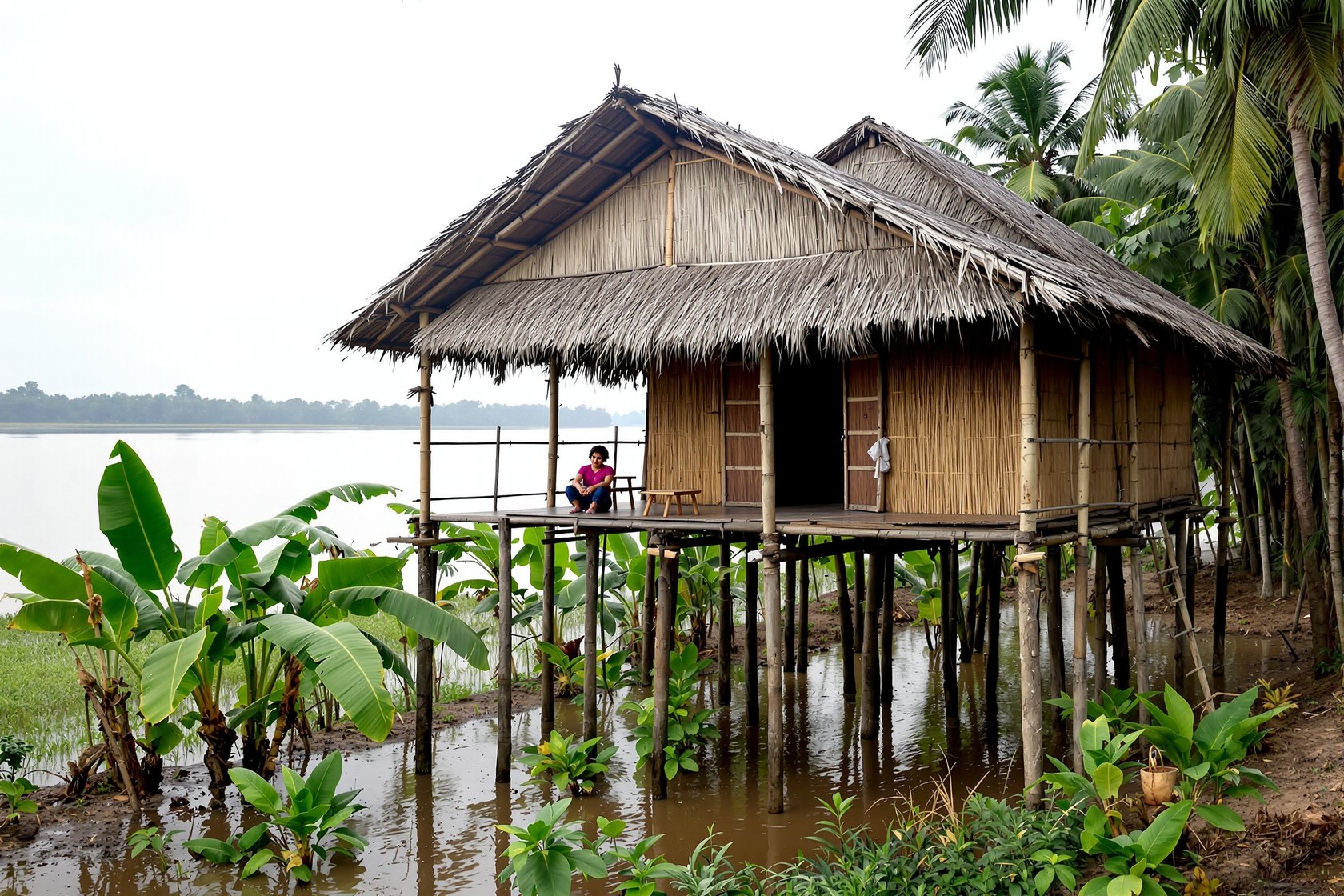
You reach Majuli by ferry, and the crossing is the first lesson. The Brahmaputra here is not so much a river as a moving sea, miles wide and the colour of milky tea, and the island it carries in its middle is never quite the same shape twice. Majuli is the largest river island in the world, and it is also, slowly and then suddenly, disappearing — the water that made it is taking it back. What holds the eye, once you land, is how the architecture has made its peace with that. On ground this restless, nobody sane builds for forever.
The scale of the loss is stark. A century ago Majuli spread across more than twelve hundred square kilometres; today it is roughly half that, and every monsoon redraws the coastline — sandbars surface and vanish, fields slide into the current, and villages that stood inland a generation ago now sit on the eroding edge. Upstream dams, heavier rain and failing embankments have all sped the retreat. This is the condition the island builds in: not the occasional flood of the mainland, but a patient erosion that moves the very map beneath your feet.
The monasteries that learned to move
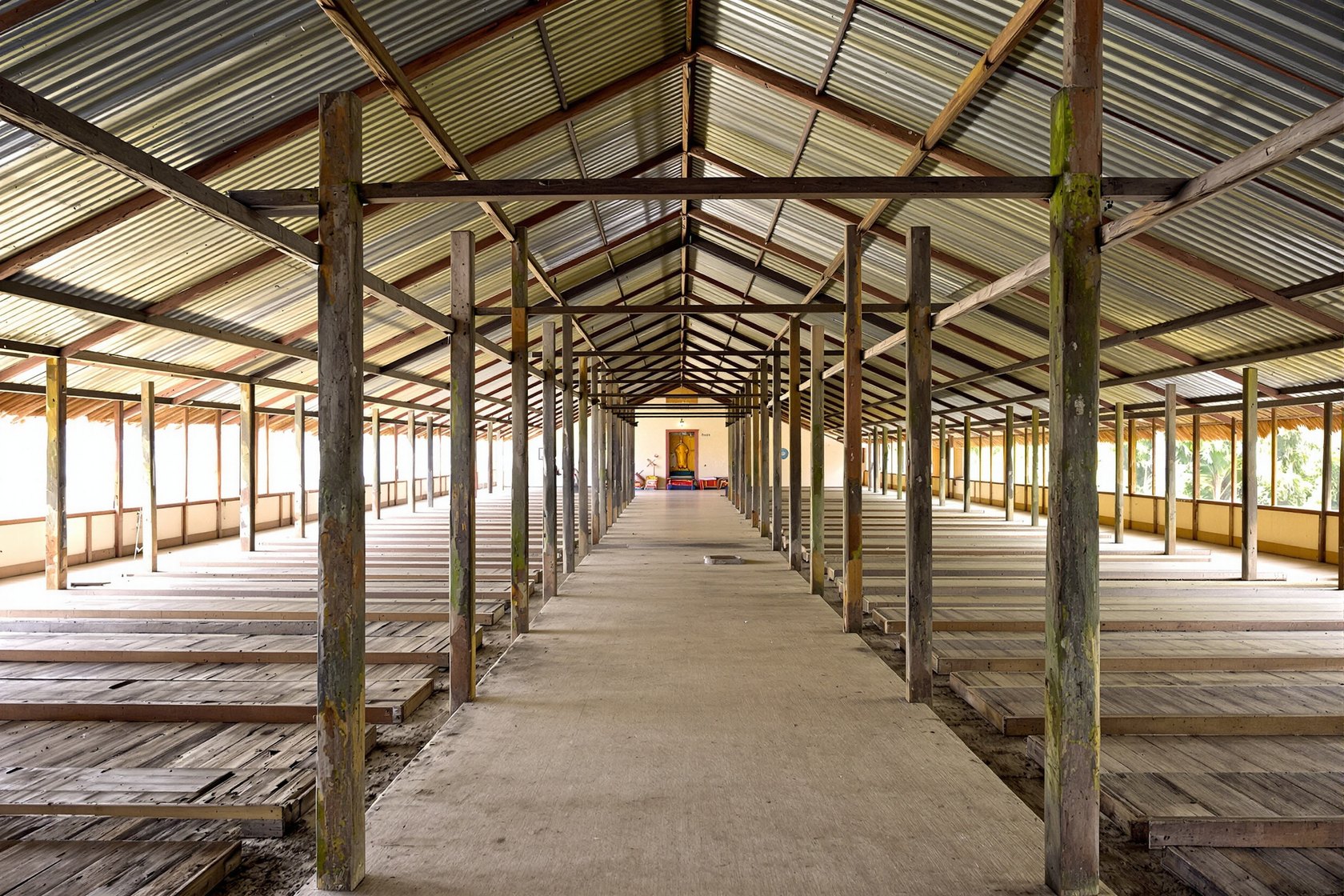
Majuli's fame rests on its satras — the monastic centres of the neo-Vaishnavite faith that the saint-reformer Srimanta Sankardeva seeded across Assam from the fifteenth century. A satra is not a single temple but a planned settlement. At its heart stands the namghar: a long, calm, open prayer hall carried on rows of timber posts under a low pitched roof, empty of idols, built for congregation and for the Sattriya dance, the borgeet and the mask-making the satras keep alive. Beside it sits the manikut, the sanctum; around them run the hatis, the ordered rows of cells where the celibate monks live. Once more than sixty of these adorned the island. Around twenty-two remain. The rest did not simply fall — many were taken down and carried off the island to safer ground as the river came for them, and rebuilt on the mainland plank by plank. The modest timber-post-and-thatch construction is exactly what makes that possible: a namghar is, in the end, a building you can dismantle and raise again.
A monastery built of light timber is a monastery that can move. On Majuli, that is not a weakness. It is the reason any of it survives.
The house that stands on legs
The island's other architecture is humbler and just as intelligent. The Mising, the largest of Majuli's tribes, build the chang ghar — a house lifted clear of the ground on a forest of bamboo or timber stilts. The living floor sits well above the flood; the walls are woven bamboo and reed, the roof is thatch, and inside, the hearth rests on a raised pad of earth so the fire outlives the water. The tall, open undercroft is the dry-season house: a place for the loom, the livestock, the boat, the grain. When the Brahmaputra rises into it, as it does most years, the flood passes through the legs and the family stays dry on the floor above. It is the exact section this issue has spent its pages arguing for — and the Mising have been living in it, without a consultant, for centuries.
Everything is grown within reach and worked by hand: bamboo and cane the island produces faster than it can use, reed and thatch, a little timber. Nothing costly is placed where the water can find it, because the water will. A wall that washes away in a bad year is not a disaster; it is a fortnight's work with materials from the same riverbank. The house, like the monastery, is built to be repaired and, if it must be, rebuilt — and that expectation is designed into every joint.
An architecture of acceptance
What Majuli refuses is the mainland's first instinct: to fight the river with a wall. Hard embankments here have a long record of buying a few dry years and then failing worse, or simply shifting the erosion onto the next village. So the island's real defence was never the barrier. It was the decision — taken so long ago it now reads as culture rather than engineering — to build light, build local, and build to move, treating impermanence not as failure but as the ground rule. It is the same wisdom architecture's establishment has just crowned a hemisphere away, in a Pritzker for buildings "almost on the point of disappearance." Majuli has been quietly practising it on the largest river island on earth.
None of which makes the ending happy. The erosion is winning, and there is a limit to how far even a movable culture can retreat; each relocated satra is a little less of the island's whole. Majuli has spent years on India's tentative list for World Heritage status, and the listing, if it comes, will honour a place that may not survive the century intact. That is the ache at the centre of it: the very lightness that lets Majuli shrug off each flood cannot, by itself, hold back the slow one.
What the mainland forgot
And yet, for a country now flooding in places that never used to, Majuli is the oldest running masterclass in the room. Everything the mainland is scrambling to relearn — raise the floor, build light, keep the services and the sacred things above the line, expect to rebuild — the island has known in its bones for five hundred years. It answers the water not with one heroic, doomed wall but with a thousand light structures that never pretended to be permanent. The flood, here, does not leave ruins behind. It leaves a method.
Stand on the eroding bank at dusk, watch the ferry come in low across that enormous water, and the lesson settles. The most resilient architecture is not the heaviest or the most defiant. It is the kind humble enough to bend, light enough to move, and honest enough to admit that the river was here first — and will, in the end, have the last word. The wisest building simply makes sure it is not the last word about the people inside.