Designing for the flood line
The new architecture doesn't fight the flood. It makes room for it.
For decades, the answer to flooding was always the same: build the walls higher, dig the drains deeper, move the water away as fast as possible. The goal was simple — keep it out. But the water has stopped cooperating. Cloudbursts are heavier and more frequent, our cities have paved over the ground that once drank the rain, and drainage built for another era is quietly giving up. So a new generation of architects, planners and landscape designers has begun asking a different question — not how do we keep water out, but how do we design with it?
The shift has a name now — flood-conscious architecture — and its central idea is almost heretical: resilience comes not from resisting water, but from making room for it. The most interesting responses turn out to be some of the oldest.
Building up
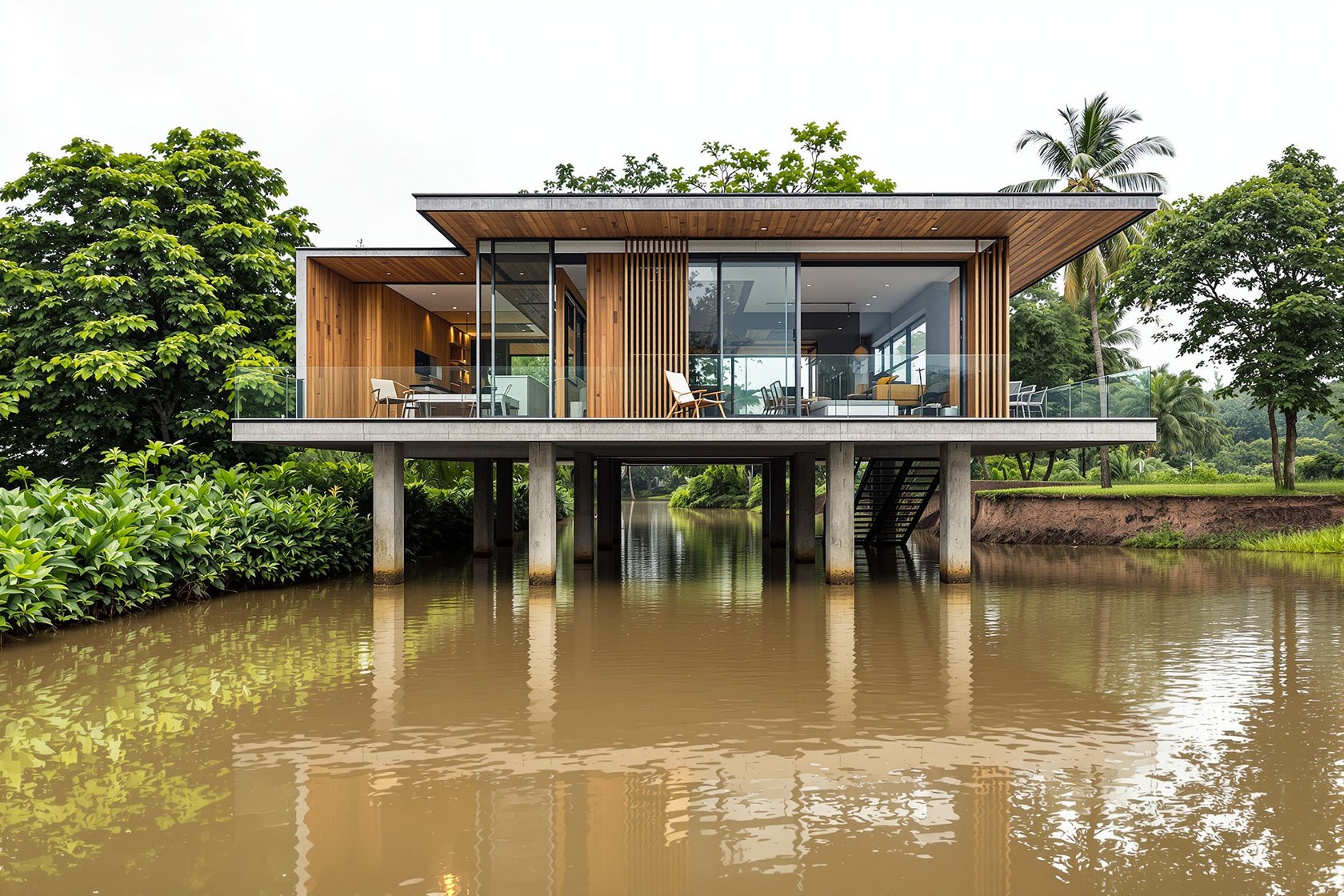
Across flood-prone India, living above the water is an old habit. The stilt houses of the Northeast, the raised coastal settlements of the east, the high plinths of the river deltas — communities learned long ago that the simplest defence against a seasonal flood is to lift the home above it. Today's architects are returning to that wisdom with new urgency. Raised plinths, elevated living floors and stilt-supported structures are reappearing in projects beside rivers, wetlands and the coast — not as an architectural flourish, but as a working strategy. The floodwater is allowed to pass beneath; the house stays dry above. Simple, and remarkably effective.
The return of permeability
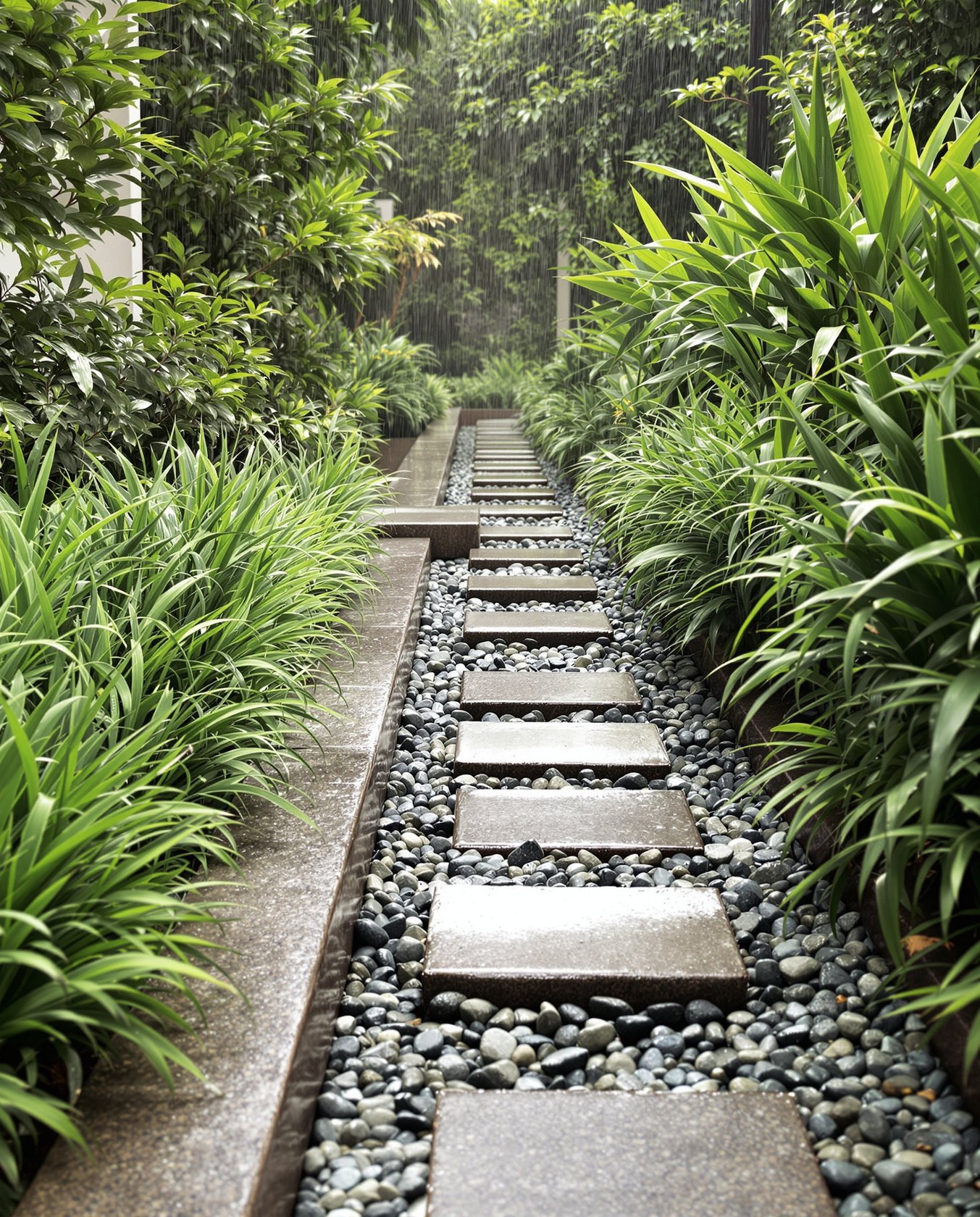
The modern city is built to shed water, not absorb it. Concrete roads, paved forecourts and sealed compounds leave rain with nowhere to go but into drains that are already overwhelmed. A growing number of projects are reversing that instinct. Permeable paving, gravel paths, rain gardens and planted swales let water soak back into the soil instead of racing off as runoff. Any one of them looks modest; together they can measurably ease local flooding while quietly recharging the groundwater. And they do it while making a place greener and better to be in — which is why they are spreading. Good water management, it turns out, looks a lot like good landscape design.
Designing for recovery
Not every flood can be prevented — and admitting that has freed architects to design for what happens when the water does come in. On the most exposed sites, buildings are being given sacrificial ground floors: a level that can take an occasional soaking without real harm, handed over to parking, storage or flexible use, while the living spaces sit safely above the expected flood line. Materials are chosen the same way — durable surfaces, electrics lifted out of harm's reach, finishes that wipe clean and dry fast — so a house can be back to normal days after a storm, not months. The aim is no longer to eliminate risk, but to soften its consequences. Recovery, this thinking says, matters as much as resistance.
Thinking like a sponge
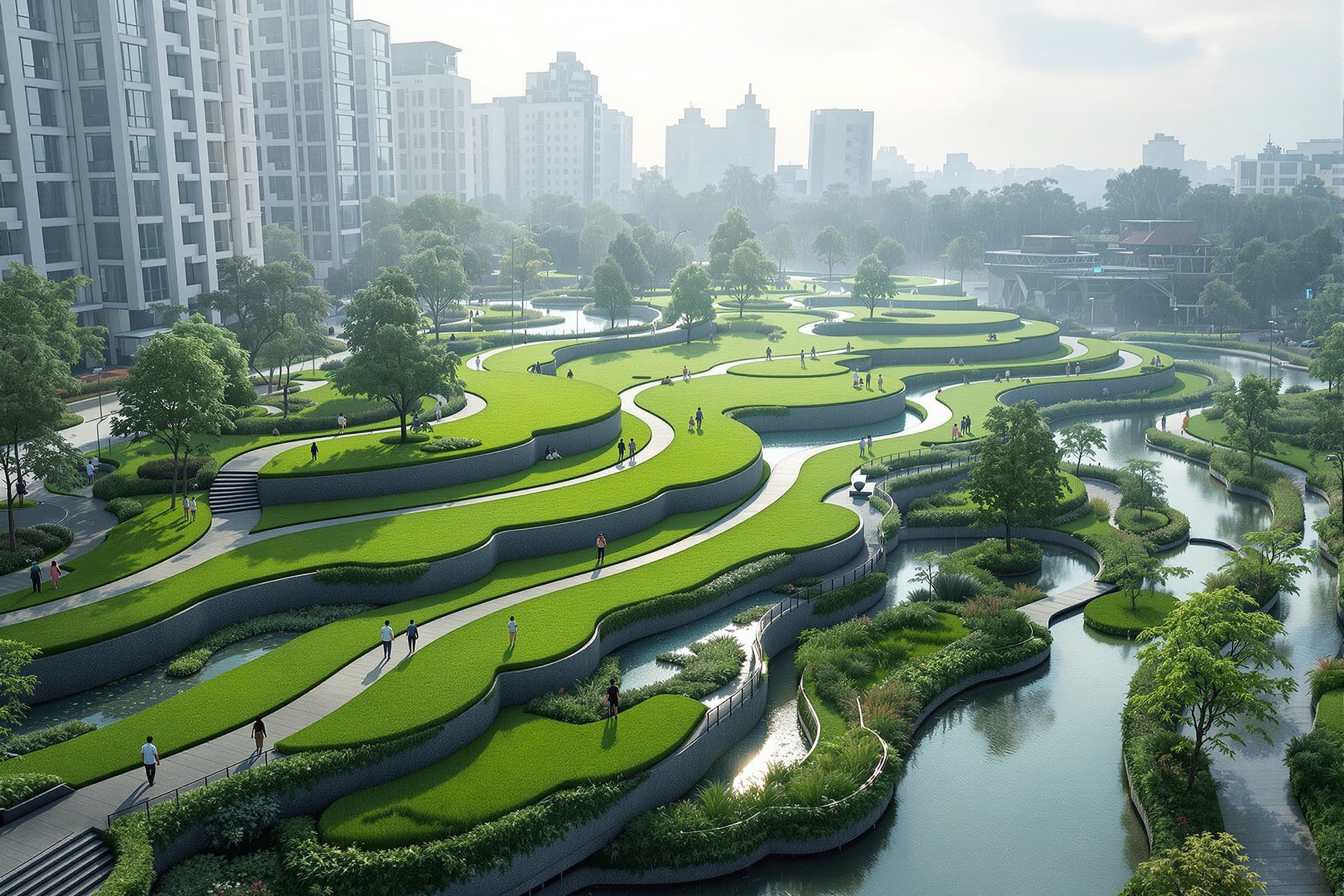
The most influential idea in the whole movement is the sponge city. Instead of rushing rain off the streets, a sponge city sets out to catch, slow, store and soak it up across the entire urban surface. Parks become temporary lakes in a storm and playgrounds again by the weekend; green corridors double as drains; public squares are shaped to hold water and then give it back. The principle is disarmingly simple: deal with the water where it lands. And though the phrase is new and much of the attention is on projects abroad, the idea is deeply familiar here. India's stepwells, tanks, ponds and linked drainage networks did exactly this for centuries — storing water when it was plentiful and releasing it slowly when it was not. In more ways than one, the future of water may be a revival of the past.
A new relationship with water
Flood-resilient design is usually framed as a technical problem. It is really a cultural one. It asks us to give up the belief that we can fully control nature, and to accept that buildings and landscapes must instead bend with it. That is not surrender to the flood — it is the opposite: resilience earned through preparation, adaptability and care. The best of these projects share one quality. They do not fight the water at every turn. They read how it moves, respect where it wants to go, and leave it room in the design.
As climate uncertainty settles deeper into everyday practice, that instinct may prove to be one of the defining ideas of contemporary architecture.
Not designing against water. Designing with it.