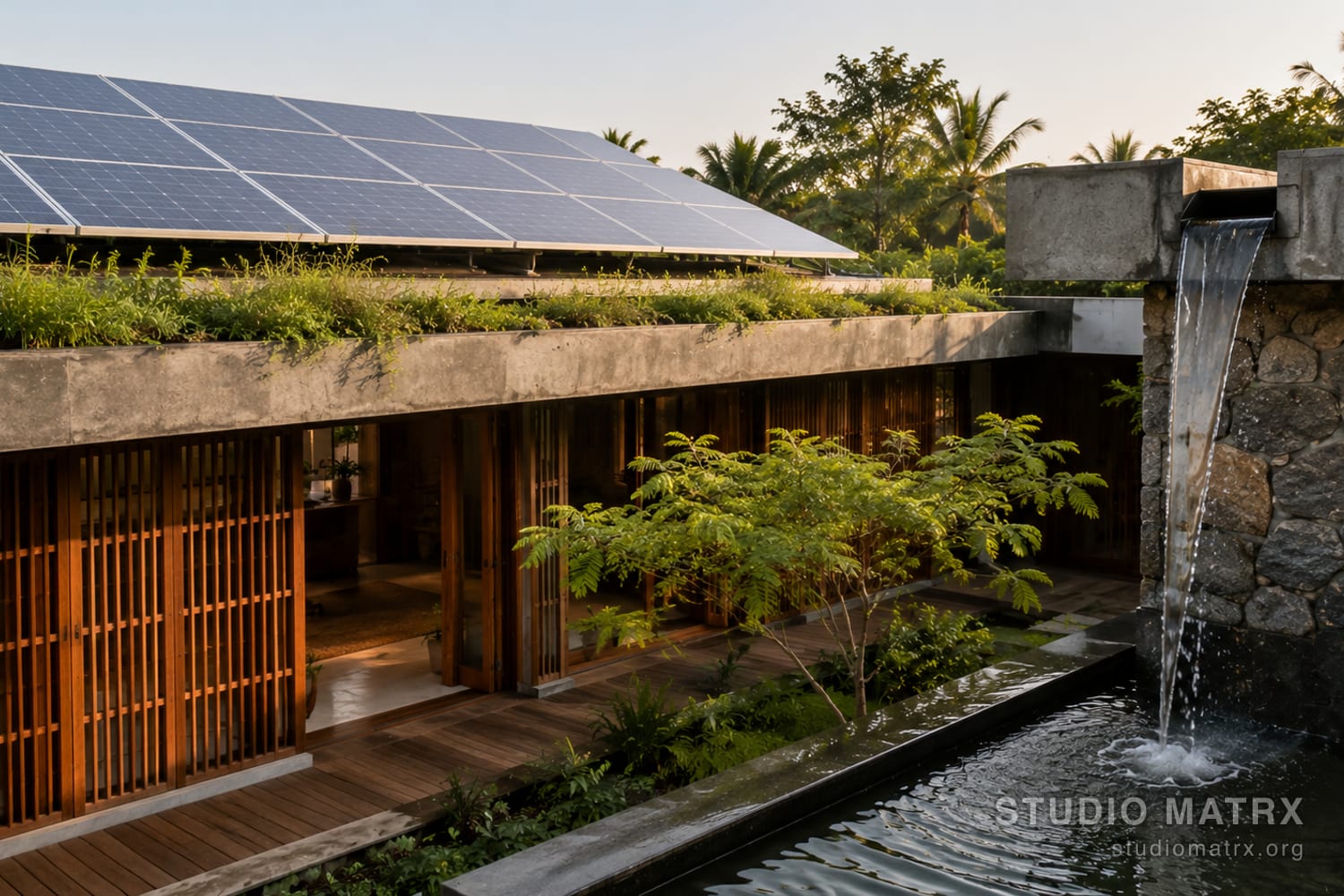
The next ten years of the Indian home
Five currents are converging into one architecture — modern, rooted, and built for the climate we actually have. Call it Contemporary Tropical Indian.
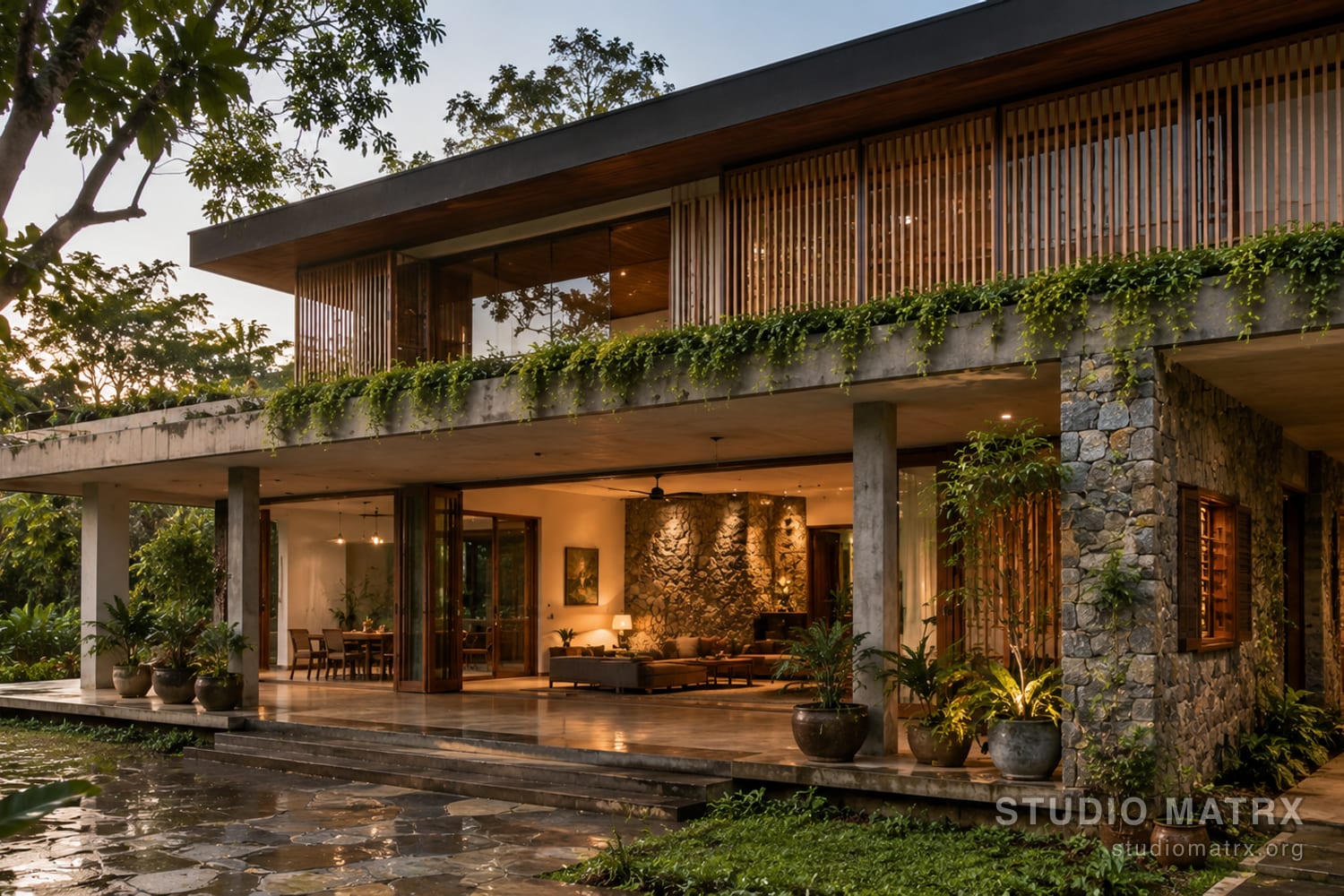
For two decades, the aspirational Indian home looked outward for its references. Glass towers borrowed from Singapore, kitchens from Milan, façades from anywhere but here. The buildings were handsome and frequently miserable to live in — sealed boxes running their air-conditioners against a climate they pretended wasn't happening outside.
The next ten years will, we think, undo that. Five separate currents that have been building quietly are now converging into a single, recognisable direction — and it is, refreshingly, an Indian one. It has no settled name yet, so we will offer one: Contemporary Tropical Indian architecture. A home that is unmistakably modern in line and feeling, yet shaped first by the sun, the rain and the way Indian families actually live.
It is less a style than a synthesis. Here are the five threads being braided together.
Contemporary, without the cringe. The clean line, the open plan, the honest material, the restraint — modern architecture's vocabulary isn't going anywhere, and nor should it. What changes is that this vocabulary stops being imported wholesale and starts being spoken with an Indian accent. Minimalism, but warmed by craft. Open plans, but arranged around the pooja room and the joint-family gathering, not around a Pinterest board.
Climate-responsive, finally. This is the load-bearing idea. For a tropical country, India has spent an extraordinary amount of energy building as though it were temperate. The coming decade reverses that. Deep verandahs and overhangs return — not as ornament but as physics. The jaali comes back as a working brise-soleil. Cross-ventilation is designed first, with the air-conditioner as backup rather than birthright. Orientation, shade, thermal mass and the courtyard — the things the nalukettu in this very issue understood eight centuries ago — re-enter the architect's first sketch, not the last.
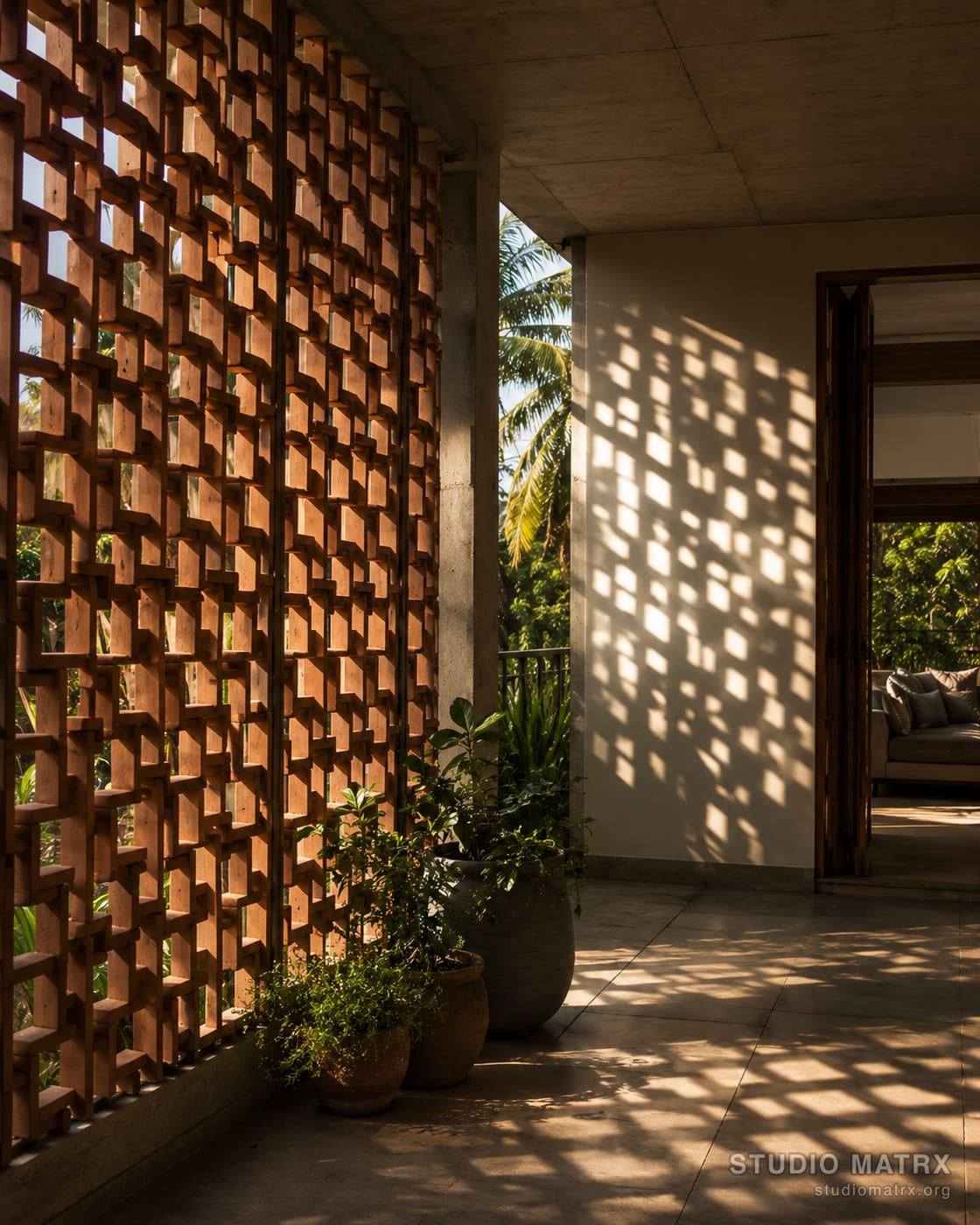
Sustainable, by necessity not virtue. Sustainability is shedding its boutique, add-on quality and becoming simply how competent buildings are made. Rainwater harvesting and greywater recycling as standard. Solar moving from accessory to assumption. Low-embodied-carbon and local materials — laterite, lime, stabilised earth, responsibly-sourced bamboo and timber — chosen because they perform and because the carbon maths now matters. A generation of architects is learning to ask not only what a building costs to make, but what it costs the planet to run.
Smart, but quietly so. Technology enters the home, but the best of it disappears. Not the gimmickry of an app for every switch, but intelligence that earns its place: automated shading that tracks the sun, sensors that manage water and air, energy systems that think, security that reassures. The decade's smartest homes will feel calm, not gadget-laden — the technology serving the architecture rather than upstaging it. AI-assisted design (a tool this very platform is built around) will help architects model light, airflow and cost long before a wall is poured.
Vernacular, remembered. And under all of it, the oldest thread — the wisdom already sitting in India's regional traditions. The Kerala courtyard, the Rajasthani jharokha and thick wall, the Goan balcão, the Northeast's breathing bamboo, the stepwell's instinct to revere water. Not copied as pastiche, but understood and rebuilt in contemporary form. The vernacular was always climate-responsive architecture; it simply predated the term.
What makes the convergence inevitable rather than fashionable is that the pressures are real. The climate is no longer politely seasonal — heatwaves are longer, cloudbursts heavier, water scarcer. Energy costs and carbon accountability are rising together. And a younger generation of Indians, well-travelled but increasingly proud of home, no longer wants a house that could be anywhere; they want one that could only be here.
Contemporary Tropical Indian architecture answers all of that at once. It is comfortable without guzzling power, modern without being rootless, beautiful without being fragile, and local without being nostalgic. A Bengaluru house, a Kochi apartment and a Jaipur farmhouse built in this spirit would look nothing alike — and that is the point. The synthesis is national; the expression is regional.
We expect, by 2035, that the best Indian homes will be quietly radical: passively cool, partly self-powered, water-wise, technologically calm, built largely of materials from within a few hundred kilometres, and shaped above all by the climate they sit in. They will feel, paradoxically, both more modern and more Indian than what came before.
The country spent a generation building as if the weather were somewhere else. The next ten years will be about building as though we live exactly where we do — which, of course, we always did.