
The house that breathes with the rain
Kerala's nalukettu answered the monsoon eight centuries ago by inviting it in — laterite walls, a steep tiled roof and an open central court that cools, lights and drains the house.
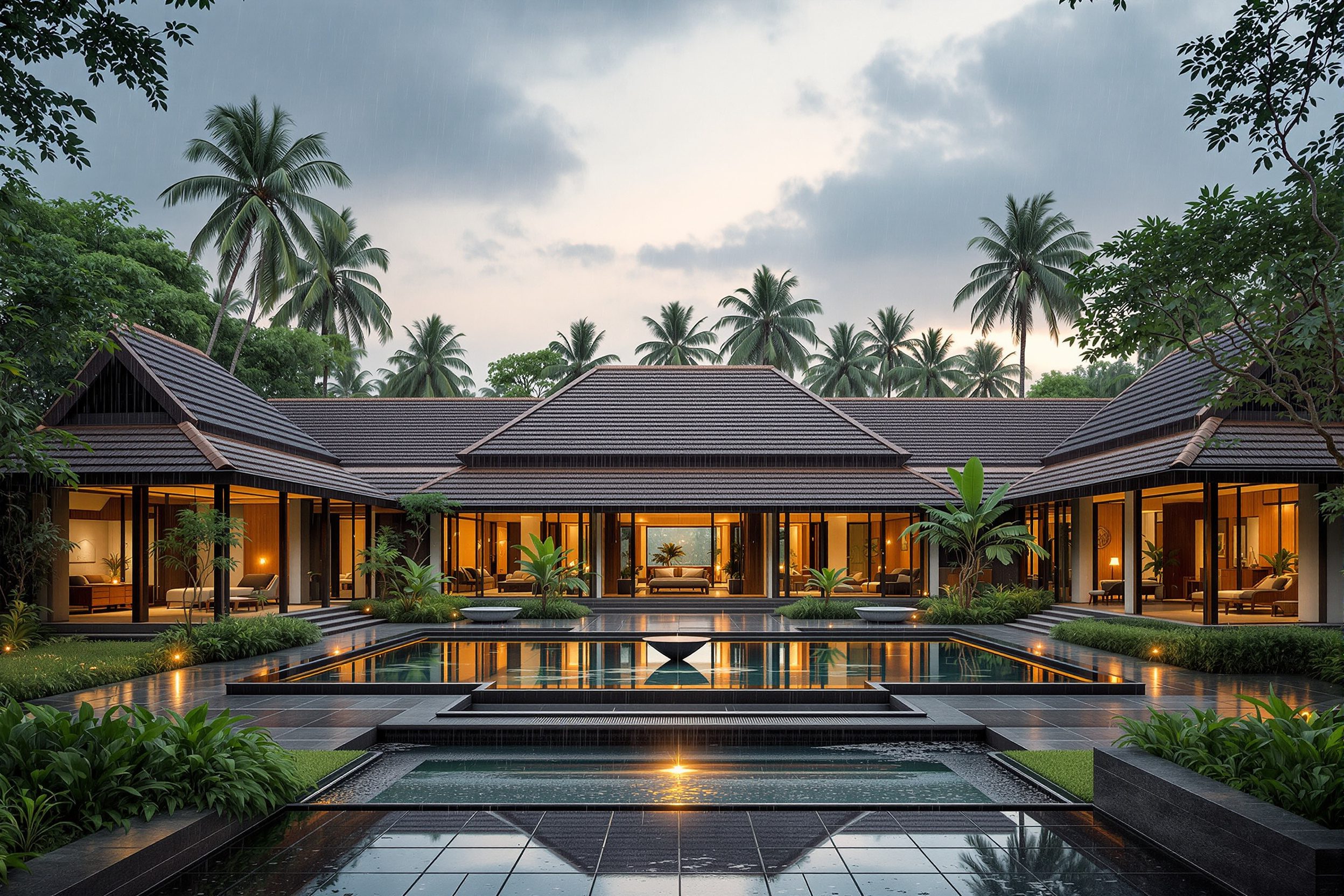
Long before waterproofing membranes and box gutters, Kerala had already solved the monsoon. Its answer was the nalukettu — the courtyard house that, for some eight centuries, did not fight the rain so much as invite it in. Stand in one during a June cloudburst and the design explains itself: the water falls into the open heart of the house, and the house grows cooler, greener and calmer for it.
The name is a description. Naal means four and kettu means a block or hall: a nalukettu is four wings of rooms built around a single open-to-sky courtyard, the nadumuttam. Larger ancestral homes doubled the plan into an ettukettu — eight halls, two courts — or, for the grandest Namboothiri and Nair tharavadus, a pathinarukettu of sixteen. The house was sized to the joint family it sheltered, growing one courtyard at a time.
Everything turns on that central court. The nadumuttam is the lung of the nalukettu: it pulls daylight into rooms that would otherwise be dark, draws a slow current of air through the deep plan, and — crucially in Kerala — receives the monsoon directly. Rain falls into the open court and runs off through stone channels to a soak pit or a pond, while the wet floor and planting evaporate-cool the rooms wrapped around it. The hottest, wettest months become the most comfortable place in the house.
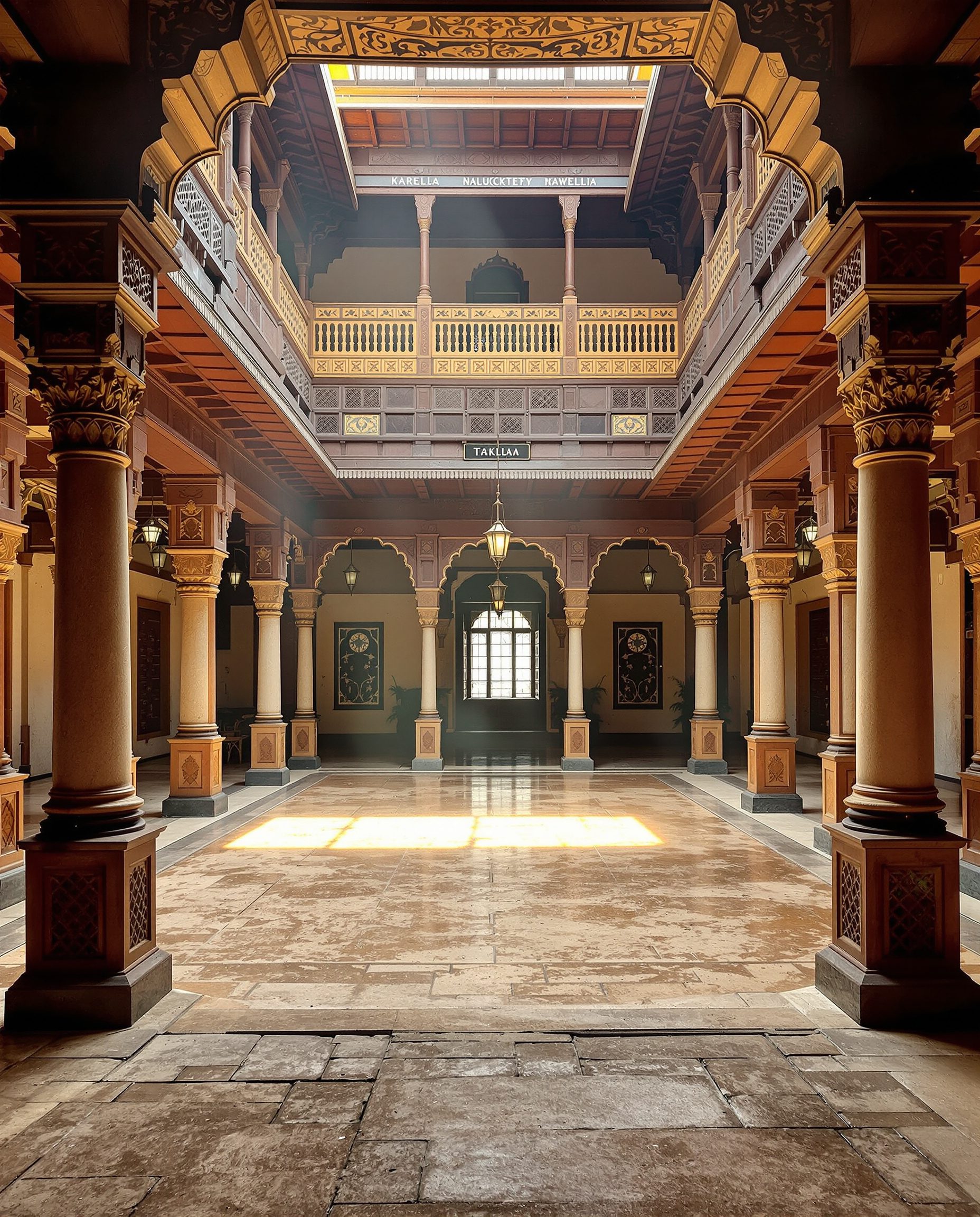
The materials are entirely of their place. Walls of laterite cut from the red coastal earth; structure and floors of local hardwoods — anjili (wild jack), teak, rosewood; and a steep, double-pitched roof of country clay tiles carried on an intricate timber frame. The pitch is no accident. A sharp slope and deep overhanging eaves throw heavy rain clear of the walls, while a high granite or laterite plinth lifts the timber above the splash and the rising damp. Every line of the section is an argument with water.
None of it was improvised. The nalukettu is the built form of Thachu Shastra, Kerala's treatise-bound science of carpentry, and of Vastuvidya as codified in texts such as the Manushyalaya Chandrika — rules of proportion, orientation and ritual that fixed where the court, the granary and the kitchen could sit. The timber frame is a feat of joinery: interlocking posts, beams and rafters pegged and slotted together, traditionally with almost no iron, so the roof could in principle be dismantled and raised again elsewhere. The thachan, the master carpenter, was as much a keeper of proportion as a builder.
Approached through a padippura — the gatehouse that breaks the compound wall — the house presents a poomukham, the raised entrance veranda where the family met the world. Inside, the wings carried names and duties: the vadakkini and thekkini, the north and south halls, for cooking, dining and ritual; the ara, a windowless timber strongroom for grain and valuables, built like a vault within the house; and sleeping rooms ranged around the court. Life ran on an axis between the public veranda and the private heart.
The tradition still stands to be visited. Its masterpiece is the Padmanabhapuram Palace — built by the rulers of Travancore in full Kerala timber style, just across today's Tamil Nadu border — a sprawling complex of courtyards, carved rosewood ceilings and cool, shuttered halls that remains the finest surviving record of the craft. Across Kerala, Namboothiri illams and manas in Palakkad, Thrissur and Malappuram, and countless Nair tharavadus, keep the nalukettu plan alive; several now open their doors as heritage homestays. The architect Laurie Baker spent a career translating their logic — laterite, jaali, deep eaves, the court — into the modern low-cost home.
What looks like heritage is really building physics. The nalukettu cools without electricity, lights itself by day, harvests its own rain and breathes through porous laterite walls — the very things a 2026 homeowner now pays consultants to retrofit. The open court that the Indian house spent fifty years designing out is the court the nalukettu was built around. Read it not as a museum piece but as a working brief.
We will, in time, bring you a contemporary architect's study for this slot — a new Kerala home, with drawings, budget and intent. Until then, the building of the month is the oldest idea in the state, and still the best answer to its weather: the original house that breathes with the rain.