
Prabhakar B. Bhagwat
The father of landscape architecture in India — a discipline grown from native soil, climate and the subcontinent's own traditions
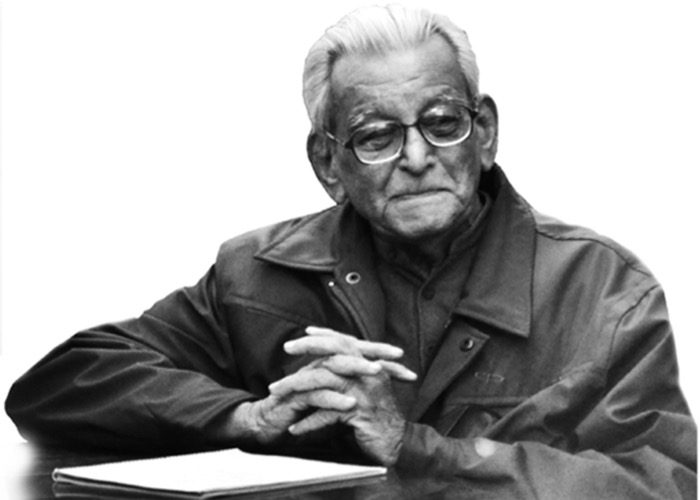
Photo: Prachi.chopade, CC BY-SA 4.0, via Wikimedia Commons
Movements
Signature works
- First landscape architecture teaching in India
- CEPT Ahmedabad landscape programme
- M/s Prabhakar B. Bhagwat studio
- Indian Society of Landscape Architects (ISOLA)
- Landscape Environment Advancement Foundation (LEAF)
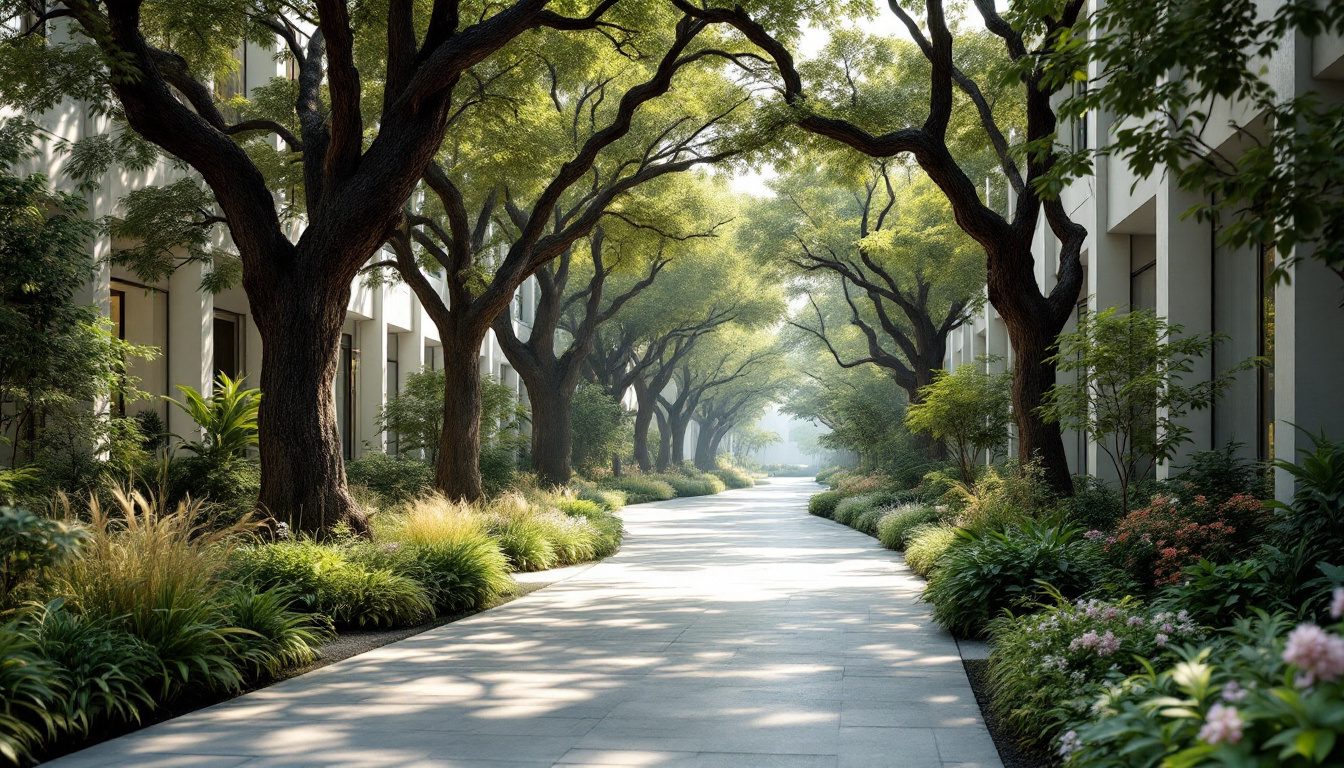
Walk into almost any thoughtful Indian garden of the last forty years — a courtyard where a flowering tree throws shade over a stone bench, a campus where the planting feels less like decoration and more like a small living forest, a city park that breathes rather than poses — and somewhere upstream of it sits one man's stubborn idea. That the Indian landscape should look, feel and behave like India: hot, wild, generous, native. Not a clipped English lawn struggling to survive a Deccan summer, but soil, season, root and canopy understood on their own terms.
The man behind that idea was Professor Prabhakar B. Bhagwat (1930–2015), known to a generation of students simply as Bade Sir — the elder, the teacher. He is widely regarded as India's first qualified landscape architect and the father of the discipline in the country: the person who, more than any other, turned landscape architecture from a foreign curiosity into a profession, a body of teaching and a way of seeing. His own path began, fittingly, among plants — in the Empress Botanical Garden in Pune, where his father was superintendent, and where a boy grew up learning the names and habits of trees long before he had a word for what he would become.
Bhagwat's central conviction was that a landscape must be grown from its own place — its climate, its soil, its native plants and the subcontinent's own long traditions of living with land — rather than imported wholesale from cooler, wetter countries. From that single rooted idea came a profession, a school of teaching, and a lineage of designers who now shape gardens, campuses and cities across India.
The idea: a landscape rooted in its own soil
When Bhagwat began, the dominant model of "good" landscaping in India was inherited and second-hand. The colonial garden, the manicured lawn, the herbaceous border, the ornamental bedding plant — these were the markers of taste, lifted more or less unchanged from Britain and Europe and then forced to perform in a climate that punished them. A lawn that made sense in rainy, temperate England became, in Pune or Delhi or Ahmedabad, a thirsty, chemical-hungry, fundamentally artificial thing: green for a season, brown and gasping the rest of the year, and dependent on water the country could not spare.
Bhagwat's quiet revolution was to ask a different question. Not how do we make the European garden survive here? but what does this land actually want to grow? The answer was all around — in the native trees that had evolved for the monsoon and the dry season, in the indigenous shrubs that fed local birds and butterflies, in the old courtyard and grove and tank-side traditions through which Indians had always organised planting around water, shade and use. A landscape, in his reading, was not a picture to be composed from a foreign palette. It was an ecology to be understood and then carefully extended.
This had consequences far beyond aesthetics. A native, layered planting needs a fraction of the water of a lawn. It builds soil rather than depleting it. It shelters and feeds local birds, insects and pollinators instead of sterilising the ground. It cools the air through shade and transpiration in a way no expanse of mown grass ever could. Long before "sustainability" became a slogan, Bhagwat was teaching that the ecological landscape and the beautiful landscape were the same thing — that working with climate and native flora was not a constraint but the very source of richness. It is an idea Studio Matrx returns to again and again in our guidance on planting and place.
Life and path
Prabhakar Bhagwat was born in 1930 into a world of plants. His father, superintendent of the Empress Botanical Garden in Pune, gave him an early, almost instinctive botanical literacy — the trees, the seasons, the soil — that would underpin everything that followed. But India in his youth had no path to becoming a landscape architect; the discipline simply did not exist here. To learn it, he had to leave.
He went first to Denmark, studying garden art at the Royal Academy of Fine Arts in Copenhagen, where the influence of the great Danish landscape tradition — spare, modern, deeply attuned to plants and space — left its mark. He then continued in England, studying landscape design at Newcastle under the pioneering landscape educator Brian Hackett, and earned lifetime membership of the British Landscape Institute. He returned to India carrying something no one else there held: a formal, international training in a profession his own country had yet to name.
What he did with it set the course of the discipline in India. He is credited with starting the first landscape architecture teaching programme in the country, and in time established and led the landscape programme at CEPT University in Ahmedabad — the institution that, more than any other, became the cradle of Indian landscape education. Generations of the country's landscape architects passed through that lineage. In 1973 he began his own independent practice in Ahmedabad under the name M/s Prabhakar B. Bhagwat, a studio that still bears his name today.
He was not content to teach and build alone; he wanted the profession itself to exist as a body. To that end he was instrumental in founding the Indian Society of Landscape Architects (ISOLA) in 2003, giving Indian landscape architects, for the first time, a professional home, a voice and a standard. A few years later, in 2007, he helped establish a research arm — the Landscape Environment Advancement Foundation (LEAF) — dedicated to studying plant material, ecology and sustainable landscape practice. Institution-building, for Bhagwat, was inseparable from design. A profession needs not only good work but schools to teach it, a society to gather it, and research to deepen it. He built all three.
The signature contributions
Bhagwat's importance is best measured not in a single famous garden but in the structures he created for an entire field. Where another designer might be remembered for one celebrated project, he is remembered for having made the very practice of landscape architecture possible in India. The table below traces that arc — and because dates and project attributions for early Indian landscape work are not always cleanly documented, what matters here is the role each contribution played.
| Contribution | Where / when | Why it matters |
|---|---|---|
| First formal landscape training in India | from the mid-20th century | Brought the discipline into being, founding teaching where there had been none. |
| CEPT Ahmedabad landscape lineage | CEPT University, Ahmedabad | Established and led the landscape programme that became the cradle of Indian landscape education and mentored the first generations of practitioners. |
| M/s Prabhakar B. Bhagwat (studio) | Ahmedabad, from 1973 | His practice — a working laboratory for ecological, native-rooted Indian landscape design, still active today. |
| Indian Society of Landscape Architects (ISOLA) | founded 2003 | Gave the profession a formal national body, identity and standards. |
| Landscape Environment Advancement Foundation (LEAF) | founded 2007 | A research arm devoted to native plants, ecology and sustainable practice. |
| Mentoring the first generation | across his teaching life | Trained and inspired the designers — and his son Aniket Bhagwat — who carry the work forward. |
The teaching is the heart of it. Bade Sir's influence was transmitted person to person, studio to studio, plant name by plant name. He insisted his students learn their flora as intimately as he had — not as a catalogue of imported ornamentals but as a living, regional vocabulary of what grows, what feeds the birds, what casts the right shade, what holds the soil through the monsoon. To design a landscape, in his teaching, you first had to read one.
His own studio became the proving ground for that conviction. M/s Prabhakar B. Bhagwat treated landscape not as the green afterthought sprinkled around a finished building but as a discipline with its own intelligence — site, ecology, water, season and use shaping the design from the first move. That ethos passed directly to his son, Aniket Bhagwat, who has continued and amplified the practice (often known publicly as LANDSCAPE INDIA), making it one of the most respected and influential landscape studios in the country. The lineage is unbroken: the father's rooted, ecological, native-first idea, carried into contemporary Indian work at every scale.

The philosophy
If you distil Bhagwat's thinking to a few principles, they map almost exactly onto the way good landscape design in India is taught today — which is no coincidence, since he is so much of the source.
The first is climate-first design. A landscape in the subcontinent cannot be a temperate landscape in disguise. It must answer the brutal sun, the monsoon deluge and the long dry months by choosing plants and structures suited to them — shade where shade is needed, drought-tolerant species where water is scarce, planting that thrives on the actual rhythm of the Indian year. This is the conviction at the core of Studio Matrx's guide to climate-responsive landscape design in India.
The second is native and ecological planting. Bhagwat's lifelong argument was that indigenous trees, shrubs and groundcovers are not a poor substitute for the imported ornamental but its superior — hardier, thirstier for less, alive with birds and pollinators, and genuinely of the place. That belief runs straight into our guidance on the best trees for Indian homes and into the wider practice of biophilic landscape design in India, where the garden becomes a living ecology rather than a static picture.
The third is landscape as a serious discipline. Perhaps his deepest legacy is simply the insistence that landscape architecture deserves the same rigour, education and respect as architecture itself — that the ground, the planting and the open space are not leftovers but the design. He is rightly placed alongside the other founders of the Indian landscape profession; explore his contemporaries Ravindra Bhan and Mohammad Shaheer, with whom he shares the work of giving the subcontinent its own landscape language.
A garden in India, Bhagwat taught, should not pretend to be somewhere cooler and wetter than it is. It should be itself — rooted in its own soil, planted with its own trees, alive with its own birds.
India
For Bhagwat, the Indian-ness of the work was not a flavour added at the end; it was the entire argument. He spent his life resisting the assumption — inherited from colonial garden-making — that the well-designed landscape was an imported one. The lawn, the formal bed, the temperate ornamental: these were, to him, a kind of category error in a hot, monsoonal country, beautiful only in photographs and ruinous in water, chemicals and ecological emptiness.
In their place he offered the subcontinent's own resources. India's native flora is extraordinarily rich — trees that have evolved for exactly this heat and this rain, plants that feed local sunbirds and butterflies, groundcovers that hold soil through the downpour. And India's own traditions of landscape, from the courtyard and the sacred grove to the stepwell and the tank, encode centuries of intelligence about water, shade and gathering. Bhagwat's genius was to treat all of this not as folklore but as a living, working design vocabulary — one fit for the modern campus, park and home.
That is why his influence reaches so directly into how a contemporary Indian household might think about its own garden or courtyard: choose the trees that belong here, plant in layers the way a forest does, design for the monsoon and the dry season alike, and let the landscape support life rather than merely display it. It is the difference between a garden that costs the earth to keep alive and one that gives back shade, coolness, birdsong and calm.
Legacy and what we can learn
Prabhakar Bhagwat's legacy is unusual because it is structural. He did not simply leave behind admired gardens; he left behind a profession that had not existed in India before him — its first teaching, its leading studio lineage, its national society in ISOLA, its research foundation in LEAF, and, above all, generations of landscape architects who learned to see the Indian land as he did. When his son Aniket Bhagwat carries the studio forward as one of the country's most influential practices, he is extending an idea that begins, unbroken, with Bade Sir.
The lesson for anyone shaping a piece of ground in India is bracingly practical. Before you reach for the lawn and the imported ornamental, look at where you actually are — the sun, the soil, the rain, the native trees already thriving down the road. Plant what belongs. Layer it the way nature does. Design for the climate you have, not the one in the magazine. A landscape rooted in its own place is not only kinder to water and to wildlife; it is, in the end, the more beautiful and the more truly yours.
It is exactly this instinct — climate, soil, native planting and place coming first — that we try to encode in DesignAI, so that an Indian garden or courtyard can be imagined the way Bhagwat would have wanted it: as a living ecology of its own ground.
References
- Indian Society of Landscape Architects (ISOLA) — tribute to the late Prof. Prabhakar B. Bhagwat, and the society's founding history.
- CEPT Archives — Prabhakar Bhagwat collection and biographical material.
- M/s Prabhakar B. Bhagwat / LANDSCAPE INDIA — studio history and the practice continued by Aniket Bhagwat.
- Rethinking The Future — profiles of Prabhakar Bhagwat and his role as a pioneer of landscape architecture in India.
- Great Gardens of the World — entry on Prabhakar Bhagwat.
Explore the ideas Bhagwat championed — climate-responsive landscape design, biophilic landscape design and the best trees for Indian homes — alongside fellow founders of the Indian landscape profession Ravindra Bhan and Mohammad Shaheer.
Philosophies they championed