
Ravindra Bhan
A founder of landscape architecture in India, who taught the profession to read the land first
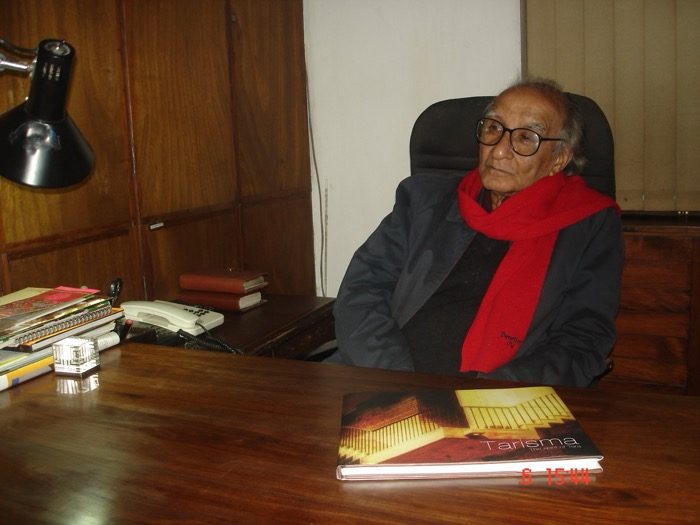
Photo: AR. RAVINDRA BHAN, CC BY-SA 4.0, via Wikimedia Commons
Movements
Signature works
- Mughal Sheraton landscape, Agra
- Shakti Sthala, New Delhi
- Department of Landscape Architecture, SPA Delhi
- Institutional campus landscapes
- Urban open spaces, Delhi
Walk into the grounds of one of Delhi's great institutional campuses on an April morning, when the city air already shimmers with heat, and notice what your body does. Under a loose canopy of native trees the temperature drops by several degrees. A path bends rather than runs straight, so the building reveals itself slowly. A change in level, a low rock, a shift from gravel to grass tells you, without a single sign, that you have moved from one kind of place to another. None of it looks designed. All of it is. That quiet, almost invisible craft — landscape that feels like it was always there — is the signature of Ravindra Bhan, one of the founders of landscape architecture as a profession in India.
When Bhan began, that profession barely existed in the country. There were gardeners and horticulturists, there were the inherited geometries of Mughal charbaghs and the colonial lawn, but there was no formal discipline that asked how the land around a building should be shaped — its contours, its water, its planting, its terrain — as seriously as the building itself. Bhan was among the small first generation who built that discipline almost from scratch: as a teacher who started one of India's earliest landscape programmes, and as a practitioner who showed, project after project, what a thoughtfully designed Indian landscape could be.
Bhan's enduring idea was that landscape is not decoration applied after the building is finished but a structural response to land, climate and terrain — and that in a hot, water-stressed country the most intelligent design works with native planting, natural contours and rock rather than imposing a foreign green ideal on the ground. Around that conviction he helped turn landscape architecture in India from an afterthought into a profession.
The idea: design with the land, not on top of it
Bhan belonged to a generation of designers, schooled in part abroad, who came home and found that the imported picture of "landscape" did not fit the place. The English lawn, the clipped ornamental bed, the thirsty exotic flowerbed — these had been carried into India by empire and habit, and they fought the Indian climate at every turn. They demanded water the country could not spare, shade they did not give, and maintenance that only the wealthy could sustain.
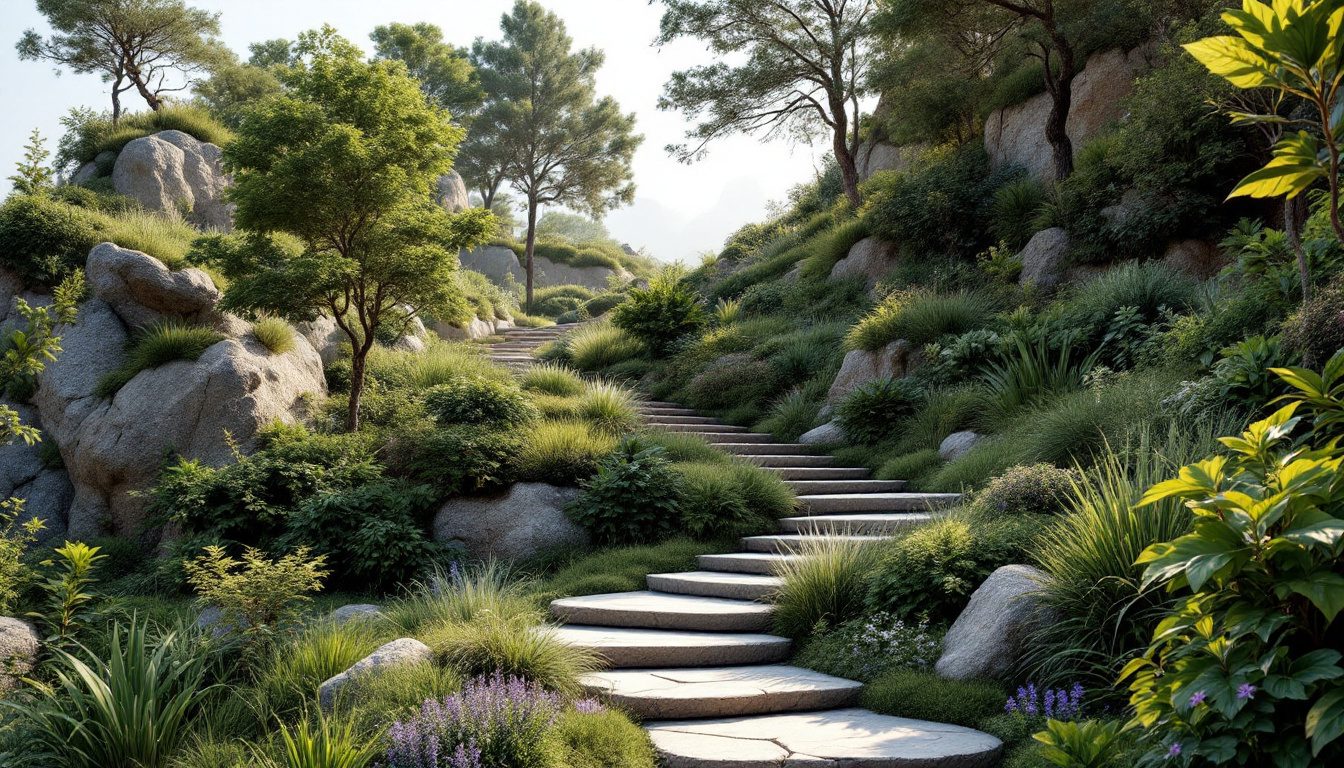
His response was to start from the ground itself. Before planting anything, read the site: which way the land falls, where water wants to collect and run, where the soil is rock and where it is deep, where the wind comes from and where the worst of the summer sun lands. The design then becomes a response to those facts rather than a pattern stamped over them. A slope is not flattened into an expensive terrace if it can be held with planting and a contoured swale; a rock outcrop is not blasted away but kept and made into the heart of a court.

From this came his preference for a naturalistic, contextual landscape: groves of indigenous trees rather than single specimen exotics, ground that drinks the monsoon rather than shedding it into drains, planting chosen because it belongs to the region's ecology and survives its dry months. The result rarely announces itself. It looks, at its best, like a piece of countryside that the building was lucky enough to be set into — which is exactly the illusion a master of the craft works hardest to achieve.
There was a deeper argument inside this, too. In a country with India's heat and its monsoon-and-drought cycle, a landscape that needs constant irrigation and a small army of gardeners is not really sustainable; it is borrowed luxury. A landscape built from native species on its own contours, by contrast, settles into the local water and climate and largely looks after itself. Site sensitivity, for Bhan, was not an aesthetic preference but the only honest way to garden a hot, water-stressed land.
Life and path
Bhan grew up in Kashmir, in a valley whose mountains, water and gardens are among the most beautiful in the subcontinent — an early immersion in landscape that he later credited as the root of his calling. He trained first as an architect, taking his degree in the United States, and then specialised in landscape architecture with graduate study there, absorbing the discipline at a time when it was a mature profession in the West and almost unknown at home.
Before returning to India for good he spent many years working abroad, in Europe and the United States, inside established architectural and planning offices. That long apprenticeship mattered: it gave him a thorough grounding in landscape and ecological planning as a rigorous discipline, not a hobby — knowledge he would carry back and have to translate, almost word by word, into Indian conditions.
The decisive move was institutional. Working with support from a major international foundation, Bhan helped establish formal landscape education at the School of Planning and Architecture in Delhi in the early 1970s, and headed the new department in its first years. This was foundational in the most literal sense: he was helping to create the academic discipline that would train the people who came after him. Soon afterwards he founded his own Delhi practice — describing it, tellingly, as a firm of architects, landscape architects and ecological planners — and ran it across roughly four and a half decades.

He never separated teaching from practice. As one of the small founding generation — alongside contemporaries who were building the profession in parallel — he taught, mentored and helped shape the standards of Indian landscape architecture even as he was demonstrating them on the ground. The Indian Society of Landscape Architects later recognised this with its highest honours for lifetime contribution to the field.
The signature works
Bhan's practice ranged across institutional campuses, urban open spaces, memorial landscapes and the settings of major buildings — often in collaboration with leading Indian architects, where his role was to make the ground around a building as considered as the building itself. The works below are widely associated with his career; the precise scope and dating of large collaborative projects can vary in the record, so they are best read as the shape of a body of work rather than a ledger.
| Work | Type & context | Why it matters |
|---|---|---|
| Mughal Sheraton, Agra | Hotel landscape, collaborative project | Associated with the Aga Khan Award for Architecture — a landscape setting near Agra that reinterprets the Mughal garden tradition for a modern building. |
| Shakti Sthala, New Delhi | Memorial landscape, Delhi | A memorial setting honoured by the Indian Society of Landscape Architects, where contour, planting and procession shape a place of quiet dignity. |
| Institutional campuses | Universities and institutes, across India | Naturalistic, native-planted grounds that shade buildings, hold the monsoon and let architecture sit within a landscape rather than on a cleared plot. |
| Urban open spaces & parks | Public landscapes, Delhi and beyond | Civic green space designed for India's climate and use, prioritising shade, durable native planting and low-water maintenance. |
| Landscape settings for buildings | In collaboration with Indian architects | The terrain, courts and approach to major buildings, treated as integral to the architecture rather than left over. |
The memorial and institutional work shows the approach most clearly. A memorial landscape is, above all, a sequence: how you arrive, what you pass, where the ground rises and falls, where shade gathers and where the sky opens. Bhan shaped these as terrain and procession — a path that turns, a level that changes, planting that frames a view — so that the meaning is carried by the land itself rather than by ornament.
The campus and institutional grounds are where the climate argument lands hardest. On an Indian campus, the difference between a bare, hard-paved plot and a grove of mature native trees is the difference between a place that is unusable for half the year and one that people actually inhabit. Bhan's grounds were designed to be lived in through the heat — deep shade on the hot edges, surfaces that stay cool, water that the soil keeps rather than loses.

His collaborations with architects were, in a sense, his most characteristic contribution. By insisting that the landscape architect sit at the table from the start — shaping contours, retaining rock, orienting courts to shade — he helped establish the very idea that a serious building deserves a serious landscape, designed by a specialist, as part of one whole.
The philosophy
Bhan's whole method is an argument for what we might now call climate-responsive landscape design. In a country of fierce summers, monsoon deluges and long dry spells, he treated climate as the first design input, not a constraint to be air-conditioned away. Shade, water-holding ground, native planting that survives the dry months — these were not green flourishes but the load-bearing logic of the design.
That logic ran straight into his choice of plants. Where the colonial and the conventional reached for exotics and thirsty lawns, Bhan reached for the region's own trees and ground cover — the deep-rooted, drought-hardy, monsoon-loving species explored in Studio Matrx's guide to sustainable water management in Indian landscapes. Native planting is not only ecologically honest; it is what allows a landscape to look after itself in India's water-stressed climate, instead of demanding an unpayable tax of irrigation and labour.
There is, finally, a quieter dimension to his work that explains why his best landscapes feel so settled. By following the terrain, keeping the rock, bending the path and gathering the shade, Bhan created the unforced, restful quality that Studio Matrx examines in why some gardens feel peaceful. A place that works with its land, rather than fighting it, reads to the body as calm. That sense of rightness — of a landscape that could not be otherwise — is the deepest mark of his craft.
A landscape designed with its terrain, Bhan's work suggests, does not look designed at all. It looks inevitable — and that is the hardest thing of all to make.
India
For Bhan, India was not a backdrop to a borrowed discipline; it was the thing the discipline had to be rebuilt around. The Western landscape architecture he had trained in assumed temperate rain, abundant water and a settled green tradition of lawns and beds. None of that held in Delhi or Agra. His career can be read as the long, patient work of translating a profession into Indian terms — its climate, its native flora, its terrain, its way of living outdoors in the cool of the morning and the evening.
His institutional contribution may matter most of all. By helping to found formal landscape education in Delhi and heading the new department in its earliest years, he did not just design landscapes; he created the means by which India would go on producing landscape architects at all. Generations of Indian designers trace their professional lineage, directly or indirectly, to that founding work — a debt the field's own society acknowledged with its highest lifetime honours.
That founding generation worked in parallel and in conversation. Bhan's contribution sits alongside that of contemporaries such as Prabhakar Bhagwat, who built the profession from the western side of the country, and Kishore Pradhan — different temperaments and regions, one shared project of giving India a landscape architecture of its own.
Legacy and what we can learn
Bhan's influence is the kind that becomes invisible precisely because it succeeded. The idea that a building's grounds deserve a designer; that native trees beat thirsty lawns in an Indian summer; that you read a site's contours and water before you plant a thing; that landscape and architecture are one project — these were arguments that had to be won when he began, and are now close to common sense among serious Indian practitioners. That shift is, in no small part, his legacy and that of his founding generation.
The practical lesson for any Indian home or campus is bracingly direct. Before you lay a lawn or buy an ornamental exotic, look at your land: where does it fall, where does the water run, where does the brutal western sun land, what already grows here that thrives without coaxing. Shade the hot edges with native trees, let the ground drink the monsoon, keep the rock and the slope and work with them. A landscape built this way is cooler, calmer, cheaper to keep and more alive — and it will, in time, look as though it was always there.
These are exactly the instincts we encode in DesignAI — reading site, climate and terrain before shaping anything, and choosing planting that belongs to the place.
References
- Ravindra Bhan and Associates — practice profile and project record, ravindrabhan.com.
- Indian Society of Landscape Architects (ISOLA) — Landmark Award and lifetime achievement / medal citations.
- Aga Khan Award for Architecture — Mughal Sheraton, Agra (award documentation).
- School of Planning and Architecture, Delhi — history of the Department of Landscape Architecture.
- Tributes and profiles in the architectural press marking Bhan's contribution as a pioneer of landscape architecture in India.
Explore the ideas Bhan championed — climate-responsive landscape design, sustainable water management and why some gardens feel peaceful — alongside fellow founders of the Indian profession Prabhakar Bhagwat and Kishore Pradhan.
Philosophies they championed