
Frederick Law Olmsted
The father of landscape architecture, who made the public park a democratic right and proved that scenery itself can heal.
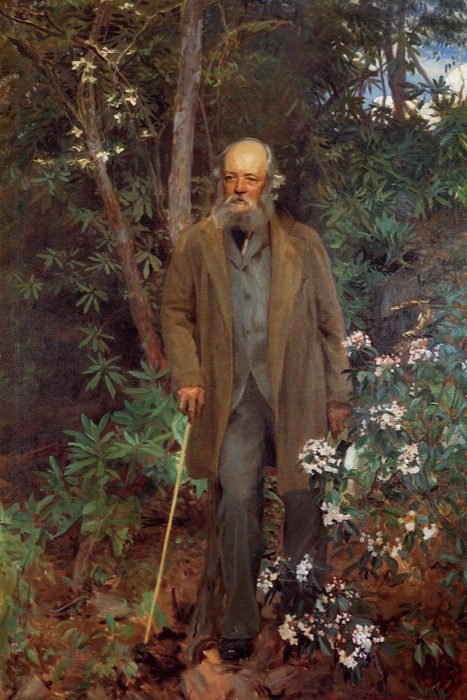
Portrait: public domain, via Wikimedia Commons
Movements
Signature works
- Central Park, New York
- Prospect Park, Brooklyn
- Emerald Necklace, Boston
- United States Capitol Grounds
- Biltmore Estate
Walk into Central Park from the roar of Fifth Avenue and within a hundred paces the city begins to fall away. The traffic noise softens behind a screen of trees; a path curves so that you cannot see where it goes; a meadow opens, then closes again into woodland; and somewhere a carriage road dips below you through a stone arch so that you never even glimpse it. You are in the middle of the densest city in America, yet you feel as though you have wandered into open country. Nothing here is accidental. Every dip, every clump of trees, every turn that hides the next view was drawn on paper a century and a half ago by a man who believed that this feeling — quiet, restorative, half-conscious — was something a great democratic city owed equally to all its citizens.
That man was Frederick Law Olmsted, born in Hartford, Connecticut, in 1822, and by the time of his death in 1903 he had not merely designed the most famous park on earth. He had, almost single-handedly, invented a profession. Before Olmsted there were gardeners and there were engineers; the word "landscape architect" as the name of a discipline was, in effect, his coinage, written into the title under which he and Calvert Vaux submitted their winning plan for Central Park.
Olmsted's central conviction was that scenery itself heals — that broad, gentle, pastoral landscape works on the mind "unconsciously," soothing nerves worn down by the city — and that such restorative green space is not a luxury for the few but social infrastructure a democracy must provide for all. From that belief he built the modern public park, and with it the case for the green lung at the heart of the crowded city.
The idea: scenery as a public good
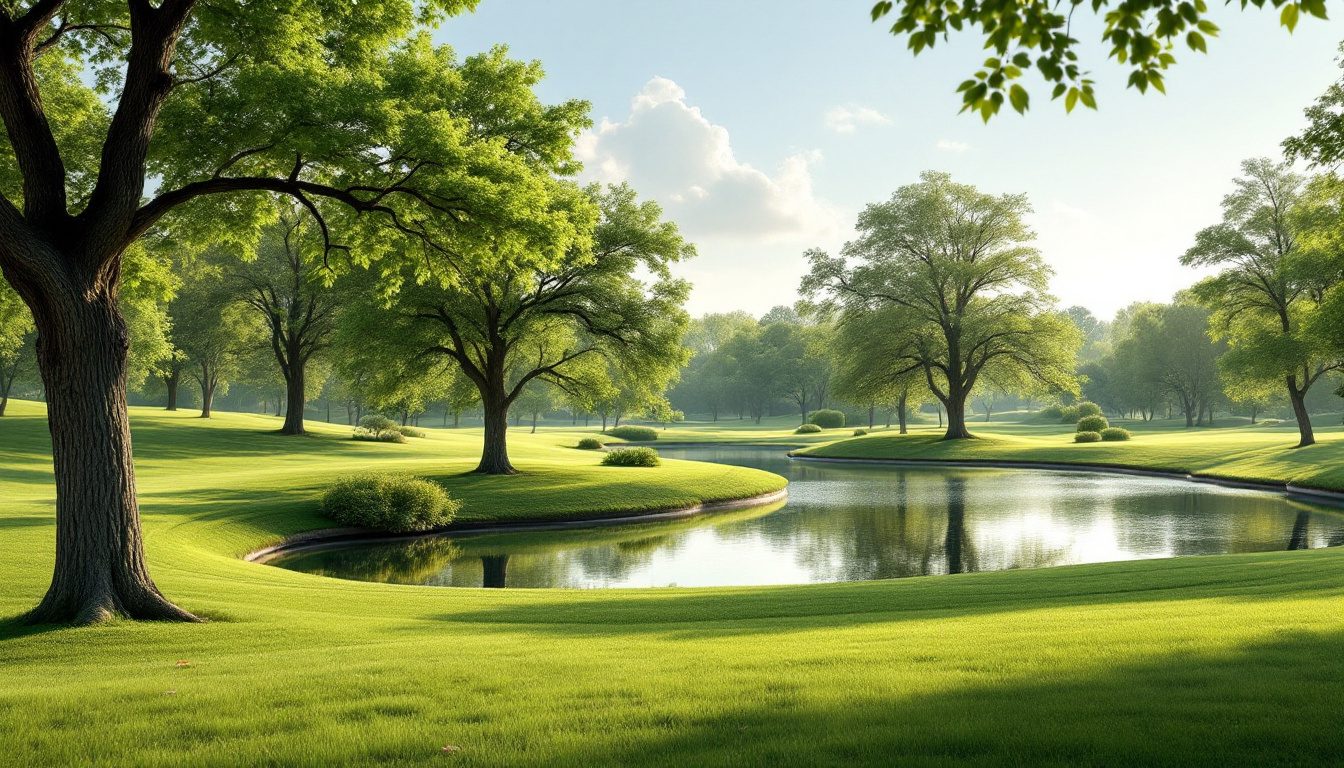
Olmsted's most radical thought was also his simplest. He believed that a certain kind of landscape — open, softly rolling, with broad meadows melting into shadowy woodland and water glinting in the middle distance — acts directly on the human nervous system. It does not lecture or impress; it works, he wrote, "unconsciously," restoring a mind frayed by the noise, crowding and relentless calculation of urban life. A person did not have to study a park or even notice its design for it to do its work. They had only to be in it.
This is why he distrusted ornament, statuary and showy flowerbeds in his great parks. Those things, he argued, demand attention; they make you stop and admire. The pastoral scene, by contrast, asks nothing. It lets the eye rest and wander, lets the mind drift, and in that drift lies the cure. He drew a sharp line between this quiet "pastoral" mode — the meadow, the still water, the grazing light — and the "picturesque" mode of dense, wild, intricate planting that he used at the edges and in the rugged corners, each chosen for its psychological effect.

From this followed everything else. If scenery is a public good, then the park is not decoration but infrastructure, as essential to a healthy city as its water supply or its sewers — a claim Olmsted made repeatedly in an age of cholera and crowded tenements, long before anyone could measure it. And because the medicine had to reach everyone, the park had to be genuinely democratic: open to the labourer and the merchant alike, a common ground where, as he put it, people of every class could meet in a shared sense of ease. The design served the idea. The free-flowing curves, the careful concealment of the city beyond, the separation of strolling paths from carriage drives and bridle trails so that no one's peace was broken by traffic — all of it existed to deliver, reliably and to all, that unconscious restoration.
Life and path
Olmsted came to landscape late and by a wandering road, and that road is the key to the man. Born in Hartford in 1822, he was a restless, half-educated young man who tried many lives before he found his own. He worked as a clerk, sailed as an apprentice seaman to China, and ran an experimental farm on Staten Island. He travelled through England in 1850 and was overwhelmed by Birkenhead Park near Liverpool — a public park, paid for by the people and open to all, that planted in him the conviction that such a thing belonged in America too.
Then he became a journalist. In the 1850s he travelled through the American South for the New York newspapers and wrote a series of clear-eyed, devastating reports on the slave economy, later gathered into books. The experience sharpened a moral and democratic instinct that never left him: a belief that institutions should serve the whole public, especially those with the least. During the Civil War he ran the United States Sanitary Commission, the vast relief organisation that cared for sick and wounded Union soldiers — early, hard schooling in public health and large-scale administration.
He was forty-one and had never designed a park when, in 1857, he took a job as superintendent of the swampy, rocky tract that New York had set aside for one. The next year he and the English-born architect Calvert Vaux entered the design competition with a plan they titled "Greensward." It won. Olmsted had found, almost by accident, the work that would consume the rest of his life — and he brought to it everything the wandering had taught him: the farmer's eye for land, the journalist's grasp of the public good, the administrator's stamina, and the reformer's faith that scenery could heal a society as well as a person.

The signature works
Olmsted's output, much of it in partnership with Calvert Vaux and later carried on by his sons and his firm, set the pattern for public landscape across an entire continent. A few works carry the argument.
| Work | Place & dates | Why it matters |
|---|---|---|
| Central Park (with Calvert Vaux) | New York, from 1858 | The "Greensward" plan that founded the profession — pastoral meadows, hidden boundaries and four sunken transverse roads separating cross-town traffic from the park experience. |
| Prospect Park (with Calvert Vaux) | Brooklyn, from 1865 | The pair's own favourite — a freer, more unified composition of the Long Meadow, a wooded ravine and a great lake, learning from and surpassing Central Park. |
| United States Capitol Grounds | Washington, D.C., 1874 onward | The national landscape — terraces, trees and approaches framing the Capitol, proving the public-landscape idea at the symbolic heart of the republic. |
| Emerald Necklace | Boston, 1878 onward | A continuous chain of linked parks, ponds and parkways that doubled as flood control and sanitation along the Muddy River — green space as working civic infrastructure. |
| Biltmore Estate | Asheville, North Carolina, 1888 onward | His last great commission — a private estate where he laid out the grounds and helped launch the first large-scale managed forestry in America. |
| World's Columbian Exposition | Chicago, 1893 | The landscape setting of the fair that shaped the City Beautiful movement and American urban planning for a generation. |
Central Park remains the founding act. Faced with a long, narrow, intractable site, Olmsted and Vaux did three things that defined the profession forever. They shaped the ground itself — moving millions of cartloads of earth and rock — to create the illusion of a natural countryside that had never existed there. They screened the city out with dense planting along the edges so that, deep inside, you forget where you are. And, most ingeniously, they sank four transverse roads below grade so that cross-town traffic could pass through the park entirely unseen, the carriage drives, bridle paths and footways weaving over and around them on separate planes. That separation of circulation — different kinds of movement kept from colliding — was a genuine invention, and traffic engineers borrowed it for the next century.

Prospect Park is, to many eyes, the better work — the place where Olmsted and Vaux, freed of Central Park's compromises, achieved their fullest pastoral composition in the broad sweep of the Long Meadow. The Emerald Necklace in Boston shows the idea growing to the scale of a whole city: not one park but a connected system of green spaces and parkways, which along the Muddy River doubled as a piece of flood-control and sanitary engineering — green infrastructure before the phrase existed. And at the United States Capitol grounds Olmsted set the landscape of the nation's most important building, confirming that the public-landscape idea belonged at the very centre of democratic life.
The philosophy
More than any other figure, Olmsted is the reason we now ask why some landscapes calm us. His insistence that scenery works on the mind "unconsciously" — restoring attention worn thin by the city — reads today like an early, intuitive statement of restorative-environments science, the research that now measures how time in green settings lowers stress and replenishes the capacity to concentrate. Studio Matrx's reading of why some gardens feel peaceful in India rests on exactly the mechanisms Olmsted trusted by instinct: soft fascination, gentle prospect, and the relief of being released from constant attention.
That same conviction makes him the spiritual ancestor of the healing garden. Olmsted designed the grounds of hospitals and asylums as well as parks, on the explicit belief that the right scenery was a form of treatment — a belief now embedded in the evidence-based design of restorative outdoor spaces for clinics and homes alike. And his whole practice — shaping ground, water, light and planting into a single felt experience rather than a collection of features — is the deep root of biophilic landscape design, the modern discipline of weaving nature back into the places where people live and recover.
He wanted the visitor to feel the landscape without studying it — to be restored, as he put it, "without conscious effort."
His instincts place him in remarkable company. The pastoral ideal he chased — the rolling meadow framed by trees, the studied illusion of effortless nature — descends directly from the English landscape tradition of Capability Brown, whose serpentine lakes and grass swept to the very walls of the great houses. And his argument that landscape is civic infrastructure, not ornament, anticipates the work of Kongjian Yu, who today designs whole cities to absorb floods and clean water with landscape rather than concrete.
India
Olmsted never saw India, and his pastoral America can feel a world away from a Mumbai chawl or a Bengaluru tech corridor. Yet no figure speaks more directly to the predicament of the dense Indian city. His founding argument — that a great city must deliberately set aside generous, freely accessible green space as a matter of public health and democratic right — is precisely the argument India most urgently needs to make for itself.
Indian cities are among the most crowded on earth, and access to good open space is sharply unequal: the gated colony has its lawn and the gymkhana its lush grounds, while the dense neighbourhood next door may have nothing but a dusty, contested patch. Olmsted would have recognised the pattern instantly, and his answer was unambiguous — the public park is not a reward for the affluent but the common ground of the city, the place where, as he believed, people of every class restore themselves side by side. The case for protecting and multiplying India's green lungs — the maidans of Mumbai and Kolkata, Delhi's ridge, Bengaluru's threatened lakes and parks, Chennai's tree-lined avenues — is an Olmstedian case to its core.
His other Indian lesson is about climate and water. The Emerald Necklace treated landscape as working infrastructure, managing floodwater and sanitation while it soothed the eye — exactly the integrated thinking India needs as monsoon flooding and vanishing wetlands collide with explosive urban growth. A park that also stores stormwater, recharges groundwater and cools its neighbourhood is the modern, climate-literate form of Olmsted's idea, and it sits at the centre of contemporary Indian landscape practice.
Legacy and what we can learn
Olmsted's reach is almost impossible to overstate. He named and gave shape to the profession of landscape architecture; the firm he founded, carried on by his sons, designed parks, campuses, suburbs and park systems across the United States for the better part of a century. The very idea that a city should have a great public park — that this is normal, expected, a measure of the place's seriousness — is in large part his bequest to the modern world.
The deeper lesson is the one most easily lost. Olmsted insisted that landscape is not decoration applied at the end but a form of public health, social equity and civic infrastructure, designed with the rigour of any other piece of city-building. He drew the whole park to deliver one quiet, democratic gift — restoration, freely available to all — and he was prepared to move mountains of earth to deliver it reliably. As cities everywhere, and Indian cities above all, count the true cost of crowding, heat and stress, his conviction that a society owes its people access to restorative nature has never felt more like common sense, or more like unfinished business.
His instinct — that the shape of land, water, light and planting can quietly change how people feel — is exactly the instinct we encode in DesignAI, reading a site's setting and scenery before anything else is decided.
References
- Witold Rybczynski, A Clearing in the Distance: Frederick Law Olmsted and America in the Nineteenth Century.
- Frederick Law Olmsted, Writings on Public Parks, Parkways, and Park Systems (ed. Beveridge & Schuyler).
- Frederick Law Olmsted, The Cotton Kingdom (his Southern travel reports).
- Charles E. Beveridge & Paul Rocheleau, Frederick Law Olmsted: Designing the American Landscape.
- National Park Service — Frederick Law Olmsted National Historic Site (Fairsted), Brookline, Massachusetts.
- Olmsted Network / National Association for Olmsted Parks — project records for Central Park, Prospect Park and the Emerald Necklace.
Explore the ideas Olmsted championed — why some gardens feel peaceful, healing gardens and biophilic landscape design — alongside fellow landscape masters Capability Brown and Kongjian Yu.
Philosophies they championed