
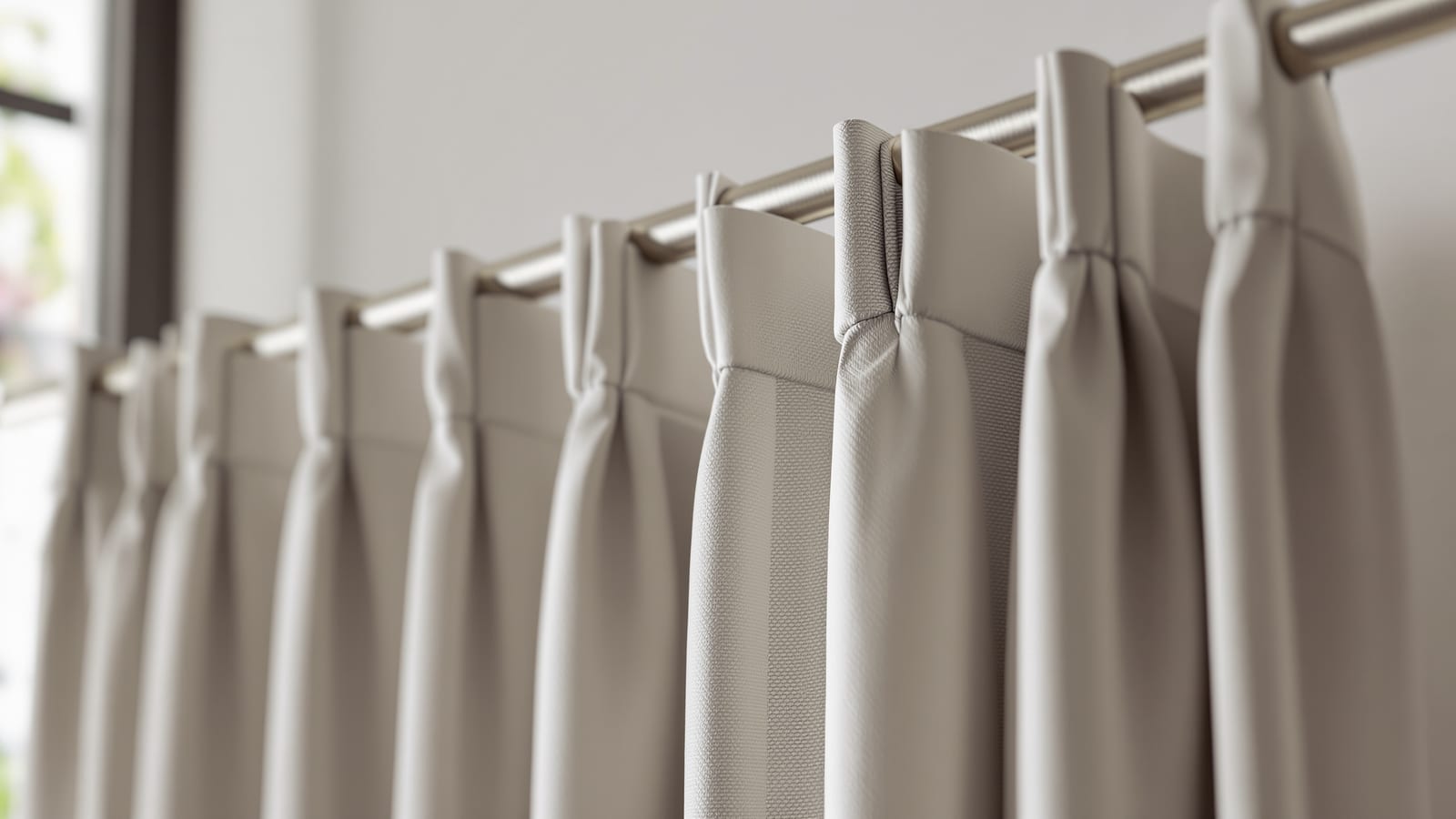
Wave & Ripple Fold Curtains: The Clean Contemporary Look (India 2026)
A continuous, even S-curve on a corded wave track — the most uniform modern fold and the natural partner of motorisation. What it costs, why it needs a special track, and which rooms it suits.
Look at almost any modern interior shoot — a glass-walled apartment, a designer villa, a five-star lobby — and the curtains are doing the same quiet thing: falling in a smooth, regular, unbroken ripple from top to bottom, with no hard pleats and no gathered top. That is the wave fold (also sold as ripple fold, snake fold, or simply "wave"). It is the cleanest, most contemporary way a curtain can hang, and it is the heading professionals reach for when the brief is modern, minimal and uncluttered. This guide explains exactly what it is, why it needs special hardware, what it costs in India, and which windows deserve it.
Wave is the only heading where the fold is engineered, not gathered. The track does the pleating, evenly, every time — which is precisely why it looks so calm and why it loves a motor.
If you want the wider picture first — opacity, layers, fabric, tracks, motors, room-by-room — start with the complete curtain guide for Indian homes. This page zooms into the one heading that defines the contemporary look.
What "wave" and "ripple fold" actually mean
They are the same thing under two names. A continuous wave tape is sewn across the top of the curtain, and that tape is clipped to a row of evenly spaced gliders joined by a cord on a special track. The cord holds every glider at a fixed, equal distance, so the fabric is forced into a uniform, repeating S-curve — a soft wave forward, a soft wave back, all the way along. There are no stitched pleat groups as in a pinch pleat, and no punched rings as in eyelet. The hardware, not the stitching, creates and enforces the fold.
The result is a heading with three defining traits:
- Perfect uniformity. Because the spacing is mechanical, every fold is identical. No heading gives a more even, calm, "designed" line.
- A clean, flat top. No gathered bunch, no goblets, no visible hooks — just a smooth band where the curtain meets the ceiling or track.
- A modest, consistent footprint when stacked open. The folds nest into each other neatly, so an open wave curtain stacks into a tidy, slim bundle.
"Ripple fold" is the term you will see more often on imported tracks and in showrooms; "wave" is the common name in India. Search either — they are interchangeable.
How wave compares to other headings
Set against the headings most Indian homes already know, wave occupies a clear position: the most uniform, the most modern, and the most hardware-dependent.
| Heading | Typical fullness | Rod / Track | Look | Relative cost |
|---|---|---|---|---|
| Eyelet (grommet) | 1.5×–1.8× | Rod | Casual, wide soft waves | Low |
| Pencil pleat | 2× | Either | Tidy all-rounder | Low–Medium |
| Pinch pleat | 2×–2.5× | Either | Crisp, tailored, formal | Medium–High |
| Goblet pleat | 2.5× | Either (fixed) | Grand, traditional cups | High |
| Wave / ripple fold | 2×–2.5× | Track only | Clean, even continuous S-curve | Premium |
Wave looks closest to a high-quality eyelet at a glance — both give soft, rounded folds rather than sharp pleats — but the difference is precision. Eyelet waves are wide and a little irregular and read informal; wave-fold ripples are tighter, perfectly even and read distinctly upmarket. For the full field of headings side by side, see curtain pleats and headings explained.
Why it needs a special wave track (and why that costs more)
This is the single most important practical fact about wave curtains: they cannot hang on a decorative rod, and they cannot hang on an ordinary track. The even S-curve only exists because corded gliders hold a fixed spacing. That means you must buy a purpose-made wave track with the cord-and-carrier system built in, matched to the wave tape on your curtain.
That hardware is the reason wave sits at the premium end:
- The track and corded carriers cost more than a plain track or a rod.
- The wave tape is a specific heading tape, and the curtain must be stitched and measured to suit it.
- It is a fitter's job, not a DIY rod-bracket job — the track must be level and the carrier spacing set correctly, or the waves go uneven.
If a false ceiling or pelmet is in your plans, design the wave-track pocket into it before the ceiling is built. A recessed wave track, where the curtain appears to pour straight from the ceiling, is the most striking version of this look — and retrofitting it afterwards is the most common avoidable regret. The curtain rods vs tracks guide covers the rod-versus-track decision in full.
Fullness, fabric and the right partner cloth
Wave runs at roughly 2× to 2.5× fullness — at the fuller end of normal — because the look depends on having enough cloth to form deep, even ripples. Skimp on fullness and the waves flatten into a limp curtain that defeats the whole point.
The fabric matters as much as the multiplier. Wave rewards fabrics with soft, fluid drape — light-to-medium weight cottons, linens, polyester sheers, and supple blends that fall into a smooth curve. It is less forgiving of stiff, bulky cloth: a heavy jacquard or a thick blackout can fight the wave and look boxy rather than flowing. A very popular and elegant combination is a wave-fold sheer layered in front of a wave-fold dim-out, both on parallel tracks, giving a fully contemporary double layer. Sheers in particular look spectacular in wave — the even ripple plus translucency is a signature modern look.
To size the cloth, don't guess the fullness. The Curtain Fullness Calculator turns your track width and chosen fullness into the exact flat fabric width you need, so your wave hangs with proper body instead of looking thin.
What wave curtains cost in India
Treat these as honest ranges, not quotes — fabric, drop, city and brand swing them widely:
- The fabric is priced as any custom curtain: per metre × fullness × drop, plus lining and stitching. At 2×–2.5× fullness, wave uses more cloth than a lean eyelet panel, which lifts the fabric line.
- The wave track and corded carriers are the premium component — noticeably dearer than a plain track or a decorative rod, and dearer again for ceiling-recessed or curved (bay) runs.
- Stitching and fitting carry a small premium over tape-gathered headings because of the wave tape and the level-track install.
The net effect: a finished wave window typically lands above an equivalent eyelet or pencil-pleat window and broadly in line with, or a little above, a good pinch pleat — with the extra clearly going into the track. The cost driver people underestimate is the track and the fullness, not the print. Price it properly with the Curtain Cost Calculator, which works fabric metres, lining and a per-window figure from your width, drop and heading.
Wave is the natural partner of motorisation
If you are going to motorise any curtain, wave is the heading to pair it with — and the reverse is just as true. Because the gliders are corded and evenly spaced, a motor pulls them along the track in a smooth, even, perfectly stacking motion, with no bunching or snagging. The fabric travels and parks more cleanly than any pleated alternative, which is exactly what makes a motorised curtain feel premium rather than fussy.
This is why showrooms so often demonstrate motors on wave tracks: the open-and-close glide is the look's best advertisement. If automation is on your list — a curtain that closes against the afternoon sun, or opens gently at dawn — read motorised curtains for Indian homes and plan the wave track and motor together. Wired motors want cabling during construction; battery motors retrofit anywhere.
Which rooms (and styles) wave suits best
Wave is a style statement, not an all-rounder. It belongs where the look is modern, minimalist or contemporary:
- Living rooms and bedrooms in modern apartments and villas — especially floor-to-ceiling glass, where the unbroken ripple emphasises height and calm.
- Minimalist and clean-lined interiors — wave is effectively the default heading of minimalist curtain design and a cornerstone of modern curtain design.
- Any window you intend to motorise, for the glide.
- Sheers on tall windows, where the even ripple plus light is the whole effect.
It suits less well in traditional, classical or ornate rooms, where pinch or goblet pleats read more correctly, and it is overkill on small back-of-house windows (utility, guest, kids') where a plain eyelet or pencil pleat does the job for far less. A sensible Indian pattern: spend on wave (and a motor) in the living room and master bedroom you use and show, and keep the secondary windows simple.
The honest caveats
- You are locked to the track. Wave cannot move to a decorative rod later. If you might want a rod look down the line, this isn't your heading.
- It needs a clean, level install. Uneven carrier spacing or an out-of-level track makes the waves visibly irregular — the one thing wave is supposed to avoid. Use a fitter who has done it before, and check a sample run.
- Stiff fabrics fight it. Match wave to soft-draping cloth; heavy blackout and bulky jacquards can look boxy.
- It is genuinely premium. Between the cloth, the wave track and the fitting, this is one of the dearer ways to dress a window — justified only where the modern look matters.
- Numbers here are indicative. Fullness, prices and track costs are working guidance — measure your own windows and price your own fabric, track and fitting locally before committing.
In one line
Wave (ripple fold) is the heading where the track makes the fold — a continuous, even, contemporary S-curve that hangs cleaner than anything else and glides best under a motor. Choose it for modern rooms you want to look effortless, budget for the special track, and let a soft-draping fabric do the rest.
Plan it with Studio Matrx. Size the cloth for a proper ripple with the Curtain Fullness Calculator, price the window — track included — with the Curtain Cost Calculator, and read the complete curtain guide for Indian homes for the full system — opacity, layers, tracks and motors. The pleats-and-headings, modern, minimalist and motorisation spokes complete the picture across this Window Treatments cluster.
Export this guide
Related Guides — Deep-dive reading
Pinch Pleat Curtains: The Tailored Designer Default (India 2026)
Stitched groups of folds, crisp tailored hang, 2–2.5× fullness — why interior designers reach for the pinch pleat first, what it costs in India, and exactly when to specify double, triple or French.
Window TreatmentsCurtain Pleats & Headings: Eyelet, Pencil, Pinch, Goblet, Wave Explained (India, 2026)
The heading is the pleated top of a curtain — and it quietly decides the look, the hardware and the bill. A plain-language reference to every style and how to pick the right one.
Window TreatmentsPencil Pleat Curtains: The Versatile All-Rounder (India 2026)
Gathered three-cord tape, adjustable fullness, works on rod or track — the forgiving, economical heading that quietly dresses most Indian windows. Here is exactly when it is the right call.
Window TreatmentsRelated Tools — Try Free
Curtain Cost Calculator
Get the fabric metres you need plus the total curtain cost by window size, fabric, pleat, lining and hardware.
Curtain CalculatorCurtain Fullness Calculator
Work out the fabric width and number of widths you need for a chosen heading and fullness.
Curtain CalculatorFalse Ceiling Cost Estimator
Live ₹/sqft across 8 ceiling types — POP, gypsum, designer, metal, PVC, wooden — with cove and spot lighting for 20 Indian cities.
Cost Calculator