
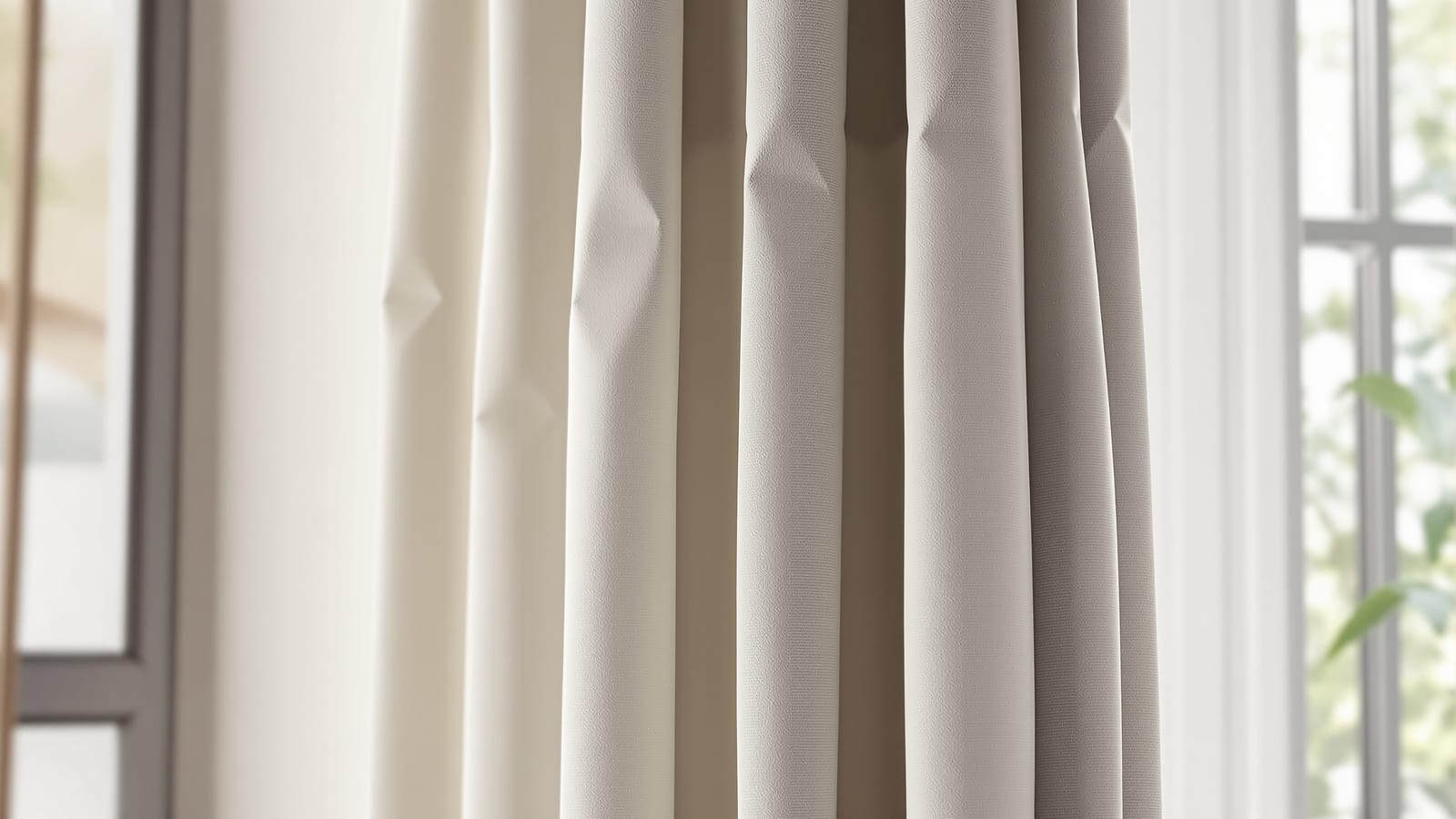
Curtain Pleats & Headings: Eyelet, Pencil, Pinch, Goblet, Wave Explained (India, 2026)
The heading is the pleated top of a curtain — and it quietly decides the look, the hardware and the bill. A plain-language reference to every style and how to pick the right one.
Most people choose a curtain by its colour and never think about the top. That top — the heading, the pleated edge that meets the rod or track — is doing more work than the print ever will. It decides how the fabric folds, how "finished" the curtain looks, whether it glides on a track or rides a rod, and, crucially, how much cloth you have to buy. Two curtains in the same fabric, same window, can differ by 40% in cost purely because of the heading. This guide is the reference: every common pleat, what it looks like, what it costs, and which one to pick.
The heading is the cheapest decision that changes the whole look — and the most expensive one to ignore. Get it right and a modest fabric hangs like money; get it wrong and a beautiful fabric hangs like a bedsheet.
If you want the wider picture first — opacity, layers, tracks, motors, room-by-room — read the complete curtain guide for Indian homes. This page zooms into the one detail that sets the look.
First, the one idea that explains all of it: fullness
Fullness is the multiplier between your window (or track) width and the flat width of fabric you buy. A heading at 2× fullness on a 1.5 metre track needs about 3 metres of gathered cloth so it hangs in proper, deep folds instead of a flat sheet.
Every heading has a natural fullness, and that single number drives everything downstream:
- More fullness → more fabric → more cost. Fabric is usually the biggest line in a custom curtain, so the heading you choose sets the budget more than the fabric price per metre does.
- More fullness → deeper, richer folds → a more "designed" look. A flat eyelet panel and a deep pinch pleat can be the same cloth and read completely differently.
- Heading also decides the hardware — some pleats only behave on a track, some are happiest on a decorative rod.
As a working scale: 1.5× is economical and flatter, 2× is the standard that looks properly full, and 2.5× is luxurious (the usual choice for sheers and premium pinch or wave). Keep this in mind as you read each style below — the Curtain Cost Calculator turns your track width, drop and chosen pleat straight into fabric metres and a per-window price, so you can feel the cost difference between headings before you commit.
The headings, compared
Here is the whole field in one view. Costs are relative (the heading's effect, not the fabric's), and "rod / track" tells you what it wants to hang on.
| Heading | Typical fullness | Rod / Track | Look | Relative cost |
|---|---|---|---|---|
| Rod pocket | 1.5×–2× | Rod (slim) | Soft, casual, gathered | Low |
| Tab top | 1.5× | Rod (decorative) | Relaxed, boho, visible loops | Low |
| Eyelet (grommet) | 1.5×–1.8× | Rod | Modern, uniform wide waves | Low |
| Pencil pleat | 2× | Either | Versatile all-rounder | Low–Medium |
| Pinch pleat (double) | 2×–2.2× | Either | Crisp, tailored | Medium |
| Pinch pleat (triple) | 2.2×–2.5× | Either | Fuller, formal, luxe | Medium–High |
| Goblet pleat | 2.5× | Either (fixed) | Grand, traditional, cups | High |
| Wave / ripple fold | 2×–2.3× | Track only | Clean, even S-curve, contemporary | Premium |
Eyelet (grommet)
Metal rings punched into the fabric ride directly on a round rod. It is the fastest, most casual, most DIY-friendly heading in India — no pleating tape, no hooks. The folds are soft, wide and a little irregular, with that characteristic uniform wave at the top. Fullness is low (often 1.5×), so it is also the most fabric-efficient heading, which is part of why ready-made eyelet panels are everywhere and cheap. The trade-offs: the ring size must match the rod diameter, it only works on a rod (never a slim track), and it reads informal — fine for a study or a kid's room, less so for a formal living room. See types of curtains in India for where eyelet fits best.
Pencil pleat
A gathered tape sewn across the top draws the fabric into tight, even, pencil-thin folds. This is the all-rounder: forgiving, economical at 2× fullness, and it works on either a rod (with rings/hooks) or a track. Because the tape is gathered with draw-cords you get some adjustability. It is the sensible default when you want a tidy, traditional finish without paying for hand-stitched pleats — the bread-and-butter heading of Indian custom tailoring.
Pinch pleat (French / double / triple)
Fabric is hand-pinched into stitched groups of folds at fixed intervals — two folds per group is a double (French) pleat, three is a triple. This is the designer default for living rooms and bedrooms: crisp, tailored, architectural, and it hangs in a controlled, repeating rhythm. Triple uses more cloth (2.2×–2.5×) and looks fuller and more formal; double (2×–2.2×) is a touch leaner and cheaper. Pinch pleat works beautifully on both rod and track, which makes it the safe upgrade when you want something clearly a cut above eyelet without going exotic.
Goblet pleat
A pinch pleat's dressier cousin: the top of each pleat is opened into a rounded cup (often padded with batting or stiffener) so it reads like a row of goblets. It is formal, traditional and grand — built for tall windows, double-height living rooms, heavier fabrics and a classic look. The cups are usually fixed in place, so goblet curtains are made to stay mostly drawn open and dressed, not yanked shut every night. High fullness (≈2.5×) plus the extra stitching and padding make it one of the pricier headings.
Tab top & rod pocket
Two relaxed, rod-only headings for curtains you rarely move:
- Tab top — fabric loops along the top slip over a decorative rod. Casual, slightly boho, the rod stays visible between tabs. Low fullness, low cost, but the tabs drag and catch when you slide them, so they suit fixed or lightly-used panels.
- Rod pocket — a sewn channel (a "pocket") threads straight onto the rod, gathering into soft folds. Cheapest of all to make, with a soft cottage look — but it bunches at the rod and is genuinely annoying to open and close, so reserve it for sheers or decorative panels that stay put.
Wave / ripple fold
The contemporary favourite: a special tape clipped to glider cords on a track holds the fabric in a continuous, perfectly even S-curve from top to bottom. No hard pleats, just a clean uniform ripple. It is the cleanest modern look and the natural partner for motorisation, because the gliders stack and travel so smoothly. The catch: wave fold requires a track (it cannot hang on a decorative rod), and the special hardware plus the even fullness (≈2×–2.3×) put it at the premium end. If you are layering it with a daytime sheer, our sheer curtains guide covers pairing.
How the heading drives your fabric bill
Walk one window to make the cost concrete. Say a 2 metre wide living-room window, floor-length (about 2.7 m drop):
- Eyelet at 1.5× needs ≈ 3 m of fabric width — the leanest, cheapest option.
- Pencil or double pinch at 2× needs ≈ 4 m width — a third more cloth, a clearly fuller hang.
- Triple pinch or goblet at 2.5× needs ≈ 5 m width — two-thirds more cloth than eyelet, before you add the extra stitching labour those pleats carry.
On a ₹600/metre fabric that fullness gap alone is roughly ₹1,200 of extra cloth per panel, repeated across every window in the house — and pinch, goblet and wave also cost more in stitching labour than a tape-gathered pencil or a punched eyelet. This is why fullness, not the print, is the real cost driver. Don't guess it: the Curtain Cost Calculator does this exact arithmetic — feed it your width, drop and heading and it returns fabric metres and a per-window price, so you can compare an eyelet quote against a pinch-pleat quote in seconds. For the bigger ready-made-versus-custom breakdown, see the curtain cost guide.
Rod or track? The heading usually decides
The hardware is invisible in photos and decisive in real life, and your heading narrows the choice for you:
- Rod only — eyelet, tab top, rod pocket. Decorative, surface-mounted, easy to fit, but limited for very heavy or motorised curtains.
- Either — pencil and pinch pleat (and goblet) hang happily on a rod or a track via rings and hooks; tracks give them crisper, more uniform folds and take more weight.
- Track only — wave / ripple fold, and essentially all motorised curtains.
Two rules hold across every heading. Tracks give more uniform folds and carry heavier cloth than rods, and they can bend around a bay or recess into a ceiling pocket. And whatever the heading, mount it wider than the window — 15–20 cm past the glass each side — so the open curtain clears the pane and lets full daylight in. If a false ceiling or pelmet is in your plans, design the curtain pocket in now; retrofitting a hidden track later is the most common avoidable regret in this whole category.
Which heading should you actually pick?
Match the heading to the room's job and your honesty about how often you'll move the curtain:
- Casual / budget / rented homes — eyelet on a rod. Cheap, modern, fabric-efficient, easy to take with you.
- The reliable default anywhere — pencil pleat. Tidy, economical, works on rod or track.
- Living room & main bedroom you want to look designed — double or triple pinch pleat. The clearest upgrade in look for a moderate cost bump.
- Formal, tall, traditional rooms — goblet, on heavier fabric, dressed to stay open.
- Modern, minimal, motorised windows — wave / ripple fold on a track.
- Sheers and "set-and-forget" decorative panels — rod pocket or tab top are fine; just don't expect to slide them daily.
A practical Indian pattern: dress the windows you use and show (living, master) in pinch or wave, and the back-of-house windows (utility, guest, kids') in eyelet or pencil. You spend the fullness where it is seen. Not sure which window deserves which? The Window Treatment Selector walks you to a recommendation, and the living room curtains guide and curtain fabric guide help you pair heading, fabric and weight sensibly.
The honest caveats
- Heavier fabric needs more body in the pleat. A flowing sheer looks lovely at high fullness; a stiff jacquard can look bulky in a tight pencil pleat and crisper in a pinch. Match heading to fabric weight, not just to taste.
- Some pleats don't like being moved. Goblet, rod pocket and tab top reward staying put; if you open and close daily, prefer pencil, pinch or wave.
- Tailors vary. Pinch and goblet are stitching-skill jobs — see a sample of the tailor's pleats before you commit a whole house, because uneven hand-pleating shows.
- Numbers here are indicative. Fullness multipliers, prices and metre estimates are working guidance — measure your own windows and price your own fabric and stitching locally before ordering.
In one line
Opacity decides what a curtain does; the heading decides what it looks like and what it costs. Pick the pleat for the room's job, set the fullness, then let the colour be the easy, last, fun decision.
Plan it with Studio Matrx. Compare headings by real fabric metres and per-window price in the Curtain Cost Calculator, get a tailored recommendation from the Window Treatment Selector, and read the complete curtain guide for Indian homes for the full system — opacity, layers, tracks, motors and room-by-room. The curtain type, fabric, sheer, living-room and cost spokes round out this Window Treatments cluster.
Export this guide
Related Guides — Deep-dive reading
Eyelet (Grommet) Curtains: The Casual Modern Heading (India 2026)
Metal-ringed curtains that ride a rod in soft, even waves — the quickest, most fabric-efficient, most modern-casual heading in Indian homes. Where they shine, what to buy, and how they compare.
Window TreatmentsPencil Pleat Curtains: The Versatile All-Rounder (India 2026)
Gathered three-cord tape, adjustable fullness, works on rod or track — the forgiving, economical heading that quietly dresses most Indian windows. Here is exactly when it is the right call.
Window TreatmentsLuxury Curtain Design Trends for Indian Homes (2026)
What actually makes a curtain read expensive — generous fullness, floor-length drops, premium fabrics, tailored headings, layering, concealed tracks and motorisation — plus the honest cost reality for Indian villas and penthouses.
Window TreatmentsRelated Tools — Try Free
Curtain Cost Calculator
Get the fabric metres you need plus the total curtain cost by window size, fabric, pleat, lining and hardware.
Curtain CalculatorCurtain Fullness Calculator
Work out the fabric width and number of widths you need for a chosen heading and fullness.
Curtain CalculatorCross-Ventilation Analyzer
Estimate airflow and air changes per hour (ACH) from room size, window areas, layout, and local wind — with NBC 2016 Part 8 compliance check.
Ventilation Calculator