
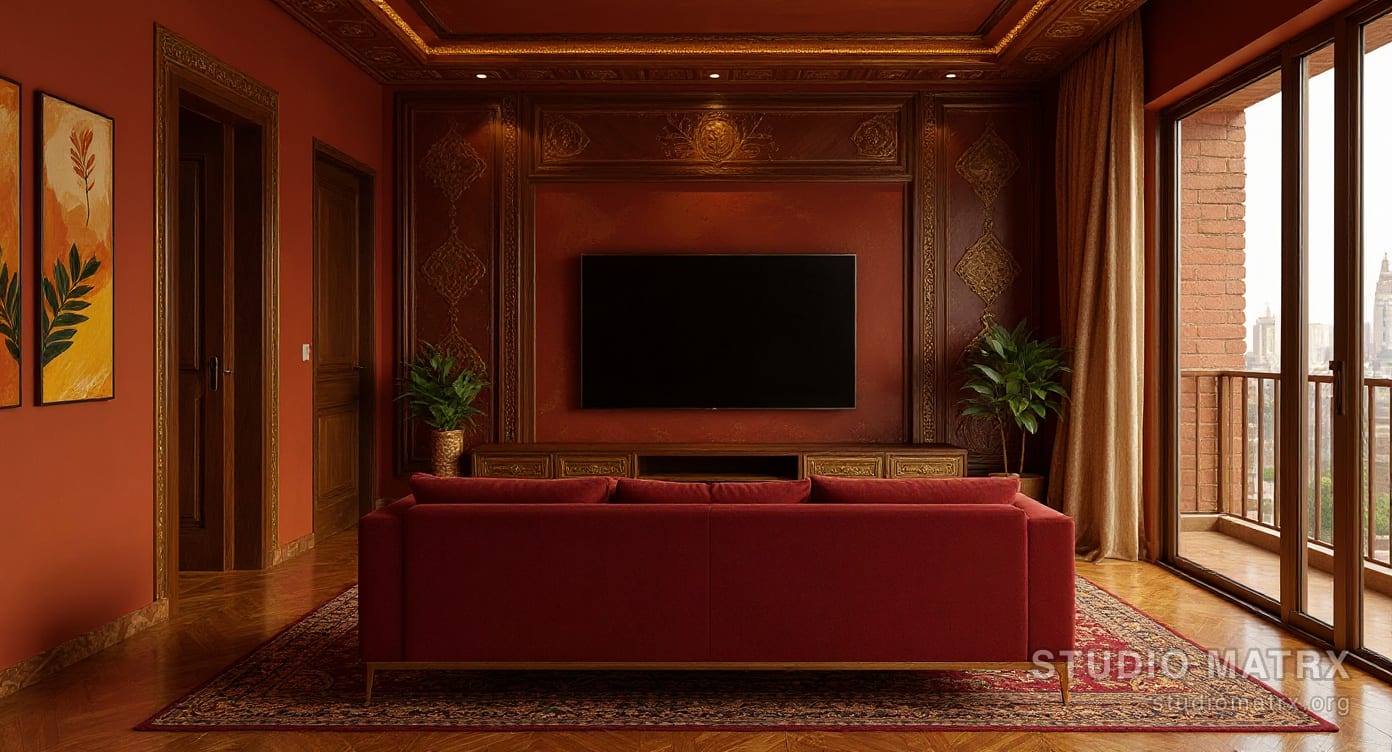
Traditional Indian Interiors — A 2026 Style Guide for Homes
Living heritage, not a museum · Carved wood, brass, jewel tones · The pooja room as heart
Traditional Indian interiors are living heritage made comfortable for daily life — carved teak, brass lamps, jewel-and-earth colour, and the pooja room as the home's quiet heart. This is not a frozen recreation of a haveli or a palace museum. In 2026, the style suits Indian homeowners who want warmth and rootedness without the heaviness that makes a room feel like a furniture showroom — joint families in tier-2 cities, villa owners with space to layer, and apartment dwellers who want one or two heritage anchors rather than a wall-to-wall period set.
Done well, Traditional Indian is generous, tactile and unmistakably ours: terracotta and maroon walls warmed by mustard and gold, hand-carved wood you actually touch every day, and textiles that change with the seasons and festivals. Done badly, it is dark, cluttered and unbreathable. This guide shows you how to get the first version.
What Traditional Indian Style Is (and Isn't)
Traditional Indian is a family of regional idioms, not a single look. It IS living heritage — craft that is still made, used and repaired, adapted to how families actually live now. It ISN'T a museum: glass cabinets of untouchable curios, every surface carved, and rooms so dark you reach for the switch at noon.
The breadth matters because "traditional Indian" means different things across the country, and mixing them carelessly is the fastest way to a confused room:
- Rajasthani / North Indian — the most recognisable strain: deep jharokha windows, lac-and-mirror work, block-print and bandhani textiles, brass and lac furniture, vivid maroon-and-mustard contrast.
- South Indian (Chettinad, Kerala, Tamil) — athangudi tiles, Burma-teak pillars and swings (oonjal), brass and bronze, oxide flooring, a calmer earth-and-ochre register with less mirror and more woodwork.
- Bengali / Eastern — colonial-Indian fusion, terracotta motifs, lighter cane and wood, kantha quilts, a softer and more restrained palette.
You do not need to recreate a whole region. The honest approach is to pick one as your base grammar, let two or three statement pieces carry the heritage, and keep the rest of the room calm. Heritage reads strongest when it has room to breathe.
Five Principles
1. Carved wood as the anchor
One or two genuinely good carved-wood pieces do more than ten mediocre ones. A jharokha-frame mirror, a hand-carved swing, a low diwan, or a temple-style mandir should anchor each main room. Choose solid teak or sheesham (rosewood) with real hand-carving, then surround it with plain, modern upholstery and clean walls so the carving is the hero, not the noise.
2. The jewel-and-earth palette
Traditional Indian colour lives in two registers held together: grounding earth tones (terracotta, ochre, clay) and saturated jewels (maroon, deep mustard, gold). The trick is proportion — earth tones cover the large surfaces (walls, floors, big upholstery) and jewel tones arrive as accents (cushions, a feature wall, dhurries, lampshades). Reverse that ratio and the room turns oppressive.
3. Layered textiles
Textiles are how the style stays soft and changes through the year. Block-print and ikat cushions, a silk or kantha throw, a hand-knotted dhurrie, mirror-work bolsters on a diwan. Layering also fixes the most common failure of heavy wooden rooms — too many hard surfaces. Cloth absorbs sound, adds warmth and lets you refresh the look for Diwali or a wedding without buying new furniture.
4. Brass and temple elements
Brass is the metal of the style: diyas, urli bowls, a temple bell, a tall standing lamp, door handles, a brass-inlaid box. Use it deliberately as warm points of light and reflection, not as a scatter of trinkets. A single large urli with floating flowers and a tea-light says more than a shelf of small idols.
5. The pooja room as the heart
In a traditional Indian home the pooja space is not decor — it is the emotional and spatial centre, and it deserves the best craft, the calmest corner and proper light. Whether it is a full room, a carved mandir, or a niche, treat it as the piece the rest of the home orients around. (Detailed styling below.)
The Traditional Indian Palette
Earth tones do the heavy lifting; jewel tones are the jewellery. Keep roughly 70 percent warm-neutral-and-earth, 30 percent saturated.
| Tone | Hex | Where to use | Indian reference |
|---|---|---|---|
| Terracotta | #9e3b29 | Feature wall, flooring, large pottery, accent upholstery | Sun-baked clay tiles, Bishnupur terracotta temples |
| Maroon | #6e1f24 | Statement upholstery, drapes, a pooja-room backdrop | Bandhani and Banarasi silk, temple textiles |
| Mustard | #d99b2e | Cushions, dhurries, lampshades, secondary walls | Turmeric, marigold garlands, Rajasthani turbans |
| Gold | #c8962f | Brass, trims, picture frames, thread-work, gilt detail | Gold zari, gilded mandir frames, temple brass |
Pair these with breathing space: ivory, off-white lime-wash, natural jute and undyed cotton on the large surfaces so the jewel tones land as accents instead of swallowing the room.
Materials, Crafts & Textiles
| Element | Role | Regional craft / sourcing note |
|---|---|---|
| Carved teak | Anchor furniture, doors, mandir, swings | Saharanpur (UP) carvers; Burma-teak heritage in Chettinad and Kerala |
| Sheesham (rosewood) | Tables, beds, diwans, chests | Jodhpur and Rajasthan furniture clusters; durable, deep grain |
| Brass | Lamps, urli, diyas, bells, hardware | Moradabad (UP), the brass city; also Tamil Nadu temple brass and bronze |
| Block print | Cushions, drapes, bedding, table linen | Bagru and Sanganer (Jaipur), Ajrakh (Kutch); Anokhi and Fabindia retail it |
| Ikat | Cushions, throws, upholstery accents | Pochampally (Telangana), Patola (Patan, Gujarat) for the finest double-ikat |
| Silk | Festive drapes, cushions, bolsters | Banarasi, Kanchipuram, Bhagalpur tussar; use sparingly as luxe accent |
| Terracotta | Pottery, planters, tiles, wall art | Bishnupur (Bengal), Pondicherry, Molela (Rajasthan) plaques |
| Inlay | Boxes, tabletops, mirror frames | Marble-and-stone inlay (pietra dura) of Agra; bone and wood inlay of Rajasthan |
A reliable rule: buy the wood and brass once and well, and rotate the textiles often. The hard layer is your investment; the soft layer is your seasonal flexibility.
Room by Room
Living room
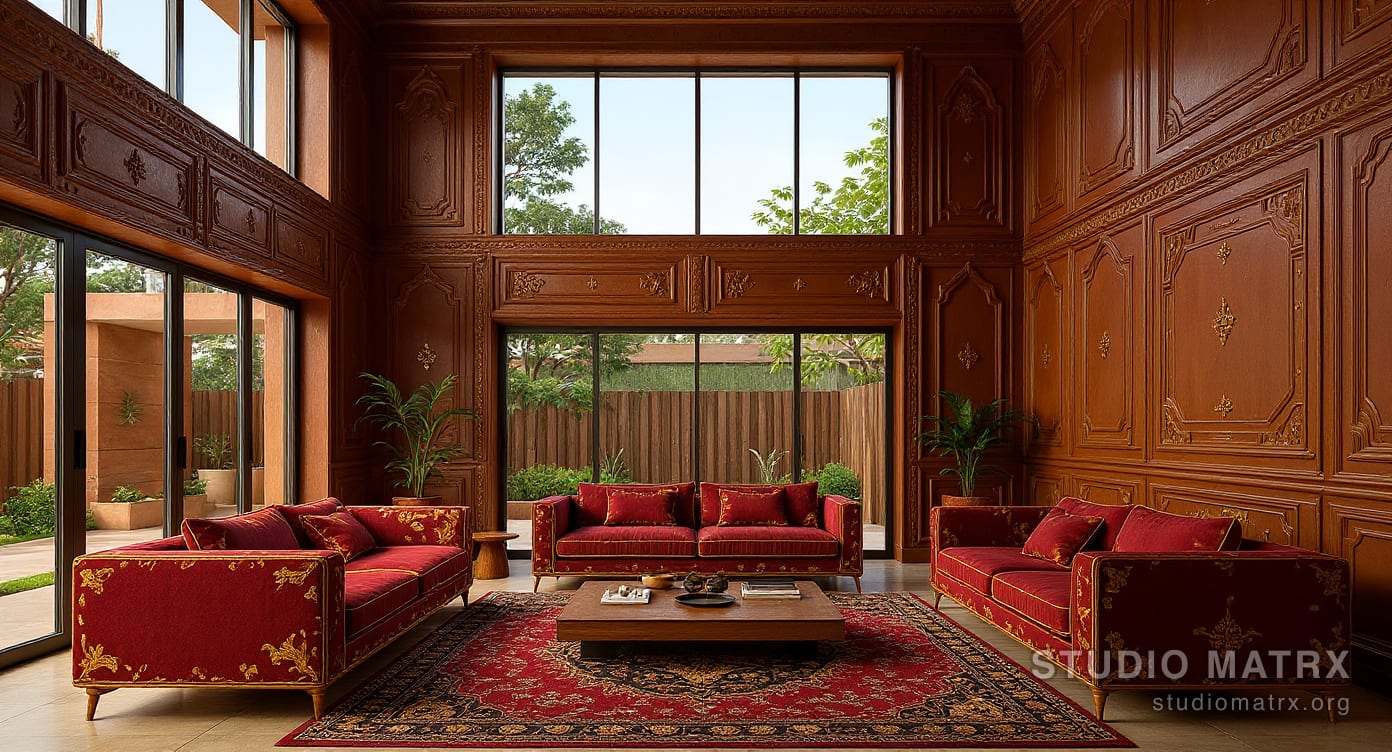
Anchor with one statement piece — a carved swing, a low diwan, or a jharokha mirror — against a calm wall. Keep the main sofa simple and well-cushioned, then layer block-print and ikat cushions, a hand-knotted dhurrie, and a brass standing lamp. Add a single terracotta or brass urli on a low table. Leave negative space; let the carving be seen against plain plaster, not crowded by more carving. A villa living room can carry a fuller composition — a wood-pillared seating bay, a larger swing — but the same restraint applies: one hero per sightline.
Kitchen
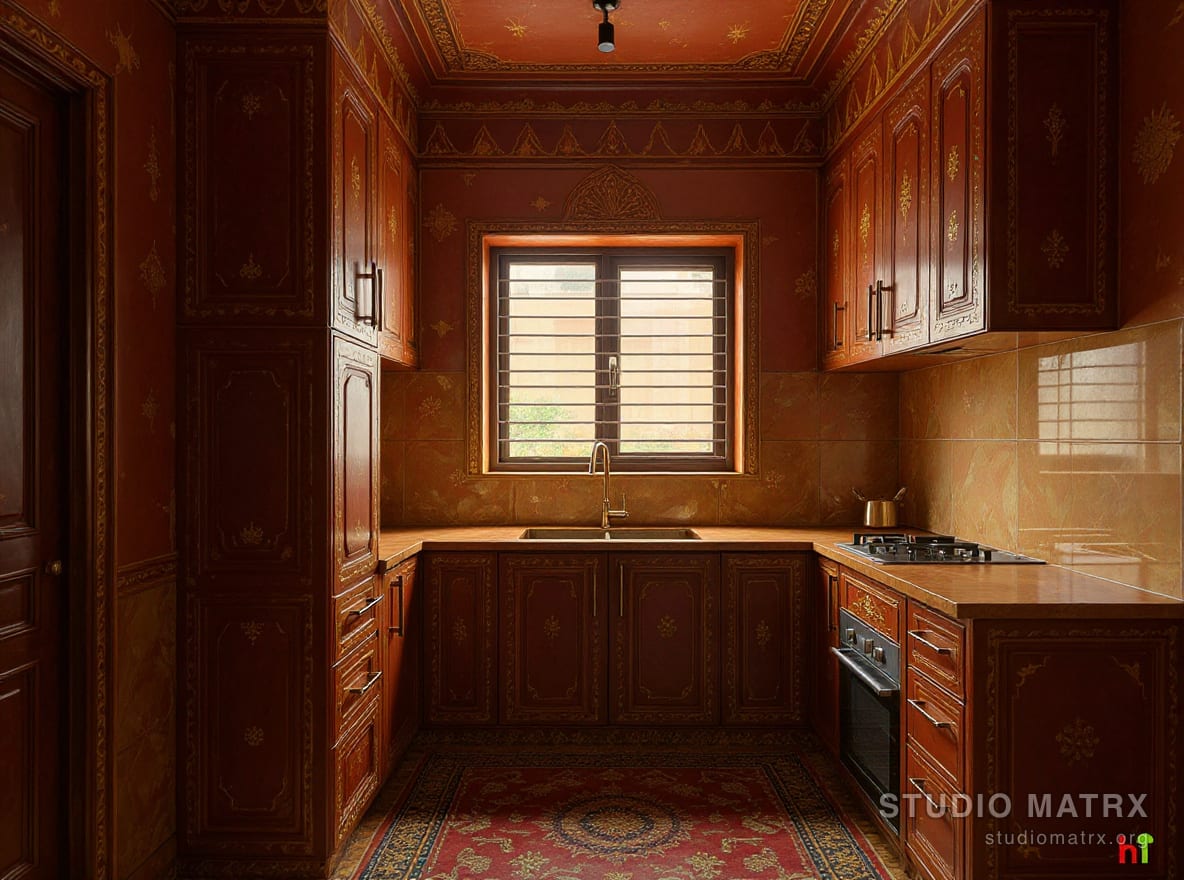
A modern, practical kitchen layout with traditional cues reads best. Use teak-finish or warm-wood shutters, a terracotta or athangudi-style tile backsplash, and brass or antique-brass handles and tap finishes. Display a row of brass storage vessels and a masala dabba on open shelving. Keep work surfaces clear and lighting bright and functional — heritage charm should never compromise a working kitchen.
Master bedroom
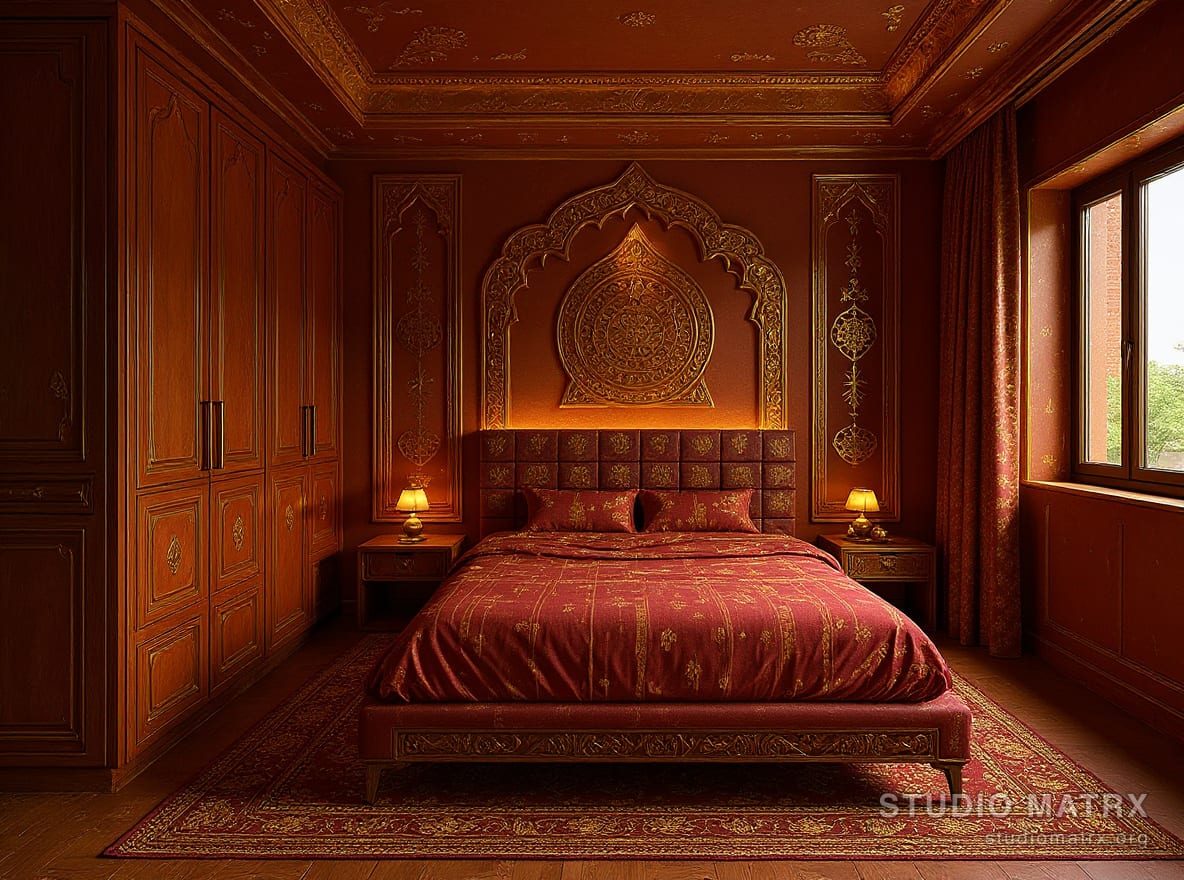
A carved teak or sheesham headboard is the natural anchor. Dress the bed in block-print or kantha-quilted bedding with a silk or mirror-work throw folded at the foot. Keep walls in a calm terracotta or ivory, hang a jharokha mirror or a Pichwai-style artwork, and use a pair of brass bedside lamps for warm, layered light. Resist filling the room — one carved chest and a small seating corner are enough.
Bathroom
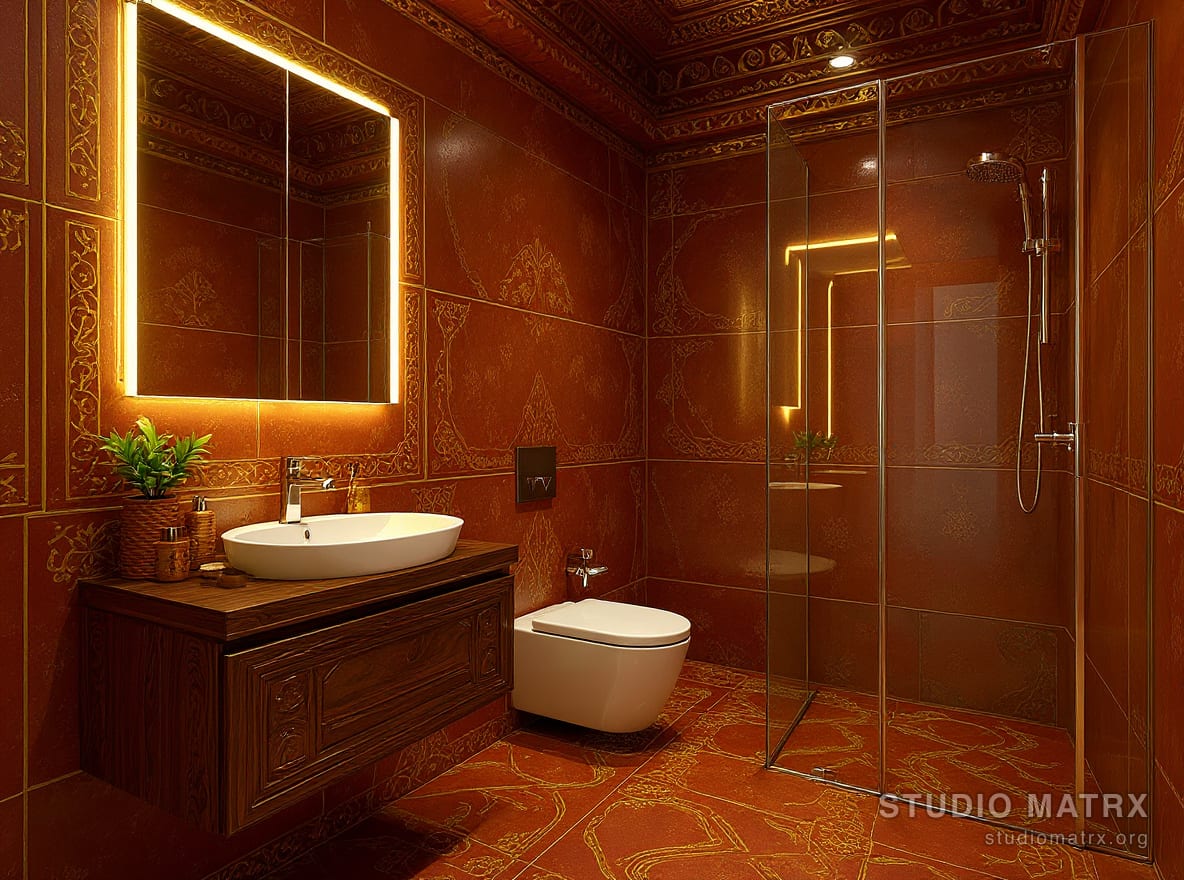
Heritage cues survive damp through hard finishes: terracotta or athangudi-pattern floor tiles, an antique-brass mirror frame and fittings, a stone or brass washbasin, and a small carved-wood stool. Keep ventilation and waterproofing modern and uncompromised — never put unsealed carved wood where it will rot. Warm metallic fittings and patterned floor tile carry the style without risk.
Dining
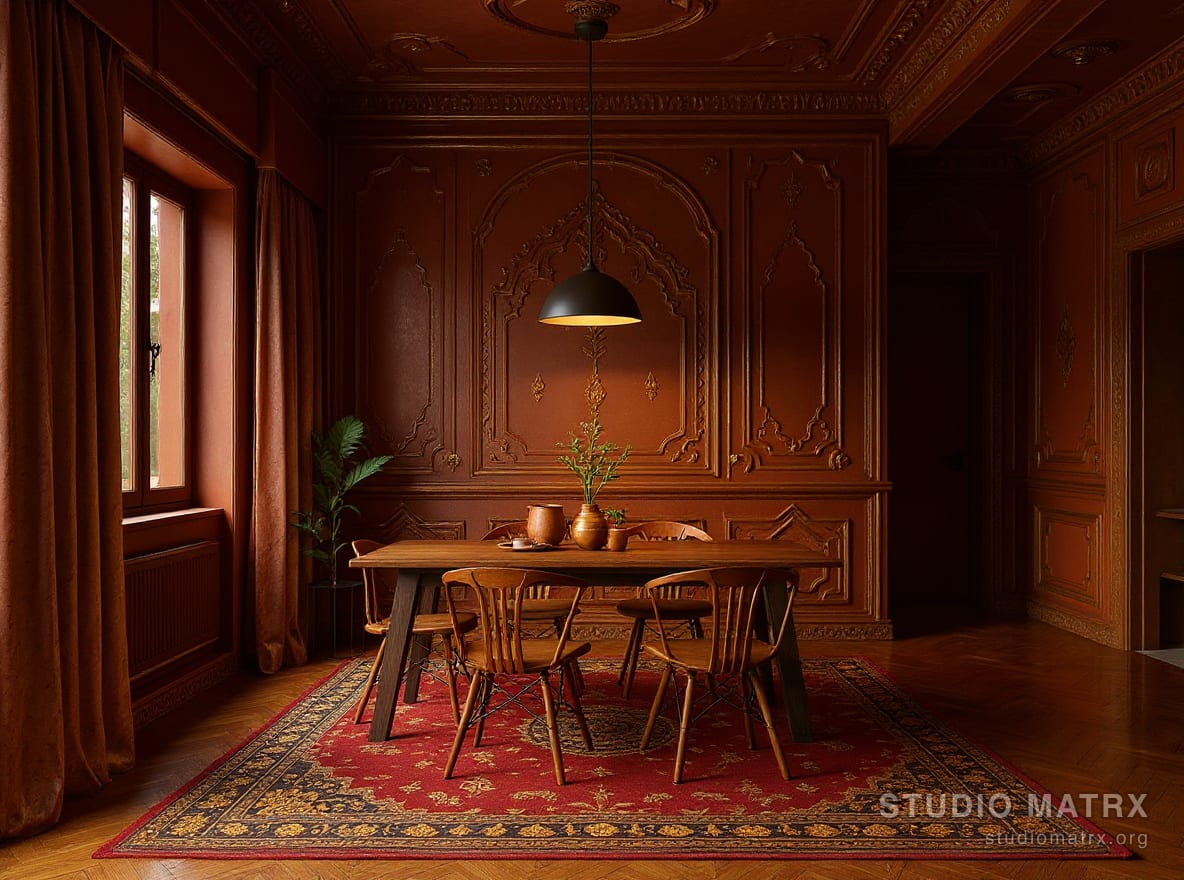
A solid sheesham or teak dining table is the centrepiece — pair it with simple chairs so the table can be elaborate without the set turning heavy. A brass or terracotta centrepiece, block-print runners and a low warm-toned pendant or a cluster of brass lamps complete it. For joint families that dine together often, prioritise a generous table and comfortable seating over decorative excess.
Pooja room — the heart of the home
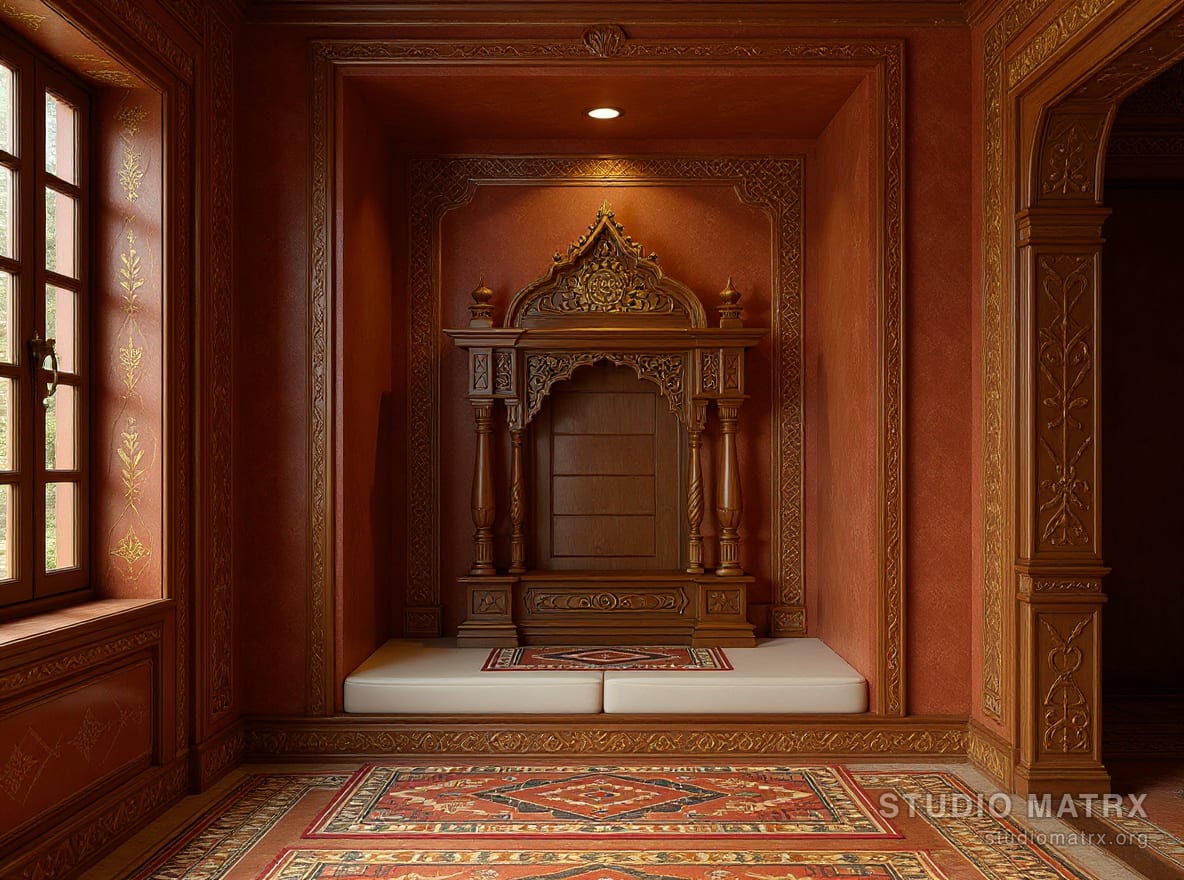
This deserves the most thought. Traditionally the pooja faces east or north-east, with the worshipper facing east or north. Whether you have a dedicated room, a carved teak mandir, or a wall niche, give it the best craft you can afford and the calmest corner of the home.
- The mandir — hand-carved teak or sheesham, raised slightly off the floor, sized to your space rather than oversized for show.
- Light — warm, layered, and gentle: a brass diya, concealed warm LED behind the carving, and natural light if possible. Avoid harsh white downlights.
- Backdrop — a maroon or deep terracotta wall, or a brass or marble-inlay panel behind the deities.
- Materials — brass diyas and bells, a marble or brass base that wipes clean, fresh marigold, and storage below for samagri.
- Restraint — keep idols to a meaningful few and the surrounding surfaces uncluttered so the space feels sacred, not crowded. Ensure ventilation for lamp smoke.
A well-made pooja space is where Traditional Indian style is at its most honest — useful, beautiful, and personal.
Budget — What It Costs in India
Indicative ranges for styling a 2–3 BHK or small villa in the Traditional Indian idiom (furniture, textiles, brass, lighting and pooja; excludes civil work). Costs vary by city, sourcing and how much is custom-carved.
| Tier | Approach | Indicative range (₹) |
|---|---|---|
| Essential | A few key carved pieces, retail textiles, brass accents, mostly existing furniture restyled | ₹1.5 – 4 lakh |
| Mid-range | Custom headboard and mandir, hand-knotted dhurries, layered block-print and ikat, quality brass and lighting | ₹5 – 12 lakh |
| Premium / villa | Bespoke carved furniture, antique heritage pieces, silk textiles, athangudi or terracotta flooring, full pooja room | ₹15 lakh and up |
Antique and heritage furniture can swing widely — a single restored haveli door or a Chettinad pillar set can cost more than a room of new furniture. Buy fewer, better pieces.
Where to Source in India
- Fabindia — block-print textiles, cushions, dhurries, brass and pottery; nationwide and reliable for the soft layer.
- Good Earth — premium textiles, tableware and decor with a refined heritage sensibility.
- Jaypore — curated craft, textiles, brass and regional artisan pieces online.
- Jaipur Rugs — hand-knotted and flat-weave dhurries and carpets direct from artisan clusters.
- Anokhi — Sanganer and Bagru block-print textiles and home linen.
- Saharanpur (UP) carvers — hand-carved teak furniture, mandirs, jharokha frames; many workshops take custom orders.
- Jodhpur / Rajasthan furniture dealers — sheesham furniture, painted and antique-style pieces, restored colonial-Indian furniture.
- Moradabad (UP) brass markets — diyas, urlis, lamps, bells and hardware at source.
- Local antique and heritage furniture dealers — for genuine old doors, swings, pillars and chests; verify provenance and condition, and budget for restoration.
When buying online, plan moodboards first so colours and woods coordinate across vendors.
Ten Common Mistakes
1. Going too heavy and dark — every surface carved and every wall deep maroon turns a home into a cave. Let earth tones and ivory carry the large areas.
2. The museum effect — glass cabinets of untouchable curios and roped-off corners. Heritage should be used, not displayed.
3. Poor lighting — harsh white downlights kill the warmth. Layer warm, dimmable light and let brass catch it.
4. Clashing regions — mixing Rajasthani mirror-work, Chettinad pillars and Bengali terracotta in one room with no base grammar reads as confused, not eclectic.
5. Neglecting comfort — beautiful carved seating that no one wants to sit on. Cushion generously; people must want to live in the room.
6. Over-accessorising brass — a scatter of small idols and trinkets becomes clutter. Fewer, larger pieces read better.
7. Too many hard surfaces — without enough textile, wooden rooms feel cold and echo. Layer cloth deliberately.
8. Wrong wood in wet zones — unsealed carved wood in bathrooms or near sinks rots and warps. Use brass, stone and tile there.
9. Oversized mandir for show — a mandir scaled for display rather than the room overwhelms the pooja space. Size it to fit and to feel sacred.
10. Buying everything at once — the best traditional homes are layered over time. Acquire key pieces slowly and well rather than a matched set in one go.
FAQ
What is traditional Indian interior style?
It is a family of regional Indian decor idioms — Rajasthani, South Indian, Bengali and more — built around hand-carved wood (teak and sheesham), brass, block-print and silk textiles, terracotta, and a jewel-and-earth palette of maroon, mustard, gold and clay. At its best it is living heritage adapted for daily comfort, not a museum recreation.
How do I make traditional Indian decor feel modern?
Keep the large surfaces calm — ivory or terracotta walls, simple upholstery, clean lines — and let one or two carved or brass statement pieces carry the heritage per room. Use modern lighting, generous cushioning and negative space. The contrast between plain backdrops and rich craft is what reads as contemporary rather than dated.
What are good traditional Indian living room ideas?
Anchor with a carved swing, low diwan or jharokha mirror against a plain wall; add a simple well-cushioned sofa layered with block-print and ikat cushions; ground it with a hand-knotted dhurrie; and warm it with a brass standing lamp and a single terracotta or brass urli. Leave space around the hero piece.
What is the best wood for traditional Indian furniture?
Teak (sagwan) is the premium choice — dense, durable, holds fine carving and ages beautifully; Burma teak is prized in Chettinad and Kerala. Sheesham (Indian rosewood) is the workhorse for tables, beds and chests, with a rich grain and good value. Both take traditional hand-carving well and last generations if maintained.
How do I style a traditional Indian pooja room?
Orient it east or north-east where possible, use a hand-carved teak or sheesham mandir sized to the space, light it warmly with brass diyas and concealed warm LEDs, set it against a maroon or terracotta backdrop, and keep idols meaningful and few. Ensure ventilation for lamp smoke and a wipe-clean brass or marble base.
Traditional Indian style rewards patience and restraint more than abundance. Choose a regional base, invest in a few genuinely good carved-wood and brass pieces, keep your walls and large surfaces calm, and let textiles do the seasonal work. Build a Moodboard before you buy, explore other looks in our Interior Styles guide, and let DesignAI help you visualise the palette in your own rooms before committing.
Last verified: June 2026 · Next verify: June 2027.
Export this guide
Related Guides — Deep-dive reading
Bohemian Interiors — A 2026 Eclectic Style Guide for Indian Homes
Collected, layered, alive · Rust and jewel tones · Curated eclecticism, never clutter
Design StylesEarthy Interior Palette — A 2026 Style Guide for Indian Homes
Rooted · Regional · Biophilic · Indian craft-anchored
Design StylesWarm Minimal Interiors — A 2026 Style Guide for Indian Homes
Restraint with warmth · Oat & oak & linen · Curated negative space
Design StylesRelated Tools — Try Free
Apartment Furniture Size Chart
Standard furniture dimensions for Indian apartments — sofas, beds, tables, dining, storage.
Reference ChartCross-Ventilation Analyzer
Estimate airflow and air changes per hour (ACH) from room size, window areas, layout, and local wind — with NBC 2016 Part 8 compliance check.
Ventilation CalculatorFull-Room BOQ — Living, Bedroom, Kitchen, Bath
Room-wise BOQ across living, bedrooms, kitchen, utility, and bathrooms with line-item pricing.
Full-Room BOQ