
Bathroom Drain Cleaning India: Clear Hair Clogs & Smelly Traps (2026)
A practical, do-it-yourself guide to clearing and maintaining Indian bathroom drains — why hair is the number-one culprit, the plunger / drain-snake / baking-soda methods that actually work, why harsh chemical drain cleaners damage your pipes, how to fix a smelly dry trap, drain guards that stop clogs, and when to call a plumber.
A slow-draining shower and a faint sewer whiff are the two most common bathroom complaints in Indian homes — and both are almost always cleanable in ten minutes with tools you already own, no plumber required. The trick is knowing what is actually blocking the water, because the wrong fix (a bottle of acid down the pipe) can turn a five-minute job into a burst-trap repair.
This guide is India-first and hands-on. It covers the number-one culprit — hair in the floor and shower trap — the safe DIY methods that clear it, why you should almost never reach for a harsh chemical drain cleaner, how to cure a smelly drain caused by a dried-out water seal, and the cheap guards that stop clogs before they start. Read it alongside the bathroom cleaning guide for India for whole-room upkeep, the floor drain guide for how the nahani trap and grating are built, and the plumbing traps guide for how water seals work.
Ninety percent of slow bathroom drains are hair and soap scum caught in the top few inches of the trap. You can lift it out by hand. Reach for chemicals last, not first.
Why hair is the number-one culprit
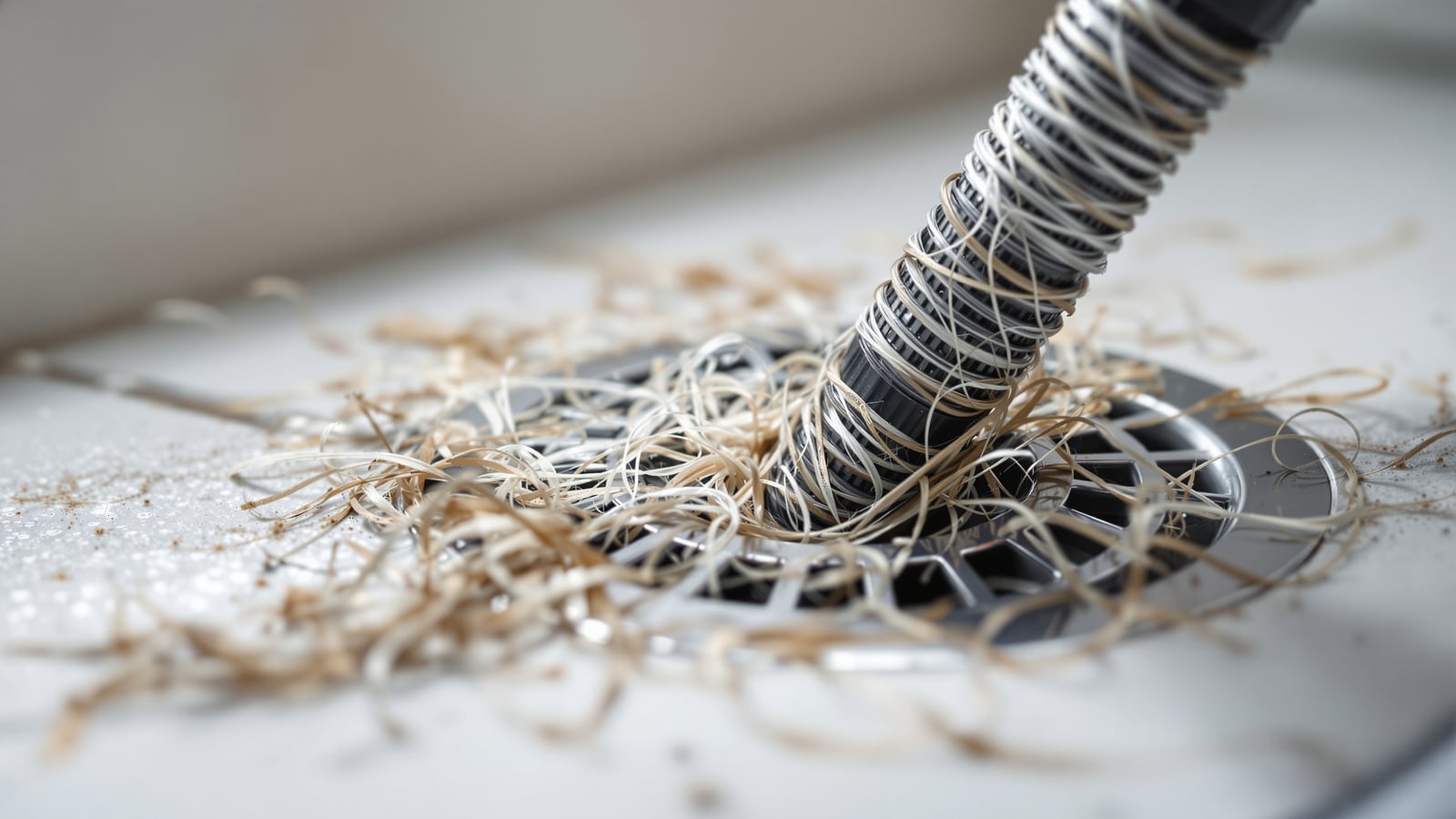
Every time you shampoo, a few strands wash toward the floor drain. They snag on the grating stem and the trap below, then knot into a felt-like mat. Soap, oil, dead skin and hard-water scale bind to that mat until water can barely trickle through. It builds slowly, so you notice only when the floor takes a minute to clear.
- Where it collects: the underside of the grating, the trap throat just below it, and the bend of the P-trap or bottle trap. Rarely deeper — which is why most clogs are reachable from the top.
- Why India makes it worse: we wash the whole floor, so far more hair and grit reach the floor trap than in a dry Western shower stall. Hard water adds scale that cements the mat.
- The good news: because it sits shallow, you rarely need to open pipes. Lift the grating and most of the blockage is right there.
The DIY methods that work — in order
Work through these from gentlest to strongest. Most drains are running again by step two.
1. Lift the grating and pull the mat. Unscrew or prise up the floor grating, put on a glove, and hook out the hair mat with a bent wire or your fingers. This alone fixes the majority of slow drains. Rinse the grating and scrub the stem.
2. Flush with hot (not boiling) water. A kettle of hot water melts soap and grease so it flushes away. Caution: on PVC / uPVC waste lines do not pour rolling-boil water straight down — very hot water can soften plastic joints and pipe over time. Let a boiled kettle stand a minute, or use hot tap water. Cast-iron and metal lines tolerate hotter water.
3. Baking soda and vinegar. Tip about half a cup of baking soda (cooking soda) into the drain, follow with a cup of white vinegar, let it fizz for 10–15 minutes, then flush with a jug of hot water. It loosens grease and light scale and deodorises — gentle on pipes and safe for PVC.
4. Plunger. For a fully blocked drain, smear a little petroleum jelly on the plunger rim, cover the drain with water, block any overflow, and pump firmly 15–20 times. The suction breaks up and lifts the clog. A small cup plunger works on shower and floor drains.
5. Drain snake / auger. For clogs you cannot reach, feed a hand drain snake (spring auger) or a flexible plastic hair-grabber strip down the drain, twist to catch the mat, and pull it out. A ₹150–₹600 hand auger is the single most useful tool for stubborn Indian floor-trap clogs.
Only if all of the above fail should you consider anything stronger — and usually that means calling a plumber, not buying acid.
Why NOT to use harsh chemical drain cleaners
The bottles promising to "dissolve" clogs are the most damaging thing you can put down a bathroom drain. They rely on strong acid or caustic soda, and the problems are real:
- They attack pipes and traps. Repeated acid or caustic use corrodes metal traps and can soften, craze or weaken PVC/uPVC joints and gaskets, causing leaks later. The very PVC lines common in Indian bathrooms are the most vulnerable.
- They rarely clear a hair mat. These cleaners are made for grease and organic gunk; a dense hair-and-scale plug often shrugs them off, so you pour more, worsening the pipe damage.
- They are dangerous to you. They generate heat, splash, and give off fumes. Never mix a chemical drain cleaner with bleach or with acid (Harpic-type) cleaners — the reaction can release toxic gas. If a cleaner is already sitting in a blocked drain, a plunger can splash it back at you.
- They harm the plumbing downstream. Strong chemicals damage the water seal, kill the useful bacteria in septic tanks, and end up in drains not built for them.
If you must use a chemical, prefer an enzyme / bacterial drain maintainer — these are mild, pipe-safe, and dissolve organic film with enzymes rather than acid. They work slowly (overnight) and are best as prevention, not for a total blockage.
A smelly drain usually means a dry trap
A drain that runs fine but smells of sewer is a different problem: the water seal in the trap has been lost, so gas from the waste line rises straight into the room. This is the classic "empty-house smell" in a guest or upper-floor bathroom.
- Why it happens: the water plug in the trap evaporates when a bathroom sits unused, or a poorly vented line siphons the trap dry each time a nearby fixture drains.
- The instant fix: pour a mug or two of water down the drain. The seal refills and the smell stops within minutes. For traps that dry often, pour a spoon of cooking oil after the water — it floats on top and slows evaporation.
- If it comes back fast: the line is being siphoned dry — a venting problem, not a cleaning one. Fit a self-sealing (anti-odour) trap insert, or have the vent checked. See the plumbing traps guide for how seal depth and venting interact, and the bathroom plumbing guide for venting.
- If the smell is more rotten than sewer: it is the biofilm — the hair-and-soap mat itself. Clean it as above and finish with baking soda and vinegar.
Drain guards: stop the clog before it starts
The cheapest maintenance is the guard that never lets hair reach the trap.
- Hair catcher / drain strainer — a silicone or steel dome that sits over or in the grating and catches hair. Empty it each time you shower. ₹50–₹300.
- Anti-cockroach basket — a fine stainless basket inside the nahani that catches hair and blocks insects in one part.
- Grating with a fine mesh — choose a floor grating with smaller slots so hair sits on top where you can wipe it away.
- Habit — wipe stray hair off the floor into the bin before the final rinse, rather than washing it into the drain.
A ₹100 hair catcher, emptied weekly, prevents almost every clog this guide is about. It is the highest-value thing you can do.
Problem → fix reference
| Symptom | Likely cause | DIY fix | When to escalate |
|---|---|---|---|
| Water pools, drains slowly | Hair + soap mat in trap | Lift grating, pull mat, baking soda + hot water | No improvement after snaking |
| Fully blocked, water sits | Dense clog in trap bend | Plunger, then hand auger | Auger cannot pass — call plumber |
| Sewer smell, drains fine | Dry / lost trap seal | Pour a mug of water; add oil film | Smell returns in days — venting issue |
| Rotten smell, slow drain | Biofilm on hair mat | Clean mat, baking soda + vinegar | Persistent after cleaning |
| Gurgling from drain | Poor venting / siphoning | — | Plumber / vent check |
| Multiple drains slow at once | Blockage in the shared waste line | — | Plumber — beyond DIY |
| Water backs up from another fixture | Main line / stack blockage | — | Plumber urgently |
A simple maintenance schedule
| Frequency | Task |
|---|---|
| Every shower | Empty the hair catcher; wipe stray hair to the bin |
| Weekly | Lift the grating, pull the hair mat, rinse the strainer |
| Monthly | Pour a mug of water down rarely-used drains to keep the seal; baking soda + hot-water flush |
| Occasionally | Enzyme drain maintainer overnight to clear greasy film |
| Yearly | Deep-clean the trap; check the grating and insert for wear |
When to call a plumber
DIY handles the hair-and-seal problems that cause almost every complaint. Call a professional (typically ₹300–₹1,000 for a visit and clear, more for rodding a main line) when:
- Several fixtures drain slowly at once, or water backs up from one drain when another is used — that points to a blockage in the shared waste line or stack, not your trap.
- A hand auger cannot clear it, meaning the clog is deep in the pipe.
- The smell returns within days of refilling the seal — a venting or siphoning fault that needs a plumber to diagnose.
- You suspect a solid object has gone down, or there is a leak under the trap.
- You would otherwise reach for acid — pay the plumber instead and keep your pipes intact.
Get the shallow stuff right — a hair catcher, a weekly grating clean, a monthly mug of water — and you will rarely need that call. For the bigger picture on drainage and traps, keep the floor drain guide, the plumbing traps guide and Studio Matrx's bathroom cleaning guide on hand.
References
- National Building Code of India (NBC 2016), Part 9 — Plumbing Services: floor traps, water seals and drainage of wet areas.
- CPHEEO Manual on Sewerage and Sewage Treatment — water-seal depths, trap venting and siphonage.
- IS 12183 (Part 1) — uPVC pipes and fittings for soil and waste discharge (relevant to plastic waste-line temperature and chemical limits).
- IS 1729 — Sand cast iron soil, waste and ventilating pipes, fittings and traps.
- Manufacturer care guidance — Astral, Supreme and Finolex uPVC pipe literature on hot-water and chemical exposure limits for waste lines.
Export this guide
Related Guides — Deep-dive reading
Blocked Drains in India: Clearing & Prevention (Drain Cleaning Guide)
A homeowner's India-first guide to blocked drains — why kitchen sinks, bathroom floor traps, WCs and external chambers clog, how to clear them safely (plunger, hot water and baking soda, drain snake, hydro-jetting), why chemical drain cleaners are risky, and how to stop blockages coming back.
PlumbingBathroom Drainage India: Waste vs Soil Pipes, Slope, Sizes, Traps & Venting (2026)
How a bathroom's waste and soil pipes actually work — the difference between waste lines (basin, shower) and the soil line (WC), the fall you need, pipe sizes in mm, floor slope to the floor trap, how it all joins the stack, and how traps and venting stop blockages and smells.
BathroomsSewer Gas Smell in India: Causes & How to Fix Bathroom & Drain Odour
A homeowner's India-first guide to that foul drain or bathroom smell — why sewer gas is unpleasant and unhealthy, the number-one cause (a dry or siphoned trap seal), the other culprits, and a room-by-room symptom-to-fix approach.
PlumbingRelated Tools — Try Free
Plumbing Pressure-Test & Leak Checklist
Pre-closure pressure and leak test — 9 categories, 60+ checkpoints across water supply, drainage, fixtures, waterproofing, hot water, tanks.
Pre-Closure TestMonsoon-Readiness Checklist
Pre-rain home audit across 9 categories — terrace, drains, waterproofing, electrical, HVAC, pest, vehicles, documents.
Seasonal AuditRainwater Tank Sizer
How big should your rainwater tank be? Computes annual harvest, recommended tank capacity in litres, water-bill savings, and payback — for 10 Indian cities.
RWH Calculator