

Cyclone and Storm-Resistant Windows in India
Wind pressure, impact-resistant laminated glass and anchoring for India's east-coast cyclone belt
When Cyclone Fani slammed into Odisha in 2019 and Amphan tore across West Bengal in 2020, the first thing many homes lost was not the roof — it was a window. Once a window blows in, wind enters the house, pressure builds against the underside of the roof, and the whole envelope can fail. On India's east coast, the window is the weakest link in a storm, and protecting it is a structural decision, not a cosmetic one.
This guide is about wind pressure and flying-debris impact — the cyclone problem. It is the storm-and-wind sibling to our monsoon-friendly window designs guide, which deals with the other coastal threat: driving rain, water ingress and weep-hole drainage. That guide keeps water out. This one keeps the window — and the wall around it — physically in place when a 50 m/s gust and a flying roof-sheet arrive together. You need both on the coast.
No window is "cyclone-proof." The goal is a window that survives the storm long enough to keep the building envelope sealed — so wind never gets inside to lift your roof.
India's cyclone coast and the wind it produces
The Bay of Bengal generates far more severe cyclones than the Arabian Sea. The four most exposed states — Odisha, Andhra Pradesh, Tamil Nadu and West Bengal — sit in the highest wind zones under IS 875 (Part 3), the Indian code for wind loads on buildings. Coastal stretches here carry a basic wind speed of roughly 50 to 55 m/s (about 180 to 200 km/h), among the highest design speeds in the country.
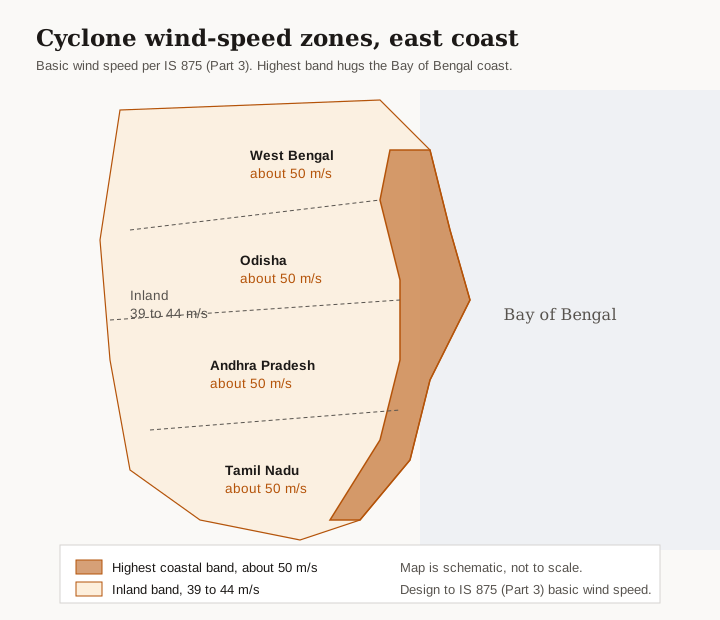
That basic wind speed is only the start. IS 875 (Part 3) multiplies it by factors for terrain, height, topography and the importance of the building to arrive at a design wind pressure on each face. Corners, edges and the windward face of a wall see higher local pressures than the open field value — which is exactly where windows usually sit.
| Region (coastal belt) | Indicative basic wind speed (IS 875 Pt 3) | Cyclone exposure |
|---|---|---|
| Odisha coast (Puri, Paradip) | ~50 m/s | Very high — Fani 2019 |
| West Bengal (Sundarbans, Kolkata) | ~50 m/s | Very high — Amphan 2020 |
| Andhra Pradesh coast | ~50 m/s | Very high — Hudhud 2014 |
| Tamil Nadu (Chennai, Cuddalore) | ~50 m/s | High — Gaja, Vardah |
| Inland (>100 km from coast) | ~39-44 m/s | Moderate |
Design pressure (DP): the number that actually matters
The single most useful spec when buying a coastal window is its Design Pressure (DP) rating — the wind pressure, in pascals or psf, that the complete window assembly can withstand without failing. A higher DP means stronger glass, frame and anchors working as a system.
For a cyclone-coast home, ask the fabricator for the design wind pressure at your site from IS 875 (Part 3) and specify a window whose DP comfortably exceeds it, with margin for gusts and corner zones. A window that only meets the field pressure can still fail at a building corner.
The two ways a cyclone breaks a window
1. Wind pressure pushes (and sucks) on the glass and frame until the glass cracks, the frame deflects, or the anchors pull out of the wall.
2. Windborne debris — roof sheets, signboards, tree limbs, loose bricks — strikes the glass at speed and punches through.
Ordinary annealed or even plain toughened glass loses to both. Toughened glass crumbles into blunt pebbles when struck — safe for people, but it leaves a hole, and now the wind is inside. The cyclone answer is impact-resistant laminated glass.
Impact-resistant laminated glass: the interlayer is the hero
Laminated glass bonds two glass plies to a tough plastic PVB (polyvinyl butyral) interlayer. When debris strikes, the outer ply may crack — but the interlayer holds the fragments together and stays bonded inside the frame, so the opening is never breached. The glass may look spider-webbed, but the wind stays out and the envelope stays sealed.
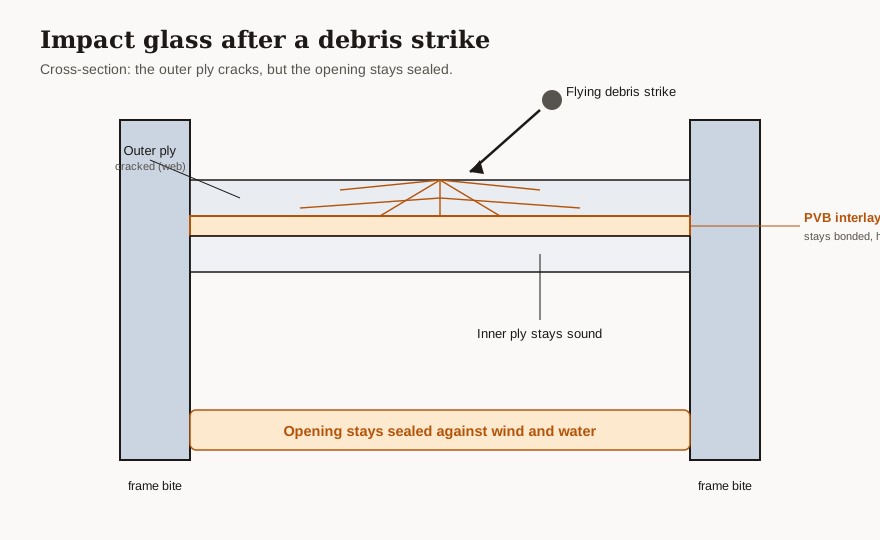
This is the same product family covered in our laminated glass windows guide — but for cyclone use you want a thicker interlayer and deeper bite into the frame than a standard acoustic or security laminate. The interlayer must not just hold fragments; it must transfer the wind load back into a frame that is itself anchored to survive.
Storm-proofing is layered — glass alone is not enough
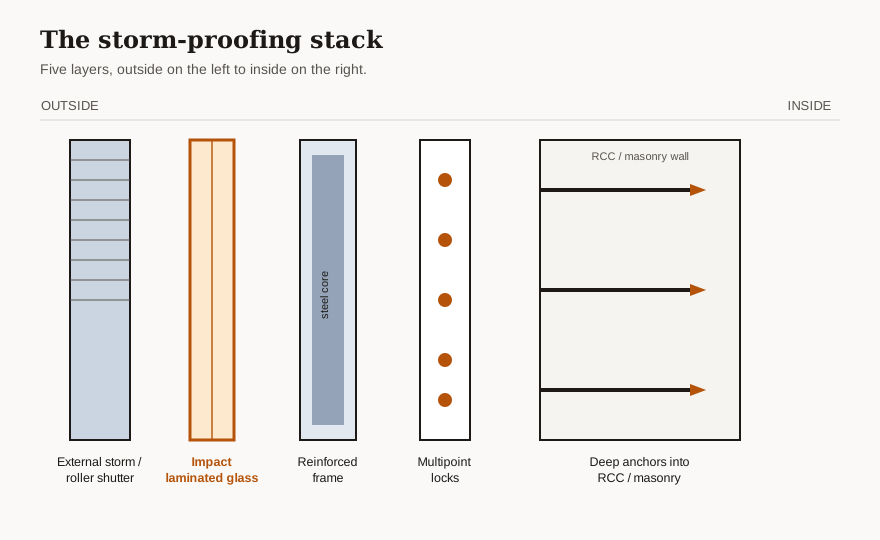
A cyclone window is a chain: glass, frame, locks and anchors. The chain breaks at its weakest link, so all four must be specified together.
| Layer | What it does in a cyclone | What to specify |
|---|---|---|
| Impact-resistant laminated glass | Resists debris, stays in frame | PVB laminate, thick interlayer, deep frame bite |
| Reinforced frame | Resists wind deflection | Steel-reinforced uPVC or structural aluminium |
| Multipoint locking | Stops suction prying the sash open | Espagnolette/shootbolt, multiple locking points |
| Anchoring and fixing | Keeps the whole unit in the wall | Through-anchors into RCC/masonry, not just foam |
| Storm/roller shutter (backup) | Stops debris reaching the glass | External roller or hinged storm shutter |
Multipoint locks matter more in a storm than in a burglary: cyclonic suction tries to peel the sash off the frame, and a single-point latch concentrates that force on one weak spot. Several locking points spread the load — the same multipoint hardware our window security pillar guide recommends for break-in resistance, doing double duty here.
Anchoring: where most failures actually start
A window can have perfect glass and still be ripped out bodily if it is fixed to the wall with screws into expanding foam and a thin bead of silicone. In a cyclone the fixing detail is the failure point.
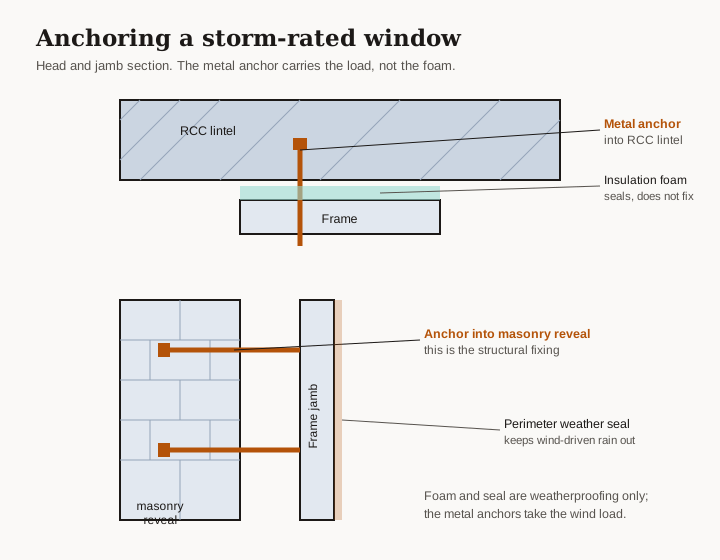
- Anchor the frame with metal fasteners through the frame into the structural RCC lintel and masonry reveal — at correct spacing, not just at the corners.
- Foam and sealant are for insulation and weather sealing only — never the structural fixing.
- The reveal should be sound concrete or solid block; fixing into hollow block or plaster alone will pull out.
- After anchoring, seal the perimeter so the storm cannot drive water in around a structurally sound frame — the overlap point with the monsoon window guide.
Storm shutters: the cheapest big upgrade
Even a strong impact window benefits from a second line of defence. External roller shutters or hinged storm shutters take the debris hit before it reaches the glass and add a stiff layer against wind pressure. They are far cheaper than impact glass on every opening, and on a budget you can prioritise impact glass on the windward (sea-facing) elevation and shutters elsewhere.
What to spec on the coast — a checklist
| Element | Coastal-cyclone spec | Avoid |
|---|---|---|
| Glass | Impact-resistant laminated (PVB) | Single annealed; plain toughened on windward face |
| Frame | Steel-reinforced uPVC or structural aluminium | Thin, unreinforced sections |
| DP rating | Exceeds site design wind pressure (IS 875 Pt 3) | Unrated "as standard" windows |
| Locking | Multipoint, several locking points | Single-point latch on large sashes |
| Anchoring | Metal anchors into RCC/masonry, correct spacing | Foam-and-screw fixing |
| Backup | External roller/storm shutter on exposed faces | No second layer on the sea-facing side |
| Sealing | Full perimeter weather seal | Gaps that admit driven rain |
On the coast, decide the window by the wall it sits in: a windward, sea-facing opening on an upper floor needs everything; a sheltered courtyard window can be specified more lightly.
How this differs from the other coastal guides
It is easy to confuse the two coastal threats, so to be precise:
- This guide (cyclone): wind pressure and flying-debris impact. The fixes are DP rating, impact laminated glass, reinforced frames, multipoint locks, deep anchoring and storm shutters.
- Monsoon-friendly windows (rain): water ingress under wind-driven rain. The fixes are weep holes, drainage channels, overhangs, gaskets and slope. A monsoon-tight window can still blow in during a cyclone; a cyclone-rated window can still leak if its drainage is poor. On the east coast you specify for both.
For the wider security and hardware context — locks, frames and the layered-defence model that a storm window borrows from — start with the window security pillar guide. To choose the window form itself (casement, sliding, awning) before you storm-proof it, see types of home windows in India.
References
- Bureau of Indian Standards — IS 875 (Part 3): Wind Loads on Buildings and Structures: https://www.bis.gov.in/
- National Building Code of India 2016 (NBC), BIS: https://www.bis.gov.in/standards/national-building-code/
- National Disaster Management Authority (NDMA) — Cyclones: https://ndma.gov.in/Natural-Hazards/Cyclone
- India Meteorological Department — Cyclone Warning Services: https://mausam.imd.gov.in/
Export this guide
Related Guides — Deep-dive reading
Window Security Guide
The layered-defence model for Indian homes — frame, glass, locks, grille and sensors working together
Windows & GlazingMonsoon-Friendly Window Designs: Keeping Wind-Driven Rain Out
Drainage channels, baffled weep holes, outward-sloped sills, EPDM seals and the right window type for an Indian monsoon
Windows & GlazingDoor Wind-Load & Cyclone Performance (India 2026)
How wind pressure attacks external, balcony and high-rise doors, what IS 875 (Part 3) wind zones demand, and how to specify cyclone-resistant frames, locking and glazing.
Home Doors & EntrancesRelated Tools — Try Free
Cross-Ventilation Analyzer
Estimate airflow and air changes per hour (ACH) from room size, window areas, layout, and local wind — with NBC 2016 Part 8 compliance check.
Ventilation CalculatorWindow Cost Calculator
Estimate window price plus installation by type, frame material, size, glass and quantity.
Window CalculatorMonsoon-Readiness Checklist
Pre-rain home audit across 9 categories — terrace, drains, waterproofing, electrical, HVAC, pest, vehicles, documents.
Seasonal Audit