
Plumbing Leak Detection in India: Find & Fix Hidden Water Leaks
How to spot a hidden water leak before it wrecks a wall — the signs that give it away, the meter test that proves it, where leaks actually start in an Indian home, and which fixes you can do yourself versus when to call a plumber.
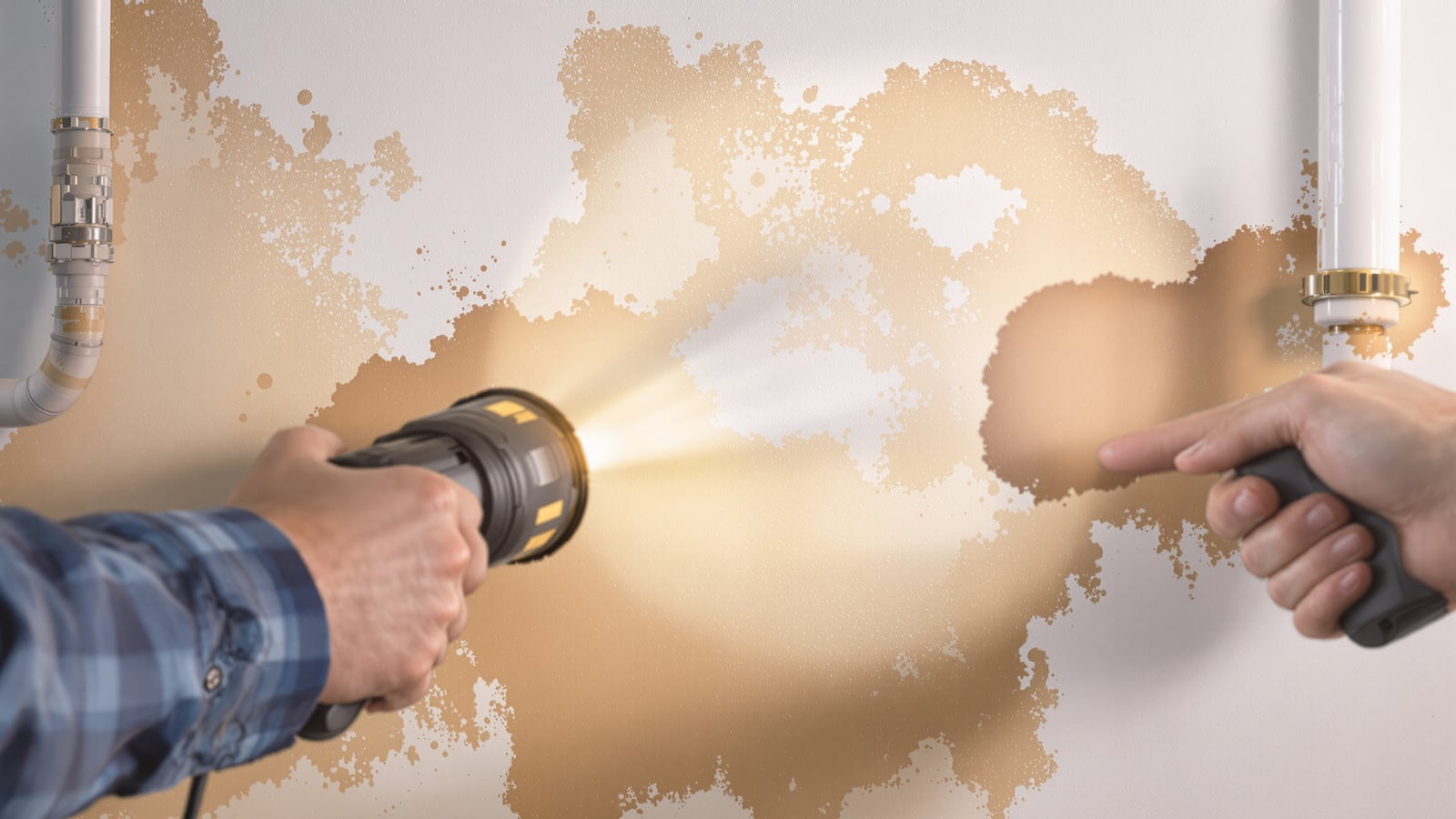
A leak rarely announces itself with a puddle. In most Indian homes the first sign is indirect — a bill that jumped for no reason, a corner of a wall that stays damp long after the monsoon, a faint dripping you hear at night. By the time water actually appears, it has usually been travelling inside a wall or slab for weeks.
This is a troubleshooting guide within the Studio Matrx plumbing maintenance guide. It sits alongside the pipe bursts guide for when a leak becomes a flood, and the concealed plumbing guide because in-wall pipes are where the hardest leaks hide. The goal here is simple: catch a leak while it is still small, prove it exists, and know which ones you can fix with a spanner and which need a professional.
The most expensive leak is the one you cannot see. A dripping tap wastes water and money; a concealed pipe seeping into a wall quietly destroys plaster, paint and sometimes the reinforcement inside the slab. Speed of detection matters more than anything.
The signs of a hidden leak
You will almost never spot a hidden leak by looking at a pipe. You spot it by reading the symptoms it leaves around the house.
- An unexplained high water bill. If usage climbs with no change in how the household lives, water is going somewhere you cannot see. This is the single most reliable early warning.
- Damp patches, stains or blistering paint. A patch of wall or ceiling that stays dark, feels cool, or shows salt-like efflorescence is water arriving from a pipe, not just humidity.
- Mould or a musty smell. Persistent black spotting in one spot — not the general monsoon film — points to a slow, steady water source behind the surface.
- The sound of dripping or running water when every tap is shut. At night, with the house quiet, a concealed leak is often audible through the wall.
- A drop in water pressure. If a tap or shower that used to run strong now dribbles, water may be escaping upstream of it through a leaking joint or cracked pipe.
- A meter that ticks with everything closed. The definitive test, below.
The meter test — proving the leak exists
Before you break a single tile, confirm there is actually a leak and roughly how big it is. Your water meter does this for free.
1. Turn off every tap, appliance and valve in the house — kitchen, bathrooms, washing machine, RO, garden. Nothing should be drawing water.
2. Read the meter and note the exact figure, including the small dials or the flow indicator (the little spinning wheel).
3. Wait 30 to 60 minutes without using any water at all.
4. Read the meter again. If the number moved, or the flow indicator crept even slightly, water is escaping somewhere between the meter and your taps — you have a leak.
If the flow indicator spins while everything is off, the leak is significant and active right now. Note it, then move to isolating where it is.
To narrow it down, close the isolation valve to one zone (say the overhead-tank feed, or the bathroom stop valve) and repeat. If the meter stops moving with that zone shut, the leak lives inside it. This zone-by-zone method turns "somewhere in the house" into "the guest bathroom wall".
Finding the leak once you know it exists
With the leak confirmed and the zone narrowed, you go looking for the actual point.
- Visual and touch check first. Open the reachable stuff — under-sink cabinets, the area behind the WC, the meter chamber, pump connections, the geyser. Run a dry hand or a tissue along each joint; a slow weep shows as a bead or a damp streak.
- Follow the damp uphill. Water travels down and sideways, so a stain low on a wall often comes from a joint higher up. Trace the wet path to its highest point.
- Concealed-pipe leaks are the worst. When the meter says there is a leak but nothing is visible at any fitting, the pipe is inside a wall or under the floor screed. These are hardest to place and most damaging, because the water is doing its work out of sight. See the concealed plumbing guide for how those in-wall lines are routed and pressure-tested — knowing the route is half the battle when hunting a hidden leak.
- Call in instruments when needed. For a genuinely concealed leak, professionals use acoustic listening devices, moisture meters and sometimes thermal imaging to pinpoint the spot before breaking the minimum amount of wall.
Where leaks actually start
Leaks are not random. In an Indian home they cluster at a predictable set of points, in roughly this order of frequency.
| Leak point | Why it fails | Typical fix |
|---|---|---|
| Tap / faucet | Worn washer or cartridge, loose gland | Replace washer or cartridge — DIY |
| Pipe joints & elbows | Bad thread sealing, thermal movement, ageing solvent weld | Re-seal or re-make joint |
| Stop valves & angle valves | Worn seat, corroded spindle | Replace the valve |
| WC cistern | Failed inlet or flush valve, cracked body | Replace internals — mostly DIY |
| Geyser / water heater | Corroded tank, leaking safety valve or inlet | Isolate power, call a pro |
| Concealed CPVC / PPR line | Cracked pipe, failed solvent joint, a nail or drill hit | Locate, break wall, re-pipe — pro |
Symptom, cause, fix
Use this as a fast triage when something is wrong but you are not yet sure what.
| Symptom | Likely cause | Fix |
|---|---|---|
| Tap drips when fully closed | Worn washer or cartridge | Change washer/cartridge; DIY |
| Damp patch spreading on a wall | Concealed supply-pipe leak | Zone-isolate, locate, call a pro |
| Water pooling under the sink | Loose trap or supply connector | Tighten or re-tape the joint; DIY |
| WC runs or refills on its own | Failed cistern flush/inlet valve | Replace cistern internals; DIY |
| Puddle beneath the geyser | Tank corrosion or safety valve | Cut power, isolate water, call a pro |
| Whole-house pressure has dropped | Leak on the main upstream run | Meter test, isolate zone, trace |
| Bill up, nothing visible | Hidden concealed or underground leak | Meter test, then professional survey |
DIY fixes versus calling a plumber
Plenty of leaks are genuinely a five-minute job. Others are a trap that turns a small problem into a big one if you improvise.
Safe to do yourself:
- Replace a tap washer or cartridge. Close the angle valve below the tap, open the tap to drain it, unscrew the head, swap the worn washer or cartridge, reassemble.
- Re-tape a threaded joint. For a weeping metal thread, undo it, clean it, wrap fresh PTFE (Teflon) tape clockwise, hand-tighten then a small nudge with a spanner. Do not over-torque plastic threads — they crack.
- Tighten a slightly loose connector at a trap or flexible hose — snug, not forced.
- Swap out WC cistern internals, which come as replaceable kits.
Call a plumber when:
- The leak is inside a wall, slab or floor — a concealed-pipe leak needs locating and re-piping, not guesswork.
- A geyser, pump or the incoming main is involved.
- A solvent-welded CPVC or PPR joint has failed — remaking these needs the right pipe, fittings and cure time.
- You have tightened and re-taped and it still leaks — forcing it further usually cracks something.
A dripping tap is not just annoying — a steady drip can waste well over a thousand litres a month, and a running cistern far more. At metered tariffs that is real money down the drain, before you even count the wall it may be ruining.
Smart leak sensors — a quiet backstop
Battery leak sensors sit on the floor near the geyser, under the sink or beside the pump and sound an alarm — or ping your phone — the moment they feel water. More advanced setups add an automatic shut-off valve on the main that cuts supply when a leak is detected, which is genuinely useful for homes left empty for long stretches. This is its own topic; see the Studio Matrx smart water management guide for how sensors, shut-off valves and flow monitors fit together. Treat them as an early-warning backstop, not a replacement for fixing the underlying plumbing.
A word on safety
Water and electricity share a lot of an Indian home, so a couple of rules are non-negotiable. Before touching a geyser or any leak near a wiring point, switch off the power at the MCB and confirm it is dead. For anything beyond a single tap, isolate the mains — close the stop valve or the overhead-tank outlet — so you are not fighting live pressure. And if a leak is soaking a wall that carries electrical conduits, stop and call both a plumber and an electrician rather than opening it yourself. When in doubt, isolate first and work dry.
References
- National Building Code of India (NBC), Part 9 — Plumbing Services, for water supply and drainage practice.
- Bureau of Indian Standards codes for water supply pipes and plumbing fittings (CPVC, PPR, PVC and GI product standards).
- Uniform Plumbing Code – India (UPC-I), for installation and testing practice.
Names are given for orientation; always confirm the current clause and edition before relying on a specific requirement.
Export this guide
Related Guides — Deep-dive reading
Bathroom Leak Repair in India: Find & Fix Common Leaks (2026)
A practical, India-first guide to finding and fixing the everyday bathroom leaks — dripping taps, weeping traps and angle valves, a running cistern, failed silicone seals — plus how to tell a simple fixture leak from a waterproofing failure that needs a professional.
BathroomsRoof Leak Diagnosis & Repair
The homeowner's most common roofing crisis, calmly explained — how to read the signs (stains, damp, efflorescence, peeling paint, drips, a musty smell), why the leak is almost never right above the stain, where roofs actually leak, how leaks are traced, and the honest line between what you can safely check yourself and what needs a professional. India-grounded, monsoon-tested.
RoofingLow Water Pressure at Home in India: Causes, Room-by-Room Diagnosis and Fixes
Why your taps trickle and your shower dribbles — how to tell low flow from low pressure, the India-specific causes from an empty overhead tank and clogged aerators to scaled-up GI pipes and half-shut valves, a symptom-to-cause-to-fix table, cheap DIY checks versus a booster pump or re-pipe, and when to call a plumber.
PlumbingRelated Tools — Try Free
Monsoon-Readiness Checklist
Pre-rain home audit across 9 categories — terrace, drains, waterproofing, electrical, HVAC, pest, vehicles, documents.
Seasonal AuditElectrical Safety & Load Audit
Home electrical audit — 10 categories, 65+ checkpoints across earthing, RCCB, MCB, wiring, switchboards, appliance circuits, DG/inverter backup.
Safety AuditPlumbing Pressure-Test & Leak Checklist
Pre-closure pressure and leak test — 9 categories, 60+ checkpoints across water supply, drainage, fixtures, waterproofing, hot water, tanks.
Pre-Closure Test