
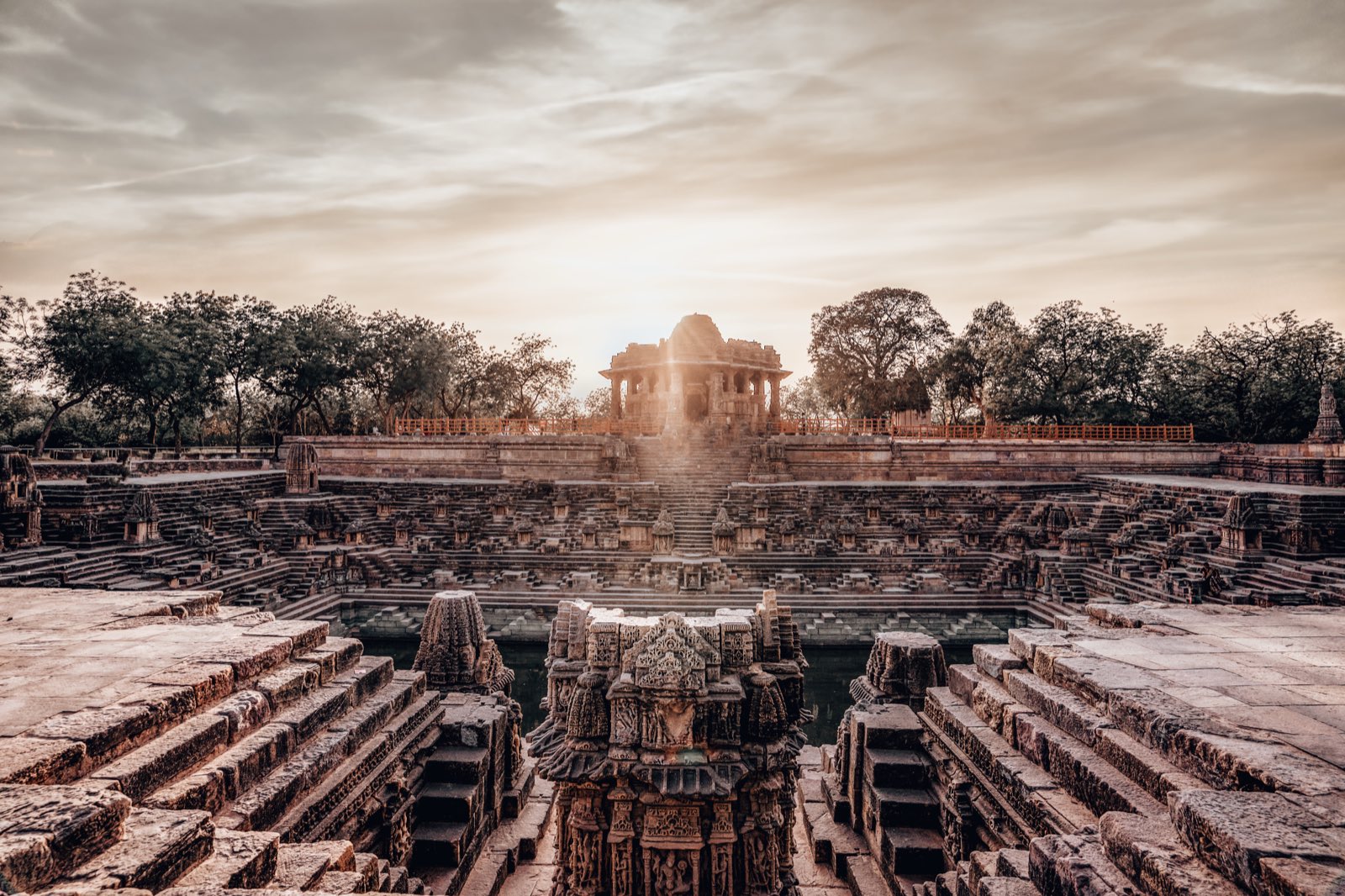
The Sun Temple at Modhera: A Temple Built to Catch the Dawn
How the Solanki kings of Gujarat aligned a whole complex — a stepped tank, a pillared hall and a sanctum — so that the rising equinox sun would run straight down its spine and light the face of the sun god
Most temples are oriented to a god who is everywhere. The Sun Temple at Modhera is oriented to a god you can watch arrive. It was built for Surya, the sun, and its designers did something few builders anywhere have attempted: they aligned an entire complex — tank, hall and sanctum, strung out in a straight line across the ground — so that on the mornings of the equinox the rising sun would shine directly down the length of the temple and strike the shrine at its far end. The building is not merely decorated with images of the sun; it is a device for receiving the sun itself. To stand at Modhera at the right dawn is to see architecture and astronomy fused into a single act of worship.
It stands in the plains of Gujarat, and it is one of the masterpieces of the Solanki (Chaulukya) dynasty — the same rulers, the same region, and very nearly the same moment that produced the extraordinary stepwell at Rani ki Vav. Modhera was built under King Bhima I, around 1026 to 1027 CE, which makes it and Rani ki Vav true siblings: two sides of a single golden age of western Indian architecture, one reaching down into the earth for water, the other reaching east to catch the light.
Three things in a line
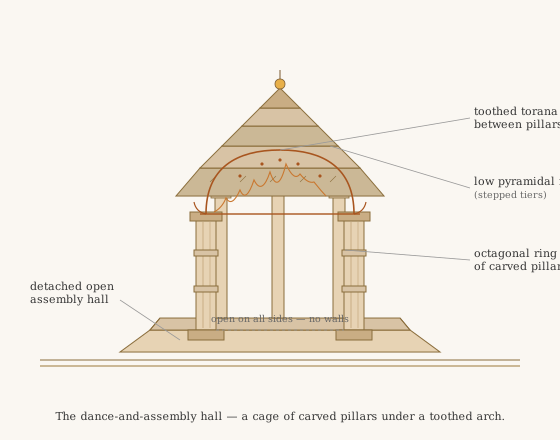
The genius of Modhera is legible the moment you understand its plan, because unlike the courts-within-courts of a southern temple-town, it is laid out as a simple, powerful, straight sequence.
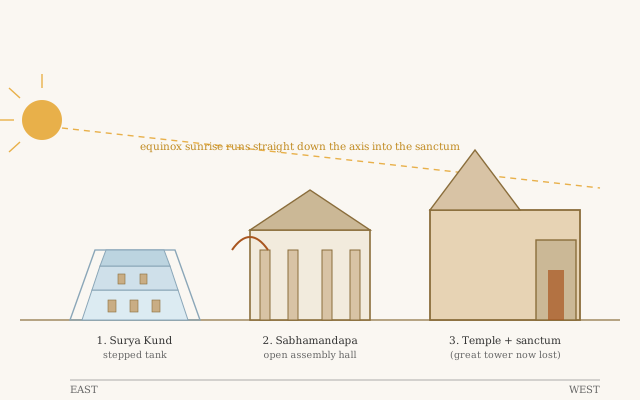
Three elements sit on one east-west axis. Furthest east, meeting the sunrise first, is the great stepped tank, the Surya Kund — a huge rectangular reservoir. Next comes the Sabhamandapa, an open, detached pillared hall entered through a carved gateway arch (a torana), where dance and assembly took place. Last, to the west, is the main temple proper — the closed gudhamandapa hall and, behind it, the garbhagriha, the sanctum that once held the image of Surya. The three are separate structures, but they read as a single processional line, and that line is the axis the sun walks down at dawn. It is said that at the equinoxes the first light passed the whole length and illuminated the sanctum, and that the walls of the sanctum were designed so the sun struck the deity's image — a claim exactly in keeping with the building's entire logic, whatever its precise modern reality after centuries of damage.
That damage is worth naming honestly: the tall tower (shikhara) that once rose over the sanctum is gone, thrown down by the raids of Mahmud of Ghazni and later earthquakes, so what survives is the magnificent lower body of the temple without its crown. Like the Mahabodhi temple or Konark, Modhera is a partial survivor, and part of appreciating it is imagining the vertical mass that once completed it.
The tank that is all stairs
For many visitors the unforgettable image of Modhera is not the temple at all but the tank in front of it, and it deserves close attention because it is one of the most perfect pieces of geometric design in India.
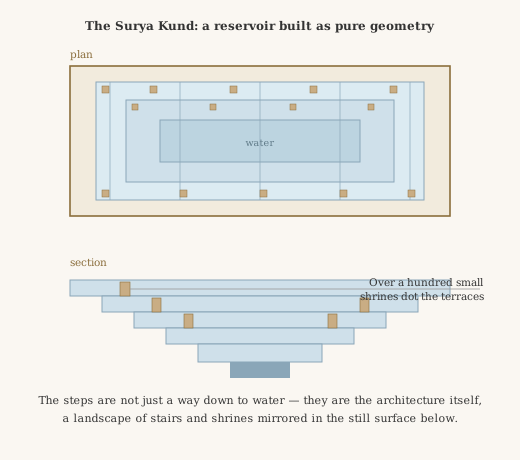
The Surya Kund is not a plain pool with steps down one side. Its entire perimeter descends to the water in a strict, breathtaking geometry of criss-crossing staircases — flights of steps advancing and retreating, interlocking at right angles, terrace below terrace, so that the whole reservoir becomes an inverted stepped pyramid carved into the ground. Set into these terraces are more than a hundred small shrines, each a miniature temple, arranged with mathematical regularity across the descending steps. The effect is mesmerising: a landscape made entirely of stairs and tiny shrines, its rigid geometry doubled by its reflection in the still water below.
This is the same western Indian genius for water-architecture that produced Rani ki Vav, turned inside out. Where the stepwell drives a long, narrow, roofed corridor of stairs deep underground, the Surya Kund opens the same idea to the sky as a broad, symmetrical, four-sided basin. Both answer the fundamental problem of a dry land — reaching stored water through the seasons as the level falls — and both refuse to treat that practical descent as anything less than sacred architecture. Water in Gujarat was never merely collected; it was approached, through stairs conceived as a form of prayer.
Carving, and the Solanki style
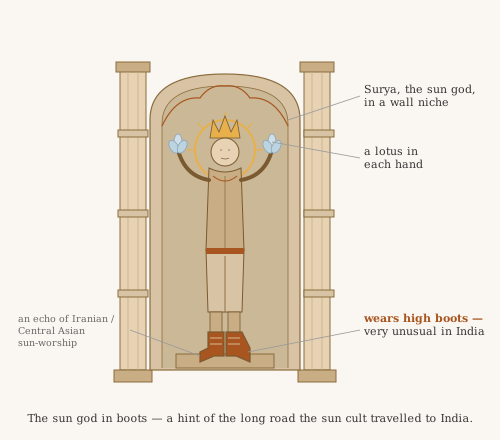
Every surface of the temple that survives is carved, and the carving is the crisp, precise, deeply undercut work of the mature Solanki school — the same hands and traditions that clothed Rani ki Vav. The pillars of the Sabhamandapa are especially fine: octagonal and richly banded, carrying carved brackets and a ring of dancers, gods and scenes, with the toothed torana arches springing between them. On the exterior walls run the standard registers of Solanki sculpture — the twelve Adityas, the forms of Surya himself shown wearing (unusually for an Indian deity) high boots, a detail that reflects the sun god's ancient links to Central Asian and Iranian sun-worship traditions carried into India long before.
There is a restraint here that distinguishes Modhera from the sheer erotic exuberance of Khajuraho, built at almost the same time far to the east. Both are peak examples of the medieval north Indian temple covered in figure sculpture; but where Khajuraho surges upward in swelling towers, Modhera — deprived now of its tower — reads horizontally, as a composition of hall, gateway and tank stretched along the ground toward the light. Comparing the two is one of the best ways to feel how varied the "medieval Hindu temple" really was across the subcontinent.
Why Modhera matters
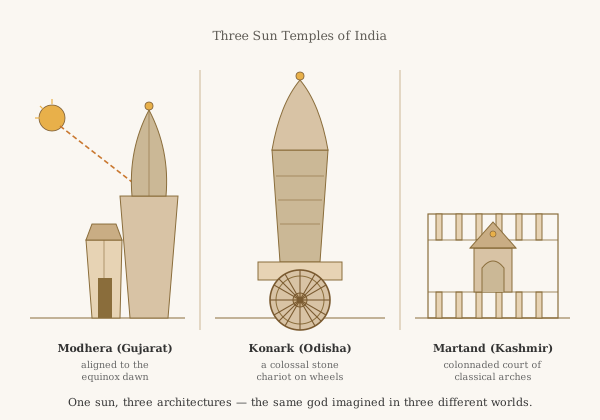
Modhera earns its place among the wonders for a simple reason: it is the clearest surviving example in India of a building conceived as an instrument of astronomy. The idea that a temple should be oriented — that its plan should answer the movement of the heavens — is old and widespread, but rarely is it as legible and as total as here, where the whole complex lines up like the sight of a telescope aimed at the equinox dawn. That impulse would find its most literal expression seven centuries later, and only a short distance away in cultural terms, when a later Rajput ruler built the great open-air astronomical instruments of the Jantar Mantar; Modhera is the devotional ancestor of that scientific ambition, the point where measuring the sky and worshipping the sky were the same thing.
Set it beside its sibling at Rani ki Vav and its distant cousin at Konark — the other great Indian sun temple, built two centuries later in Odisha as a colossal stone chariot — and you have three of the most inventive experiments in the whole tradition: one that carved a temple downward into water, one that dragged the sun across the sky on stone wheels, and here, at Modhera, one that quietly turned an entire complex to face the dawn and waited, each equinox, for the god to arrive on his own light.
Part of the Architectural Wonders series. Read about its Solanki sibling, the stepwell at Rani ki Vav; the other great Indian sun temple at Konark; and, for the contemporary temple sculpture of central India, the Kandariya Mahadeva at Khajuraho.
Export this guide
Related Guides — Deep-dive reading
Khajuraho: The Temple Built to Be a Mountain
How the Chandela masons of 10th-century central India made the northern temple rise like a Himalayan peak — and why its sculpture, its engineering and its improbable survival still instruct the modern architect.
Architectural WondersThe Mahabodhi Temple, Bodh Gaya: A Building Raised Over the Exact Spot of Enlightenment
How the holiest place in the Buddhist world produced one of India's strangest towers — a straight-sided brick pyramid built not to house a god but to mark a single point of ground beneath a tree
Architectural WondersRani ki Vav: The Temple Turned Upside-Down
How an 11th-century Gujarat queen built a stepwell as an inverted subterranean temple — seven storeys descending to the water — and made the storage of water as sacred, and as beautiful, as any shrine.
Architectural WondersRelated Tools — Try Free
Before & After Studio
Generate AI before-and-after renders to preview how your redesign could look.
DesignAIWindow Orientation Planner
Pick the best window type, glass and shading by wall direction — north, east, south and west.
Window ToolArchitect Fee Calculator
Estimate architect fees based on COA guidelines, project scope, and city.
ArchitectAI