
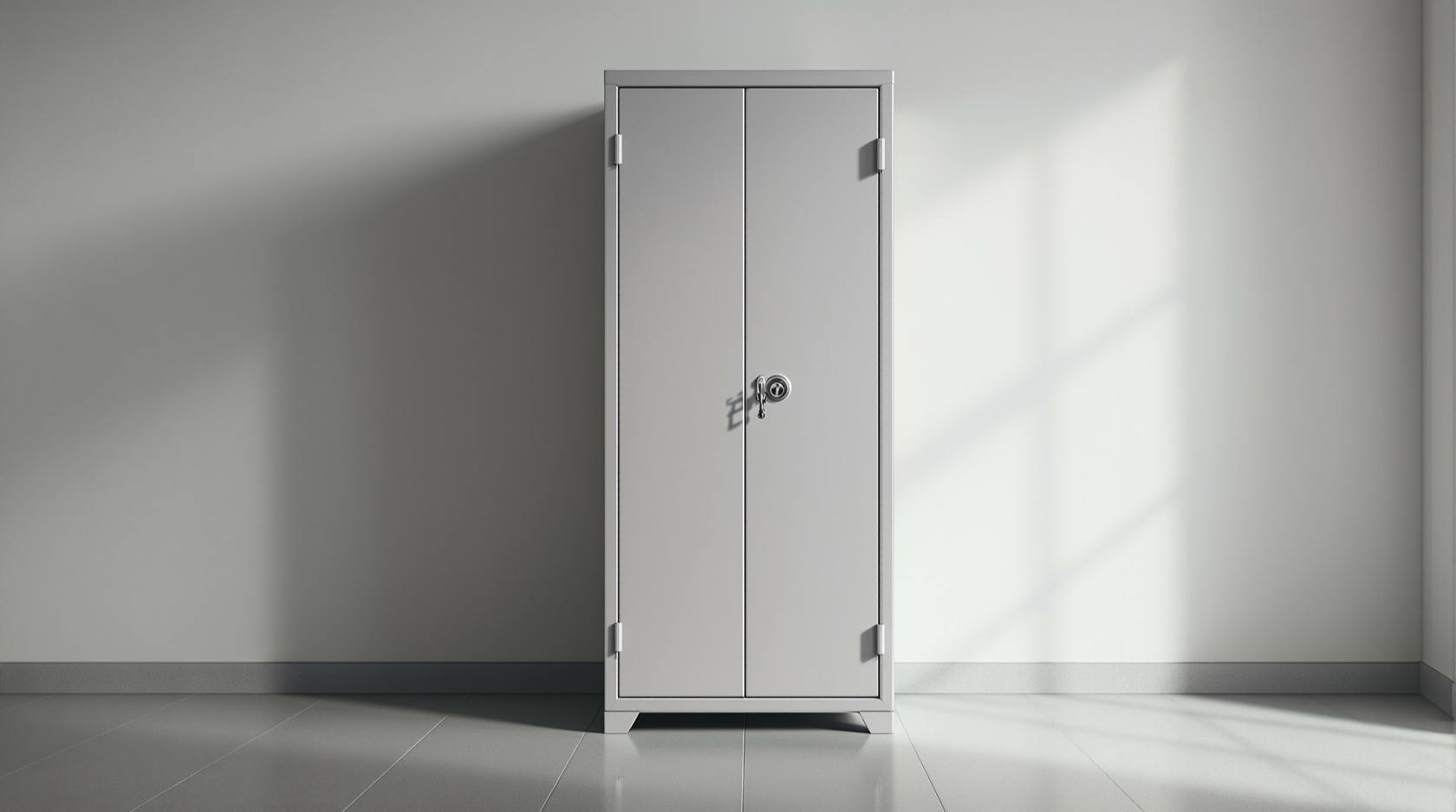
Licensed Firearm Storage in India (2026): The Owner's Duty to Store Safely
How a licence-holder stores a firearm securely and lawfully at home under the Arms Act 1959 and the Arms Rules 2016 — in a solid, anchored steel gun cabinet, unloaded, with ammunition locked separately and keys kept from everyone, especially children.
If you hold a firearm licence in India, safe custody is not optional and it is not just good manners — it is a condition of the licence itself. The law treats a licensed firearm as something you are trusted to keep out of the wrong hands at all times, and the licensing authority or police may verify how you store it. This page is only about that duty: how a responsible licence-holder stores a firearm securely and lawfully at home, in the right cabinet, unloaded, with ammunition locked separately and keys kept away from everyone else — above all from children. A good gun cabinet is a specialised member of the home-safe family, so much of the same discipline applies as in the complete guide to home safes in India.
The governing law is the Arms Act 1959 and the Arms Rules 2016, read together with the specific conditions printed on your own licence. Those conditions are the authoritative source for your situation — quantities, storage expectations and reporting are set there and by the licensing authority, and they can change. Treat this guide as background on the duty of secure storage, then confirm the current requirements directly with your licensing authority or the local police before you rely on anything.
Scope & how to read this. This guide covers only the safe, lawful storage of a firearm you are already licensed to possess; it does not cover acquiring, buying, importing, modifying, loading, carrying or using a firearm, and nothing here explains how to defeat a lock or safe — for any of that, contact your licensing authority or the police.
Safe custody is a legal duty, not a preference
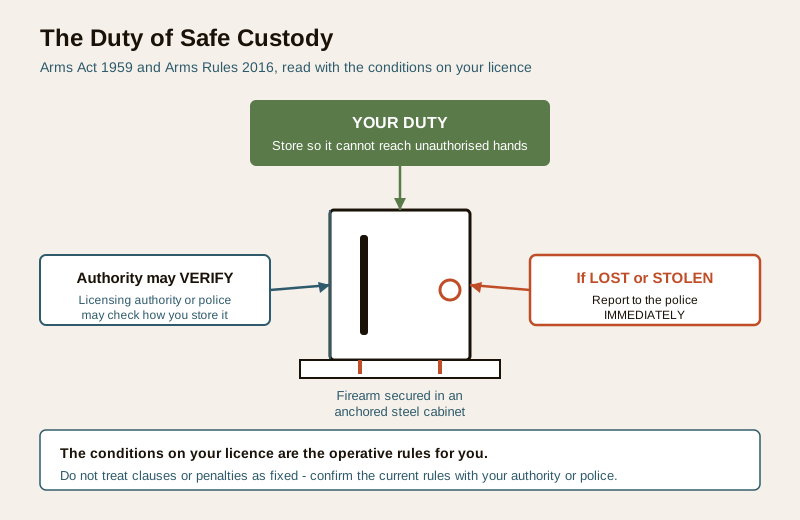
Under the Arms Act 1959 and the Arms Rules 2016, holding a licence carries a continuing duty of safe custody: you must store the firearm so that it cannot fall into unauthorised hands — a thief, a visitor, a domestic helper, and most urgently a child. The licence is issued to you personally; the responsibility for where and how the arm is kept sits with you and does not transfer to anyone else in the household.
Two practical consequences follow. First, the licensing authority or the police may verify your storage — treat a well-kept, anchored cabinet and orderly records as part of being a licence-holder in good standing, not as a burden. Second, the exact expectations — how the arm and ammunition are to be secured, what you record, how renewals and any inspections work — are set by the Act, the Rules and the conditions endorsed on your licence. Because those specifics vary and are updated, this guide deliberately does not quote clause numbers or penalties as fixed. Read your licence, then ask your licensing authority or local police station what applies to you now.
The cabinet: a proper gun safe, well made and well fixed
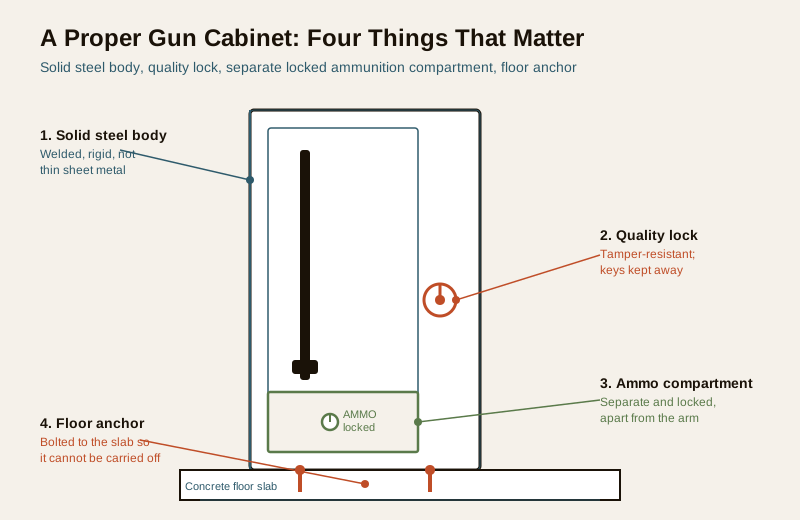
A firearm belongs in a purpose-made steel gun cabinet or gun safe, not a wardrobe, a wooden almirah or a drawer. The point of the cabinet is simple: it must resist casual and opportunist access, and it must be impossible for a child or a curious visitor to open. As with any home safe, the security comes from the body, the lock and — critically — how it is fixed down.
What to look for
- Solid steel body — a rigid welded steel construction, not thin sheet metal that can be prised or peeled. Heavier gauge and continuous welds resist forcing.
- A quality lock — a reliable, tamper-resistant lock, whether a good key lock or a certified electronic/combination lock. Keep spare keys or codes secured elsewhere, never with the cabinet.
- A separate, lockable compartment for ammunition inside or alongside the cabinet, so the arm and its ammunition are not simply loose together.
- Anchor points — pre-drilled holes in the base and back so the cabinet can be bolted down. An unanchored cabinet can be carried away whole, which defeats the entire purpose.
For choosing and rating a cabinet body and lock sensibly, the same logic as any home safe applies — see the complete guide to home safes in India. Rating systems for burglary resistance are named generically (for example cash-rating and residential security container grades); read the manufacturer's certificate and, if you carry household insurance, ask your insurer what they expect, rather than trusting a marketing figure.
Anchor it down — always
An unanchored cabinet is a portable box: a thief simply removes the whole thing and opens it elsewhere at leisure. Bolt the cabinet through its base (and back where possible) into a solid structural element — a concrete slab or a masonry wall — using suitable anchors. In an Indian flat this usually means anchoring into the RCC floor slab or a load-bearing wall; a professional does this cleanly and correctly. The method, fixings and floor loading mirror any heavy safe, which is covered in home safe installation and anchoring in India. Heavy fixing and any doubt about the slab is a job for a professional installer or mason, not a DIY afternoon.
Store it unloaded, with ammunition locked separately
Two habits sit at the heart of safe storage, and both are about removing the chain of events that leads to an accident.
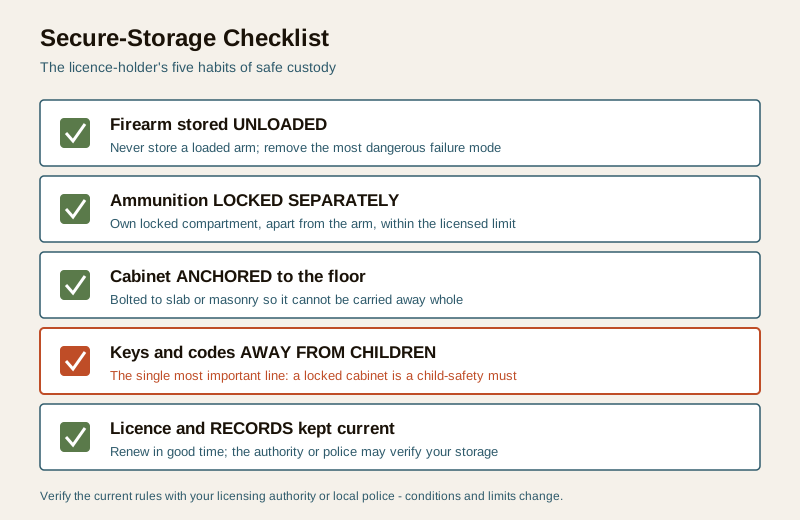
Keep the firearm unloaded in storage. A stored arm is a resting arm; it does not need to be loaded to be ready to be secured. Storing it unloaded removes the single most dangerous failure mode — a child or unauthorised person reaching a firearm that is ready to discharge.
Store ammunition separately and locked, apart from the firearm. Keep ammunition in its own locked compartment or container, not loose in the same space as the arm and ideally not in the same immediate compartment. The quantity of ammunition you may keep is set by your licence and the Rules — follow those limits and verify them with your authority. Separating and locking ammunition means that even if one layer is somehow reached, the arm and its ammunition are not together and ready.
| Storage habit | Why it matters | The safe practice |
|---|---|---|
| Firearm loaded vs unloaded | A loaded arm can discharge the instant it is reached | Store unloaded; never store a loaded firearm |
| Ammunition with the arm | Arm and ammunition together is the highest-risk state | Lock ammunition in a separate compartment, apart from the arm |
| Ammunition quantity | Limits are set by your licence and the Rules | Keep within the licensed limit; verify the current limit with your authority |
| Where the arm lives | Wardrobes and drawers offer no real security | A solid, anchored steel cabinet only |
| Access | Any unauthorised reach is a failure of the duty | Locked at all times; keys or codes controlled |
Keys and codes away from everyone — especially children
The best cabinet in the world is open if the key hangs on a hook beside it. Control the keys and codes as strictly as you control the arm. No one in the household should have casual access, and children must never be able to reach or work out how to open it. A locked, anchored cabinet is first and foremost a child-safety measure — the same instinct that childproofs a home against medicines, chemicals and sharp tools applies with far greater force to a firearm.
- Keep keys on your person or in a separate secured place, never near or on the cabinet.
- If the lock is electronic, use a code that is not guessable and not shared, and change it if it may have been seen.
- Never let a child watch you open the cabinet or learn the code; do not store the code written near the cabinet.
- Treat "who can open this" as a list of one — you, the licence-holder — unless the law and your circumstances specifically require otherwise.
Because this is squarely a child-safety topic, it pairs naturally with the wider home-security thinking about where a secure store even belongs in the house, covered in where to place a home safe in India: out of sight, out of children's reach, and fixed to structure.
Records, renewal and everyday discipline
Being a licence-holder in good standing is partly about paperwork and routine.
- Keep your licence current. Track the renewal date and renew in good time through your licensing authority; do not let it lapse.
- Keep the arm and its details recorded as your licence requires, and keep your documents where you can produce them if the authority or police ask.
- Keep the conditions in view. Re-read the conditions on your licence periodically — they are the operative rules for you, and they can be updated.
- Verify, do not assume. Rules and limits change; when in doubt, ask the licensing authority or local police rather than relying on old habit or hearsay.
| What to keep current | Who sets it | What to do |
|---|---|---|
| Firearm licence | Licensing authority under the Arms Act/Rules | Renew before it lapses; keep the document accessible |
| Storage conditions | The conditions endorsed on your licence | Read them, follow them, re-check periodically |
| Ammunition limit | Your licence and the Arms Rules 2016 | Stay within it; confirm the current figure |
| Records | Your licence requirements | Keep them orderly and producible on request |
| Cabinet and anchoring | Good practice and your duty of safe custody | Inspect the lock, keys and anchor bolts periodically |
If it is lost or stolen — report immediately
If a licensed firearm or its ammunition is lost or stolen, report it to the police immediately. This is not a matter of choosing whether to; it is part of the duty that comes with the licence, and prompt reporting is both a legal expectation and the responsible thing to do. Go to the police at once, report the loss or theft, and follow the process the police and your licensing authority set out. Keep a record of the report. Do not delay in the hope of finding it yourself — the priority is that the authorities know a firearm is unaccounted for.
If you are ever locked out of your own cabinet, do not try to force or defeat it. Contact the cabinet manufacturer or a licensed locksmith or safe technician with proof of ownership — the same rule as for any safe.
How it connects
A gun cabinet is a specialised home safe, so this guide sits alongside the wider safes cluster. Start with the complete guide to home safes in India for choosing and rating a body and lock; use home safe installation and anchoring in India for fixing it down to structure; and read where to place a home safe in India for keeping a secure store out of sight and out of children's reach. All of these live in the Safes & Vaults library.
Key takeaways
- Safe custody is a legal duty under the Arms Act 1959 and Arms Rules 2016 and a condition of your licence — store the firearm so it cannot reach unauthorised hands.
- Use a solid steel gun cabinet with a quality lock, and anchor it to the floor slab or a masonry wall so it cannot be carried away.
- Store the firearm unloaded, and keep ammunition locked separately and within your licensed limit.
- Control keys and codes strictly — a locked, anchored cabinet is above all a child-safety measure.
- Keep your licence renewed and your records current; the licensing authority or police may verify your storage.
- If the firearm is lost or stolen, report it to the police immediately; if locked out, call the manufacturer or a licensed technician with proof of ownership — never force the cabinet.
- Verify the current rules with your licensing authority or local police; conditions and limits change.
References
- Arms Act 1959 (Government of India) — the primary law governing licensed firearms and the licence-holder's responsibilities; read for the duty of safe custody.
- Arms Rules 2016 (Government of India) — the operative rules on possession, storage and ammunition made under the Arms Act; verify current provisions.
- The conditions endorsed on your own firearm licence — the authoritative, personal source for how you must store, what you may keep and what you must report.
- Your local licensing authority and police station — the place to confirm current requirements, renew the licence, and report a lost or stolen firearm.
- Gun-cabinet and safe manufacturers' guidance — for the cabinet body, lock, and anchoring method; read the certificate rather than the marketing.
- Your household insurer, where applicable — for what they expect of a secure store for valuables and firearms.
Indicative guidance only, on safe and lawful storage of a firearm you are already licensed to possess. The conditions on your licence and the current Arms Act/Rules are the authority; verify with your licensing authority or police, have a professional anchor a heavy cabinet, and report any loss or theft to the police immediately. This is strictly about secure storage — not acquiring, using or defeating anything.
Export this guide
Related Guides — Deep-dive reading
Home Safe Installation and Anchoring in India (2026)
Why bolting a home safe to the structure is the step most people skip and the one that matters most, with the anchor options, the fixings, floor loading and moisture to specify, and a clear line on when the job belongs to a safe technician, mason or structural engineer.
SecuritySecurity for People Living Alone in India (2026): Calm, Practical Habits When There Is No Second Person to Notice
Living alone is an ordinary and growing part of Indian life - the student in a new city, the working single, the elder whose children are abroad, the person after a separation. It does not call for fear. It calls for a few deliberate habits, because there is no second person in the home to notice trouble, raise the alarm, or catch an accident. This is calm self-reliance, layer by layer.
SecurityWhat Is Structural Safety in Residential Buildings? A Homeowner's Field Guide
How a house carries its loads safely to the ground — the forces it must resist, who is responsible for safety, the warning signs you can read yourself, and when to call a structural engineer.
Structural SafetyRelated Tools — Try Free
Pre-Possession Inspection Checklist
Inspect your flat before registration — 10 categories, 70+ checkpoints across legal, carpet area, structure, finishes, and deviations.
Homebuyer ChecklistChild & Elder Home-Safety Audit
Room-by-room safety audit for households with children or seniors — 10 categories, 70+ checkpoints tagged by audience.
Safety AuditInterior Contract Clause Checklist
16 sections and 98 checkboxes covering scope, BOQ, milestones, penalties, warranty, and disputes.
Contract Checklist