
Landscape Architecture for India's Climates — A Zone-by-Zone Overview
A homeowner's orienting map to India's climate zones and what each one demands of shade, wind, water and planting in the garden.
India is not one country, climatically — it is at least six. The same week that a homeowner in Jaisalmer is shading a courtyard against a 46 °C dust wind, someone in Shillong is choosing plants that can sit in soil soaked by 300 mm of rain, while a family in Kochi is fighting salt spray and humidity, and a couple in Leh is trying to keep a sapling alive through a night that drops below freezing. The plant that thrives in one place will die, sulk, or become a maintenance nightmare in another. A pergola that saves a Delhi terrace in May is irrelevant in Munnar. Landscape, more than almost any other part of a home, is a conversation with local climate.
This is why "what should I plant?" is the wrong first question. The right first question is "what does my climate demand of the outdoors?" — and the answer changes dramatically as you move across the subcontinent. Get the climate logic right and the planting, paving, shade and water decisions fall into place; get it wrong and you spend years and rupees pushing water uphill.
This guide is a map, not a manual. It argues that every good Indian garden begins by correctly placing itself in one of the country's climate zones — hot-dry, warm-humid, composite, temperate/moderate, or cold — with the coastal and monsoon conditions layered on top, and then applying that zone's core landscape strategy for shade, wind, water and planting. Once you know your zone, the deeper "how" lives in our specialist guides; this is the orienting overview that tells you which way to look.
Why climate zones, and whose map?
India's most widely used climatic classification comes from the National Building Code (NBC 2016) and the Energy Conservation Building Code, which divide the country into five primary zones — hot-dry, warm-humid, composite, temperate (also called moderate), and cold — based on temperature, humidity and rainfall over the year. The same framework underpins the Bureau of Energy Efficiency's design guidance and most architecture-school teaching, drawing on the foundational climate-and-architecture work of researchers such as Arvind Krishan and the late Baker–Koenigsberger tradition.
These zones were drawn for buildings, but they map almost perfectly onto landscape decisions, because the same forces that make a house comfortable — sun, wind, humidity and water — are exactly what a garden must negotiate. The Indian Society of Landscape Architects (ISOLA) has long argued that landscape is climate-responsive infrastructure rather than decoration, and the climate-responsive design movement championed by practices such as Mohammad Shaheer's and, more recently, firms like Integral Designs and Land India, treats the local climate as the first design client.
A word of honesty about the map below: it is schematic and indicative, not geographically precise. Climate zones in India have soft, overlapping edges; a hill town can sit inside a hot region, and a single city can shift zone with altitude. Use it to find your approximate position, then verify against your own lived experience of the local summer, monsoon and winter.
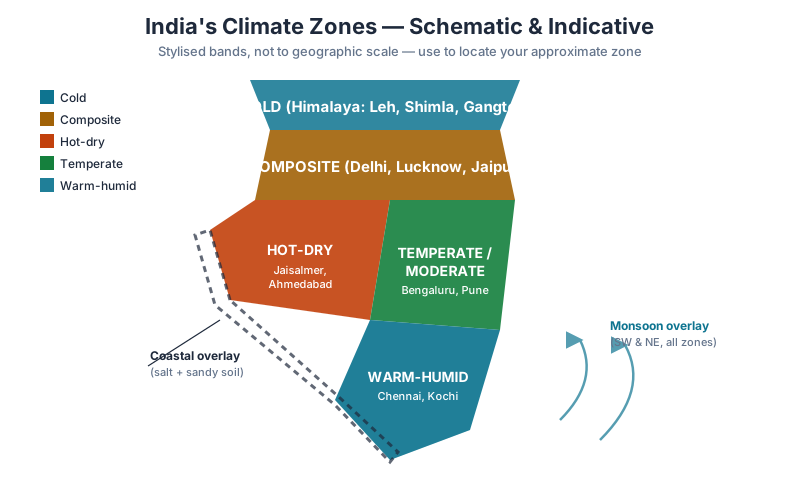
| Zone (NBC 2016) | Representative places | Defining climate stress | Landscape's main job |
|---|---|---|---|
| Hot-dry | Jaisalmer, Bikaner, Ahmedabad, Nagpur | Extreme heat, low humidity, dust, scarce water | Make shade, block hot wind, save every drop |
| Warm-humid | Mumbai, Chennai, Kochi, Kolkata | Heat plus oppressive humidity, heavy monsoon | Move air, drain fast, manage damp |
| Composite | Delhi, Lucknow, Jaipur, Bhopal | Hot-dry summer, humid monsoon, cool winter | Flex with the seasons; do many jobs |
| Temperate / moderate | Bengaluru, Pune, Hyderabad (parts) | Mild, equable, gentle seasonal swing | Refine and beautify; widest plant palette |
| Cold | Leh, Shimla, Gangtok, Shillong (cool-humid) | Frost, snow, short growing season | Trap warmth and sun, shelter from cold wind |
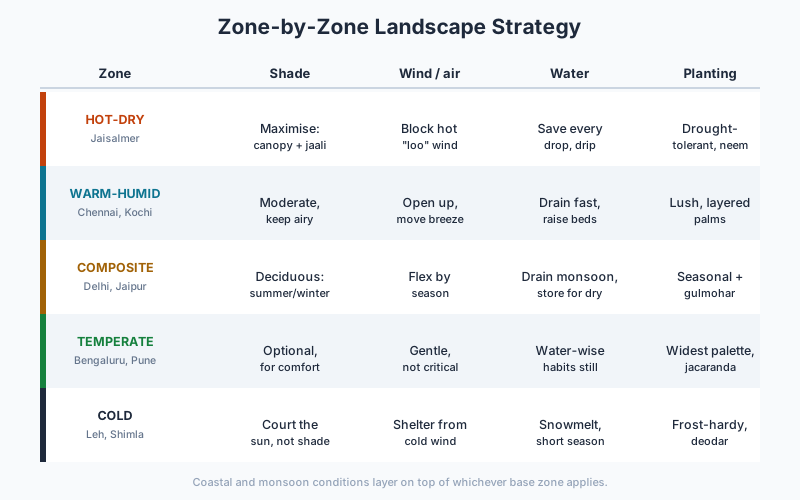
Hot-dry: the discipline of shade and water
In the Thar belt and the dry interiors of Gujarat, Rajasthan and parts of the Deccan, the landscape's enemies are sun, dust and thirst. Summer surface temperatures can be brutal, the air is parched, and water is precious enough that lawns are a quiet act of waste. The traditional response — seen in Rajasthani havelis and stepwells — was to bring the garden inward and downward: shaded courtyards, water features that cool by evaporation, and dense planting only where shade made it survivable.
The core strategy is shade first, water second, openness last. Plant for canopy to cool the ground; use built shade — pergolas, jaalis, brise-soleil — over sit-outs; orient seating away from the hot pre-monsoon "loo" wind; and replace thirsty lawn with gravel, decomposed-granite paving and drought-tolerant groundcovers. Drip irrigation and mulch are non-negotiable. Rainwater harvesting matters most here precisely because rain is rare.
A practical hot-dry test: if a feature needs daily watering to survive a May afternoon, it is probably the wrong feature. The most resilient desert gardens read as sparse and architectural — a few well-shaded trees, hardy succulents, gravel courts and a small, deep water body that does double duty as evaporative cooling and as a focal point. Walls and paving should be light-coloured to reflect heat, and seating tucked into the shadow of a tree or a built screen rather than left exposed. Mulching beds heavily slows evaporation and keeps soil temperatures survivable for roots.
Signature plants: Neem (Azadirachta indica) for tough, shade-giving canopy; Bougainvillea for water-thrifty colour over a pergola; Aloe vera and Agave as architectural, near-zero-water accents.
Warm-humid: moving air and shedding water
Along the western and eastern coasts and the lower Gangetic plain — Mumbai, Goa, Kerala, coastal Tamil Nadu, Bengal — the problem flips. There is usually enough water (sometimes far too much), but the heat comes wrapped in humidity that makes still air feel suffocating and keeps everything perpetually damp. Mould, root rot, mosquitoes and waterlogging are the daily battles.
The strategy here is the opposite of the desert's: open up, move air, and drain fast. Keep planting layered but not so dense that it traps stagnant, humid air; channel the prevailing sea breeze through the garden with open lawns and avenues; raise beds and use free-draining soil so roots never sit in water; and choose hard surfaces that dry quickly and don't grow slippery algae. This is the realm of the lush tropical garden — and our tropical landscape design guide goes deep on the warm-humid palette and layering that this overview only sketches.
There is a maintenance reality worth naming: warm-humid gardens grow fast and rot fast. Pruning to keep air moving, lifting fallen leaf litter before it mats and breeds fungus, and choosing termite- and rot-resistant materials (stone, treated hardwood, powder-coated metal over bare steel) all matter more here than in any dry zone. Standing water is the enemy twice over — it drowns roots and breeds mosquitoes — so every low point needs a way out.
Signature plants: Coconut and Areca palm for vertical, breeze-friendly structure; Heliconia and Canna for bold, moisture-loving colour; Hibiscus as a robust, flowering screen.
Composite: designing for three seasons in one
The great north-Indian plains — Delhi, Lucknow, Jaipur, Bhopal, Kanpur — live three climates a year: a hot-dry summer, a humid monsoon, and a genuinely cold winter. A garden here cannot specialise. It must give deep shade in May, drain hard in August, and let the low winter sun warm a lawn in January. This is the most demanding zone to design for, and the most rewarding when it works.
The strategy is deciduous flexibility. Plant deciduous shade trees that block the high summer sun but drop their leaves to let winter sun through; design drainage for the monsoon's intensity; and create both shaded summer sit-outs and sunny winter ones, so the garden has a "summer face" and a "winter face." Seasonal flowering — chrysanthemums and roses in winter, monsoon greens in the rains — is part of the composite reward.
The composite gardener's secret weapon is the deciduous canopy placed to the south and west of the main sit-out. In summer its dense leaves cut the fierce afternoon sun; by December, bare branches let the welcome low winter sun pour onto the same terrace. No mechanical shade can match this seasonal intelligence — it is, quite literally, free climate control that resets itself twice a year. Pair it with a paved winter court that catches sun and a shaded summer court that catches breeze, and a single garden serves both extremes.
Signature plants: Gulmohar (Delonix regia) and Amaltas (Cassia fistula) for deciduous summer shade and spectacular flowering; Frangipani (Plumeria) for a sculptural, drought-tolerant accent that survives the swing.
Temperate / moderate: the widest palette
The Deccan plateau cities — Bengaluru, Pune, parts of Hyderabad — enjoy India's most equable climate: warm days, cool nights, no real extreme. This is gardening on easy mode, and the temptation is to plant everything. The discipline here is less about survival and more about restraint, composition and water-wise habits (Bengaluru's recurring water stress is a reminder that "moderate" is not "unlimited").
The strategy is refinement. Because almost anything grows, the design challenge shifts to structure, seasonal interest, and avoiding water-hungry habits that the gentle climate lets you get away with — until a drought year arrives. Native and adapted species still earn their keep through lower maintenance.
Signature plants: Silver Oak (Grevillea robusta), long associated with the Deccan; Tabebuia for reliable seasonal flowering; Jacaranda for the famous blue spring canopy of Bengaluru and Pune.
Cold: trapping warmth and shelter
In the Himalayan belt — Leh and the trans-Himalaya (cold-dry), Shimla, Manali, Gangtok, and the cool-humid hill stations — the growing season is short and the threats are frost, snow load and biting wind. Here the landscape's job inverts again: instead of escaping the sun, you court it; instead of opening to the breeze, you shelter from it.
The strategy is capture and shelter. Position seating and tender plants to catch the sun and sit against warm south-facing walls; use evergreen conifers and dense hedges as windbreaks; choose hardy, frost-tolerant species; and keep the growing season in mind — much of the year the garden is dormant or under snow, so structure and evergreens carry the design.
Signature plants: Deodar (Cedrus deodara), the iconic Himalayan cedar windbreak and shade tree; Rhododendron, spectacular in the eastern hills; apple, walnut and other temperate fruit that reward the cold with a real harvest.
The two overlays: coast and monsoon
Two conditions cut across the zones and deserve their own thinking. The coastal overlay — anywhere within a few kilometres of the sea — adds salt spray, sandy soil and corrosive air to whatever the base zone demands. Most coastal India is warm-humid, but the salt is the extra variable: it scorches sensitive leaves and rusts metalwork. Choose salt-tolerant species (coconut, casuarina, screwpine, sea hibiscus), use stone and treated timber over cheap steel, and plant a tolerant windbreak as the first line.
The monsoon overlay affects nearly the whole country but with wildly different intensity — from a few rainy weeks in the northwest to Cherrapunji's relentless deluge. Wherever you are, the monsoon is the moment your drainage, soil and slope are tested. Designing for it means generous surface drainage, free-draining beds, erosion control on slopes, and harvesting the abundance you spend the rest of the year missing.
| Overlay | Where it bites | Extra stress | First landscape move |
|---|---|---|---|
| Coastal | Within ~2–5 km of the sea | Salt spray, sandy soil, corrosion | Salt-tolerant windbreak; stone over steel |
| Monsoon (heavy) | Western Ghats, NE India, coasts | Erosion, waterlogging, root rot | Surface drains, slope stabilisation, raised beds |
| Monsoon (light) | NW plains, rain-shadow Deccan | Brief intense bursts, then dry | Capture and store; recharge pits |
The universal climate-smart moves
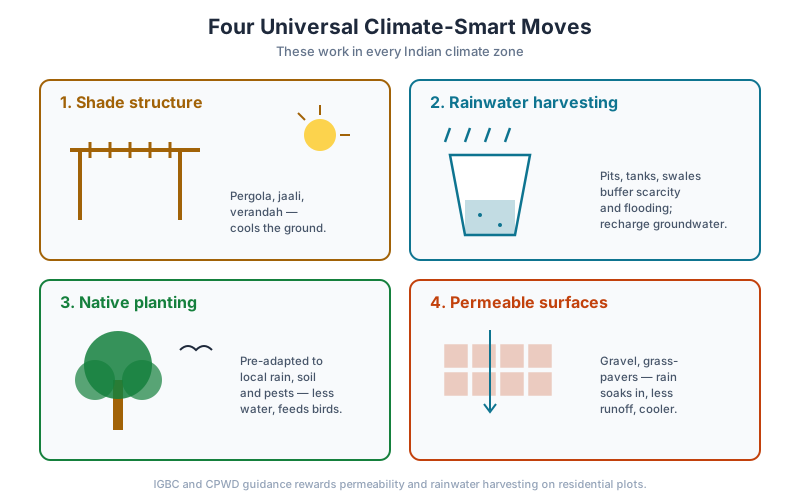
Whatever your zone, four moves repay themselves everywhere in India. Think of them as the common grammar beneath the zonal dialects.
Shade structures. Built shade — pergolas, jaali screens, vine-covered trellises, deep verandahs — extends usable outdoor time and cools the ground far cheaper than air-conditioning the indoors. In hot zones it is survival; in mild zones it is comfort; even in cold zones a deciduous vine gives summer shade and lets winter sun through.
Water harvesting. From the desert to the deluge, capturing rain where it falls — recharge pits, swales, rain gardens, storage tanks — buffers both scarcity and flooding. CPWD and several state by-laws now mandate rainwater harvesting on plots above a threshold size, and our sustainable water management guide details the systems. Done well, it cuts municipal demand and keeps the garden alive through the dry months.
Native and adapted planting. Native species are pre-adapted to local rainfall, soil and pests, so they need less water, less feeding and less fuss — and they feed local birds and pollinators. ISOLA and biodiversity bodies consistently recommend a native-first palette; our guide to the best trees for Indian homes is the place to start choosing.
Permeable surfaces. Replacing solid concrete with gravel, grass-pavers, permeable interlocking blocks or stone-on-sand lets rain soak in rather than run off, recharging groundwater, reducing flooding and keeping the ground cooler. The Indian Green Building Council (IGBC) rewards permeability in its rating systems precisely because it does so much, so cheaply.
| Universal move | What it does | Works best in | Rough cost level |
|---|---|---|---|
| Shade structure (pergola, jaali, verandah) | Cools ground, extends outdoor hours | Hot-dry, composite, warm-humid | Medium |
| Rainwater harvesting (pits, tanks, swales) | Buffers scarcity and flooding, recharges | All zones | Low–medium |
| Native / adapted planting | Cuts water, feeding and pest care | All zones | Low |
| Permeable surfaces | Recharge, less runoff, cooler ground | All zones, vital in monsoon | Low–medium |
Where to go from here
This overview is deliberately the wide-angle view. Once you have placed yourself on the map, the depth lives in the specialist guides. For the full zone-by-zone planting palettes and material logic, read climate-responsive landscape design for India. If you are in the warm-humid belt, the tropical landscape design guide is your detailed playbook. For the water side of every zone, see sustainable water management in the landscape; for choosing the right canopy, the best trees for Indian homes; and for the big picture of the discipline, the landscape hub.
A garden that knows its climate is calmer, cheaper and more alive than one that fights it. Start with the zone, layer in the coast and monsoon if they apply, and lean on the four universal moves — and your outdoors will work with India's weather instead of against it, season after season.
References
- Bureau of Indian Standards, National Building Code of India (NBC) 2016 — climatic zone classification.
- Bureau of Energy Efficiency / Energy Conservation Building Code (ECBC) — climate-zone design guidance.
- Arvind Krishan et al., Climate Responsive Architecture: A Design Handbook for Energy Efficient Buildings.
- O. H. Koenigsberger et al., Manual of Tropical Housing and Building — climate-and-design foundations.
- Indian Society of Landscape Architects (ISOLA) — position on climate-responsive landscape as infrastructure.
- Indian Green Building Council (IGBC) — credits for permeable surfaces and water management.
- Central Public Works Department (CPWD) and state municipal by-laws — rainwater harvesting requirements.
Export this guide
Related Guides — Deep-dive reading
Climate-Responsive Landscape Design for India
Designing your garden to work with India's five climate zones — shade, water, air and planting palettes that fit hot-dry, humid, composite and cold
LandscapeThe Best Trees for Indian Homes
A research-grade guide to choosing and placing trees around an Indian home — the real cooling and clean-air numbers, the right species for shade, flowers, fragrance and fruit, and the placement science that keeps roots out of your walls and drains.
LandscapeHow Buildings Can Give Back: Biodiversity and Environmental Health
How an Indian home and its plot can actively improve the ecology and environment around it, not just reduce harm
SustainabilityRelated Tools — Try Free
Brise-Soleil Visualizer
Interactive horizontal-louvre cut-off angle calculator — sun altitude, louvre depth, and spacing inputs with a live shadow preview. Computes θ = arctan(spacing/depth) for façade shading, ECBC envelope compliance, hospital daylight design, and tropical sun-control detailing.
Sun Shading ToolRainwater Tank Sizer
How big should your rainwater tank be? Computes annual harvest, recommended tank capacity in litres, water-bill savings, and payback — for 10 Indian cities.
RWH CalculatorCross-Ventilation Analyzer
Estimate airflow and air changes per hour (ACH) from room size, window areas, layout, and local wind — with NBC 2016 Part 8 compliance check.
Ventilation Calculator