
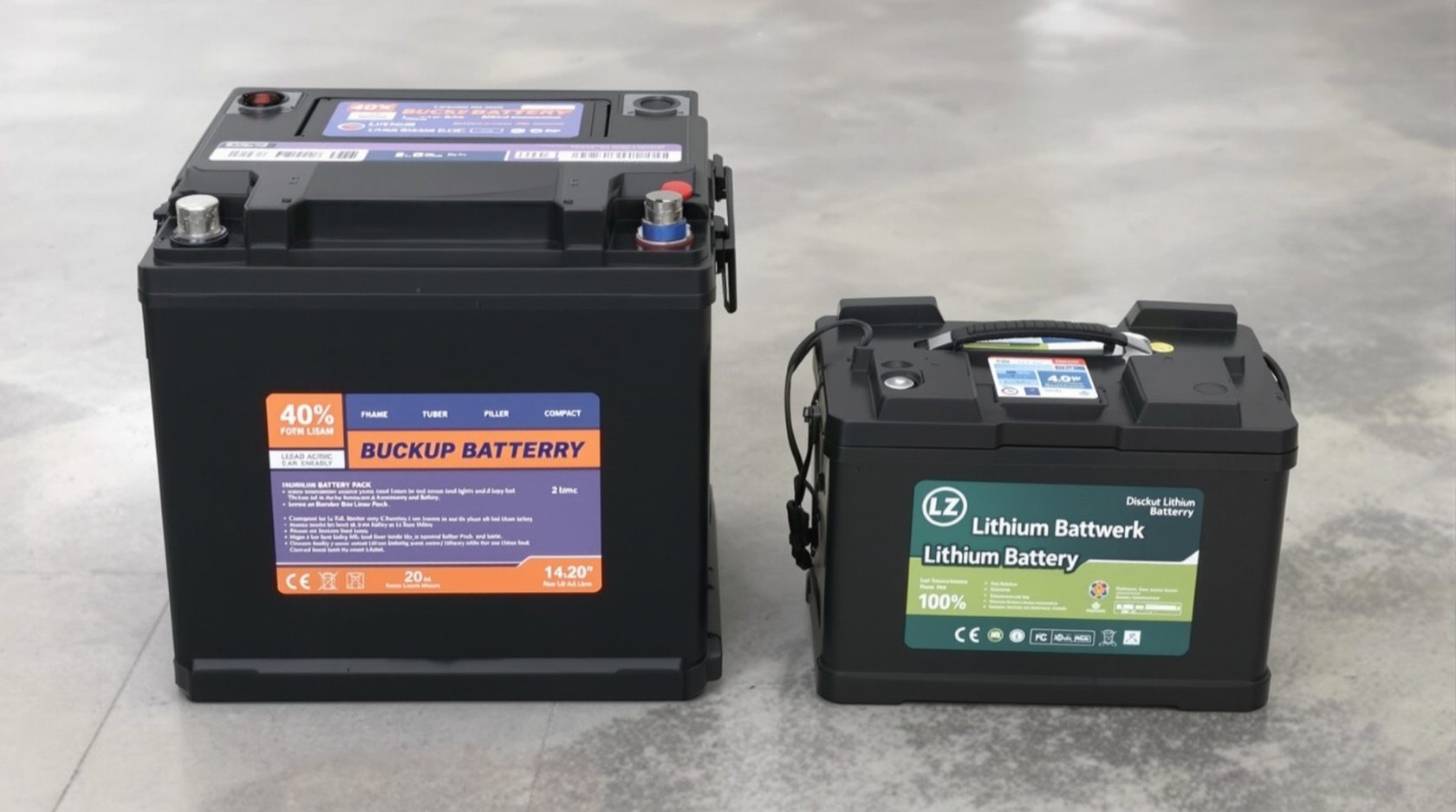
Inverter Battery Types: Tubular, Flat-Plate, VRLA & Lithium Compared
The battery is where most of the money and most of the trouble in a backup system lives — so choose it well. Flooded tubular and flat-plate lead-acid, sealed VRLA, and lithium compared on life, maintenance, cost, safety and where each fits an Indian home.
In a backup system, the inverter is a one-time buy that lasts many years; the battery is the part you replace, maintain, and spend most of your money on over time. So getting the battery type right matters more than any other backup decision. The choices run from the traditional flooded lead-acid (tubular and flat-plate) through sealed VRLA to modern lithium — each with a very different balance of life, maintenance, cost and safety. This guide compares them for an Indian home.
It sits under the inverter & battery guide and the home backup power guide.
The safety line. Batteries store large energy and, depending on type, can vent gas or pose fire/chemical risk if mishandled. Installation, ventilation and connection are a licensed electrician's job. Lead-acid batteries conform to standards such as IS 15549 (VRLA); insist on ISI-marked, reputable batteries.
Flooded lead-acid: tubular and flat-plate
The traditional, dominant home-inverter battery in India is flooded (wet) lead-acid, which needs its electrolyte (water) topped up periodically. It comes in two constructions:
- Tubular — the workhorse of Indian home backup. Robust, tolerant of the deep discharges and long backup that Indian power cuts demand, and long-lived (commonly several years). It needs periodic topping-up with distilled water and ventilation, but it is reliable and the value choice for most homes.
- Flat-plate — cheaper and gives quick bursts of current, but is less tolerant of deep discharge and generally shorter-lived than tubular. Suited to areas with short, infrequent cuts rather than long outages.
For most Indian homes with regular, longish power cuts, a good tubular battery is the sensible default: durable, forgiving, and economical over its life.
Sealed VRLA (SMF / gel)
VRLA (valve-regulated lead-acid), also sold as SMF (sealed maintenance-free) or gel batteries, seals the electrolyte so there is no watering and little maintenance, and they can sit indoors with minimal venting. The trade-off: they are typically costlier per unit of capacity and shorter-lived under the deep, frequent discharge of heavy Indian backup use than a good tubular. They suit places where maintenance access is hard or the battery must live indoors, and are made to IS 15549.
Lithium (Li-ion / LFP)
Lithium batteries (increasingly LFP — lithium iron phosphate for home use) are the modern option:
- Pros: long life (many more cycles than lead-acid), compact and light, no maintenance, high efficiency, deep usable capacity, and fast charging.
- Cons: higher upfront cost, and they need a good battery management system (BMS) for safety; quality and BMS matter greatly.
- Best where: you want long life and zero maintenance and can pay more upfront, and especially where the battery pairs with solar (lithium suits solar storage well — see the solar guides).
Lithium's higher price is offset by its far longer life and zero upkeep, so over many years the cost of ownership can be competitive — but the upfront cost is real, and quality (cells + BMS) is non-negotiable for safety.
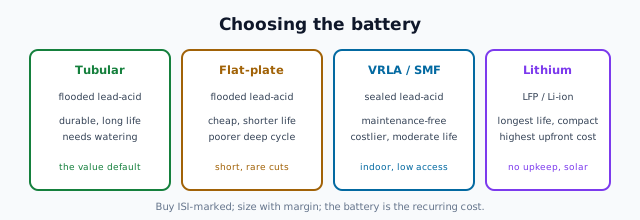
Comparison
| Type | Maintenance | Deep-discharge / long backup | Life | Upfront cost | Best for |
|---|---|---|---|---|---|
| Tubular (flooded) | Watering + ventilation | Excellent | Long | Moderate | Most homes, regular long cuts |
| Flat-plate (flooded) | Watering + ventilation | Poorer | Shorter | Low | Short, infrequent cuts |
| VRLA / SMF / gel | Maintenance-free | Moderate | Moderate | Higher | Indoor, low-access installs |
| Lithium (LFP) | Maintenance-free | Excellent | Longest | Highest | Long life, solar pairing, no upkeep |
How to choose
- Regular, longish power cuts, value-focused: a good tubular flooded battery — the durable default.
- Short, rare cuts, low budget: a flat-plate flooded battery is adequate.
- Battery must live indoors / hard to maintain: a VRLA/SMF sealed battery avoids watering.
- Want longest life, zero maintenance, or pairing with solar, and can pay more: lithium (LFP).
Whatever the type, buy ISI-marked, reputable batteries, size them with margin (avoid habitual deep discharge), and have them installed and ventilated correctly. The battery is the recurring cost — a quality one that lasts years beats a cheap one you replace often.
The one-line answer
The inverter battery is where your backup money and maintenance mostly go, so choose the type to your usage: a durable tubular flooded lead-acid battery is the value default for the regular, longish cuts of Indian homes; flat-plate suits short, rare cuts; sealed VRLA/SMF avoids watering where the battery lives indoors; and lithium (LFP) offers the longest life, zero maintenance and the best solar pairing at a higher upfront cost. Buy ISI-marked and reputable, size with margin to avoid deep discharge, and have it installed and ventilated by a licensed electrician.
Where to go next
- How to size it: Inverters & Batteries Guide.
- The backup strategy: Home Backup Power Guide.
- Pairing with solar: Residential Electrical Systems.
- Size it: Inverter & Battery Calculator.
References
- IS 15549 : 2005, Stationary Regulated Lead Acid Batteries, Bureau of Indian Standards.
- IS 16242 (Parts 1–5), Uninterruptible Power Systems (UPS), BIS.
- Bureau of Energy Efficiency, Standards & Labelling programme: https://beeindia.gov.in/
- National Electrical Code of India, SP 30 : 2023, BIS: https://www.bis.gov.in/
Battery characteristics and life are indicative and vary widely by brand, quality and usage; buy ISI-marked batteries and have them sized and installed by a licensed electrician and supplier. Verify any standard's status via the BIS catalogue before relying on it.
Export this guide
Related Guides — Deep-dive reading
Lithium vs Lead-Acid: Choosing a Home Battery for Inverter & Solar
The battery is where most of a backup system's cost and lifespan live — an honest comparison of lithium and lead-acid for home inverters and solar storage: upfront cost versus lifespan, usable capacity, maintenance, space and safety, and which genuinely works out cheaper over time.
Electrical & WiringResidential Electrical Systems: The Complete Guide for Indian Homes
How the electricity in an Indian home actually works — from the utility supply and meter through the distribution board, circuits, wiring, earthing and protection, to lighting, safety, energy efficiency, smart controls, solar and backup — written so a homeowner can understand, plan and judge it, and know exactly where a licensed electrician must take over.
Electrical & WiringBattery Room Fire Safety in India (2026): Lead-Acid Hydrogen Venting and Lithium-Ion Thermal Runaway
How the dedicated battery bank behind an apartment, office, data centre, hospital or solar-storage install should be compartmented, ventilated, detected and isolated, and why the two chemistries need two different controls.
SecurityRelated Tools — Try Free
Inverter & Battery Calculator
Size a home inverter (VA) and battery (Ah) for the load you want to back up and the hours of backup you need.
Backup PowerSecurity Backup Power Calculator
Size a UPS/inverter and battery to keep CCTV, NVR, router and alarm running through a power cut — load, Ah, VA and cost.
Backup PowerAccess-Control Battery-Backup Calculator
Size the standby battery so an access system keeps running through a power cut, with an egress life-safety note.
Battery Backup