

Hydraulic Home Lifts Explained (India): How They Work, Costs, Pros and Cons
The piston-driven low-rise workhorse: shallow pit, lowest entry cost, smooth ride — and where gearless traction beats it.
The hydraulic home lift is the workhorse of the Indian low-rise home: a single piston quietly pushes the cabin up, a small cabinet beside the shaft holds the machinery, and the pit you have to dig is barely ankle-deep. For a G+1 or G+2 villa where you want a real lift without a deep excavation or the highest price tag, this is usually the first option a contractor will quote.
This guide is the dedicated buyer's deep-dive into the hydraulic (piston/ram) lift — how it actually works, what it costs in India in 2026, where it shines and where a traction lift quietly beats it. For a one-paragraph mechanism summary of all four lift types, see How home lifts work; that overview is the quick tour, while this page goes floor-by-floor into the hydraulic type alone.
If your home is two to four floors, your headroom is tight, and your budget is the deciding factor, the hydraulic lift is built for exactly your situation.
How a hydraulic home lift works
A hydraulic lift has no ropes, no counterweight and no machine room on top. Instead, an electric pump drives oil into a cylinder, and the rising oil pushes a steel piston (the "ram") that lifts the cabin. To come down, the cabin does not need power at all — a control valve simply releases oil back into the tank, and the car descends under its own weight at a regulated speed.
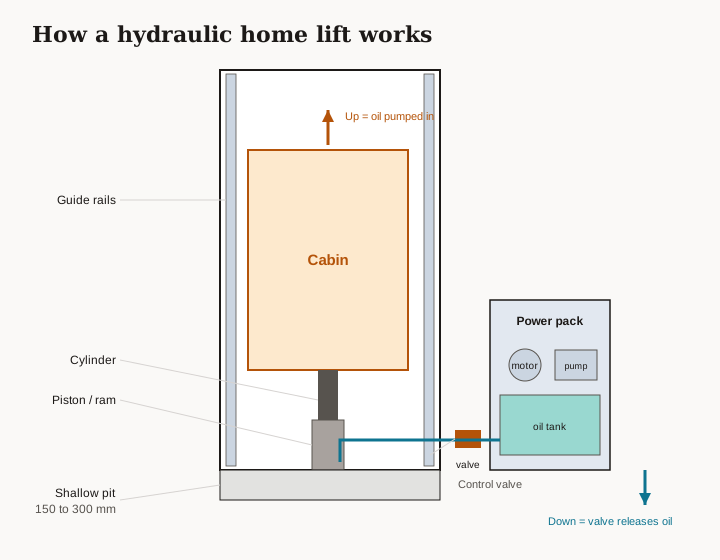
That single-direction power flow is the source of every hydraulic strength and weakness. Because the descent is gravity-fed, the ride down is exceptionally smooth and silent. Because all the lifting energy is spent on the way up, the running cost on ascent is higher than a counterweighted traction lift. The three core parts a homeowner should recognise are:
- The piston and cylinder inside (or beside) the shaft — the muscle that does the lifting.
- The power pack — pump, motor, oil tank and valve block, all housed in a small cabinet.
- The cabin and guide rails — the car the family rides in, running on fixed rails.
The power-pack cabinet, not a machine room
The headline planning advantage is that the machinery does not sit on top of the shaft. The power pack is a compact cabinet — roughly the size of a tall fridge — that can stand in an adjacent utility space, under a staircase or in a nearby store within about 10 metres of the shaft. That means no rooftop machine room and no overhead structure, which keeps the building elevation clean and the structural work simple.
The shallow-pit advantage
The single biggest reason Indian homeowners choose hydraulic is the pit. A hydraulic (and screw) lift needs a pit of only about 150–300 mm — a shallow recess you can often cast without disturbing the foundation. A traction lift typically wants 300–610 mm, and some modern gearless cars want 1200–1500 mm, which on a finished ground floor can mean breaking the slab.
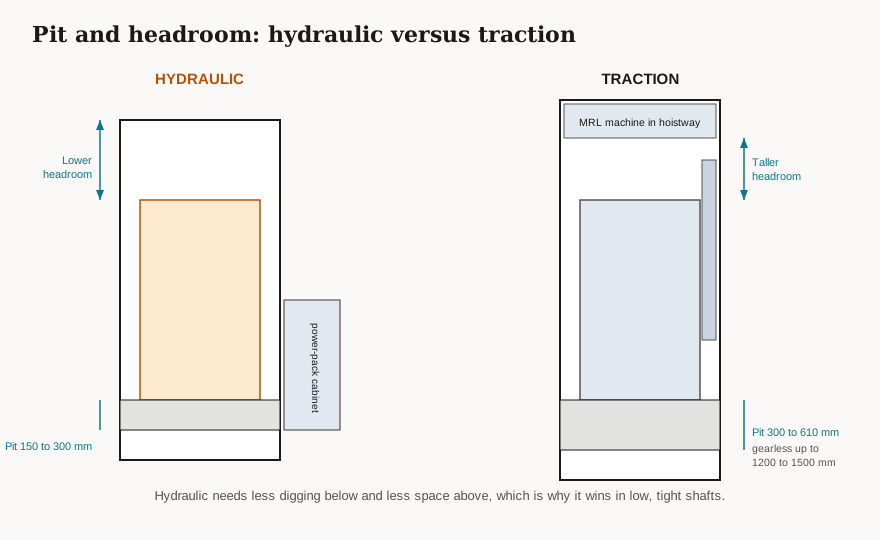
The same logic applies overhead. Hydraulic lifts need less clear height above the top floor because there is no machine sitting up there. In a home where the top-floor ceiling is already low — common in older Indian houses with later additions — that shallow headroom can be the difference between a lift fitting and not fitting at all. For a fuller pit and overhead walkthrough across all types, see the comparison pillar.
Ride feel, speed and everyday use
A hydraulic lift rides softly. Acceleration is gentle, the descent is gravity-quiet, and there is no rope vibration. What you trade for that is speed: home hydraulic lifts run at roughly 0.15–0.3 m/s, the slowest of the mainstream types. Over two or three floors that difference is barely noticeable — a few extra seconds per trip. Over five or six floors with heavy daily traffic, the wait starts to feel slow, which is exactly where traction pulls ahead.
| Specification | Typical hydraulic home lift |
|---|---|
| Drive | Oil-pumped piston / ram |
| Speed | 0.15–0.3 m/s (slowest mainstream type) |
| Pit depth | 150–300 mm (shallow) |
| Overhead / headroom | Lower than traction; no rooftop machine |
| Machine location | Power-pack cabinet beside shaft (within ~10 m) |
| Best floor range | 2–4 floors (G+1 to G+3) |
| Power | Often single-phase for small cars |
| Ride quality | Very smooth, especially on descent |
Energy and the oil/temperature factor
Two ongoing considerations set hydraulic apart. First, energy on ascent: because there is no counterweight to share the load, the pump motor lifts the full weight of car plus passengers every trip up. A gearless traction lift, where a counterweight balances about half the load, simply uses less electricity per ride. For a home that takes a dozen trips a day this is a modest line on the bill; for heavy use it adds up.
Second, oil and temperature. The hydraulic fluid warms with use, and its behaviour changes with ambient heat. In a hot, unventilated shaft — a real risk in many Indian summers — the system can need an oil cooler or simply ventilation to hold ride quality steady. A reputable installer will size this for your climate; ask the question explicitly in coastal and hot-dry regions. This is a maintenance reality, not a deal-breaker, but it is the kind of detail a thin quote will skip.
Cost in India (2026)
A hydraulic home lift is typically the lowest entry cost of the full-cabin types, indicatively ₹8–20 lakh depending on floors, cabin size, doors and finish. 18% GST applies on top, and civil work (shaft, pit, electricals) plus installation are usually billed separately.
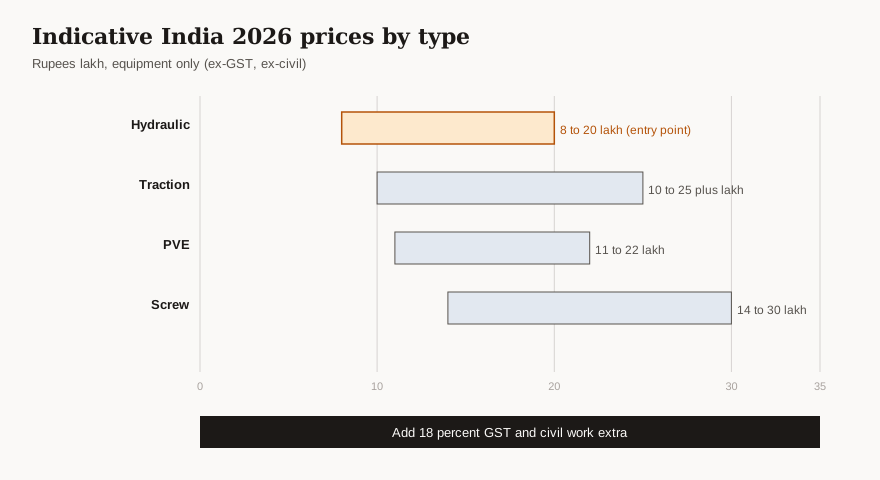
| Lift type | Indicative price (ex-GST, ex-civil) | Note |
|---|---|---|
| Hydraulic | ₹8–20 lakh | Lowest entry cost, low rise |
| Traction (gearless) | ₹10–25 lakh+ | Efficient, faster, premium ride |
| Pneumatic vacuum (PVE) | ₹11–22 lakh | Shaftless retrofit, limited capacity |
| Screw / winding-drum | ₹14–30 lakh | Self-supporting, low pit |
These are indicative June 2026 figures — confirm with itemised quotes from a licensed lift contractor, since cabin size, door type, travel and finish move the number significantly. To model your own configuration, use the home lift cost calculator; that tool estimates a budget, while this guide explains why the hydraulic number sits where it does.
Pros and cons
| Pros | Cons |
|---|---|
| Lowest entry cost among full-cabin lifts | Slowest mainstream type (0.15–0.3 m/s) |
| Shallow pit (150–300 mm) — minimal excavation | Higher running energy on ascent (no counterweight) |
| No rooftop machine room; clean elevation | Oil warms; may need cooling/ventilation in hot shafts |
| Lower headroom needed than traction | Less suited to 5+ floors and heavy daily traffic |
| Very smooth, quiet descent | Oil-system upkeep adds to AMC scope |
| Power pack fits in a small adjacent cabinet | Loses on lifetime efficiency to gearless traction |
Hydraulic vs traction: who wins where
Traction — especially modern gearless PMSM in a machine-room-less (MRL) layout — is the efficiency rival. It is faster, more energy-efficient over the lift's life, and better for taller homes, but it asks for more pit and headroom and costs more up front. The honest split is by floor count and usage.
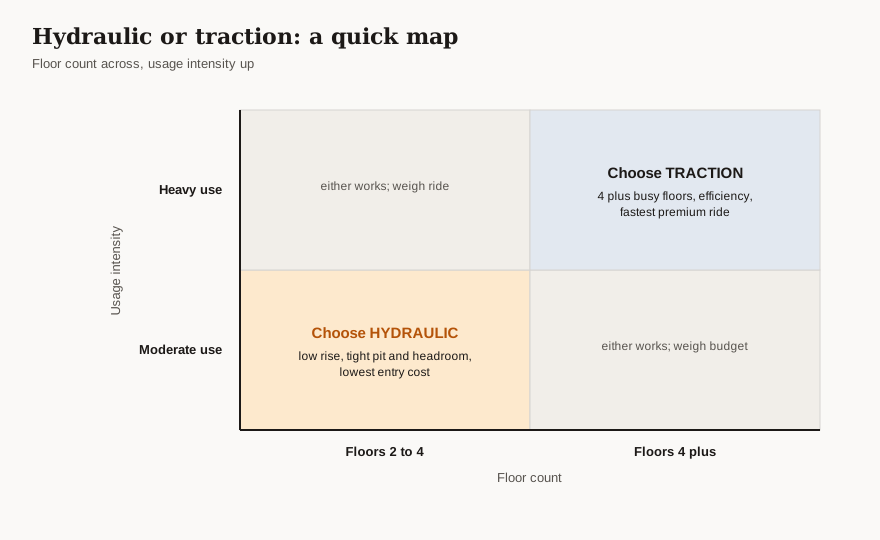
Choose hydraulic if: your home is 2–4 floors, you want the lowest entry cost, headroom or pit depth is tight, and daily use is moderate.
>
Avoid hydraulic (lean traction) if: you have 4+ busy floors, you prioritise lifetime energy efficiency, you want the fastest, most premium ride, or your shaft runs hot and ventilation is hard.
For the full case on the efficient rival, read Traction home lifts explained; it is the deep-dive on the type that beats hydraulic on speed and running cost.
Standards and safety — what applies to a hydraulic home lift
Since 22 December 2025, IS 17900 is the current mandatory standard for all new lift installations, safety components and major modernisations in India. Built on the European EN 81-20 / EN 81-50 benchmark, it explicitly covers home lifts and supersedes the older IS 14665 (traction) and IS 14671 (lifts for persons with disabilities), now retired references. Two protections it mandates matter to every buyer:
- UCMP (Unintended Car Movement Protection) — the car must not drift with the doors open.
- ACOP (Ascending Car Overspeed Protection) — overspeed on the way up is stopped if controls fail.
Non-compliance can mean penalties, a rejected occupancy certificate and invalidated insurance, so insist your contractor certifies IS 17900 compliance in writing. Lifts are also state-regulated in roughly ten states (Maharashtra, Karnataka, Tamil Nadu, Delhi and others), which require an installation licence, an operating registration and periodic inspection by the State Lift Inspectorate. Beyond the standard, two India-specific must-haves: an Automatic Rescue Device (ARD) to bring the car to the nearest floor and open the doors during a power cut, and door sensors plus an emergency alarm and intercom. NBC 2016 Part 8, Section 5 governs where and how lifts are installed, and where accessibility matters the CPWD Harmonised Guidelines and RPwD Act 2016 set the wheelchair-friendly benchmark.
A final note on motors: this guide is about the hydraulic drive type as a whole. For a focused comparison of the motors and drive electronics across lift types — geared, gearless PMSM, pump motors and their efficiency classes — see Lift motor technologies.
The bottom line
The hydraulic home lift earns its popularity honestly: lowest entry cost, the shallowest pit, no rooftop machine and a beautifully smooth descent, all ideal for the 2–4 floor Indian home. Its limits — modest speed, higher ascent energy and an oil system that needs the right ventilation — are real but manageable, and they only start to hurt in tall, heavy-traffic homes where gearless traction is the smarter long-term buy. Quote both, weigh the floors you actually have, and let the building decide.
Planning a home around a future lift? Studio Matrx's DesignAI can help you visualise where a compact hydraulic shaft and its power-pack cabinet sit cleanly within your floor plan before you commit to civil work.
References
- IS 17900 mandatory 22 Dec 2025 / EN 81-20/50, UCMP, ACOP (Elevator World): https://elevatorworld.com/article/indias-elevator-revolution-why-is-17900-is-the-biggest-market-opportunity-since-eu-harmonization/
- IS 17515 energy performance of lifts (Elevator World): https://elevatorworld.com/article/new-indian-standard-is-17515-on-energy-performance-of-lifts-escalators-moving-walks/
- BIS National Building Code 2016: https://www.bis.gov.in/standards/technical-department/national-building-code/
- CPWD Harmonised Guidelines (barrier-free built environment): https://www.cpwd.gov.in/Publication/Harmonisedguidelinesdreleasedon23rdMarch2016.pdf
- Lift regulations in India (99acres): https://www.99acres.com/articles/know-all-about-the-lift-regulations-in-india.html
Export this guide
Related Guides — Deep-dive reading
How Home Lifts Work (India): Hydraulic, Traction, Screw and Vacuum Explained
A plain-language look inside the four drive types that lift a home elevator, plus the core components and safety systems every homeowner should be able to name.
Home Lifts & AccessibilityTypes of Home Lifts in India (2026): Complete Comparison and How to Choose
All seven home-lift options on one comparison table, plus a five-question decision framework to pick the right one
Home Lifts & AccessibilityLift Safety Standards Every Homeowner Should Know (India)
The plain-language homeowner digest of what IS 17900, mandatory since 22 December 2025, actually requires on your new home lift, and the four pieces of compliance proof you can verify or ask your vendor for.
Home Lifts & AccessibilityRelated Tools — Try Free
Accessibility Compliance Calculator
Check a planned lift against the CPWD and RPwD accessible-lift benchmarks for a score.
Lift CheckerHome Lift Cost Calculator
All-in home lift cost by floors, type, capacity and city — equipment, civil, GST and AMC, with a drive-type comparison.
Lift CalculatorHome Lift Comparison Tool
Compare hydraulic, traction, pneumatic vacuum and screw lifts side by side for your home.
Lift Comparison