
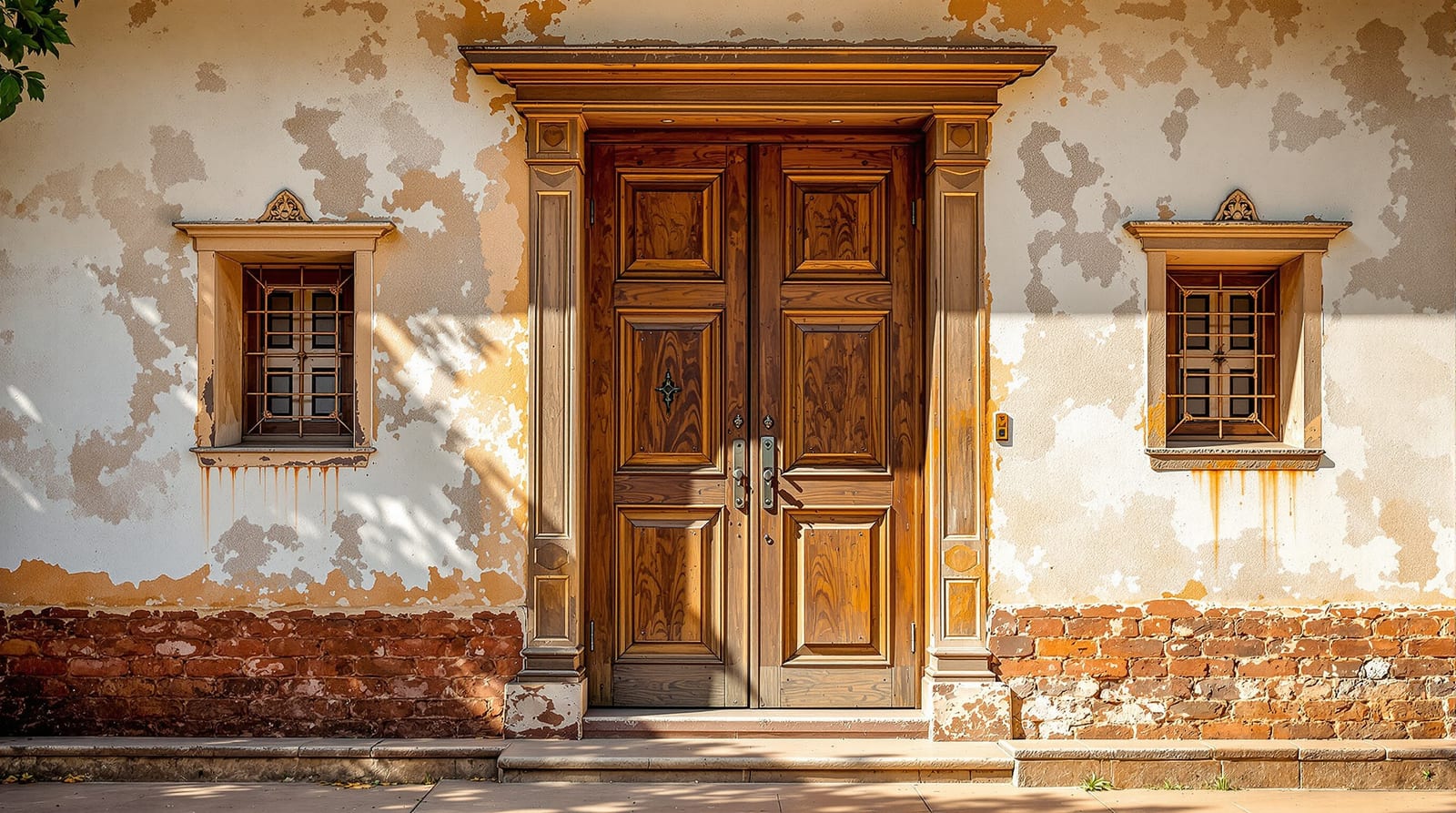
Door Weathering and Durability in India 2026: A Guide
How UV, monsoon, humidity and salt break doors down, how external doors are tested, and which materials and finishes survive the Indian climate.
An external door in India lives a hard life. It faces forty-degree summer sun, lashing monsoon rain, salt-laden coastal air and months of high humidity, often all on the same leaf within a single year. Door weathering and durability is the story of how that climate slowly attacks a door — bleaching its finish, swelling and warping its core, peeling its layers apart and corroding its metal — and of how good materials, finishes and testing keep a door sound for decades instead of years. For an Indian homeowner, understanding weathering is the difference between a door that is repainted every monsoon and one that simply lasts.
This Studio Matrx guide explains the failure modes that weathering causes, how external doors are tested before they reach you, which materials and finishes survive which climate zones, and the maintenance that buys extra years. Because a door that resists the weather is a door you replace less often, durability here is also sustainability. It sits inside the cluster pillar, the complete door guide, and supports the Act pillar on sustainable doors.
How weathering attacks a door
Weathering is not one process but several, each driven by a different part of the climate. Understanding door weathering and durability means knowing which enemy does which damage, so you can choose materials and finishes that defend against the ones your site actually faces.
UV fade and finish breakdown
India's intense ultraviolet radiation is relentless on south- and west-facing doors. UV breaks down the lignin in exposed timber, leaving it silver-grey and brittle; it chalks and fades polymer surfaces like uPVC and WPC; and it degrades the binder in paints and stains, causing them to fade, crack and flake. A finish that looks fine for one summer may be failing by the third without UV-stable pigments and a re-coat cycle.
Swelling, warping and movement
Timber and engineered cores are hygroscopic — they absorb moisture in the monsoon and warm-humid air and release it in dry heat. This constant swelling and shrinking causes warping, bowing, sticking and split panels. An unsealed bottom edge wicking water is the classic trigger; doors in the warm-humid coastal zones of Kerala, Goa, the Konkan and the East coast suffer most.
Delamination
Flush and engineered doors are built from layers bonded by adhesive. Repeated wetting and drying, plus UV at the edges, breaks that bond and the layers peel apart — usually starting at an unsealed bottom edge or a damaged corner. BWP-grade (boiling-waterproof) bonding under IS 710 dramatically slows delamination, but no adhesive survives standing water indefinitely.
Corrosion
Metal doors, frames and hardware corrode in moist and salty air. Coastal salt aerosol is especially aggressive: mild-steel hardware rusts, untreated aluminium pits, and hinges and locks seize. Anodised or powder-coated marine-grade aluminium, stainless-steel or brass hardware, and FRP resist this; cheap steel and bare metal do not.
How external doors are tested
Reputable doors are not sold on faith — they are put through standardised weathering and durability tests that compress years of climate into days or weeks. Knowing the tests lets you ask the right questions of a manufacturer.
| Test | What it simulates | What it reveals |
|---|---|---|
| Accelerated weathering (UV / xenon-arc, ASTM G154 / G155) | Years of sun & rain in a chamber | Fade, chalking, finish breakdown |
| Cyclic humidity / wet-dry cycling | Monsoon-to-dry-heat swings | Swelling, warping, delamination |
| Boiling-water / BWP bond test (IS 710) | Extreme wet bonding stress | Adhesive durability, delamination resistance |
| Slam / open-close cycle test | Years of daily use | Hinge, hardware and joint fatigue |
| Salt-spray test (ASTM B117) | Coastal salt corrosion | Finish & hardware corrosion resistance |
| Water penetration & air permeability | Driving rain & wind | Sealing, weather-tightness of the assembly |
| Wind-load / structural (IS 875 Part 3) | Storm & cyclone wind pressure | Leaf and frame strength |
The slam-cycle test is particularly telling: a door rated for tens of thousands of open-close cycles has proven its hinges, joints and hardware will survive years of family use without sagging or splitting. Together these tests stand behind the weather ratings on a quality door — see how the full weather-resistance picture fits together in weather-resistant doors and the wetting-specific detail in door water resistance.
The weathering cycle, illustrated
The diagram shows how a single external door is attacked from several directions at once, and where good design intervenes.
Which materials and finishes last
No material is immune to weathering, but they differ enormously in how they cope. The table sets out realistic, India-grounded durability against the main climate stresses — choose by the worst stress your site actually faces.
| Material | UV resistance | Moisture / swelling | Coastal / salt | Best-fit zone |
|---|---|---|---|---|
| Solid teak / seasoned hardwood | Good (greys, re-coatable) | Good if sealed | Moderate | Hot-dry, composite (with care) |
| Cheap flush door | Poor | Poor (swells, delaminates) | Poor | Internal only |
| Engineered / solid-core (BWP) | Moderate | Good if sealed | Moderate | Composite, sheltered external |
| WPC | Good (UV-stabilised) | Excellent | Excellent | Warm-humid, coastal, wet zones |
| uPVC | Moderate (can embrittle) | Excellent | Excellent | Coastal, humid |
| FRP / fibreglass | Good | Excellent | Excellent | Coastal, cyclone-prone |
| Marine-grade aluminium (anodised / powder-coated) | Excellent | Excellent | Excellent | Coastal, high-rise, all zones |
Finish matters as much as substrate. UV-stable exterior PU, marine varnish and quality powder-coat hold up far better than ordinary interior paint; an anodised or powder-coated aluminium finish resists both UV and salt; and any timber finish must be re-coated on a cycle before it fails, not after. For the deeper material-versus-climate logic, see door materials comparison, and for how durability feeds green credentials, timber door sustainability.
Climate-zone reality
India is not one climate, and the right durable door changes with the zone. A door that thrives in dry Rajasthan may rot on the Konkan coast.
- Hot-dry (Rajasthan, interior Deccan): UV and thermal cycling dominate; swelling is less of a threat. Well-sealed seasoned timber and aluminium do well; the enemy is sun, so UV-stable finishes and re-coating matter most.
- Warm-humid coastal (Kerala, Goa, Konkan, East coast): the harshest zone for doors — relentless humidity, monsoon rain and salt. WPC, FRP, uPVC and marine-grade aluminium earn their premium; untreated timber and cheap flush doors fail fast.
- Composite (most of North and Central India): all stresses appear seasonally — hot-dry summers, wet monsoons. BWP-bonded engineered doors and well-sealed timber work if maintained; sheltering exposed doors with an overhang helps everywhere.
- Cold / temperate (hills, Northeast): moisture and damp dominate over UV; rot-resistant materials and good drainage at thresholds matter.
The single most cost-effective durability measure in every zone is physical shelter: a porch overhang or weather bar that keeps direct sun and driving rain off the leaf can multiply a door's life regardless of material. For storm-prone and coastal sites, wind loading under IS 875 (Part 3) also governs — see door wind-load performance.
Maintenance that extends a door's life
Durability is bought partly at the shop and partly earned over the door's life. A small, regular routine adds years — and is by far the greenest option, since the most sustainable door is the one you keep.
- Seal all six edges, the bottom edge especially, before and after hanging — most weathering damage begins at a bare base wicking water.
- Re-coat exterior finishes on a cycle, every two to four years in harsh sun, before they crack and fail rather than after.
- Rinse coastal doors of salt periodically and oil or replace corroded hardware before it seizes.
- Specify BWP bonding and anti-termite treatment for any timber or engineered door in an exposed or ground-contact position.
- Fit and shelter well — a plumb frame, correctly sized hinges, and an overhang that keeps sun and rain off do more for longevity than any single material choice.
- Match material to position — use WPC, FRP, uPVC or marine aluminium where moisture and salt would kill timber, and reserve timber for sheltered or drier positions.
To weigh how a door's weathering performance feeds its overall green score, the door sustainability scorer factors durability in, and the eco door material selector matches material to your climate zone. For the lifespan-and-cost side of the same coin, see door lifespan and durability.
Frequently asked questions
Why does my external door fade and grey so quickly in India?
Intense ultraviolet radiation. India's strong sun breaks down the lignin in exposed timber (turning it silver-grey) and degrades paint and stain binders, causing fade, chalking and flaking. South- and west-facing doors take the worst of it. UV-stable exterior finishes, a porch overhang and a regular re-coat cycle — every two to four years in harsh sun — keep a door looking sound for far longer.
Which door material is most durable on the coast?
In warm-humid coastal zones, rot- and salt-proof materials win clearly: WPC, FRP/fibreglass, uPVC and marine-grade (anodised or powder-coated) aluminium. They resist swelling, delamination and corrosion that destroy untreated timber and cheap flush doors. If you want a timber look on the coast, choose a sheltered position, a fully sealed seasoned hardwood, and commit to regular re-coating — or use a wood-effect WPC or FRP door instead.
How are external doors tested for weathering?
Reputable doors pass standardised tests that compress years of climate into days: accelerated UV/weathering chambers (ASTM G154/G155) for fade, cyclic wet-dry humidity for swelling and warping, boiling-water bond tests (IS 710 BWP) for delamination, slam/open-close cycling for hardware fatigue, salt-spray (ASTM B117) for corrosion, and water-penetration and IS 875 wind-load tests for the whole assembly. Ask a manufacturer which of these their door has passed.
What causes flush and engineered doors to peel apart?
Delamination — the adhesive bonding the layers breaks down under repeated wetting and drying plus UV at the edges, usually starting at an unsealed bottom edge or a damaged corner. BWP-grade (boiling-waterproof) bonding under IS 710 greatly slows it, but no adhesive survives standing water forever. Sealing every edge and keeping the door out of direct wetting are the best defences.
Does maintenance really make a difference to durability?
Enormously. Sealing bare edges, re-coating finishes before they fail, rinsing coastal salt, oiling or replacing corroded hardware, and treating timber against termites can multiply a door's life. A door that is sheltered and maintained can outlast an identical neglected one many times over. Since the greenest door is the one you never have to replace, maintenance is both the cheapest and the most sustainable durability measure there is.
Is durability the same thing as sustainability for a door?
Largely, yes. A door's biggest environmental cost is the embodied carbon paid each time it is manufactured. A weather-durable door spreads that cost over decades, while a door that rots or warps and is replaced every few years repeats it again and again. Choosing a material and finish that survive your climate — and maintaining it — is one of the most reliable green decisions you can make for your home.
Export this guide
Related Guides — Deep-dive reading
Coastal Region Door Buying in India 2026: Salt-Air Guide
Why cheap flush and MDF doors fail near the sea, and which water-resistant materials and corrosion-proof hardware actually last.
Home Doors & EntrancesWeather-Resistant Doors: Rain, Sun & Coastal (India 2026)
How to choose external doors that shrug off Indian rain, sun and humidity — the right materials, finishes and weather detailing for every climate zone.
Home Doors & EntrancesDoor Water Resistance in India: Waterproof or Not? (India 2026)
Waterproof versus water-resistant doors, which materials shrug off monsoon and which swell — for bathrooms, balconies and exposed Indian entrances.
Home Doors & EntrancesRelated Tools — Try Free
Door Material Comparison Tool
Compare 2–4 door materials on cost, durability, maintenance, security and moisture resistance.
Comparison ToolWindow Material Comparison Tool
Compare uPVC, aluminium, wood, steel and composite windows on cost, life, upkeep and insulation.
CompareMaterial Decision Framework (M-Score)
Score 30+ Indian construction materials across cost, durability, climate fit, maintenance, and sustainability.
Materials