
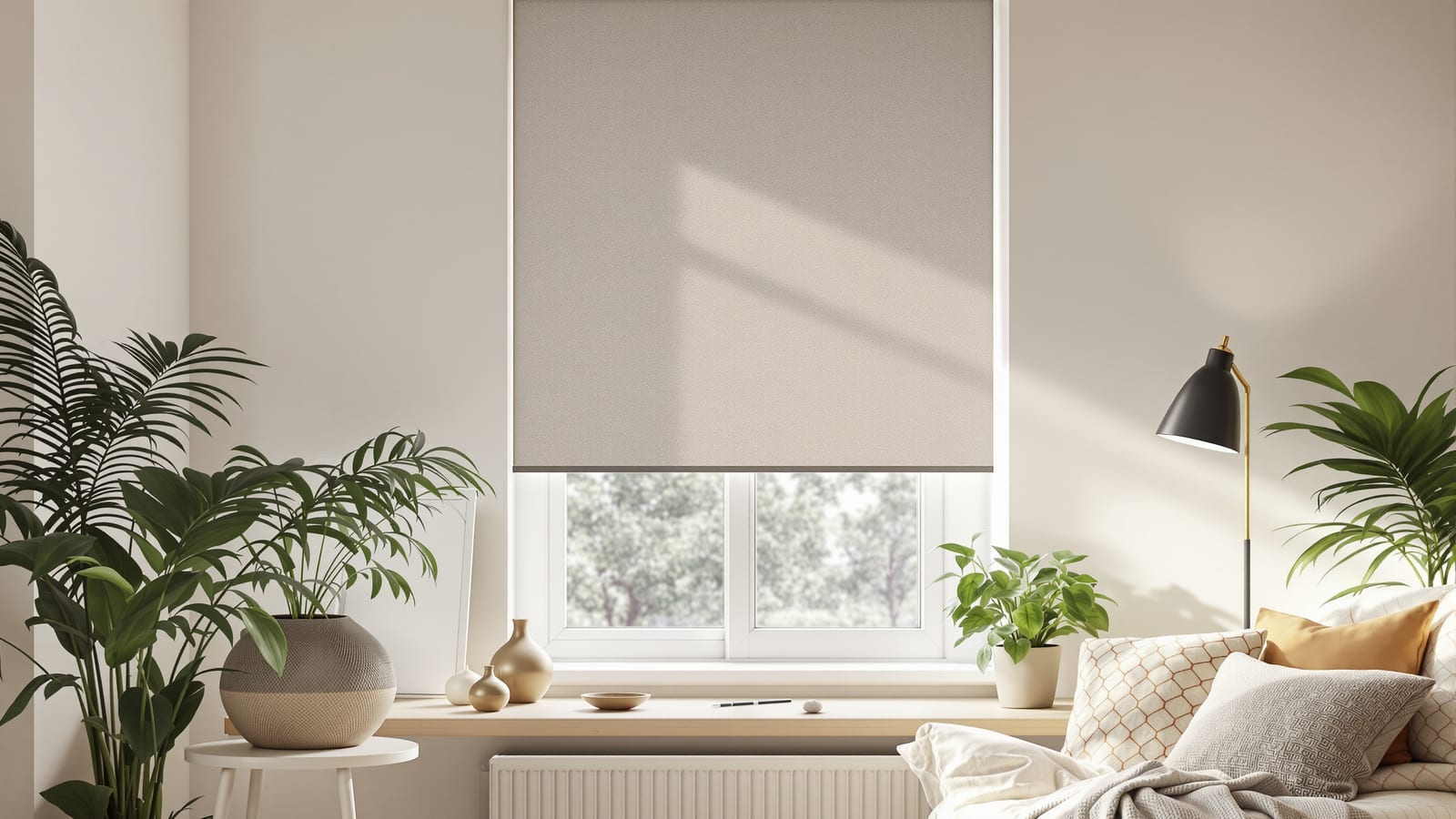
Curtain Colour Selection Guide: How to Choose the Right Shade (India 2026)
Blend with the wall or contrast for a statement, pull from the rug, light vs dark, warm vs cool — a practical method for choosing curtain colour in Indian homes.
Curtain colour is the decision everyone starts with and almost nobody has a method for. You stand in the showroom, surrounded by a hundred shades, and pick the one that catches your eye under fluorescent light — only to hang it at home and find it fights the sofa, shows every speck of dust, or turns the room into a cave. Colour feels like the fun, instinctive part. It is, but only once you know the handful of rules that turn "what do I like?" into "what works here?".
This guide is that method. It answers the questions people actually ask — should curtains match the walls or contrast them? Pull a colour from the rug, or play it safe with neutrals? Light or dark? Warm or cool? — and it answers them for Indian rooms, Indian light and Indian dust.
Curtain colour is the last decision, not the first. Settle the fabric, the layers and the light control, and the colour becomes the easy, joyful finish — not a gamble.
If you have not yet chosen the cloth itself, do that first: the Curtain Fabric Guide covers drape, opacity and fade-resistance, because the fibre decides how a colour ages far more than the shade does.
The first fork: blend or contrast?
Almost every curtain-colour question collapses into one choice — do you want the curtains to disappear (blend with the wall) or announce themselves (contrast it)? Both are correct; they just do different jobs.
| Approach | What it does | Best when | Watch out for |
|---|---|---|---|
| Blend (match the wall) | Curtains recede; walls read taller and calmer; window feels bigger | Small rooms, low ceilings, busy decor, rentals | Can look flat if there is no texture or sheen difference |
| Soft contrast (a few shades off) | Gentle definition, frames the window without shouting | Most living rooms and bedrooms — the safe sweet spot | Getting the undertone wrong (warm curtain on cool wall) |
| Bold contrast (statement colour) | Curtains become a feature; adds energy and a focal point | Neutral rooms that need life; a single accent wall | Overpowering a small or already-colourful room |
The honest default for most Indian homes is soft contrast — curtains a few shades deeper or lighter than the wall, in the same temperature family. It frames the window, adds quiet depth, and forgives small mismatches. Go full blend when the room is small or the rest of the decor is already loud, and reserve bold contrast for a deliberate focal moment.
Pull the colour from the room, not the catalogue
The single most useful trick designers use: do not invent a curtain colour — borrow one that is already in the room. A scheme holds together when colours repeat. So pick your curtain shade from one of these, in roughly this order:
- The largest patterned thing — a rug, a printed sofa, a feature cushion, a painting. Pull a secondary colour from its pattern (not the dominant one) and your curtains instantly look intentional.
- The wall colour — for a blended or softly-contrasting scheme, work a few steps along the same swatch card.
- An undertone you want to amplify — the warmth in your wooden floor, the brass of your fittings, the green of your plants.
Avoid matching the biggest block of colour exactly; echo a supporting colour instead. Matching the sofa precisely tends to look like a showroom set, not a home. The Curtain Pattern Selection guide goes deeper on coordinating prints and solids when more than one pattern is in play.
Neutrals: the default that almost never fails
If you take away nothing else: when in doubt, choose a neutral. Beige, greige, soft grey, oatmeal, ivory, taupe and warm white are popular for a reason — they suit almost any wall, survive a change of sofa, and never date. For a first home, a rental, or any room you are not certain about, a neutral curtain is the low-regret choice.
But "neutral" is not one colour, and getting the undertone right is the whole game:
- Warm neutrals (beige, cream, sand, greige) flatter Indian light and pair with wood, terracotta, brass and most traditional decor. This is the safest family for the majority of homes.
- Cool neutrals (true grey, dove, oatmeal-grey) suit modern, minimalist or blue/green schemes — but can read cold or "office-like" in a north-lit room.
- Greige (grey-beige) is the modern hedge that leans either way and is hard to get wrong.
A common, costly mistake is buying a "grey" that turns out to have a purple or blue undertone and clashes with warm walls. Always check a swatch against your own wall, in your own daylight, before you commit.
Light vs dark — and the honest Indian caveats
This is where Indian conditions overrule pure aesthetics. Light and dark each buy you something, and each cost you something:
- Light colours (white, cream, pale neutrals, pastels) make a room feel bigger, brighter and airier, bounce light around, and keep a small space open. They also show dust and grime faster in our dusty cities, and pale sheers can yellow over time. Choose washable fabrics and expect to launder more often.
- Dark colours (charcoal, navy, deep teal, maroon, forest) feel cosy, dramatic and grounding, hide dust and stains brilliantly, and darken a room for sleep. But dark fabric on a sunny window absorbs heat and, more importantly, fades visibly — direct UV bleaches a deep colour into a patchy, streaked version of itself within a year or two, and the fade shows far more on dark cloth than on light.
The two honest trade-offs nobody mentions in the showroom: light curtains show dust; dark curtains on a bright window fade and absorb heat. Choose with your window's orientation in mind, not just the mood board.
The practical resolution: on a bright west or south-facing window, favour mid-tones and fade-resistant solution-dyed polyester (see the fabric guide) over deep dyes; save the dramatic dark velvets for bedrooms and shaded windows where they shine and last. The Window Treatment Selector factors orientation into its recommendation so you do not learn this the hard way.
Warm vs cool: matching colour to the room's light
Every colour leans warm or cool, and the room's natural light changes how it reads:
- Warm shades (terracotta, mustard, ochre, warm beige, dusty rose, deep red) add cosiness and energy. They are wonderful in north-facing or low-light rooms that feel cold, and they sit beautifully with India's love of wood, brass and traditional textiles.
- Cool shades (blue, green, teal, grey, lavender) feel calm, fresh and spacious. They suit bright, hot, sunny rooms and bedrooms where you want a restful, cooling mood — and they make a small cool-lit room feel airy.
A reliable rule: use warm curtains to warm up a cold room, cool curtains to calm a hot or bright one. Indian palettes lean naturally warm — terracotta, mustard, deep greens, indigo and jewel tones all read beautifully against typical wall colours and woods, which is why those shades feel "right" in so many Indian living rooms.
Tricks for small rooms and low ceilings
Colour is also a spatial tool. A few moves make a room read bigger:
- Match curtains to the wall so the eye does not stop at the window edge — the wall reads as one continuous, larger plane. The single most effective small-room trick.
- Go light and low-contrast — pale curtains against pale walls open a space; dark curtains can close it in (lovely for cosy, wrong for cramped).
- Hang high and wide, then keep the colour quiet — mount the rod near the ceiling and let floor-length panels in a soft shade draw the eye up; busy colour at the window fights the illusion.
- Use vertical interest, not loud colour — a subtle tone-on-tone stripe lengthens a low wall better than a strong contrast does.
For low ceilings specifically, floor-length panels in a colour close to the wall, hung high, do more for perceived height than any single decorating move.
Coordinating colour across rooms
Open-plan flats and homes seen from a single hallway need curtains that talk to each other without being identical. The method:
- Pick one consistent neutral or undertone for curtains across connected spaces, then vary the texture or a small accent room by room.
- Keep the temperature consistent — do not mix warm beige curtains in the living room with cool grey in the adjacent dining if both are visible at once.
- Let bedrooms break the rule — closed-off private rooms can take a bolder, more personal colour because they are not seen in the same glance.
Consistency across the public, visible rooms plus freedom in the private ones is the formula that keeps a home feeling designed rather than piecemeal.
A simple decision method
Put it together and choosing curtain colour becomes five quick moves:
1. Decide the job — should the curtains blend (recede) or contrast (feature)? Small/busy room blends; neutral room that needs life contrasts.
2. Borrow a colour from the room — pull a supporting shade from the rug, sofa or art, or step along the wall's swatch card.
3. Default to a neutral when unsure — and get the undertone (warm vs cool) right against your own wall.
4. Sanity-check light vs dark for the window — bright sunny window = mid-tone, fade-resistant; shaded or bedroom = dark is fine.
5. Match the temperature to the light — warm shades for cold rooms, cool shades for hot, bright ones.
Do those in order and the spelling you searched — "curtain colour" or "curtain color" — matters less than the fact that you now have a repeatable method instead of a showroom guess.
The honest caveats
Three things to hold lightly. First, screens lie — colours online and under shop lighting shift dramatically in home daylight, so always test a swatch on your wall, in your light, morning and evening, before buying metres of it. Second, Vastu colour guidance (north-east lighter shades, south-west earthy tones, and so on) is cultural preference, not physics — follow it if it matters to you, but never let it override light control or fade-resistance on a hard-working window. Third, remember a curtain uses two to two-and-a-half times the track width in cloth, so a colour you are unsure about is an expensive mistake to repeat — which is exactly why the method above is worth ten minutes.
Choose your colour with confidence, the Studio Matrx way. Let the Window Treatment Selector match your room, orientation and mood to a colour and treatment shortlist, then price it per window with the Curtain Cost Calculator. For the full picture, read the Complete Curtain & Window Treatment Guide, and go deeper with the modern curtain design and living room curtains guides, or browse the whole Window Treatments cluster.
Export this guide
Related Guides — Deep-dive reading
How to Choose Curtains: A Step-by-Step Guide for Indian Homes (2026)
Eight decisions, in the right order — name the window's job, pick the layers, fabric, pleat, fullness and hardware, settle the colour, then decide whether to motorise. The method that ends in confidence, not a showroom guess.
Window TreatmentsDecorative Mirrors — A 2026 Guide for Indian Homes
Space, light and a focal point in one move · Full-height to Venetian · Where to place them and why
Design StylesVastu for Curtains: Colours, Directions and the Honest Take (India 2026)
Curtain colours by direction, room-by-room Vastu suggestions — and an honest line on where the advice tracks real daylight and heat physics versus where it is simply cultural convention.
Window TreatmentsRelated Tools — Try Free
False Ceiling Cost Estimator
Live ₹/sqft across 8 ceiling types — POP, gypsum, designer, metal, PVC, wooden — with cove and spot lighting for 20 Indian cities.
Cost CalculatorWindow Orientation Planner
Pick the best window type, glass and shading by wall direction — north, east, south and west.
Window ToolCross-Ventilation Analyzer
Estimate airflow and air changes per hour (ACH) from room size, window areas, layout, and local wind — with NBC 2016 Part 8 compliance check.
Ventilation Calculator