
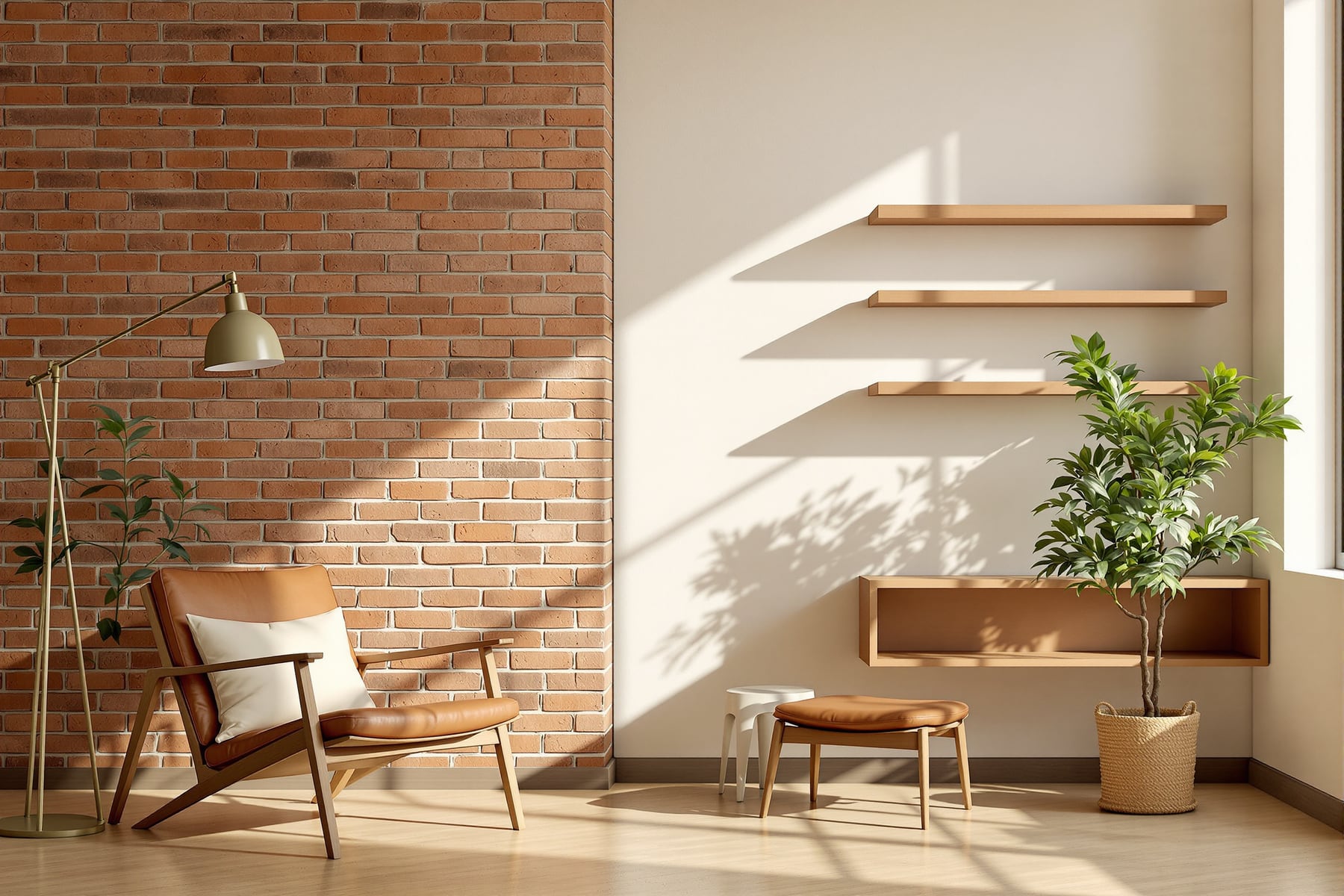
Brick Veneer Walls: The Complete Guide for Indian Homes
The warmth and texture of exposed brick without a structural wall — what brick veneer is, the types and looks, how thin slips are fixed and pointed, where it works, and the four routes to a brick wall.
The exposed-brick wall is one of the most enduring looks in interiors — warm, textured, a little industrial, a little rustic, and instantly characterful. But a real structural brick wall is heavy, thick and only an option when you are building from scratch. Brick veneer solves that: thin, real-clay brick slices, glued to the face of an ordinary wall, that give you all the warmth, colour variation and tactile texture of exposed brick at a fraction of the thickness, weight and cost. It is how the cafe-loft look gets into a normal flat.
This is the complete guide to brick veneer walls for Indian homes — a deep dive under the wall cladding & panels guide and the master wall-finishes guide. We will explain what brick veneer is (and how it differs from a full wall and from fakes), show the types and looks, walk through how the slips are fixed and pointed, map where it works, and lay out the four different routes to a brick-look wall.
What brick veneer is
The key is to see brick veneer against its two neighbours — a full brick wall and a printed fake — because it sits deliberately between them.
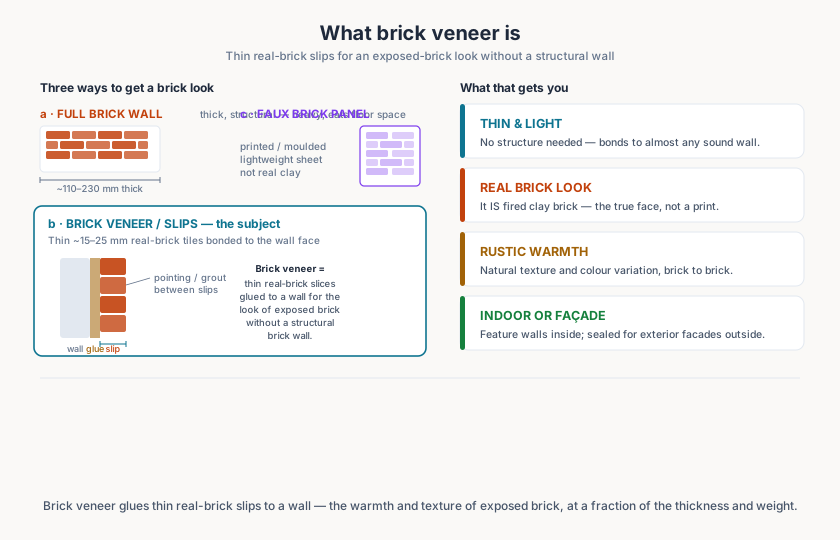
Brick veneer is thin real-brick slips — roughly 15–25 mm slices of actual clay brick — bonded to a wall's face, with mortar pointed between them, for the look of exposed brick without a structural brick wall. Unlike a full brick wall (thick, heavy, space-taking), it adds almost no thickness or weight; unlike a faux printed panel or wallpaper, it is real fired clay, with genuine texture. Its qualities: thin and light (no structure needed), a real brick look (because it is real brick), rustic warmth (with natural colour and texture variation), and it works indoors or on a facade when sealed.
Brick veneer types and looks
"Brick veneer" spans a wide range of moods, from classic red clay to moody charcoal, and the choice sets the whole room.
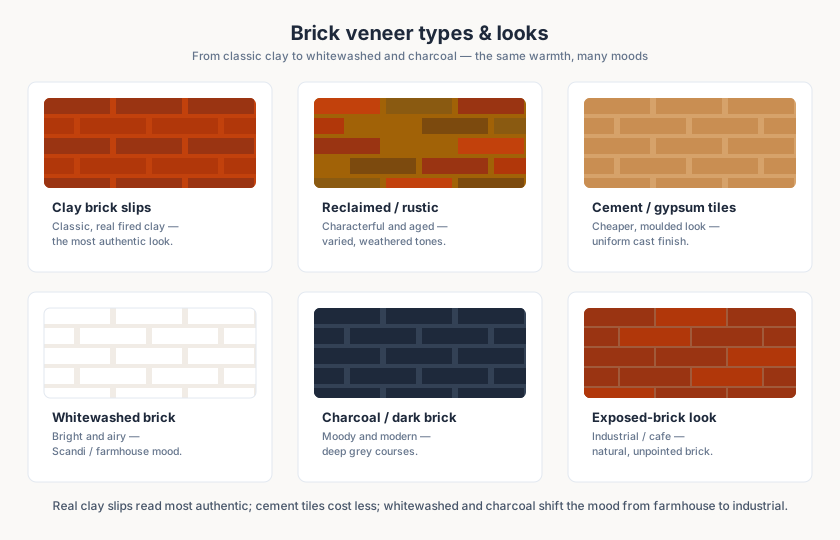
The main options: clay brick slips (classic, real fired clay), reclaimed/rustic (varied weathered tones with character), cement or gypsum brick tiles (cheaper cast versions), whitewashed brick (bright, Scandi or farmhouse), charcoal/dark brick (moody and modern), and a natural exposed-brick look (raw, industrial, cafe-style). Real clay slips read most authentic; cement tiles cost less; and whitewashed or charcoal tones shift the mood from farmhouse to industrial.
How brick veneer is fixed
Installing brick veneer is much like tiling, with one trick that makes or breaks the illusion.
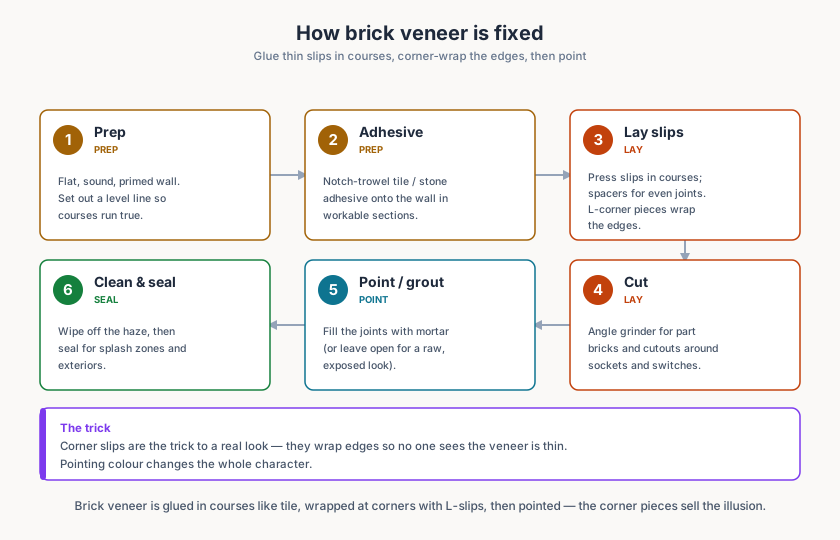
The sequence: prep a flat, sound, primed wall and set a level line; apply tile or stone adhesive with a notched trowel; lay the slips in courses, using spacers for even joints and L-shaped corner pieces at edges; cut part-bricks with an angle grinder; point the joints with mortar (or leave them raw for an industrial look); and clean and seal — sealing is important for splash zones and exteriors. The make-or-break detail: corner slips wrap the edges so no one sees the veneer is thin, and the pointing colour changes the whole character of the wall.
Where brick veneer works
Brick veneer is warm and durable, but as porous real clay it needs sealing wherever water or grease reaches it.
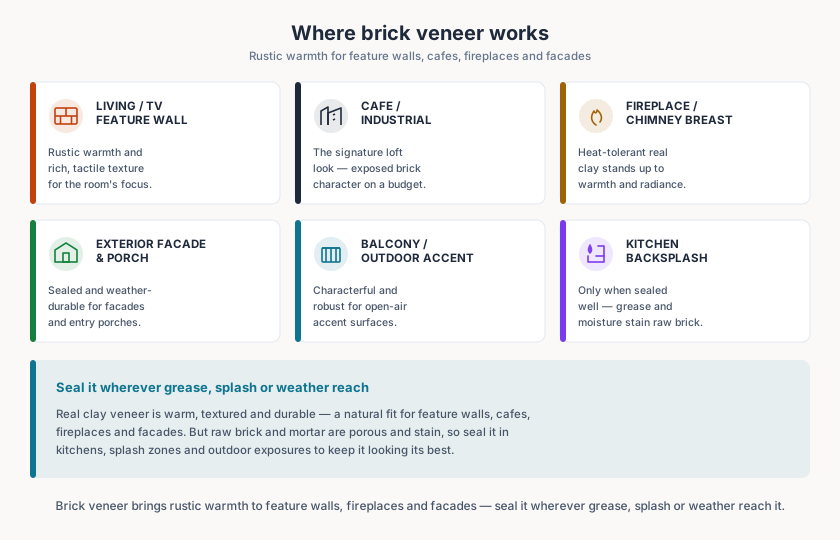
It shines on living-room and TV feature walls (rustic warmth and texture), in cafe and industrial interiors (its signature loft look), on a fireplace or chimney breast (real clay is heat-tolerant), on exterior facades and porches (sealed and weather-durable), on balcony accents, and even on a kitchen backsplash if sealed well. The one rule: real clay veneer is warm, textured and durable — just seal it in kitchens, splash zones and outdoors, because raw brick and mortar are porous and will stain.
Getting the brick look: four routes
Brick veneer is one of several ways to a brick wall, and it helps to see where it sits on cost and authenticity.
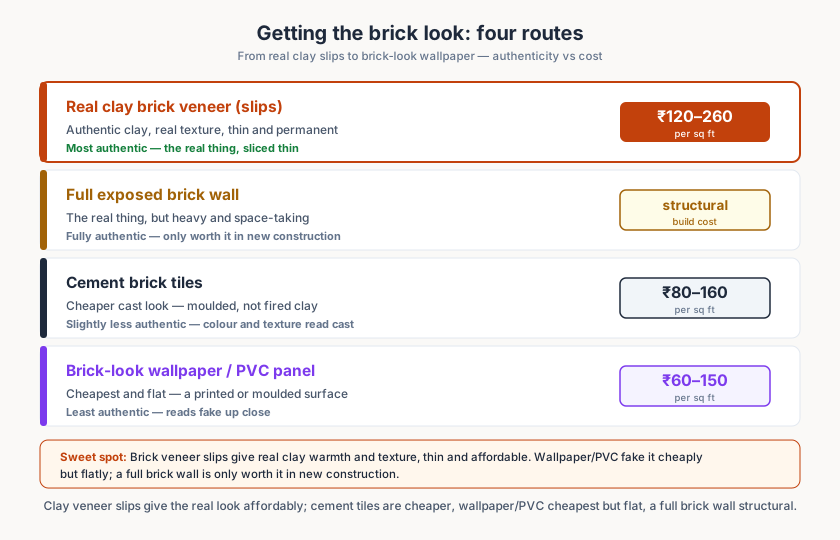
Real clay brick veneer slips (₹120–260/sq ft) give authentic clay warmth and texture, thin and affordable — the sweet spot. A full exposed brick wall is the real thing but heavy and space-taking, worth it only in new construction. Cement brick tiles (₹80–160) are a cheaper cast look, slightly less authentic. And brick-look wallpaper or PVC panels (₹60–150) are cheapest but flat, reading fake up close. The takeaway: veneer slips are the sweet spot — real look, affordable, thin — with wallpaper/PVC faking it cheaply and a full wall only for new builds.
Brick veneer is how the warmth of exposed brick reaches an ordinary room — real clay, real texture, thin enough to glue onto any sound wall. Wrap the corners, choose your pointing, seal it where water reaches, and it turns a plain wall into the heart of a cafe-warm space. For the wider panel and cladding family, return to the wall cladding & panels guide.
Export this guide
Related Guides — Deep-dive reading
Porcelain, Ceramic & Sintered-Stone Facade Cladding in India: A Practical Guide
Thin large-format porcelain and sintered-stone slabs can clad a building with the look of marble, concrete or weathered steel at a fraction of stone's weight — but on a facade, the fixing system is a life-safety decision, not a finish choice.
Building FacadesEpoxy Grout vs Cement Grout for Tiles in India: Which to Specify (2026)
A plain-English guide to tile grouts for Indian homes: what grout does, how cementitious grout compares with epoxy grout on cost, stain and water resistance, hygiene and durability, and exactly where each one belongs - kitchens, bathrooms, pools, dry rooms and more.
Building MaterialsWall Cladding & Panels: The Complete Guide for Indian Homes
The fast, dry way to transform a wall — the whole family from PVC to natural stone, how each is fixed, where it belongs indoors and out, the cost ladder, the fire-and-moisture cautions, and how to choose by what you want the wall to do.
Wall FinishesRelated Tools — Try Free
Home Building & Interior Cost Calculator — 20 Cities
Construction + interior costs for 20 Indian cities across kitchen, wardrobes, flooring, painting, ceiling.
Cost CalculatorCross-Ventilation Analyzer
Estimate airflow and air changes per hour (ACH) from room size, window areas, layout, and local wind — with NBC 2016 Part 8 compliance check.
Ventilation CalculatorFalse Ceiling Cost Estimator
Live ₹/sqft across 8 ceiling types — POP, gypsum, designer, metal, PVC, wooden — with cove and spot lighting for 20 Indian cities.
Cost Calculator