
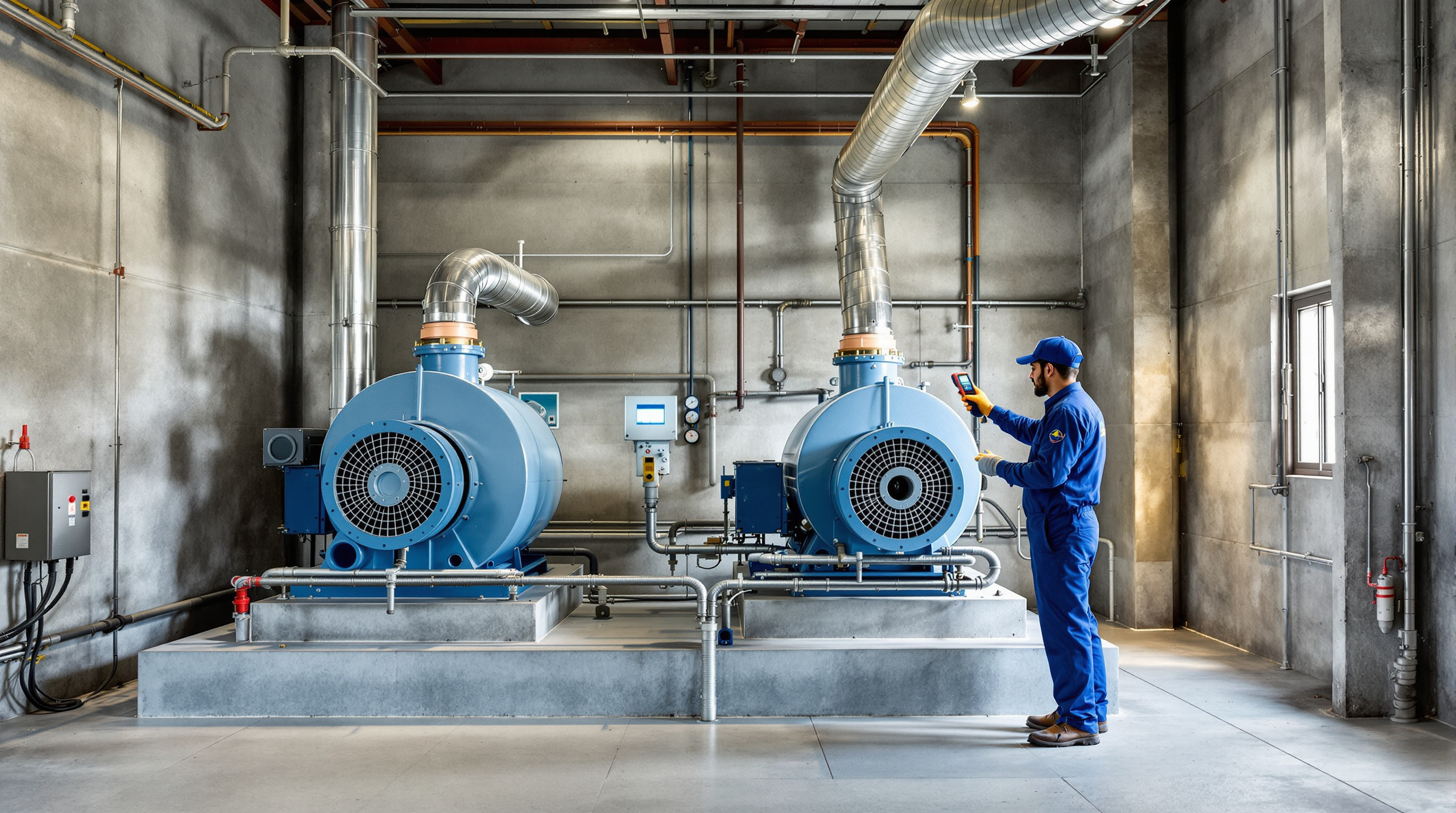
STP Blower Maintenance: The Complete O&M Guide for Air Blowers
How to keep the air blowers that power your STP running reliably — filter cleaning, oil and belt checks, bearing and temperature monitoring, standby rotation, and the common faults that trip operators up.
If the aeration tank is the heart of a sewage treatment plant, the air blower is the muscle that keeps that heart beating. It pushes a steady stream of air through the diffusers at the bottom of the tank, and that air feeds the billions of microbes doing the actual work of cleaning your sewage. Starve the tank of air for even a few hours and the biology begins to suffocate — dissolved oxygen crashes, the culture dies back, the outlet water turns cloudy and smelly, and you are looking at days of recovery.
That is why blower maintenance is not an optional line item. It is the single most important piece of preventive care in the whole plant. The good news: a positive-displacement STP blower is a simple, rugged machine, and keeping it healthy comes down to a handful of disciplined, repeatable checks.
A blower that is well fed with clean air, correctly oiled, properly tensioned and never allowed to overheat will run for years. Nearly every catastrophic blower failure on an Indian STP traces back to a clogged filter, a missed oil change, or a temperature warning that nobody was watching.
Know your blower first
Most building STPs in India use twin-lobe (roots-type) positive-displacement blowers — two figure-of-eight rotors that trap air and push it forward against the back-pressure of the water column above the diffusers. Larger or energy-conscious plants may use tri-lobe or screw / turbo blowers, but the maintenance philosophy is the same. Sizing depends on your tank volume and diffuser depth; if you are ever unsure whether the installed unit is right for the load, the Blower Size Calculator converts your air demand into the required capacity in Nm³/hr.
A typical installation runs duty and standby blowers — one working, one resting — so the plant never stops when a machine is pulled for service. How you rotate those two units matters as much as how you clean them, and we will come back to it.
The daily and weekly rhythm

Blower care is mostly about catching small drifts before they become failures. Build these into the operator's routine — and fold them into your broader daily STP checklist and weekly STP maintenance rounds so nothing slips.
Every day (2 minutes per blower):
- Listen. A healthy blower has a steady, even hum. Knocking, rattling, screeching or a rising whine means stop and investigate.
- Feel for vibration. Excess vibration points to worn bearings, a loose coupling, or debris in a lobe.
- Read the pressure gauge. Note the discharge pressure. A slow creep upward over days usually means the diffusers are fouling; a sudden jump means a blockage.
- Check the air-filter indicator (or the filter itself). A choked intake filter is the number-one cause of blower overheating and lost airflow.
- Confirm airflow in the tank. A uniform "rolling boil" across the aeration tank surface tells you air is actually reaching the diffusers.
Every week:
- Clean or check the intake air filter. In dusty Indian conditions, filters clog fast. Tap out or vacuum the element; wash washable foam pre-filters and dry them fully before refitting. Replace paper elements when cleaning no longer restores them.
- Inspect the drive belt. Press the belt midway between the pulleys — about 10–15 mm of deflection is right. A belt you can twist more than 90°, or one that is glazed, cracked or shedding black dust, needs replacing.
- Check the oil level in the gear-end and drive-end sight glasses. Top up with the manufacturer-specified grade only — never mix grades.
- Wipe the casing down and clear the ventilation louvres of the blower room. A hot, unventilated room makes every other problem worse.
Oil, belts and bearings — the wear items
These three consumables decide how long a blower lives. Treat them on a schedule, not on failure.
| Task | Typical interval | What to watch for |
|---|---|---|
| Intake air-filter clean | Weekly | Dust load, drop in airflow, rising motor current |
| Air-filter element replace | 3–6 months | Cannot be cleaned back to clean; visibly torn |
| Oil check / top-up | Weekly | Level between marks, milky or dark oil = trouble |
| Oil change (gear + drive end) | Every 3,000–4,000 running hours, or as per manual | Metal particles, burnt smell, discolouration |
| Belt tension check | Weekly | Deflection, glazing, cracks, alignment |
| Belt replacement | 6–12 months (as a set) | Never replace one belt of a matched set |
| Bearing inspection / greasing | Per manual (grease-lubricated types) | Noise, heat, vibration |
| Bearing replacement | On condition | Rising temperature and vibration trend |
Two rules save more blowers than any other. First, change the oil on hours, not on looks — a positive-displacement blower's gears and bearings run on that oil film, and heat degrades it long before it looks dirty. Second, replace belts as a matched set and re-check tension after the first day of running, because new belts stretch in.
Temperature and bearing monitoring
Heat is the early-warning signal for almost every blower fault. Make a point-and-shoot infrared thermometer part of the daily round and log the readings — the trend matters more than any single number.
- Check bearing housing temperature at the drive and gear ends. A reading that is climbing week on week, or that runs noticeably hotter than its standby twin under the same load, is a bearing beginning to fail.
- Check discharge air temperature. Positive-displacement blowers heat the air they compress; an abnormally high discharge temperature usually means a clogged intake filter, a fouled diffuser raising back-pressure, or low oil.
- Watch the motor current (amps) against its rated full-load value. Rising amps track rising back-pressure — a quiet signal that the diffusers need attention. If the tank looks under-aerated, pair this with a diffuser cleaning check.
A blower that trips on its thermal overload is telling you something upstream went unwatched. The whole point of monitoring is to act on the trend a week before the trip.
Standby rotation — do not let the spare rot
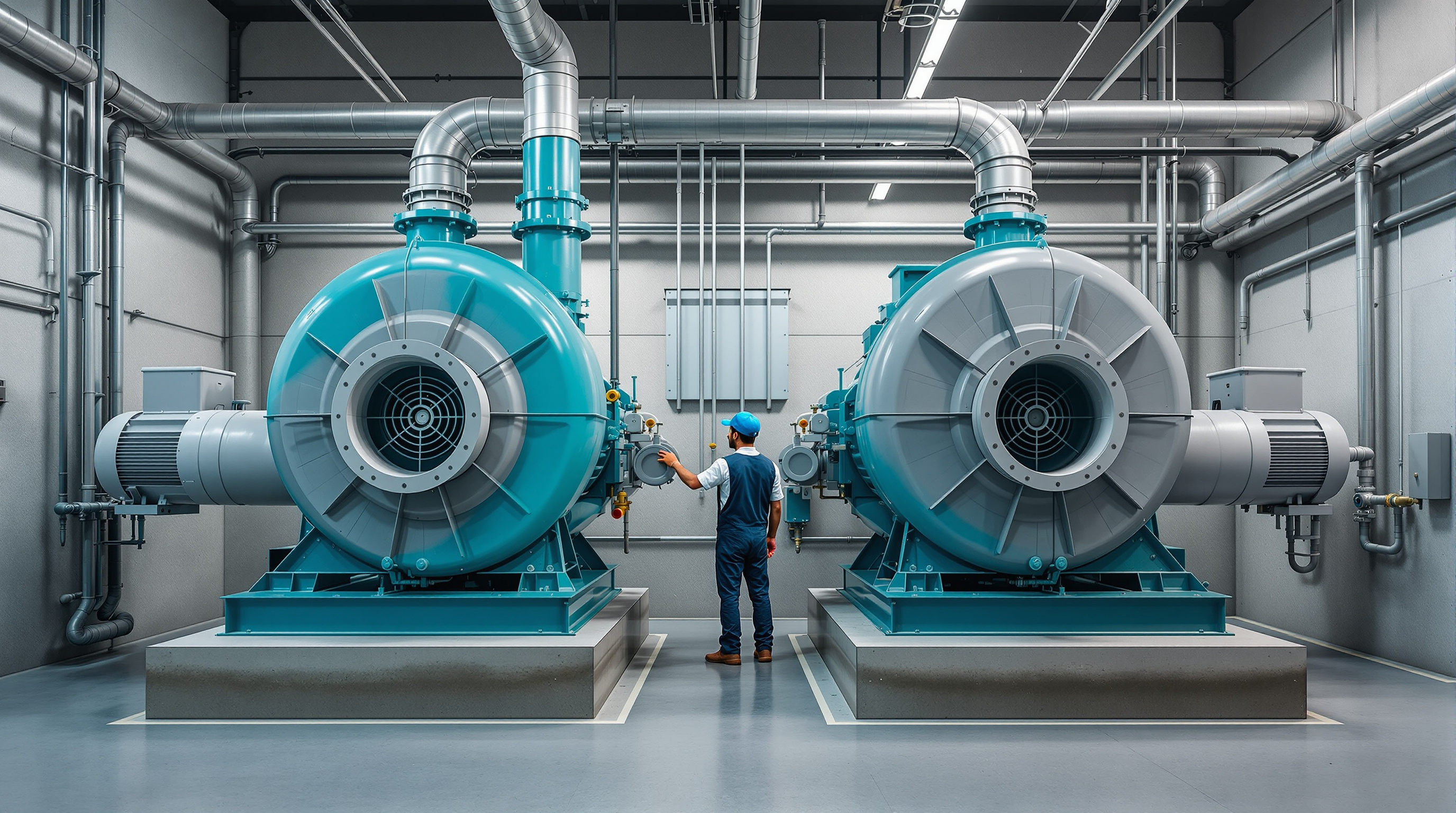
The commonest mistake in Indian STP rooms is running one blower until it dies while the "standby" sits untouched for months. A blower that never turns seizes: oil drains off the bearings, seals dry out, and lobes can rust in humid plant rooms.
Alternate the duty and standby units on a fixed cycle — weekly is ideal, fortnightly at most. Many control panels have an auto-changeover timer; if yours does, confirm it is actually switching. If it is manual, put it on the roster. Rotation does three things: it equalises wear so both units age together, it keeps the spare genuinely ready, and it gives the operator a natural moment to service the resting machine while the other carries the load.
Common blower faults — cause and fix
When something does go wrong, the symptoms are usually unambiguous. Keep this table on the blower-room wall.
| Symptom | Likely cause | First action |
|---|---|---|
| Low airflow, weak boil in tank | Clogged intake filter; slipping belt; worn lobes | Clean/replace filter; tension or replace belt |
| Blower overheating / thermal trip | Choked filter; low oil; high back-pressure; hot room | Check filter, oil level, diffusers, room ventilation |
| High discharge pressure | Fouled or blocked diffusers; closed valve | Inspect diffusers; confirm valves open |
| Loud knocking or metallic noise | Worn bearings; lobe contact; foreign object | Stop blower; inspect — do not run to failure |
| Excess vibration | Worn bearings; loose coupling; misaligned pulleys | Check alignment and bearings |
| Oil leak at seals | Worn oil seals; overfilled oil | Replace seals; correct oil level |
| Milky / emulsified oil | Water ingress past seals | Change oil; replace seals |
| Motor draws high current | High back-pressure; bearing drag | Check diffusers and bearings |
If a fault has already knocked your outlet quality out of spec, work through the STP troubleshooting guide alongside these fixes — a blower problem and a biology problem often show up together.
The bottom line
Air-blower maintenance is unglamorous, repetitive, and the highest-leverage work an STP operator does. Clean the filter, watch the oil, tension the belt, log the temperatures, and rotate the standby — five habits that, done weekly, prevent almost every expensive failure. Blowers are also the largest single power draw in most STPs, so a well-maintained, correctly-loaded blower is a lower electricity bill too; see reducing STP electricity consumption for the wider picture.
To go deeper on how blowers and diffusers work together to aerate the tank, read the air blowers and diffusers guide, and browse the full Sewage Treatment Plants library for the rest of the O&M series.
Export this guide
Related Guides — Deep-dive reading
STP Troubleshooting: Common Problems & Fixes (Operator's Guide)
Odour, cloudy effluent, high BOD, sludge bulking, foaming, choked diffusers, pump trips and rising power bills — a practical symptom-to-cause-to-fix guide for facility managers running an Indian building STP.
Sewage Treatment PlantsDiffuser Cleaning & Maintenance in STPs: Keeping Oxygen Transfer Efficient
Why fine-bubble diffusers foul, how to read the warning signs of uneven bubbling and rising back-pressure, and the acid-wash, air-bumping and replacement routines that keep your aeration tank transferring oxygen the way it was designed to.
Sewage Treatment PlantsAir Blowers & Diffusers in an STP: How Aeration Actually Works
The blowers that push air and the diffusers that turn it into bubbles are the lungs of your sewage treatment plant. Here is how they work, how they are sized, and why they decide most of your electricity bill.
Sewage Treatment PlantsRelated Tools — Try Free
Healing View Impact Calculator
Evidence-Based Design dashboard quantifying the recovery impact of nature view + daylight factor on analgesic use, length of stay, and HCAHPS patient-experience uplift. Calibrated against Ulrich 1984 (Science), Park & Mattson 2008, and the CHD EBD evidence base.
EBD CalculatorDaily STP O&M Checklist Tool
An interactive daily operator round for a sewage treatment plant — tick off biology, flows, equipment and output checks and see a live completion score, per-section progress and shift readiness.
ChecklistSTP Preventive Maintenance Checklist
An interactive checklist of weekly, monthly, quarterly and annual sewage treatment plant maintenance tasks that scores your completion as you tick each item off.
Checklist